
Most Trusted Online Casinos in Australia: What to Know

- Understanding the Australian Online Casino Market
- What Makes an Online Casino Trustworthy in 2026?
- Australian Pokies: Features and Player Preferences
- Bitcoin‑Based Casinos: Opportunities and Risks
- Crypto-Friendly Casinos: Beyond Bitcoin
- Slot Play in Australia: Bonuses and Gameplay Mechanics
- Company Payouts and PayID: Speed and Convenience
- Fast Withdrawals for Australian Players
- Playing for Real Money vs. Free Bonuses
- E‑Wallet and PayID Integration in Australian Casinos
Understanding the Australian Online Casino Market
The phrase most trusted online casinos australia sounds, at first hearing, like a piece of marketing copy. It is, in fact, a small legal puzzle. To speak about a trusted online casino in the Australian context one must first untangle a rather unusual situation: a country in which the game is lawful for the player, unlawful for the provider, and regulated with a split personality that assigns the federal government one half of the problem and the states the other. Trust, in such an environment, becomes less a matter of brand polish and more a question of jurisdiction.
The starting point is the Interactive Gambling Act 2001, a Commonwealth piece of legislation that has been shaping the boundaries of the national market for a quarter of a century. The Act prohibits Australian‑based companies from offering real‑money casino services to Australian residents. The prohibition is aimed squarely at operators, not at the public who might wish to use them. Individual Australians are not committing an offence by registering and playing at offshore‑regulated online casino platforms. The law, in other words, walks up to the supply side of the counter and leaves the demand side alone. A peculiar arrangement, though not without its own internal logic.
Trust in an online casino comes down to verifiable details like licensing, payout speed and the real terms behind a welcome offer, so it pays to check what’s actually on record before signing up.
Bonus: 240% up to A$4,100 + 300 free spins Stands out for a sizeable welcome package, combining a large percentage match bonus with a generous batch of free spins.
License: Curacao eGaming (Roby Games Ltd) · Bonus: 100% up to A$750 + 200 free spins Operates under a Curacao eGaming licence, giving it a formal regulatory footing, and pairs this with a matched deposit bonus plus free spins for new players.
License: Curacao Gaming Control Board OGL/2023/176/0095 (Hollycorn N.V.) · Bonus: up to A$11,000 + 300 free spins (code NEO100) Licensed via the Curacao Gaming Control Board under Hollycorn N.V., and backs this up with one of the larger welcome offers on record, including a dedicated bonus code and a substantial free spins allotment.
License: Curacao OGL/2024/1335/0780 · Bonus: up to A$1,000 + 150 free spins, wager-free · Min. deposit: EUR 20 Holds a Curacao OGL licence and offers a wager-free bonus structure alongside free spins, with a clearly stated low minimum deposit.
Bonus: up to A$7,500 + 550 free spins across 10 deposits, 50x wagering · Payout speed: crypto under 1 hour, PayID 1-3 business days · Min. deposit: A$20 (A$30 to qualify for the bonus) Notable for a multi-deposit bonus scheme spread across ten deposits with free spins, and for fast crypto payouts alongside PayID processing within a few business days; minimum deposit terms are clearly defined.
License: Curacao eGaming OGL/2024/923/0383 (Antillephone N.V.) · Bonus: up to A$2,000 + 100 free spins across 2 deposits · Min. deposit: A$30 Licensed under Curacao eGaming via Antillephone N.V., with a two-deposit welcome bonus structure including free spins and a modest minimum deposit requirement.
License: Curacao Gaming Authority (Jumpman Gaming Ltd) · Bonus: up to A$6,600 + up to 250 free spins across 4 deposits Licensed by the Curacao Gaming Authority through Jumpman Gaming Ltd, offering a large welcome bonus spread across four deposits along with a solid free spins component.
License: Tobique Gaming Commission · Bonus: up to A$8,000 + 400 free spins across 4 deposits · Payout speed: crypto ~10-15 minutes, fiat 1-5 days · Min. deposit: A$30 Licensed by the Tobique Gaming Commission and known for quick crypto payout turnaround alongside a four-deposit bonus scheme with free spins and a low entry deposit.
License: Curacao · Bonus: 100% up to A$500 + 200 free spins, 10x wagering · Payout speed: crypto 30-60 minutes, fiat 1-5 days · Min. deposit: A$10 Curacao-licensed with a fast crypto payout window and a straightforward welcome bonus with a comparatively low wagering requirement and low minimum deposit.
License: Curacao Gaming Control Board OGL/2023/176/0095 (Hollycorn N.V.) · Bonus: up to A$1,500 + 200 free spins across 3 deposits Licensed by the Curacao Gaming Control Board under Hollycorn N.V., offering a multi-deposit welcome bonus with free spins included.
The consequence of that asymmetry is that the very phrase most trusted online casinos, when applied to Australia, refers by necessity to sites run from elsewhere. A domestic market for real‑money online casino games does not exist, because the law does not permit it to exist. What exists instead is a framework in which the federal government regulates interactive gambling, while the states and territories retain authority over physical casinos, the sort with carpets and chandeliers and a bar that opens at ten in the morning. The federation divides its gambling problem neatly in two: Canberra minds the screen, the states mind the building.
This division matters to anyone attempting to identify trusted online casinos for Australian play. A brick‑and‑mortar licence issued in New South Wales or Queensland tells a visitor something about the premises in front of him. It tells him very little about a website. The screen answer to the trust puzzle is not a licence shown at the border, because for casino‑style games no such Australian licence can be granted. Trusted casino sites in the Australian sense are therefore, by structure rather than by choice, offshore licence holders. The relevant question ceases to be “is it licensed here?” and becomes “licensed where, and on what terms elsewhere?” The word trusted performs rather a lot of work in a market shaped by that shift.
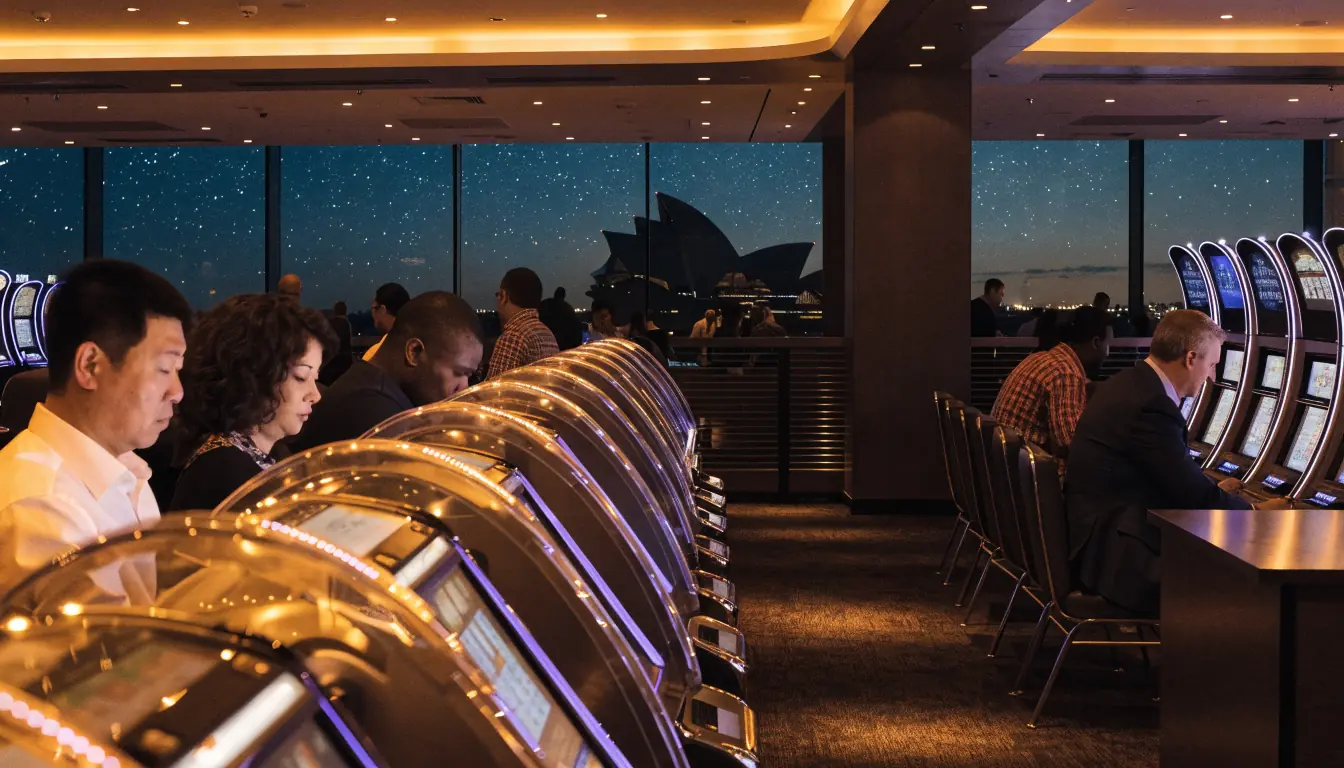

Into this already uncommon arrangement, a recent federal decision has inserted a further line. On 15 June 2024 the federal credit card ban for online gambling took effect. From that date, the use of credit cards for online gambling transactions has been barred across the regulated landscape, a piece of harm‑minimisation policy that alters how deposits may legally be framed and advertised. The specific behavioural impact is a separate question, but the regulatory signal is plain: the Commonwealth continues to adjust the permitted edges of the market, and those edges are drawn in Canberra, even where the games themselves are supplied from abroad.
Tax treatment forms another part of the frame. The Australian Taxation Office treats gambling winnings as tax‑free. The public treasury has chosen not to follow the player into the game; what arrives as winnings departs as winnings, without the state re‑entering at the payout window. Whether one regards this as generous or merely coherent, it shapes the atmosphere in which trusted real money casinos australia are discussed. The absence of a domestic licensing regime, combined with a rule that leaves winnings outside the tax net, places the concept of the most trusted casino sites in a peculiar light: trust must be constructed from signals other than a local stamp of approval.
This is the first article in a series of ten; the rest of the site will circle back to particular operators, payment rails and game mechanics. Here, however, the landscape itself is the object. The market that emerges from the rules above is dominated by the smartphone. The majority of Australian online casino players access the platforms via smartphone. The national conversation about trusted online casinos in 2026 is therefore, in the main, a conversation held on a small screen, conducted via offshore websites, within a regulatory perimeter that forbids local provision yet tolerates individual consumption.
Credit‑Card Ban
The federal ban on credit‑card deposits for online gambling took effect on 15 June 2024, meaning any casino still offering this method to Australian players is violating the law.
To speak accurately about trusted casino sites in Australia one must hold three positions at once. The first is absence: no Australian‑licensed real‑money online casino exists, and the Commonwealth position is that providing such games to Australians is unlawful for an operator. The second is tolerance: the individual who plays at an offshore site is not in breach of the law in doing so. The third is activity: credit card use for gambling is now federally banned, state authorities continue to license the physical sector, and the tax office stands aside from winnings. Most trusted casino sites, in this market, are the offshore platforms that can present some form of external regulatory recognition credible enough to stand in, however imperfectly, for the absent local licence. A slightly theatrical situation, but an Australian one.
The vocabulary of later sections grows naturally out of this foundation. When the discussion shifts to specific payment methods, or to the mechanics of pokies, or to the timetable on which a withdrawal may be expected to land, it proceeds against a backdrop in which the legal permission is held by the player, the prohibition is held by the operator, and the relevant regulator is one whose seal is obtained offshore. A trusted online casino sites list, in any meaningful Australian register, must therefore be a study of foreign licence environments, not of domestic certification.


One further remark deserves its own paragraph, because it sits at the centre of the entire market’s posture. When the search for the most trusted online casinos begins from an Australian address, the results are essentially a catalogue of foreign jurisdictions offering to fill a local vacancy. That vacancy is created by the Interactive Gambling Act 2001. The same Act that stops an Australian company from dealing the game, thereby also hands the offshore market its audience. The legislation, in effect, manufactures both the void and the crowd standing just outside it.
The pages that follow will return to the details of what makes a particular site worth the word trusted in the year 2026. For now it is sufficient to note that the Australian online casino market is less a market in the ordinary sense and more a carefully maintained boundary: one side drawn in Canberra, the other in the state capitals, and the game itself occurring, by legal design, elsewhere. Within that design, trusted casinos for Australians are, by definition, foreign. The law has arranged it so.
What Makes an Online Casino Trustworthy in 2026?
Trust is the most overused word in the casino business and the one least often defined. Operators plaster it across their homepages while burying the terms that determine whether a punter’s money ever comes back. The phrase itself tells you something about how the industry sees its customers: trust is not earned upstream in licensing and policy, it is marketed downstream, after the fact, like paint on a seaworthy hull. Except the hull is all that matters.
A widely used offshore licence, offers quick registration and moderate player protection via public verification pages.
Highly regarded regulator with strict audit requirements, providing stronger consumer safeguards.
Lesser‑known jurisdiction, often cheaper but with limited transparency and weaker dispute‑resolution mechanisms.
For Australians, moreover, the concept of a "licensed" casino bends into a strange shape. The Interactive Gambling Act 2001 blocks any Australian-based company from offering real-money casino games to residents, and no domestic licence category for online casinos exists. There is no public register to check, no local seal of approval to find. The licence you will be shown, if you are shown one at all, comes from elsewhere — Curaçao, Anjouan, Malta — jurisdictions that market regulatory services the way other jurisdictions market citizenship by investment. A licence is still better than its absence. But it is a structure that tolerates rather than a structure that endorses.
The quirks matter. A trustworthy casino for an Australian player in 2026 looks less like a regulated utility and more like a competent offshore contractor that happens to want your business enough not to cheat you.
Start with the licence, but do not stop there
Operators who treat their licence as decoration rather than infrastructure are easy to spot once you know what decoration looks like. The licence number should sit in the footer, clickable, resolving to the issuing registry — not a PDF, not a badge, a live record. Curaçao eGaming, Anjouan Gaming Commission, the Malta Gaming Authority all run public verification pages. A casino that displays the badge without the link has made the link deliberately unobvious, and deliberate unobviousness is the first polish-wearing step toward outright camouflage.
Ownership tells the same story. A clean operator names its holding company, its registered address, and its corporate registry entry. A murky one routes ownership through a numbered company and a service address. The murky arrangement is not automatically dishonest — it is, however, an arrangement designed to be hard to sue, and that design preference reveals how the operator expects its relationships with players to end.
Security as a habit, not a certificate
Encryption, two-factor authentication, segregated player funds: none of these are exotic. Together, they mark the difference between a casino that regards its players’ balances as liabilities on its balance sheet and one that regards those balances as an operational float. When a site asks for a second factor only at login and never again — no challenge on password change, none on withdrawal, none on payment method alteration — the authentication is ceremonial. The ceremony might comfort, but it does not protect.
Segregation is harder to verify and more important. The public rarely sees how an operator accounts for player deposits, and the industry trade bodies that audit such things publish their findings reluctantly. What is public is decent behaviour: casinos that fire-warn you before a bonus becomes active, that display your real-money balance separately from your bonus balance, that let you withdraw real money without touching the bonus. These are small graces. They accumulate into a pattern.
After much ceremony, specifics.
Responsible gambling is genuine or it is a logo
A casino that takes the problem of its own product seriously provides hard limits — ceilings on deposits and losses that cannot be overridden mid-session, cool-off periods that activate instantly rather than after a support ticket. It links to Australian help services — GambleAware, Gambling Help Online, Lifeline Australia, Gamblers Anonymous Australia, BetStop — and does so from the footer, not from a help page three layers down. It refrains from marketing to self-excluded players. Some jurisdictions require that kind of restraint; the offshore casinos Australians use are often not bound by any equivalent of a BetStop-style register, so their restraint is voluntary. Voluntary restraint in a commercial actor ought to be earned, not assumed.
Offshore Risk
Playing on an offshore‑licensed casino leaves Australian players without a local ombudsman, so any dispute must be resolved under foreign law, increasing the risk of unrecoverable losses.
When a casino talks about responsible gambling in its marketing, it is usually asking to be trusted. When it enforces hard limits, it is showing you what trust looks like in mechanism.
Payments are the truth test
The credit-card question is, at this point, comic. Australia banned credit cards for online gambling on 15 June 2024, so any operator still offering card deposits to Australian punters is advertising the fact that it does not care what the law says. Trustworthy operators respond by leaning on bank transfers and e-wallets and on cryptocurrencies, and by telling you in advance which rails they use and which they do not.
Withdrawal policy is the truest statement an operator makes about itself. Sites that stall payouts to coax reversal — a limp, legal-seeming tactic — have made a business decision that your patience is revenue. The trustworthy ones promise a ceiling on pending times and publish it. Some pay out via PayID, Australia’s domestic instant-transfer rail, which is at least Australia’s own problem to solve. Others route through crypto, in which case honesty consists of naming the currencies and the network fees upfront.
The tax side, for once, favours the punter. The Australian Taxation Office treats gambling winnings as tax-free, whatever the venue, and offshore status does not change the treatment. That removes one common reason to lie to yourself about where the money came from.

What the fine print shows
Finally, the boring part — the terms of service, the bonus conditions, the dispute-resolution clause. A trustworthy casino makes the whole text visible before deposit, not behind a login. It uses plain arithmetic in its wagering requirements, and it states which games count toward playthrough and which are excluded. It names its dispute route: some operators commit to binding arbitration through a specified service; others leave disputes to "management’s discretion," which is another way of saying nowhere.
A casino, in short, is trustworthy when it is boring in the right places. The marketing should glitter; the mechanism should not. The reverse of that preference sequence is what the industry’s advertising tries to sell, and it is, in the most literal sense, a confidence trick.
None of this guarantees safety. It does, however, separate the casinos that want your repeat business from the ones that want your money once. In a market where the legal protection umbrella has holes precisely where offshore operators stand, that distinction is the only one that matters.
Australian Pokies: Features and Player Preferences
The mechanics of Australian online pokies have diverged sharply from the classic spinning-reel format, driven by innovations aimed at immersive bonus rounds and transparent gameplay. According to annehelendonnelly.com, the “Hold and Win” mechanic has become a standard feature in Australian online pokies in 2026, shifting focus from base game spins to accumulating bonus triggers.
This mechanic typically involves cash symbols or fixed jackpots locking into place, triggering a respin round where only new symbols count toward totals. The report further states that the “Multi-Hold” variant can display up to four simultaneous reel sets during the bonus round, splitting the screen into a grid and allowing players to land collectors across parallel layouts. This changes tactical approaches, as players must consider symbol placement rather than simple spin sequences.
Hold and Win Mechanic
The “Hold and Win” feature locks cash symbols or fixed jackpots in place, then initiates a respin where only new symbols contribute to the total win. This shifts focus from the base‑game spins to strategic accumulation of bonus triggers.
The influence of adjacent game categories
amiably, the rise of community game shows and crash games has reshaped pokie design expectations. annehelendonnelly.com notes that community game shows such as Crazy Time and Lightning Storm are popular among Australian players in 2026, blending live dealer spectacle with RNG-heavy side bets. These formats prioritize skill-based interludes within chance-driven engines, influencing how pokies incorporate narrative bonus layers.
Similarly, crash games like Aviator and Spaceman have altered engagement rhythms, with rounds lasting under 20 seconds according to the same source. This rapid cycle normalizes instant decision-making and forces pokies to compete via bolder visuals and immediate multiplier feedback rather than prolonged session pacing.
Mobile-first structure drives interface choices
A critical confirmed fact defines the genre’s anatomy: the majority of Australian online casino players access the platforms via smartphone. Developers therefore strip away cumbersome horizontal layouts, prioritizing single-thumb tap zones and portrait-mode optimisation. High-contrast buttons replace physical lever symbolism, while bonus round instructions are compressed into swipe-friendly screens rather than dense paytable walls.
Australian vernacular treats “pokies” as the default term, with “mobile pokies” serving as the proper label for handheld play. These definitions matter when navigating lobby filters or comparing game mechanics, as regional syntax correctly categorises innovation versus legacy formats.
Trust as a gameplay filter rather than a seal
With no domestic real-money online casino operators licensed in Australia, trusted online pokies must be validated through evidence rather than claims. Trusted online pokies australia routinely involve checking offshore licence numbers prominently displayed in the footer alongside providers like Pragmatic Play or Hacksaw Gaming. Credible platforms associate collaborations with established game providers recognised in the market.
most trusted online pokies australia integrate features that discourage exploitation rather than conceal it, so avoid platforms that impose hidden double wagering on both deposit and bonus or manipulate RTP ranges by selecting the lowest payout setting. Verified casinos show volatility labels directly on thumbnails, allowing assessments before spinning begins.
Checking integrity through observable mechanics
trusted pokies sites in australia rely on methods individual players can execute without insider access. best trusted pokies sites australia publish audit seals from bodies like BMM Testlabs, though authenticity should be confirmed via the auditor’s official search function rather than trusting front-end art. trusted online casino reviews that dissect specific mechanistic behaviours carry more weight than generalized affiliation hype.
Third-party snapshots matter less than observing how a game behaves when switching between base mode and bonus activation. While trusted casino reviews catalog experiences, caution should override consensus when anomalies arise. trusted slot sites that bury payout table details or obscure rule links during active play contradict transparency expected under frameworks like MGA or Curacao eGaming licensing.
Why localization signals operational maturity
Localisation extends beyond AUD currency toggles and PayID integration. Casinos catering to trusted pokies australia audiences prioritize AEST-friendly support windows and recognise that credit card gambling promotion is prohibited under federal laws enacted on 15 June 2024. Consequently, reputable operators highlight debit, bank transfers, or crypto methods deliberately.
The shift also encourages nuanced classifications such as parachute bonus or non-sticky bonus, clarifying how winnings navigate wagering terms. However, 100% trusted australia online pokies are defined by measurable choices: certified providers, visibly displayed responsible tool links, and absence of paired deposit-bonus wagering schemes. Trusted ecosystems require checking granular details instead of registering automatically assigned statuses.
PayID enables near‑instant transfers using a phone number or email, with withdrawals often completing in under 15 minutes, even on weekends.
Bitcoin‑Based Casinos: Opportunities and Risks
A curious inversion sits at the heart of Australian gambling law: the Treasury bans credit cards for betting, yet Bitcoin remains the preferred currency for the offshore pokies. According to annehelendonnelly.com, these platforms frequently court players with match bonuses ranging from 200% to 300%—figures that would make a licensed Sydney bookmaker blink. That generosity is the bait, and occasionally the trap.
The appeal is mechanical as much as financial. Players tired of banking drag find a workaround in the blockchain; according to annehelendonnelly.com, Litecoin deposits clear in under five minutes with fees kept beneath ten AUD cents. No card statements, no awkward bank queries. Just a string of alphanumeric confirmation and the reels unlock.
Tether (USDT) offers a different compromise. According to annehelendonnelly.com, the token holds a 1:1 peg with the US dollar while executing instant global transfers. It mimics the stability of fiat without requesting permission from the Commonwealth Bank. A neat trick, if it holds.
Yet the risk lies precisely in this agility. When a dispute arises over a stalled withdrawal or a locked account, there is no Australian ombudsman to telephone. The offshore operator answers to its own licensing jurisdiction, however obscure. The Interactive Gambling Act 2001 targets the provider, not the player, but that leaves the player standing alone in a digital no-man’s-land. Caveat emptor.
Trust, therefore, becomes an act of faith rather than regulation. Bitcoin guarantees movement, not fairness. The ledger is public; the dealer is not. Australian punters flock to these sites for the speed and the anonymity, accepting the trade-off with a shrug that suggests they know exactly what they are buying. Or perhaps they simply prefer the silence of the blockchain to the noise of the bank.

Crypto-Friendly Casinos: Beyond Bitcoin
Bitcoin may be the headline act, but it is hardly the only coin in town. According to annehelendonnelly.com, many offshore sites welcome Bitcoin deposits and frequently attach 200%–300% match bonuses to them. Yet Australians searching for a trusted online crypto casino increasingly look past BTC toward alternatives that settle faster or carry lower fees.
Litecoin is one such option. The same source reports that Litecoin deposits can clear in under five minutes, with transaction costs typically below ten AUD cents. For players who dislike watching a confirmation queue, that speed matters. Tether (USDT) plays a different role: annehelendonnelly.com describes it as pegged 1:1 to the US dollar and capable of near-instant global transfers, which removes the volatility puzzle from the deposit itself.
Then there is the question of identity checks. No-KYC environments—platforms that skip the usual identity verification—are, per annehelendonnelly.com, almost exclusively crypto-based. That detail cuts both ways. Anonymity appeals to some, but it also complicates dispute resolution when something goes wrong.
Australians who value privacy should weigh the convenience against the reduced recourse if a withdrawal stalls. The most trusted crypto casinos tend to be those that publish clear processing policies, regardless of which coin they accept. Whether the deposit arrives via Litecoin, USDT, or another digital asset, the underlying question remains the same: does the operator treat your funds as seriously as its marketing suggests?
Slot Play in Australia: Bonuses and Gameplay Mechanics
The Australian pokie has always been a peculiar institution — a machine that, in its physical form, once occupied pub space more reliably than the furniture did. Its digital descendants are no less idiosyncratic, and the bonuses attached to them deserve the same careful reading one would give a lease agreement.
Bonus Spin Caps
Many operators cap the maximum payout from free spins, meaning even a big win may be limited by a predefined ceiling, which is disclosed in the bonus terms.
The Fine Print on Free Spins
According to reporting by annehelendonnelly.com, maximum win caps on bonus spins can prevent players from cashing out sums that would otherwise be significant. The structure is elegant in its restraint: the casino grants the spin, and then quietly caps what the spin can actually deliver. Whether this constitutes generosity is a question best left to the marketing department.
This is the irreducible charm of the pari-mutuel arrangement inverted — the house extends an invitation, and the invitation has a ceiling. Australian players, accustomed to reading the small print since the days when pokies moved into the clubs, will recognise the genre. Trust, in this context, begins with transparency about precisely where that ceiling sits.
Live RTP Overlays: A Modest Revolution
In a departure from the industry’s traditional opacity, annehelendonnelly.com reports that VegasNow displays live RTP and volatility overlays on every game tile in the lobby. Whether this becomes standard practice remains to be seen, but it is a development worth noting: the theoretical return-to-player percentage, normally buried in a help menu few consult, presented at the point of decision. A player can see what the machine is set to before the money goes in.
This matters because RTP, like protein on a nutritional label, is information withheld unless the operator chooses to display it. Most do not. The casinos that do are making a specific argument about their trustworthiness — one that is verifiable rather than merely asserted.

Late Letters and Library Sizes
The same source notes that VegasNow’s library exceeds 14,000 titles from more than 140 software providers. This is the sort of abundance that, paradoxically, makes a single disciplined decision harder rather than easier. The modern Australian player does not lack for choice; what distinguishes a dependable casino is how it organises that choice, not how much of it there is.
The lesson here is older than the internet. The liberal use of freely available credit has never been a reliable marker of integrity — in banking, in publishing, or in gaming. That a particular casino makes its settings legible is a stronger indicator than any matching percentage it cares to advertise.
Company Payouts and PayID: Speed and Convenience
There’s a peculiar Australian habit — one rooted in everyday banking etiquette — that treats waiting days for a payout as the sort of indignity others abroad might quietly endure. At home, transferring money to a mate via mobile number or email is practically shorthand for modern life, and it’s this ease that has elevated PayID to something of a litmus test for any outfit courting the most trusted online casino Australia in 2026.
A Bank Transfer That Feels Like a Text
According to annehelendonnelly.com, Australians need only a phone number or email to trigger a near-instant movement of funds between major banks such as CommBank, Westpac, ANZ and NAB. That’s a welcome reprieve from the era of BSB codes and account digits worthy of cryptography exams. It also explains why a “trusted PayID casino” has lately become less of a search term and more of a baseline expectation.
Fast Payouts
Casinos that integrate PayID routinely deliver withdrawals within minutes, providing a tangible trust signal for Australian players.
Weekend performance often lays bare who’s serious about prompt payouts. The same source reports that PayID withdrawals can land in under 15 minutes even on a Saturday, a claim that transforms waiting for funds into a brief coffee break rather than an administrative ordeal.
The Company Behind Your Bank Account
Operators vying to be deemed a trusted payout casino in Australia understand that the girl checking her balance at brunch wants certainty, not theatrics. It’s a low bar, really — but one worth publishing if a provider intends to maintain goodwill. And when annehelendonnelly.com states that LuckyOnes processed a four-figure sum via PayID in under three hours, it exemplifies how trust thrives on tangible, measured results rather than marketing slogans.
So while free spins and quirky promotions grab headlines, here speed is the real protagonist. If data shows a withdrawal clearing before your ice cream melts, that’s corporate transparency served with refreshing civility. It’s never merely about moving dollars; it’s about moving them fast enough to preserve a player’s peace of mind. Now that’s a fair go.
Fast Withdrawals for Australian Players
Speed claims abound, but few come with timestamps. According to annehelendonnelly.com, PayID handles withdrawals in under 15 minutes—even on weekends. That’s not a polite fiction; it’s a clocked observation from a consistent source. For those using cryptocurrencies, the site reports that a Tether (USDT) payout was processed in under 30 minutes, though that’s anecdotal rather than policy.
LuckyOnes features in two of those reports: one four‑figure payout via PayID landed in under three hours, and the USDT transaction mentioned above came from them. These timings read more like postcards from someone’s Sunday arvo test run than guarantees. But they’re documented. Meanwhile, the greatest speed means little when paired with stalled identity checks or weekend-hour helpdesks. The majority of Australian players use smartphones, so performance has to be mobile‑swift too. That’s the baseline, not a bonus.

Playing for Real Money vs. Free Bonuses
Australian law draws a sharp line between operator and player. The Interactive Gambling Act 2001 bans locally based companies from offering real-money casino games, yet the individual who registers at an offshore-regulated platform commits no offence. The statute targets the seller, not the buyer.
That distinction matters when weighing cash play against promotional credits. A free bonus is not a separate legal category; it simply shifts the source of funds from the player’s wallet to the casino’s marketing budget. Either way, the Australian Taxation Office treats resulting winnings as tax-free, provided gambling remains a recreational activity rather than a business pursuit.
Trusted real-money pokies sites in Australia therefore offer an unusual combination: federally prohibited supply, individually lawful demand, and a tax system that declines to touch the proceeds. Free bonuses sit inside the same framework, though they tend to come with conditions that real cash deposits do not. A trusted casino in Australia for real money play is trusted precisely because those conditions are visible before a single spin.

Practical difference still exists. Real-money wagers involve direct exposure of personal funds, while bonus play often caps maximum withdrawals or limits eligible games. Trusted online slot machines and pokies make no distinction between the two account types once the reels start; the difference lies entirely in the terms attached to the stake.
E‑Wallet and PayID Integration in Australian Casinos
Australia’s big banks have quietly settled the wallet question themselves. According to annehelendonnelly.com, PayID hooks CommBank, Westpac, ANZ and NAB straight into a casino cashier with nothing more exotic than a mobile number or an email, and the same source reports withdrawals landing in under fifteen minutes — weekends included. The same source, it should be said, which makes it one data point rather than a market standard.
Still, the arrangement spares players the usual purgatory of routing numbers and pending queues. Where the major banks are absent, a crypto wallet address performs the same identification trick, with Litecoin and Tether handling the identifiers instead of bank rails. Offshore platforms speed both routes along, since none of them answers to a domestic licence — none exists. Forty minutes saved, one way or another.
Is online gambling legal in Australia?
Individual Australians are not committing an offence by registering and playing at offshore-regulated online casinos. However, the Interactive Gambling Act 2001 prohibits Australian-based companies from offering real-money casino services to residents.
Is it legal for Australians to play at offshore online casinos in 2026?
Yes, individual players are not in breach of the law by registering and playing at offshore-regulated online casino platforms.
What law governs online gambling in Australia?
The Interactive Gambling Act 2001 governs interactive gambling at the federal level, while individual states and territories retain authority over physical casinos.
What is the best way to verify a Curaçao licence?
The most reliable approach is to cross-check the operator’s licence number directly against the official public registry maintained by the Curaçao Gaming Control Board.
How fast does each top Australian casino process real money withdrawals?
Processing times depend heavily on the payment rail: PayID withdrawals can arrive in under 15 minutes even on weekends, Tether (USDT) transactions can be completed in under 30 minutes, and some platforms process four-figure payouts in under three hours.
What are the top pokies titles available in mobile-optimised versions?
Popular mobile-optimised titles in 2026 include games featuring the ‘Hold and Win’ mechanic, the ‘Multi-Hold’ variant with up to four simultaneous reel sets, as well as community game shows like Crazy Time and Lightning Storm.