Best Casino in Brisbane: Rooms, Gaming and Dining Guide
 Available in US
- Hotel and Accommodation Options at Brisbane Casino
- Gaming Floor: Poker Rooms and Table Games
- Dining Experience: Buffets and Breakfast Offerings
- Parking and Accessibility
- Nearby Lodging and Alternative Accommodation
- Contact Points: Bars, Baccarat, Events and Customer Service
- Operating Hours, Development and Upcoming Events
- Wellness and Spa Facilities
- A‑la‑Carte Restaurants and Specialty Eateries
- Food Courts and Outdoor Pool Area
Hotel and Accommodation Options at Brisbane Casino
A hotel attached to a casino sells more than a bed. It sells proximity — the fifteen-second walk between a room key and a gaming floor, engineered so that nothing interrupts the transaction. That’s the pitch behind on-site accommodation at Brisbane’s casino, and it’s worth separating the pitch from the product before booking either.
The rooms themselves function much like any large hotel property: standard, deluxe and suite tiers, differentiated mostly by floor level, view and square footage rather than anything unique to the casino setting. What actually distinguishes them from a hotel three blocks away is the building’s internal logic. Guests move between accommodation, gaming areas and dining without stepping onto a public street, which matters more to some travellers than others. For someone attending an event or planning a short stay built around table games, that internal continuity is the entire appeal. For someone who wants Brisbane and treats the casino as an afterthought, it’s largely irrelevant, and arguably a reason to book elsewhere.
Since online casinos are just a tap away from Brisbane players, it helps to know what each site actually offers before you sign up, from welcome bonuses to licensing and payout speed.
Bonus: 240% up to A$4,100 + 300 free spins WinShark stands out for a sizeable welcome package, combining a large percentage match with a generous batch of free spins.
License: Curacao eGaming (Roby Games Ltd) · Bonus: 100% up to A$750 + 200 free spins Roby Casino operates under a Curacao eGaming licence and pairs that with a straightforward welcome bonus of a matched deposit plus free spins.
License: Curacao Gaming Control Board OGL/2023/176/0095 (Hollycorn N.V.) · Bonus: up to A$11,000 + 300 free spins (code NEO100) Neospin holds a Curacao Gaming Control Board licence and offers one of the higher welcome bonus ceilings on this list, boosted further with a dedicated bonus code and a large free spins allotment.
License: Curacao OGL/2024/1335/0780 · Bonus: up to A$1,000 + 150 free spins, wager-free · Min. deposit: EUR 20 Vegaz Casino is licensed under Curacao’s OGL framework and offers a wager-free welcome bonus with free spins, plus a low minimum deposit requirement.
Bonus: up to A$7,500 + 550 free spins across 10 deposits, 50x wagering · Payout speed: crypto under 1 hour, PayID 1-3 business days · Min. deposit: A$20 (A$30 to qualify for the bonus) Ricky Casino offers an extensive welcome package spread across multiple deposits, with fast crypto payouts and a low minimum deposit to get started.
License: Curacao eGaming OGL/2024/923/0383 (Antillephone N.V.) · Bonus: up to A$2,000 + 100 free spins across 2 deposits · Min. deposit: A$30 WinSpirit Casino is licensed via Curacao eGaming and spreads its welcome bonus and free spins across two deposits with an accessible minimum deposit.
License: Curacao Gaming Authority (Jumpman Gaming Ltd) · Bonus: up to A$6,600 + up to 250 free spins across 4 deposits DragonSlots Casino, licensed by the Curacao Gaming Authority, offers a substantial welcome bonus and free spins spread over four deposits.
License: Tobique Gaming Commission · Bonus: up to A$8,000 + 400 free spins across 4 deposits · Payout speed: crypto ~10-15 minutes, fiat 1-5 days · Min. deposit: A$30 SkyCrown is licensed by the Tobique Gaming Commission and combines a large multi-deposit welcome bonus with notably fast crypto payout times.
License: Curacao · Bonus: 100% up to A$500 + 200 free spins, 10x wagering · Payout speed: crypto 30-60 minutes, fiat 1-5 days · Min. deposit: A$10 Wild Tokyo, under a Curacao licence, offers a welcome bonus with a comparatively low wagering requirement and quick crypto payouts, alongside a very low minimum deposit.
License: Curacao Gaming Control Board OGL/2023/176/0095 (Hollycorn N.V.) · Bonus: up to A$1,500 + 200 free spins across 3 deposits LuckyVibe is licensed by the Curacao Gaming Control Board and offers a welcome bonus with free spins spread across three deposits.
What "deals" usually means here
Package deals tied to on-site rooms tend to bundle accommodation with dining credit, late check-out, or access to specific floors and lounges. None of this is exclusive to gambling — it’s standard hotel-loyalty mechanics wearing a casino’s branding. The distinction worth holding onto: a room discount is not a gambling incentive, and the two shouldn’t be confused. Any offer genuinely tied to wagering — bonus credit, matched play and the like — sits under separate terms, is restricted to first-time sign-ups, and is not open to anyone under 18. Room deals, by contrast, are ordinary retail promotions and available to any adult guest regardless of whether they intend to gamble at all.
That’s not a trivial line in Australia, where the shape of gambling participation is broad enough that a large share of hotel guests are, statistically, already gamblers before they check in. Close to three-quarters of Australian adults gambled in some form over the past year, and more than a third gambled weekly — figures that make a casino hotel less of a niche booking and more of a mainstream one. The accommodation side of the business, in other words, isn’t selling to a subculture. It’s selling to a habit that’s already ordinary.
How it compares with staying nearby
The trade-offs against independent accommodation a short distance away are fairly predictable:
| On-site casino hotel | Nearby independent hotel | |
|---|---|---|
| Access to gaming floor | Immediate, internal | Requires walking outside |
| Room pricing structure | Often bundled with dining/leisure credit | Typically standalone rate |
| Noise and foot traffic | Higher, especially near entertainment areas | Generally quieter |
| Suited to | Short stays centred on the casino | Longer stays, business travel, families |
Neither option is objectively better; they’re built for different itineraries. A couple attending a concert or a poker event benefits from never leaving the building. A family in Brisbane for the week, treating a casino visit as one evening among several, is usually better served by a hotel that doesn’t route every hallway past a gaming floor.
Age and access
Because the hotel and the casino share a building, front-desk and floor access naturally intersect with the venue’s age restrictions. Access to casino offers and gaming areas is limited to guests 18 and over, and that boundary applies regardless of who booked the room or who’s paying for it. It’s a detail worth knowing before assuming a family room bundled with dining credit also functions as a pass for the gaming floor — it doesn’t, for anyone under that age.
The practical takeaway
On-site rooms make sense as a convenience purchase, not a value purchase. They’re rarely the cheapest beds within reach of the casino, and they’re not trying to be. What they sell is the removal of friction between arriving and playing, which is precisely the thing a nearby independent hotel doesn’t offer — and, depending on the traveller, precisely the thing worth paying to avoid.
Gaming Floor: Poker Rooms and Table Games
A poker room reveals more about a city than its skyline does. Brisbane’s version runs on the same logic as every other room of its kind: felt tables, dealers who have seen every bluff already, and a clock that stops meaning anything once the cards are out. Whether the room is busy on a given night depends less on the calendar than on who has decided that tonight is the night, which is its own small sociological study.
Age restriction
All guests must be 18 years or older to access the casino floor; any breach can result in denied entry and potential fines for the venue.
Table games sit at the centre of the gaming floor, separate from the machines that hum along the walls. Blackjack, roulette and baccarat variants make up the bulk of it, each with dealers running fixed rotations rather than automated shoes. Poker occupies its own corner, structured around cash games and scheduled tournaments rather than the constant churn of table games elsewhere on the floor. Tournament schedules shift with demand, and the practical way to confirm a specific date or buy-in is to check directly with the venue rather than rely on secondhand listings, since these details are not published in any centralised, reliably current source.
What separates the poker room from the rest of the floor
The distinction matters more than it sounds. Table games are built for volume — short hands, quick turnover, house edge doing its quiet work in the background. Poker is different in structure: players compete against each other, not the house, and the room takes a cut rather than setting the odds directly. That single mechanical difference explains why poker rooms attract a different crowd than the blackjack pits a few metres away — one built on patience and reads, the other on pace.
The scale behind the tables
None of this happens in a vacuum. Australians placed bets totalling $244.3 billion in 2022–23, with losses reaching $31.5 billion over the same period. Per-capita betting sat at AUD 9,885 in FY 2020–21, against an average loss of AUD 1,200. Numbers like that don’t distinguish between a pokies session and a night at the poker table, but they explain why a single gaming floor can support a poker room, a full table-games pit, and a sports bar without any of them feeling like an afterthought. Somewhere in that same national ledger sit the 80,000 to 160,000 adults for whom the tables stopped being entertainment some time ago — a fact worth carrying past any single gaming floor, this one included.
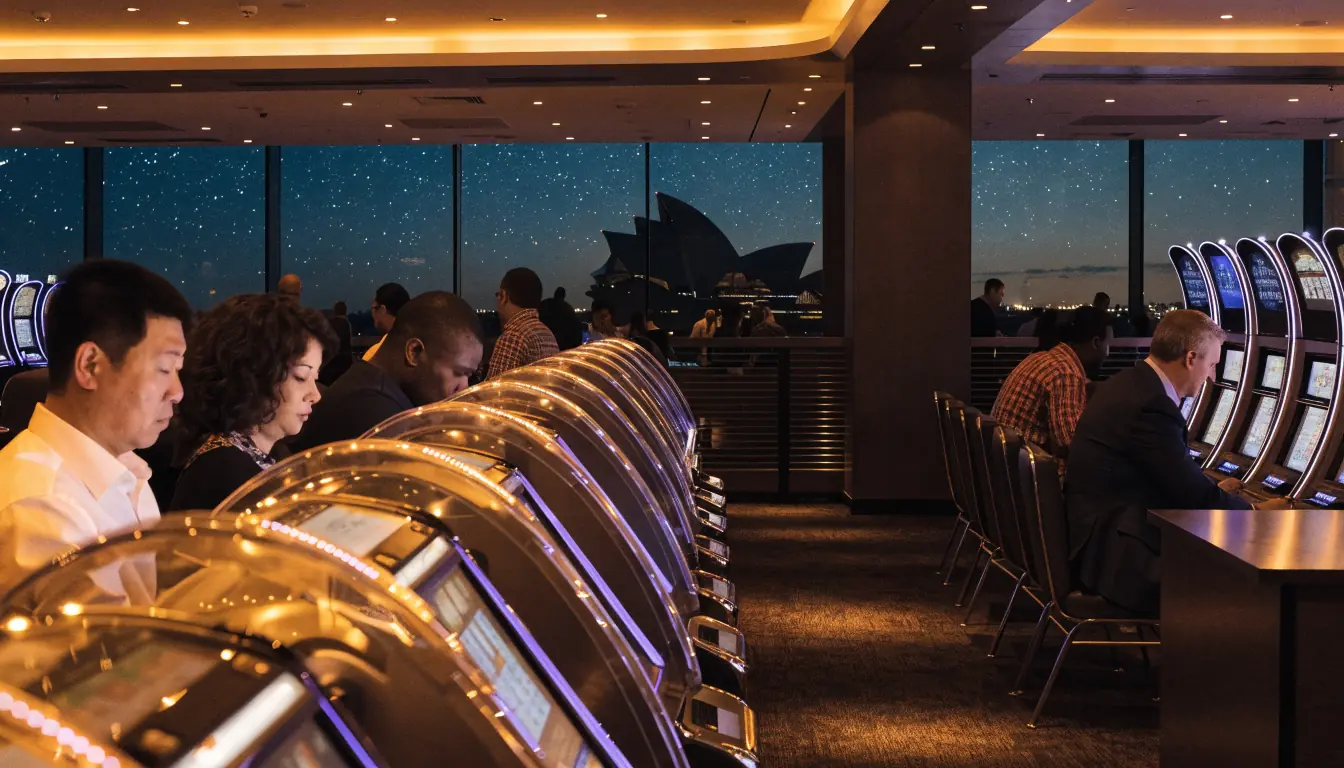
Sports bar and the rest of the floor
A sports bar typically anchors one end of a gaming floor of this kind, screens running fixtures while table games continue a short walk away. It functions as its own space rather than an extension of the poker room — a place to watch a race or a match with a drink in hand, distinct from both the tournament tables and the dining areas covered elsewhere. Whether it’s currently open follows the same logic as the rest of the floor: trading hours are set by the venue and worth confirming directly rather than assuming they mirror the hotel or the restaurants around it.
A note on how any of this gets judged
Independent scoring of gambling venues and operators — the kind used to rank product offerings in this space — typically weighs bonus transparency, cashout speed, customer care and licensing integrity. None of that applies to walking onto a physical gaming floor, where there’s no bonus to disclose and no withdrawal to time. It’s a reminder that a casino floor and an online gambling product are governed by entirely different rules, and conflating the two is where a lot of confusion about "checking" a venue tends to start.
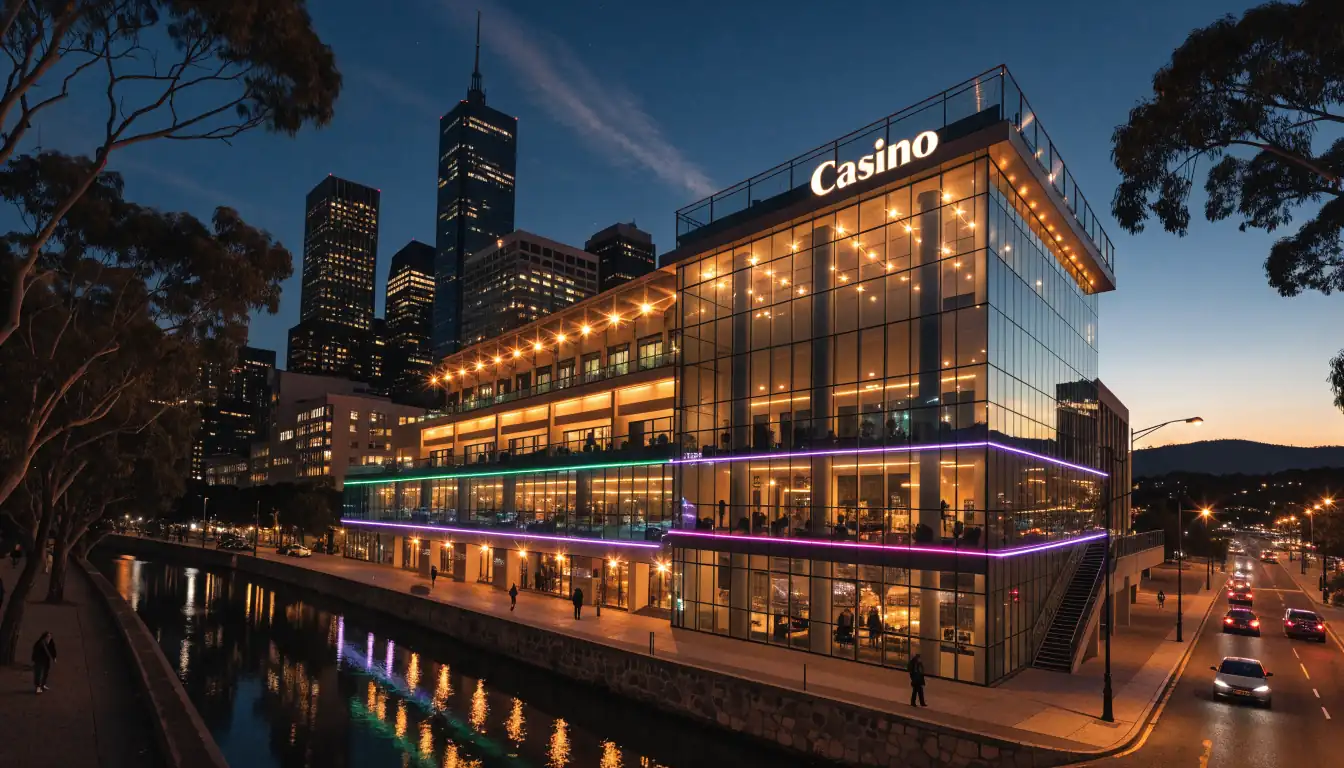
Dining Experience: Buffets and Breakfast Offerings
A casino resort in Brisbane runs on the assumption that a gambler needs feeding at hours no ordinary restaurant would keep, which is why the buffet exists in the first place — not as a culinary statement but as a logistics solution. It is the room where shift workers coming off the gaming floor at dawn sit next to families who wandered in for something that looked like a normal breakfast and turned out to be a production line of it: eggs made to order, pastries replenished on schedule, the whole apparatus designed to move people through quickly and send them back to whatever brought them there.
The breakfast service is the more interesting half of this arrangement, because it is the one meal at a casino resort aimed squarely at people who have no intention of gambling that day. Hotel guests, conference attendees, locals who treat the buffet as a Sunday habit — the pricing and format are built for volume, not for lingering. What separates it from the property’s sit-down restaurants is not just the format but the intent: a buffet promises consistency and speed, an à la carte kitchen promises a dish made specifically for the table that ordered it.
Rewards and Recognition
Loyalty programmes at Australian casinos generally attach dining credit to gaming activity, and Brisbane’s resort is no exception in spirit, though the mechanics of any given tier or offer shift often enough that quoting specifics here would date badly. What’s worth noting instead is the logic behind it: comping meals is cheaper than comping cash, and a free breakfast buys goodwill at a fraction of what a matching cash bonus would cost the house. It’s a trick as old as casino floors themselves, dressed up in a loyalty card.
None of this is taxed on the player’s side — winnings in Australia aren’t subject to income tax, buffet credit or otherwise — which is a small mercy compared to how casino revenue is treated at the state level, where gambling has historically supplied a meaningful share of state and territory tax income. The breakfast spread a guest eats after a good night at the tables is, in that sense, a rounding error in a much larger fiscal relationship between the venue and the government that licenses it.
Reading the Rankings
Any list ranking casino dining, hotel packages, or the resort experience broadly should be read with a small dose of scepticism about how fresh it actually is. Ranking systems built on weighted scoring — the kind used to compare venues and offers across the industry — are typically recalculated on a weekly basis, which means a description accurate this month may already be stale by the time it’s read. Treat published rankings as a snapshot, not a permanent verdict.
Employment Behind the Counter
The buffet and breakfast operation is also, unglamorously, one of the larger employers on the property. Casino resorts of this scale run kitchens, front-of-house teams, and hospitality shifts around the clock, which means dining roles turn over regularly and postings for kitchen staff, servers, and buffet attendants appear alongside gaming-floor positions on the resort’s careers page. It’s worth remembering that the buffet a guest walks through at 7am is staffed by people working a schedule built entirely around when gamblers, not diners, are awake.
What the buffet does not attempt to be is a destination in its own right. It performs a function — feed people fast, feed them often, feed them at hours restaurants keep closed — and does not compete with the resort’s specialty kitchens for a guest’s attention. The two operate on entirely different clocks.
Parking and Accessibility
A casino in Brisbane lives or dies, in the public imagination, by how easily a car can get near it. Everything else — the tables, the towers, the buffet queue — comes second to the question of where to leave the vehicle, and for how long, and whether the machine at the boom gate will demand something unreasonable on the way out.
The property sits close enough to the central business district that public transport is a genuine alternative rather than a courtesy mention. Trains, buses and the river ferries converge nearby, which matters more than it sounds: a venue built around games of chance benefits from patrons who don’t have to think about a car at all. No parking dispute, no circling for a bay, no argument with a machine.
For those who do drive, on-site parking exists in the multi-level structure attached to the complex, distinct in both tariff and temperament from the parking arrangements tied to the hotel tower. Hotel guests generally deal with their own allocation, often bundled into the room rate or handled through valet at the entrance — a separate transaction, a separate queue, and a separate set of assumptions about who’s paying for what. Someone staying overnight and someone popping in for a session on the gaming floor are, from the car park’s point of view, two different customers, and the facility treats them that way.
What differs from hotel parking
- Duration logic. Casino-floor parking assumes shorter, transactional visits; hotel parking assumes a stay measured in nights, not hours.
- Entry point. Guests checking in are typically funnelled toward valet or a dedicated hotel entrance, while day visitors use the general public structure.
- Validation. Time spent gambling or dining can sometimes offset the parking charge at the public structure — a courtesy that has nothing to do with the hotel’s own arrangement, which is billed separately regardless of how long anyone spends at a table.
None of this is exotic by Australian standards. Multi-level structures attached to entertainment precincts across the country run on the same basic principle: charge for convenience, discount for spending, keep the two audiences — overnight guests and passing visitors — administratively apart even when they’re standing in the same lobby.
Accessibility beyond parking is the less glamorous but more telling measure of how a venue treats the people who use it. Step-free access, lifts to the gaming floors, accessible restrooms and staff briefed on assisting patrons with mobility needs are the baseline expectation for a complex of this scale, and Brisbane’s casino meets it without making a production of it — no signage boasting about inclusiveness, just ramps where ramps are needed.
It’s worth remembering, while weighing up how convenient it all sounds, that no amount of validated parking changes what happens once a person is inside. The industry backing these venues is substantial — Australia’s largest superannuation funds alone held stakes worth billions in listed igaming companies as of mid-2026, a detail that says more about how normalised gambling capital has become than any brochure ever could. A ranking formula built for online operators weighs things like payout reliability and support responsiveness; a car park weighs something much simpler, which is whether a person can get in, spend what they intended, and get out again without the logistics souring the evening.
That, in the end, is the whole pitch of good parking: it disappears. Nobody remembers a car park that worked.
Nearby Lodging and Alternative Accommodation
Not everyone who comes to play wants to sleep where they gambled, and Brisbane’s inner city has grown around that preference rather than against it. Within easy reach of the gaming floor sits a spread of independent hotels and serviced apartments, none of them affiliated with the casino, all of them competing for the same overflow of interstate visitors and weekend arrivals. The result is a lodging market that looks nothing like a monopoly, which is precisely what keeps it honest on price and service.
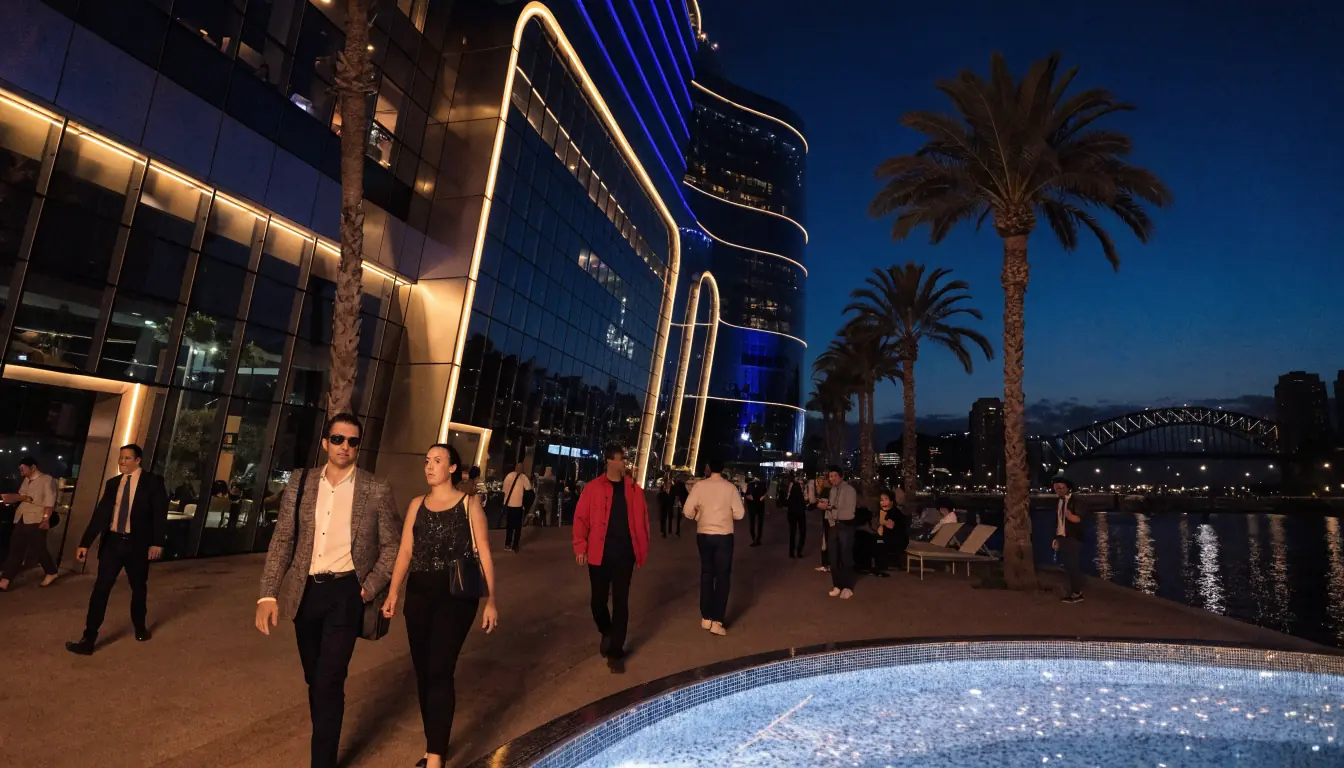
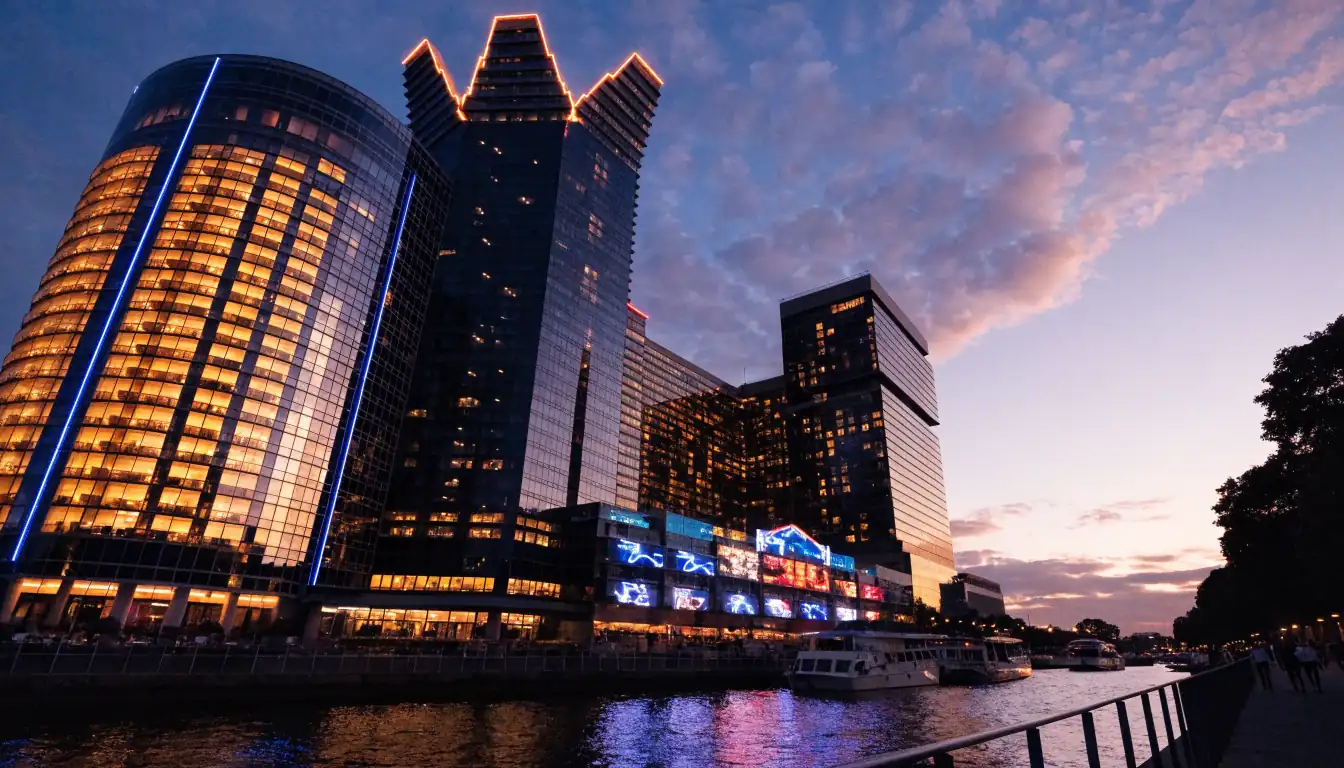
Serviced apartment operators tend to cluster along the river, trading a shorter walk for a premium that fluctuates with convention season and school holidays. Traditional hotel chains fill the gap further out, usually a short rideshare or a walk through the CBD, and they compete less on proximity than on the kind of amenities a casino floor doesn’t bother with — laundry facilities, kitchenettes, extended stay rates. Budget lodging exists too, mostly a few blocks removed, aimed at the visitor who came for a weekend of tables and doesn’t much care what the room looks like at 3am.
What sits outside the casino’s control
None of these properties answer to the casino’s booking desk or its loyalty programme, and that separation matters more than it first appears. Rates move independently. Availability during major events isn’t tied to gaming activity. A guest can walk into any of these buildings without ever registering a players card, which is worth noting for anyone who’d rather keep their accommodation and their entertainment on separate ledgers entirely.
This is also where the legal picture around gambling in Australia deserves a plain mention, since it has nothing to do with where a person sleeps but everything to do with what they might be tempted to do from the room. The Interactive Gambling Act 1997 is generally cited as the law prohibiting the provision of online casino games to Australian residents — though some sources instead point to a 2001 version of the same act, and the discrepancy isn’t resolved cleanly in public commentary. Either way, the practical outcome is identical: no hotel room in Brisbane, however well-appointed, sits inside a jurisdiction where a domestically licensed online casino exists. The gaming happens downstairs, on the floor, under a physical licence — not through a laptop on the nightstand.
Choosing between proximity and independence
The trade-off for nearby lodging is straightforward. Staying inside the casino’s own property buys walking distance and integration with its loyalty tiers, a subject covered elsewhere. Staying outside it buys negotiating power, more room configurations, and the option to leave the gaming precinct entirely without checking out. Families and longer-stay visitors tend to favour the apartment-style options further from the entrance, where a kitchen and a lounge area do more for a week-long visit than a room built around a short, high-intensity stay. Solo travellers chasing weekend poker tend to accept the premium and take whatever’s closest.
None of these bookings run through the casino’s own systems, and no external hotel review carries the same verification standard applied to the gaming operator itself, where reviewers deposit real money and test withdrawals before publishing a verdict. A hotel stay can be judged on comfort. A casino’s reliability has to be judged on whether the money moves both ways.
Contact Points: Bars, Baccarat, Events and Customer Service
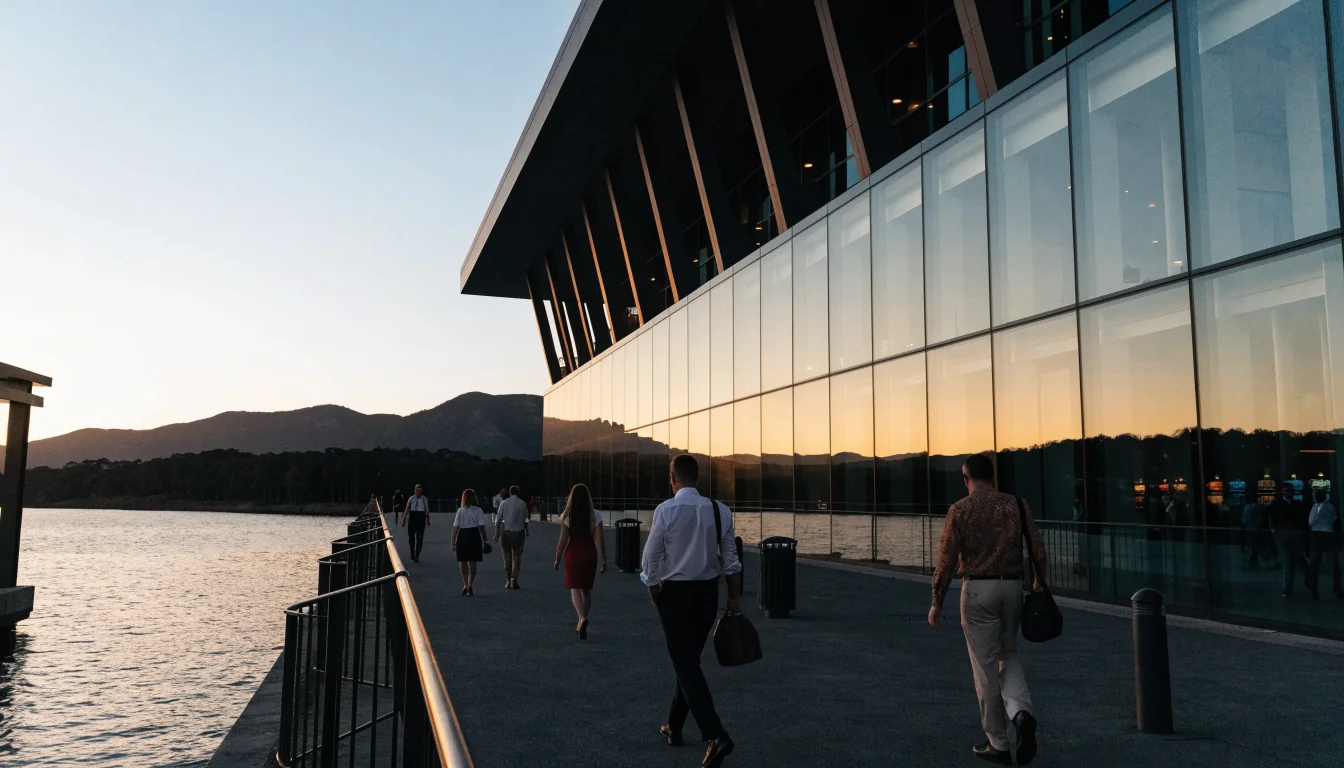
A casino floor is, in the end, a collection of rooms designed to keep a person from checking the time. Brisbane’s version arranges bars, a baccarat lounge and a concert venue around that same principle, each with its own mood and its own reason for existing separately from the gaming tables next door.
The bars scattered through the property do the ordinary work of bars anywhere — a drink between hands of blackjack, a quieter corner for people who came mostly to talk. What distinguishes a casino bar from a hotel one is proximity: it sits close enough to the floor that nobody has to leave a table for long, which is either convenience or a mild form of architecture doing psychological work, depending on how charitable the visitor feels.
The baccarat lounge is a different register entirely. Baccarat carries a reputation — deserved or inherited, it’s hard to say — as the game of quieter money and higher stakes, and the room built for it tends to reflect that: separated from the general noise, less about spectacle than about a small number of people playing a game whose rules a card table has hosted for a very long time. It is not the place to look for the pokies or the general table-game bustle described elsewhere on the floor; it is its own enclosure, and treated as one.
The concert venue is the loudest departure from the gambling premise. Live entertainment attached to a casino is a familiar pairing worldwide — the theory being that people who came for a show might stay for a hand of cards, or the reverse — and Brisbane’s version books acts across a range of genres rather than committing to one. It functions as a standalone destination in its own right, with its own schedule, separate from anything happening on the gaming floor.
Getting in touch
Contact channels for the property typically run through a general enquiries line and email correspondence, covering bookings, general questions and event information. What’s worth stating plainly: no single national body sits over all of this. Gambling regulation in Australia is split between state and territory authorities and federal law, with no one overarching statute tying it together. The Australian Communications and Media Authority enforces the Interactive Gambling Act 2001 at the federal level — the law aimed at minimising gambling harm — while the Northern Territory Racing Commission has become, almost by default, the country’s most consequential regulator for online betting, since it licenses the bulk of the national bookmakers that operate under its lower tax regime. None of that machinery governs a phone call to a venue’s front desk, but it explains why "who regulates this" rarely has a one-line answer in Australia.
Online sports betting, for context, is legal here under state and territory licensing — a different animal altogether from anything on a casino gaming floor, and worth keeping separate in memory when the subject of contact and regulation comes up.
What these venues are not
None of this overlaps with parking, which is a logistical matter of getting a car onto the property, or with the spa, which serves a wellness function entirely apart from a night at the baccarat table. Bars, baccarat and concerts belong to the entertainment layer of the casino; enquiries and customer service sit alongside them as the practical means of reaching any of it. Distinct rooms, distinct purposes.
Operating Hours, Development and Upcoming Events
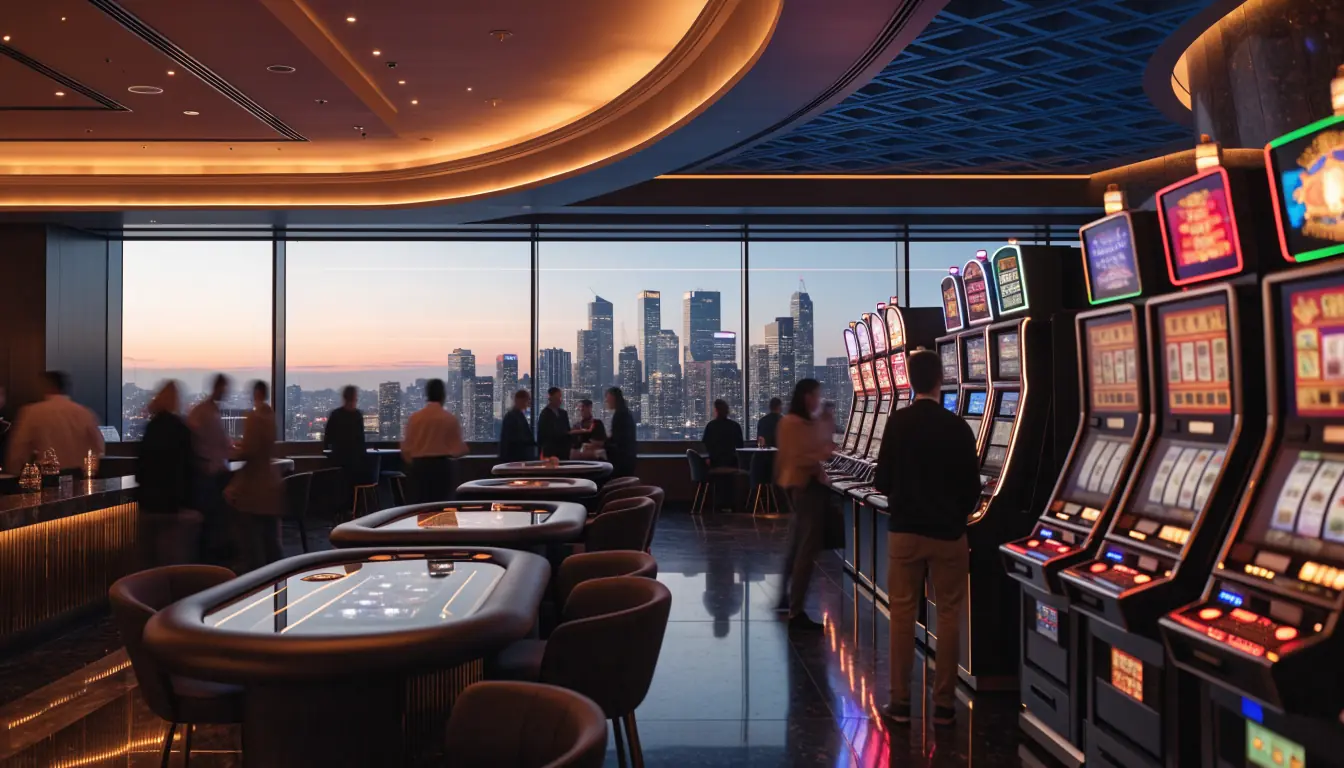
Questions about whether a particular Brisbane casino property is reopening or trading under new hours tend to spike whenever renovation work is visible from the street. Precinct-wide redevelopment has been a fact of life around the site for years, and hoarding, scaffolding and phased handovers of new wings have a way of convincing passers-by that the whole building must be closed. It usually isn’t. Staged construction is standard practice for a project of this size — one tower opens while another is still being fitted out — and the gaming floor, dining outlets and hotel rooms covered elsewhere in this guide have generally kept operating through each phase, with individual venues shifting hours around specific building milestones rather than shutting entirely.
None of that construction activity has anything to do with what can legally be offered online. It’s worth saying plainly, because the two get conflated more often than they should: a physical casino redeveloping its Brisbane riverfront site is a matter of building permits and hospitality licensing, not of the Interactive Gambling Act 2001, which governs a separate question entirely — whether real-money casino games can be offered over the internet to Australian residents. They can’t. No operator holds a domestic licence to do so, and none is being issued one regardless of how many towers get built on land. Nothing about walking into a physical venue changes that federal position, and nothing about the federal position affects the physical venue’s trading hours.
What to expect around scheduling
Exact opening times shift with the season and with whichever part of the complex has just reopened after works, so a specific hour printed here would be out of date within a 2026 news cycle. What’s stable is the pattern: gaming areas run long hours most days, food and beverage outlets keep their own separate schedules tied to service periods rather than the casino floor, and any temporary closures tend to be announced in advance rather than sprung on visitors — a courtesy that matters more during an active building project than at a finished venue.
Entertainment and staffing
The complex’s calendar of live entertainment, comedy nights and seasonal programming is coordinated separately from table games and slots — sometimes called pokies locally, though that machine floor sits outside this section’s scope. Event listings change often enough that checking the venue’s own schedule closer to a visit is more reliable than any fixed date printed in a general guide. The same goes for employment: a development project of this scale creates hiring waves in hospitality, security, construction and gaming operations at different points, and those opportunities are advertised directly by the operator and its contractors rather than through any centralised listing.
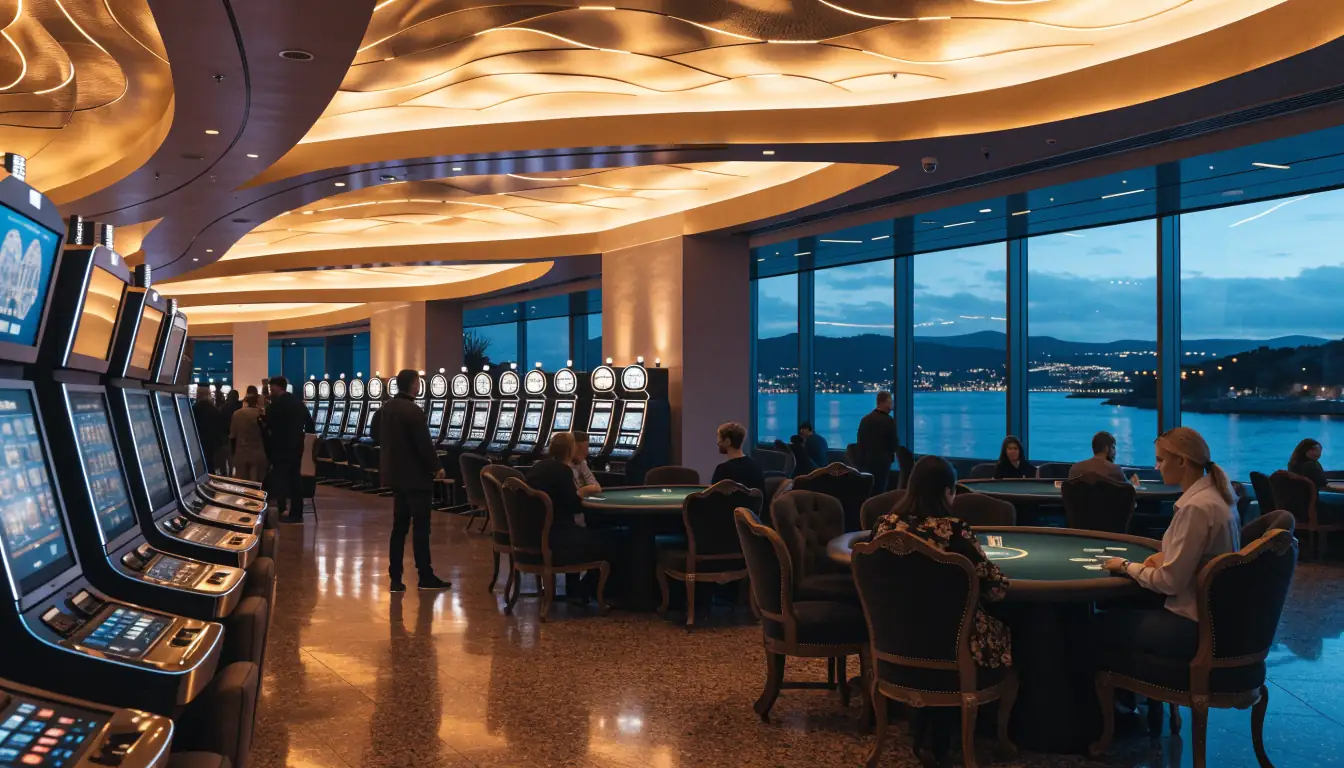
What none of it touches — construction, entertainment bookings, staffing drives — is the separate legal reality sitting underneath all Australian gambling coverage. Individual players who look at offshore-licensed online casinos aren’t committing an offence by doing so; the law is written to target the operators offering the service, not the person clicking play. A distinction easy to lose. Worth keeping straight.
Wellness and Spa Facilities
Somewhere below the noise of the gaming floor, past the escalators and the smell of carpet cleaner fighting cigarette smoke that officially isn’t allowed indoors anymore, there’s a day spa that would rather you forgot the pokies existed for an hour. It’s an odd pairing on paper: a wellness retreat bolted onto a building built to keep people awake and spending. In practice, the split works because the two zones share almost nothing — different lighting, different soundtrack, different pace of time.
The spa operates on its own booking system, separate from hotel check-in and separate from any loyalty tracking tied to table play. Treatments run the usual circuit — massage, facials, body therapies — packaged for couples or solo visits, and the appeal isn’t novelty so much as convenience: it’s inside the same complex as the rooms, so there’s no taxi between a night at the tables and a morning trying to undo it.
What the spa is not
It’s worth being direct about the boundary, since the marketing sometimes blurs it. The spa doesn’t run on casino credit, doesn’t tie into any pokies rewards tier, and treatments aren’t billed as part of a gambling promotion. That’s a sensible line to keep, especially given the legal reality around gambling products in Australia — online casino gaming remains illegal to offer domestically, and there’s no path to a local licence for it. A physical, regulated wellness service sitting next to a physical, regulated casino floor is a different animal entirely from anything offered over the internet, and nothing about the spa experience should be read as endorsing or resembling online play. Live in-play betting by phone is legal, incidentally, which has nothing to do with a hot stone massage but says something about how selectively Australian gambling law draws its lines — permissive here, absolute there, rarely where you’d guess.
Booking and packages
Treatment menus change seasonally, and package pricing is handled directly by the spa desk rather than published as a fixed rate anywhere reliable enough to quote. What’s consistent is the format: standalone appointments for walk-ins, and bundled packages aimed at hotel guests who want the massage-and-room combination without separate reservations. Staff can usually accommodate same-day bookings outside peak periods, though weekends tend to fill the treatment rooms faster than weekdays.
There’s no dress code carried over from the gaming floor — robes and slippers are standard spa attire, and nobody’s checking for the smart-casual rules that apply a few floors up. That alone tells you how deliberately the two experiences are kept apart. One is designed to hold attention; the other is designed to let it go.
A‑la‑Carte Restaurants and Specialty Eateries
A buffet feeds the crowd; an à la carte kitchen has to earn its keep one table at a time. That distinction is the whole point of the sit-down restaurants scattered through the property, each pitched at a different appetite and a different idea of an evening out. Where the buffet trades on volume and choice, these rooms trade on a chef’s name, a wine list, a table booked in advance rather than a queue.
The spread of cuisines is broad enough to cover most occasions without repeating itself. Steakhouse-style grills sit alongside Asian-influenced menus, and there’s usually a seafood-forward option for anyone treating the visit as a special dinner rather than a quick meal between hands of blackjack. Portions and pacing are built for lingering — courses arrive spaced out, service is attentive rather than brisk, and the pricing reflects a proper dining experience rather than a casual top-up.
What sets them apart from the buffet
- Booking, not queuing. A la carte rooms generally take reservations, which matters on weekends when the buffet lines stretch out the door.
- Fixed menus, not stations. No wandering between counters — a server takes the order and the kitchen plates it.
- Higher price point. These are the venues for marking an occasion, not refuelling before a session on the floor.
- Wine and cocktail pairing. Drink lists are curated per restaurant rather than the general bar service found elsewhere on site.
None of this displaces the buffet — it sits beside it as the other half of the dining offer, aimed at guests who want a slower, more composed meal rather than a fast, generous one. Someone staying at the on-site hotel might do breakfast at the buffet and dinner at one of the specialty rooms without ever leaving the building, which is presumably the intended effect.
It’s worth noting, in passing, that none of this is available to browse from a laptop at home. Australia’s gambling framework draws a hard line between a physical casino floor — restaurants, bars, tables and all — and anything resembling an online casino offered to residents of the country. The dining rooms are real, bookable and taxed like any restaurant; an online equivalent of the gaming floor sitting behind them is not something the law permits at all, regardless of how the venue markets itself.
The restaurants aren’t reviewed here as an incentive to gamble, and they shouldn’t be treated as one — a good steak doesn’t change the odds at a table game, and it’s not meant to. They’re simply part of what the building offers to people who are already there, whether for a stay, a show, or a night at the tables. Anyone under 18 shouldn’t be in the gaming areas at all; the restaurants sit within the same licensed premises, and the same age restriction applies to the building as a whole, not just the machines and tables inside it.

Food Courts and Outdoor Pool Area
Not everyone at a casino wants a tasting menu. Some want a quick bowl of noodles between hands at the tables, and Brisbane’s casino food court exists for exactly that gap — fast, casual, no reservation required, a deliberate counterweight to the linen-tablecloth restaurants a floor away. The offering leans on familiar formats: Asian bowls, burgers, coffee and pastry counters, the sort of stalls built for turnover rather than lingering. It’s the least remarkable part of the complex, and that’s rather the point.
The outdoor pool sits apart from all of it, gaming and dining alike. It belongs to the hotel guests rather than the gaming floor, a stretch of water and deck chairs that has nothing to do with pokies or blackjack tables inside. Whether that separation is generous or simply practical is hard to say — a pool doesn’t generate turnover the way a card room does, and its presence reads less as indulgence than as something a hotel of this scale is expected to have.
Australians collectively staked $244.3 billion in 2022–23 and lost $31.5 billion of it. None of that money moves through a food court or a sun lounger. It moves inside, under lights, on felt. The pool and the noodle bar are the parts of the building where nothing is being wagered at all — a curious kind of relief, in a place built almost entirely around the opposite idea.
Are crypto and online casinos legal in Australia in 2026?
No, it is illegal to offer online casino gambling domestically and no licences are issued for it under the Interactive Gambling Act 2001. However, it is not illegal for individual Australians to play at offshore-licensed online casinos, as the law targets operators rather than players.
How can I verify if a gambling operator is legal in Australia?
There is no single overarching gambling authority; regulation is split between federal and state/territory levels. The Australian Communications and Media Authority (ACMA) enforces the Interactive Gambling Act, while the Northern Territory Racing Commission (NTRC) licenses most national online bookmakers.
Where can I complain about an online casino in Australia?
Complaints regarding illegal online gambling fall under the federal Interactive Gambling Act 2001 and are enforced by the Australian Communications and Media Authority (ACMA). For licensed bookmakers, regulatory issues are handled by the respective state or territory licensing authority, such as the Northern Territory Racing Commission.
What security features must licensed casinos have?
Each licensed casino listing is evaluated and scored on licensing integrity, bonus transparency, cashout speed, and customer care. Reviewers physically test these standards by depositing at least A$300 at each venue and executing withdrawals to verify payout reliability.
What is the minimum age to access casino offers in Australia?
The minimum age to access casino offers and gaming areas is 18 years. This applies regardless of who books the accommodation or pays for the room at on-site casino hotels.
Created by the ”Pokies Payouts Guide” editorial team.