
Best Paying Online Pokies in Australia: 2026 Guide

- Australian Casino Landscape: Regulations and Player Protections
- Understanding Pokies Paytables and Crypto Payment Benefits
- Slot Games in Australia: Legal Status and Gameplay Features
- Slot Machines vs. Online Slots: How Technology Shapes Payouts
- Popular Online Casino Game Types for Australian Players
- What Australian Players Need to Know: Age, Identity, and Responsible Play
- Real‑Money Online Slots: Fast Deposits, Instant Withdrawals, and Payout Potential
Australian Casino Landscape: Regulations and Player Protections
The Australian gambling market occupies an unusual position in the developed world. It is a country where the local pub has a row of pokies humming near the entrance, where sports betting is woven into the national conversation, and where the parliament has spent two decades building one of the most restrictive online gambling regimes anywhere. The Interactive Gambling Act did not emerge in a vacuum. It arrived in the early days of widespread internet access, when legislators decided that the easiest way to reduce gambling harm was to stop the online casino industry at the border. Two decades on, the border is still there, and the argument about what it protects has not settled.
The law at the heart of this framework is the Interactive Gambling Act 2001. It is the primary Commonwealth statute regulating online gambling in Australia, and it reaches into every corner of the market. Under this law, it is illegal to offer online casino gambling in Australia and impossible to obtain a domestic licence to operate one. That means there are no locally licensed real‑money online casinos available to Australian players. The games most people associate with casinos — pokies, blackjack, roulette, poker — are all prohibited under the Act when offered online. The ACMA, the Australian Communications and Media Authority, enforces these prohibitions and has the power to issue blocking orders against offshore operators that target Australian residents.
If you’re chasing strong payout potential from online pokies in 2026, it pays to check what each casino actually offers before you sign up. Here’s a quick, no-nonsense look at what stands out about each site on this list.
Bonus: 240% up to A$4,100 + 300 free spins WinShark leads with a hefty welcome package, offering a 240% match up to A$4,100 plus 300 free spins for new players chasing a big pokies bankroll.
License: Curacao eGaming (Roby Games Ltd) · Bonus: 100% up to A$750 + 200 free spins Roby Casino operates under a Curacao eGaming license via Roby Games Ltd, backing up its 100% bonus up to A$750 plus 200 free spins with proper regulatory oversight.
License: Curacao Gaming Control Board OGL/2023/176/0095 (Hollycorn N.V.) · Bonus: up to A$11,000 + 300 free spins (code NEO100) Neospin holds a Curacao Gaming Control Board license through Hollycorn N.V. and pairs it with one of the larger bonuses on this list, up to A$11,000 plus 300 free spins via a dedicated code.
License: Curacao OGL/2024/1335/0780 · Bonus: up to A$1,000 + 150 free spins, wager-free · Min. deposit: EUR 20 Vegaz Casino is licensed under Curacao’s OGL framework and offers a wager-free bonus up to A$1,000 plus 150 free spins, with an accessible minimum deposit.
Bonus: up to A$7,500 + 550 free spins across 10 deposits, 50x wagering · Payout speed: crypto under 1 hour, PayID 1-3 business days · Min. deposit: A$20 (A$30 to qualify for the bonus) Ricky Casino spreads a substantial bonus of up to A$7,500 and 550 free spins across ten deposits, and stands out for fast crypto payouts alongside PayID support.
License: Curacao eGaming OGL/2024/923/0383 (Antillephone N.V.) · Bonus: up to A$2,000 + 100 free spins across 2 deposits · Min. deposit: A$30 WinSpirit Casino is licensed by Curacao eGaming through Antillephone N.V. and offers up to A$2,000 plus 100 free spins spread over two deposits, with a modest entry deposit requirement.
License: Curacao Gaming Authority (Jumpman Gaming Ltd) · Bonus: up to A$6,600 + up to 250 free spins across 4 deposits DragonSlots Casino runs under a Curacao Gaming Authority license via Jumpman Gaming Ltd, offering a generous multi-deposit bonus of up to A$6,600 plus up to 250 free spins.
License: Tobique Gaming Commission · Bonus: up to A$8,000 + 400 free spins across 4 deposits · Payout speed: crypto ~10-15 minutes, fiat 1-5 days · Min. deposit: A$30 SkyCrown is licensed by the Tobique Gaming Commission and combines a sizeable bonus of up to A$8,000 plus 400 free spins with notably quick crypto payout times.
License: Curacao · Bonus: 100% up to A$500 + 200 free spins, 10x wagering · Payout speed: crypto 30-60 minutes, fiat 1-5 days · Min. deposit: A$10 Wild Tokyo holds a Curacao license and keeps things approachable with a low minimum deposit, a 100% bonus up to A$500 plus 200 free spins, and fast crypto withdrawals.
License: Curacao Gaming Control Board OGL/2023/176/0095 (Hollycorn N.V.) · Bonus: up to A$1,500 + 200 free spins across 3 deposits LuckyVibe is licensed by the Curacao Gaming Control Board through Hollycorn N.V., offering up to A$1,500 plus 200 free spins split across three deposits.
One complication in the historical record concerns the origins of the prohibition. Some official summaries of the legislation trace the ban on online casino games to an Interactive Gambling Act of 1997; others point to the 2001 Act as the true legal foundation. The discrepancy matters mainly to lawyers and compliance teams. For a lay reader it is a reminder that the rules have been tightened repeatedly, each time with a new layer of legislative text added on top of the old.
The Strictest Regime in the Developed World
Australia’s approach sits at the far end of the spectrum among developed countries. The government’s stated aim has always been harm minimisation. The IGA was not written to satisfy the gambling industry; it was written to protect the public by limiting the kinds of products that can be offered over the internet. In practice, this means the only online gambling products that can be offered locally are sports betting, racing, and lotteries. Everything else that resembles a traditional casino is off limits.
The strictness of the regime shapes the vocabulary of the market. When a player searches for a best paying online casino in Australia, they are not looking at a domestic market. They are looking at an offshore one. No Australian‑licensed site can offer real‑money pokies, blackjack, or roulette. That is not a nuance; it is a structural fact that determines which brands can legally advertise, which payment options exist, and which regulator can be contacted when something goes wrong.

What the Law Allows and What It Forbids
The IGA draws a sharp line between permitted and prohibited activities. On the permitted side sits online sports betting under state or territory licences, along with online lotteries and keno. On the prohibited side sit online casino‑style games and in‑play betting over the internet. In‑play betting by phone remains legal, which creates the curious situation where a punter may not place a live bet on a website but may do so by calling the operator on the phone. The distinction is arbitrary in everyday life but legally precise.
The list of prohibited offerings is comprehensive: online pokies, online poker, online blackjack, online roulette, and any other game that resembles a casino table game. The law targets providers and operators, not the players. There is no criminal penalty for an individual Australian who logs in to an offshore crypto casino and plays. The prohibition binds the operator; the player is left in a legal grey zone that the authorities have so far chosen not to police.
How the 2023 and 2024 Amendments Changed the Picture
The most recent legislative activity concerns payments. In 2023, amendments to the Interactive Gambling Act sought to restrict operators from accepting digital currency payments from Australians. According to one industry overview, this was part of a broader push to close loopholes that allowed offshore sites to process crypto deposits for local customers. The same source reports that in June 2024 the Act was amended again to prohibit the use of cryptocurrencies and credit cards on Australian licensed gambling sites. Because these changes are recent and derive from a single source, they should be treated as an indication of regulatory direction rather than a settled market norm.
Payment Restrictions
The 2023‑2024 amendments removed card and crypto deposit options for licensed Australian operators, meaning Australian players must rely on offshore sites to access real‑money online casino games.
These amendments matter because they remove the two most popular deposit methods from the regulated toolkit. When an Australian goes looking for a best paying online casino real money experience, the methods available are no longer the same as they were a few years ago. Card‑led deposits have been pushed out of the licensed space, and digital currencies, while still used offshore, face restrictions when dealing with any locally regulated operator. The result is a market where payment channels narrow even as the number of offshore sites grows.
Offshore Operators and the ACMA’s Grip
Because there is no domestic online casino licence, Australians who wish to play pokies online must turn to offshore operators. Many of these are licensed in jurisdictions such as Curacao or Malta and accept players from Australia despite the IGA’s prohibition. The ACMA can and does issue blocking orders against unlicensed offshore operators that actively offer casino services to Australian residents, but enforcement is selective and the volume of offshore sites makes complete suppression unrealistic.
The practical consequence is that the conversation about best paying casinos in Australia happens in an offshore context. The regulator’s website will not list a safe, locally licensed casino for pokies because such a site does not exist. Instead, players rely on outdated or informal lists of offshore brands. An industry overview published earlier in the year mentioned names such as GoldEx, King Johnnie, and Stellar Spins as popular with Australian crypto players, though the overview itself is a single source and the market shifts quickly. That list illustrates the fragility of “recommendations” in a market where the regulator’s focus is on prohibition rather than consumer guidance.
Player Protections in a Market Without Legal Online Casinos
Player protection under Australian law is designed around the products that are legal: sports betting, racing, and lotteries. For those products, local operators must display responsible‑gambling messaging, verify identity before allowing withdrawals, and keep licence details visible in the footer. These rules do not extend to offshore casinos that serve Australians, and the IGA does not require offshore sites to embed Australian‑specific protections.
This creates a paradox. The country has some of the strictest online gambling laws in the developed world, yet the protections apply mainly to the products that are not the most harmful. The games associated with casinos — pokies, table games — are banned domestically, so the regulator’s protections are concentrated on legal betting and lotteries. When a reader looks for the best paying online casino games, the protections they actually receive depend on the offshore site’s own policies rather than any Australian mandate.

What protections exist for Australian players are therefore mostly exhortations or prohibitions. They are told not to gamble at unlicensed sites, warned about the risks of offshore operators, and reminded that no local consumer guarantee applies. The ACMA publishes lists of blocked domains, and internet service providers are required to implement the blocks, but determined players can still find workarounds. The protective apparatus is robust in theory and porous in practice.
The Effect on the Search for the Best Payouts
The regulatory landscape shapes how players talk about payouts. A “best paying” casino in the Australian context is not a locally licensed site with audited payout percentages; it is an offshore casino that has built a reputation for timely withdrawals and transparent terms. Because the ACMA does not audit offshore casinos, and because there is no local disclosure regime for return‑to‑player data, players rely on third‑party reviews and community reports. These sources vary in quality, and the numbers they quote are rarely verified by any authority.
This is the context in which the phrase “best paying online casino Australia” circulates. It points to a market that official Australia refuses to regulate, yet which serves Australian players every day. The focus shifts away from the domestic legal framework and toward offshore licensing, payment flexibility, and crypto‑based banking. The result is a consumer conversation that occurs entirely outside the bounds of the IGA, driven by players who care more about how quickly a site pays out than about which jurisdiction has granted the licence.
A Market Defined by Prohibition
Taken together, the IGA, the ACMA’s enforcement powers, and the recent amendments produce a market in which online casino gambling is forbidden locally, tolerated for individuals who play offshore, and subject to periodic crackdowns on payments and advertising. This framework shapes every discussion of the best paying casino. It means that the sites that come up in Australian conversations are not Australian in any legal sense; they are offshore sites that accept Australian players while operating under a different licence. Regulators call the arrangement a loophole; players call it the only option available.

The introduction of the IGA and its later amendments tells a story about the country itself: a nation comfortable with gambling in physical venues, yet deeply wary of the channels through which gambling reaches the home. The law’s focus on harm minimisation is genuine, but it has pushed the online casino market into the offshore realm, where harm minimisation is left to the discretion of foreign jurisdictions. That is the trade‑off Australia has made, and it is the context any discussion of payout‑focused casinos must acknowledge.
Understanding Pokies Paytables and Crypto Payment Benefits
Where the money hides. That’s the question the lobby never answers, because the lobby is built to be looked at, not read. A pokie decides how much of every wager it returns long before anyone presses a button — the decision lives in the paytable, a small document most players never open and the operator hopes they won’t. It’s not on the thumbnail. It’s not on the banner. It’s behind an icon shaped like the letter i, which could hardly be more discreet if it tried. Learning to read that document is what separates choosing a game from merely being shown one. The best paying online pokies Australia has to offer in 2026 aren’t found by scrolling for the shiniest tile; they’re found by reading what the machine declares about itself.
What a paytable actually declares
Strip away the artwork and a pokie is a set of promises. The paytable states them plainly enough: which symbols appear, what each combination returns relative to the stake, whether the game runs on fixed lines or ways-to-win, how wilds and scatters behave, and which features interrupt the base game. Two titles can sit side by side in identical livery and treat the same wager very differently, simply because one spreads its returns evenly across ordinary spins while the other hoards nearly everything behind a feature that may not surface for a long session. The artwork won’t tell you which is which. The paytable will, if you care to look.
It also describes the shape of the ride. A game that concentrates value in rare combinations pays dramatically and then goes silent; one that spreads the same value across common combinations pays gently and often. The long-run return can be identical while the evening feels completely different — one player leaves with a story, the other with a slow leak. Neither temperament is wrong. Choosing between them deliberately, rather than discovering the preference mid-session, is most of what "best paying" means in practice. The phrase belongs to the paytable, not to the lobby.
There is one figure, though, that matters above the others, and it’s the one the artwork works hardest to keep out of sight. When people hunt for the best paying pokies online, the return-to-player percentage is the number they’re after. And here’s the awkward thing: for any individual title, that figure frequently isn’t publicly verified in the Australian context, because the offshore sites hosting the games publish it inconsistently and sometimes not at all. The honest answer, more often than the industry would like, is that independent confirmation of a specific game’s return simply isn’t available. A prudent approach treats the RTP as a comparative tool — a way of ranking games against one another — rather than a promise of what any given session will return. Over a handful of spins the figure is nearly meaningless; over the long run it’s the only figure worth ranking by. Best paying, compared honestly. That matters more than best paying, advertised confidently.
Provably fair, and the limits of verification at the counter
There is a second kind of transparency, and it’s exclusive to the crypto side of the market. Reputable crypto casinos use provably fair algorithms that let a player verify randomness through cryptographic hashes published before the spin resolves. That is genuinely different from any checking you could do at a card-based venue — the venue can promise fairness and an auditor can certify it, but a player standing at the cashier cannot test either claim. A hash can be tested after the fact, which is a meaningful distinction in a market that runs largely offshore.
But verification has a limit, and it’s worth naming. The hash verifies randomness; the paytable governs value. A game can be provably random and still return less than its neighbour. Fairness checkable at the counter is a better arrangement than the alternative, and still only half the question — the other half, as ever, is what the paytable declared before the first hash was ever checked.
Why the payment rail is part of the answer
Australian players predominantly play at offshore venues licensed in jurisdictions such as Curacao or Malta — a consequence of the domestic prohibition laid out in the first section. Once the venue is offshore and the deposit travels by card through a chain of intermediaries, the payment method stops being a footnote and becomes part of the playing experience. Crypto casinos offer a more direct way to move funds than those card-led systems, and the difference shows up at both ends of the session.

Deposits on a blockchain can be confirmed very quickly, often within minutes, with no card processor between the wallet and the venue. Bitcoin remains the most widely accepted option, and many crypto casinos also support Ethereum, Litecoin, USDT, Dogecoin, Solana, Ripple and other altcoins — so the choice of coin is rarely the bottleneck. Withdrawals are where the gap widens. Sources disagree on what to expect: some describe payouts clearing in minutes with low fees, usually instantly or within hours; others point out that the casino’s own approval queue sits ahead of the blockchain’s clock, and that queue can delay the whole thing. Both descriptions are honest. The first describes what the technology permits; the second describes the practices of a particular operator. A venue’s payout policy is therefore worth reading as carefully as its paytable.
A few platforms have gone further and issued native tokens that carry staking rewards and governance rights — according to one industry observer, rather than as established market practice. Functionally, that turns the payment method into a small stake in the venue itself. Whether that’s a benefit or a complication depends on how one feels about holding the venue’s paper.
The reporting side has moved too. One industry review notes that 2026 brought AML/CTF changes requiring additional reporting across the gambling sector, falling mainly on providers rather than players. For the person at the cashier the practical effect is uncertainty: the anonymity that crypto deposits seem to promise was never guaranteed, and under the newer reporting rules that was true even before the changes — assuming otherwise was one of the common user mistakes, along with sending funds on the wrong blockchain and overlooking network fees.
Quick in, and at the better venues quick out — where the quick part is genuinely useful is at the moment of leaving. The paytables deserve first reading in any case; the faster banking simply makes the reading matter sooner.
Slot Games in Australia: Legal Status and Gameplay Features
Where Slots Stand Under Australian Law
Talking about slot games in Australia inevitably leads back to the Interactive Gambling Act, and that return trip is less a legal formality than a reminder that the country still treats online casino games with the seriousness usually reserved for public health policy. A federal prohibition covers the offer of online casino-style games to Australian residents, and this includes slot games as they appear in offshore digital venues. The ban targets the operators who provide such content rather than the players who choose to open the site. That detail is the quiet hinge on which the whole arrangement swings.
Anybody looking for a domestically licensed slot site will find none, because none can exist under the present framework. Unlike sports wagering, which states and territories happily licence, the digital slot remains outside the gate. The paradox is that sports betting thrives under local authorisation even while in-play wagering remains barred at home; slots, meanwhile, are fenced off entirely. A tidy arrangement in theory, though untidy in practice where offshore platforms step in. These platforms operate beyond Australian jurisdiction, yet they still shape how slot gameplay functions in the everyday life of those who visit them.
Legal certainly has a flavour, but it is not a single taste. Australians can access offshore casinos without breaching the law themselves, yet they are interacting with operators whom the federal government would gladly prosecute if it could. The law won’t stop a curious player, though it makes the terrain uneven. A short pause sits there, almost audible. Players know this, operators know this, policymakers know this.
How Digital Slot Games Work Behind Their Colourful Screens
Slot games reveal a curious double life. On the surface they resemble physical slot machines, with reels, symbols and a payout table, yet under the surface they behave as software, driven by random number engines and digital wallets. That difference shapes how they structure play and settle payments. With online slots the experience begins long before the reels twitch. Deposits may come through crypto rails whose quirks deserve more caution than enthusiasm, since users often stumble over basic details like choosing the wrong blockchain or forgetting that a transfer carries a network fee. Some even assume digital currency bypasses identity checks altogether. It rarely does.
Gameplay itself is built on a straightforward premise: a spin triggers a random sequence that lines up symbols across fixed or variable paylines. What changes is how results are processed behind the curtain. Unlike the mechanical timers inside physical machines, digital slots calculate outcomes in real time through code. A few platforms go even further, handing over control not to a corporate server farm but to decentralized protocols where no single entity holds the strings. This distributed structure changes how results are generated and, in some cases, how payouts are verified, though it rarely changes the visual rhythm that players encounter.
The mechanics are plain yet filled with ritual. A spin. A flash. A result. That’s all there is until the internal algorithms begin their quiet arithmetic, deciding what lands on the reels. The pleasure and the risk sit intertwined, yet they aren’t the point here. The point is that digital play in Australia sits at the junction of federal prohibition and offshore possibility, and the shape of the gameplay reflects that duality.
How Offshore Status Shapes the Play Experience
Most Australians who play slot games online do so through offshore platforms, which introduces both accessibility and ambiguity. These casinos operate outside domestic oversight, meaning any rule, regulation or standard players encounter will come from foreign jurisdictions rather than from an Australian authority. What is or isn’t offered depends on the laws under which the operator claims to be licensed, and even the terminology of the game—pokies, video slots or simply slots—leans on linguistic convention rather than legal taxonomy.
Inside those offshore platforms, gameplay mechanics diverge subtly from what Australians would see in physical venues. Digital wallets make funds move faster, though the quirks of crypto transfers demand attention. Sending tokens across an unintended network is not just inconvenient; it can be irreversible. Overlooking transaction fees remains another classic misstep. And while decentralized setups claim transparency, they also require users to understand how outcomes are validated. The technology’s strangeness holds both promise and hazard.
The game screens are lively, yet everything about a slot—from the flow of funds to validation of spins—depends on systems well beyond Australia’s borders. Short breath, long shadows. There is also a linguistic tick: on global slot platforms, “best paying” often floats around descriptions, but such labels rarely align with any measurable trait verified by Australian regulators. They are more marketing patter than legal classification. The phrase remains part of the user’s vocabulary, though the meaning often dissolves into whatever the offshore operator asserts.
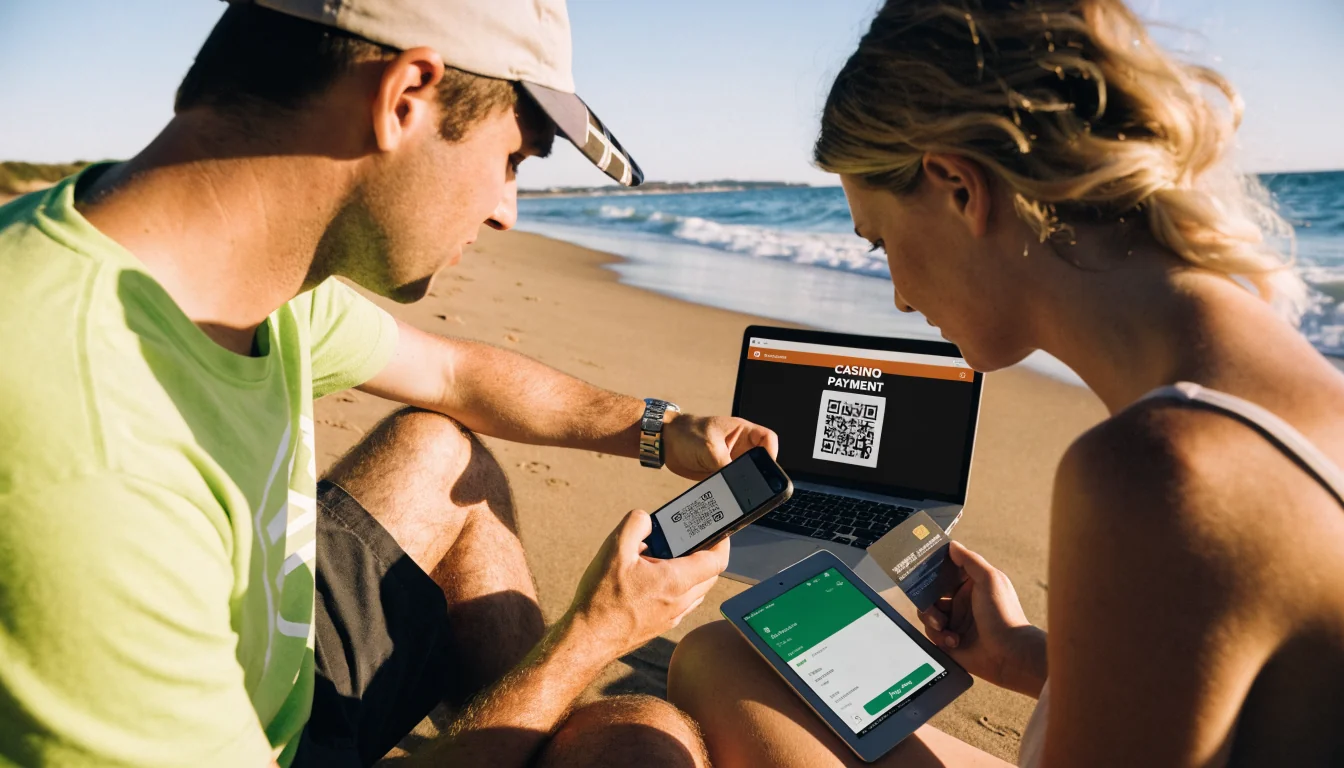
Difference Between Slot Games, Pokies, and Other Categories
In Australian cultural vocabulary, pokies hold a cherished place; digital slot games, however, occupy slightly different conceptual ground. Pokies typically refer to the physical machines in pubs and clubs, and their digital counterparts simply borrow the phrase out of politeness. When Australians move online, the word “slot” edges in because it better matches international casino terminology. Yet confusion persists, and the categories blur more than they separate.
Legal status doesn’t help the conversation. Both pokies and online slots fall under the same prohibition when offered domestically, and both lead players to offshore casinos if they wish to engage. Still, their gameplay mechanics are written in different dialects. A pokie machine uses hardware logic; a digital slot uses programmable logic. Those differences matter only if the player cares to think about what the casino chooses to disclose about its inner workings.
Sports wagering is legal within regulated formats, yet no such buffer exists for slots. Therefore, those searching for the best paying slot websites or the best paying online slots to play are always working within the offshore sphere whether they realise it or not. And there’s some irony in the terminology: the more a phrase promises value, the closer it sails to marketing jargon. This is where legal and cultural meanings collide while the reels keep spinning.
Digital slots occupy a peculiar position. They are legally off-limits domestically, socially normalised through pokies in venues, and technologically more sophisticated than their mechanical ancestors. Offshore platforms fill the gap, sometimes through decentralized systems, sometimes through ordinary servers, and always with a blend of legal risk and technological convenience that Australian law watches with a disapproving brow. A short moment of honesty: perfection is impossible under prohibition.
From the standpoint of regulated markets, slot games remain an outlawed pleasure. From the standpoint of gameplay, they are a mosaic of coded randomness shaped by whichever overseas authority the operator chooses. The legal fence limits domestic supply yet leaves demand untouched. Beyond mechanics and law sits the global vocabulary of “best paying” slot games—words which promise value while revealing little. Digital spins continue anyhow, permitted for the player though barred for the provider. The machine hums its odd lullaby, and the law pretends not to hear it.

Slot Machines vs. Online Slots: How Technology Shapes Payouts
The gap between a physical pokie and its online counterpart is wider than a screen. One sits on club carpet, bolted to the floor, coded under state legislation and usually wired into a venue’s loyalty system. The other lives on a server thousands of kilometres away, under offshore licensing arrangements most Australians have never bothered to investigate. Both spin. That is roughly where the resemblance ends.
What the machine on the floor actually guarantees
Land‑based machines in Australian pubs and clubs are built under technical standards that each state and territory imposes on approved manufacturers. Every licensed physical machine must be tamper‑evident, must return outcomes from a certified random number generator, and must sit inside a venue that holds a gaming licence. Regulators can, in principle, walk in and inspect the thing.
None of this makes the machine generous. It makes it legible. The payout percentage is engineered, audited, and fixed in paperwork a regulator can request. Players rarely see that paperwork, of course, and most never ask. The reassurance is structural rather than personal: someone, somewhere, signed off on the maths.
That is the whole offer. Predictability without visibility.
What happens once the same game moves online
An online slot runs on software hosted by an operator, not on a cabinet in a venue. The random number generator still exists, but the oversight framework changes entirely. In Australia’s case, that framework is mostly absent at the Commonwealth level, because online casino‑style games — slots included — cannot be offered to residents by any operator under an Australian licence. The Interactive Gambling Act 2001 draws that line; later amendments have only made it starker. One source recounts a 1997 precursor, but the operative prohibition everyone cites now is the 2001 Act.
Three consequences matter for payouts:
- Offshore oversight is the default. Many crypto casinos serving Australian players are licensed in jurisdictions such as Curacao or Malta. Those regimes vary in how deeply they audit game mathematics, complaint channels, and payout behaviour.
- Provably fair systems replace some paper audits. Reputable crypto casinos use provably fair algorithms that let a player verify the randomness of individual rounds via cryptographic hashes. That is a different kind of assurance — decentralised, technical, and checkable after the fact rather than before it.
- Decentralised platforms remove the operator’s hands from some decisions. On protocols where no single company controls funds or outcomes, payout logic is embedded in code rather than in a venue’s back office. Whether that is comforting depends on how much the player trusts code.
Assurance changes shape. It does not disappear.
Payout structure: fixed percentages versus changeable environments
A physical machine’s payout percentage is locked at the level of its approved software. Changing it is a regulated event. Online slots, by contrast, exist in a live environment where the operator can, in some jurisdictions, select among certified return‑to‑player settings for the same game title. Sources do not publish operator‑specific settings for casinos accessible from Australia, so there is no reliable public figure to cite either way. The honest statement is that official sources do not disclose these values for offshore casinos, and players who want the number often have to take operator page claims at face value.
Where crypto enters the picture, the payout conversation shifts from game mathematics to cash‑out mechanics. Withdrawals at crypto casinos are usually processed within hours, and often clear in minutes with low fees. That single source’s version comes with a caveat from another source: withdrawals depend on casino approval and blockchain processing, which can delay them. Both claims exist in the materials; neither abolishes the other.
Regulation as a sorting mechanism
The sharpest difference between the two formats is not technological at all. It is regulatory. A pub pokie is legal to operate in Australia precisely because it is physical, licensed under state or territory law, and monitored. An online slot offered to Australian residents is, in the eyes of the ACMA, something no compliant local operator may provide. That pushes Australians towards offshore crypto casinos, which many players can legally access, and which sit under foreign licensing.
The result is a peculiar inversion. The game most constrained by local law — the physical machine — is also the one whose payout mathematics are least visible to its player. The game with the most visible verification tools — provably fair — is the one no Australian licence is permitted to carry. A tidy arrangement, then. Or not tidy, exactly. Just deeply Australian.
What the distinction means in practice
Players who care about payout behaviour are, deliberately or not, choosing a framework of trust. The physical machine offers state‑backed scrutiny that a player cannot inspect. The offshore online slot offers cryptographic verification tools and offshore licensing that a player can, at least in theory, personally interrogate. Neither framework guarantees a better long‑run outcome than the other; the published materials simply do not compare them on percentage terms, because official sources do not publish such figures here.
Choosing between them is choosing a kind of evidence. One is stamped. The other is hashed.
Popular Online Casino Game Types for Australian Players
Winz has become a recognized name among Australian players who engage with crypto casinos, particularly for those who prioritize transparency and player-friendly features. The platform caters specifically to users looking for alternatives to traditional payment methods and offers a more streamlined experience for those familiar with digital currencies.
While Australian gambling laws prohibit domestic operators from offering online casino games, offshore platforms like Winz continue to attract attention. They typically operate under licenses from jurisdictions such as Curacao or Malta, providing access to real-money games in a legally gray area for Australian users. These casinos are often praised for fast deposits and withdrawals, especially when using cryptocurrencies like Bitcoin, Ethereum, Litecoin, or USDT.
It’s important to note that although crypto deposits can be confirmed quickly—often within minutes—withdrawals depend on both casino approval and blockchain network congestion. As with any offshore provider, players are encouraged to verify the site’s licensing details and understand the risks involved.
Mentions of top crypto casinos such as GoldEx, King Johnnie, or Stellar Spins sometimes appear in industry roundups, but these reflect individual opinions rather than formal regulatory evaluations. Without official local oversight, players must rely on platform reputation, user feedback, and personal due diligence when engaging with any offshore operator.
What Australian Players Need to Know: Age, Identity, and Responsible Play
The duty of care in Australian gambling law travels in one direction: from operator to player, never the reverse. What an individual does with their own leisure time and money is, legally speaking, their own affair.
The threshold appears at eighteen. Until that birthday, participation in any form of gambling — whether at a physical venue or an online destination — remains prohibited. The restriction exists because harm accumulates differently in the young.
Offshore platforms present a curious wrinkle. Australian legislation regulates providers, not players. When an individual accesses a service operating from another jurisdiction, no criminal exposure attaches to that choice. The prohibition targets those who offer, not those who accept.
Identity verification follows a similar pattern. Licensed operators must confirm a customer’s identity before permitting withdrawals, a safeguard against money laundering and underage access. Offshore sites vary in their requirements, though the most reputable maintain comparable standards voluntarily.
Responsible gambling resources exist regardless of where one plays. Gambling Help Online offers support without judgment, recognising that the activity itself remains a legal adult pastime even when the venue operates outside Australian licensing. The framework assumes adults can make informed decisions; it simply insists they be adults first.
Real‑Money Online Slots: Fast Deposits, Instant Withdrawals, and Payout Potential
Speed is the entire argument for moving real‑money slots play online, and the case rests on how crypto bypasses banking rails. Deposits confirm in minutes, which matters when a title is running a promotion or a progressive pot is ripe. The real question for anyone hunting the best paying options is not RTP alone, but how fast winnings reach a wallet.
Cash Flow, Not Just Coin‑Flip
Withdrawals are advertised as instant or processed within hours, often clearing in minutes with low fees. A different source notes that payouts still depend on casino approval and blockchain congestion, so the rush can stall. Both claims deserve mention; the gap between promise and practice is where the real‑money experience lives. Approval queues and chain lag are disclosed profitably little.
Where the math gets interesting is in comparing what the casino keeps versus what it pays out. Rapid banking does not fix a lousy RTP, but it does shrink the time between hitting a win and spending it. That velocity is the advantage – provided the title pays decently to begin with. Velocity helps, mostly.
Is using a crypto casino legal for Australian players?
Yes, it is not illegal for individual Australians to play at offshore crypto casinos. The Interactive Gambling Act targets operators, not players, so there are no criminal penalties for individuals accessing these sites.
Can Australians use crypto casinos safely?
Yes, provided you choose reputable offshore platforms. Many top crypto casinos for Australians, such as GoldEx, King Johnnie, and Stellar Spins, use provably fair algorithms that let you verify randomness via cryptographic hashes.
Are the games at crypto casinos actually fair?
Yes, reputable crypto casinos use provably fair algorithms, letting you verify game randomness via cryptographic hashes. Some also operate on decentralized protocols where no single entity controls funds or outcomes.
Are there no deposit bonuses at crypto casinos?
Yes, no deposit bonuses are available at many crypto casinos. These offers let you try out the pokies and other games without having to fund your account first.
Can I play anonymously at crypto casinos?
No, you cannot assume that using crypto removes identity checks entirely. Recent AML/CTF changes in 2026 mean additional reporting affects providers, so you will likely still face some verification.
Where can I complain about an online casino in Australia?
Complaints about unlicensed offshore operators targeting Australian residents can be directed to the ACMA. However, since offshore crypto casinos operate outside the domestic licensing system, the ACMA’s enforcement is selective.