
Bitcoin Pokies in Australia: What Players Should Know

Best Bitcoin Pokies in Australia (2026)
There is something quietly paradoxical about the way Australians reach online pokies in 2026. The country has some of the strictest online gambling laws in the developed world, and the Commonwealth’s Interactive Gambling Act 2001 makes it flatly illegal for any operator — licensed abroad or not — to provide online casino games to Australian residents. Online casino, poker, and in-play betting are all prohibited federally under that Act, and it is not merely difficult to obtain a domestic online casino licence; it is impossible, by design. And yet, the individual Australian who spins the reels at an offshore crypto casino is not committing any offence. The law was written to hunt providers, not players. So the whole affair operates in a curious legal twilight: forbidden to offer, permissible to play. One could argue that this is the most Australian arrangement imaginable — the legislature bans the door, and the population finds the window.
What this guide does, then, is map that window as it exists in 2026. The focus here is on what players themselves call bitcoin pokies: online slot games funded and withdrawn in Bitcoin or another cryptocurrency, at offshore platforms that accept Australian traffic. The expression "crypto casino" has long since overtaken "bitcoin casino" as the term of art, because Bitcoin is only the most widely accepted coin in a market that now typically supports Ethereum, Litecoin, USDT, Dogecoin, Solana, Ripple and a shifting roster of altcoins. The pokies themselves — the games, the reels, the themes — are the same ones found in any online casino. What changes is everything around them: how money moves in, how it moves out, who verifies the fairness of the spin, and what legal risk the operator shoulders. This section sets the stage for the rest of the guide by looking squarely at those things, because the choice of where to play is less a question of game variety than a question of how the whole apparatus is held together.
Choosing a bitcoin pokies site in Australia for 2026 means weighing licensing, bonus terms, and payout reliability rather than just the size of a welcome offer, so a quick side-by-side view of the top contenders helps narrow things down.
Bonus: 240% up to A$4,100 + 300 free spins Stands out for a large welcome package combining a high percentage match bonus with a generous batch of free spins.
License: Curacao eGaming (Roby Games Ltd) · Bonus: 100% up to A$750 + 200 free spins Operates under a Curacao eGaming licence and offers a straightforward welcome bonus paired with free spins for new players.
License: Curacao Gaming Control Board OGL/2023/176/0095 (Hollycorn N.V.) · Bonus: up to A$11,000 + 300 free spins (code NEO100) Licensed under the Curacao Gaming Control Board, it backs its offering with one of the larger bonus ceilings plus free spins, unlocked via a specific promo code.
License: Curacao OGL/2024/1335/0780 · Bonus: up to A$1,000 + 150 free spins, wager-free · Min. deposit: EUR 20 Holds a current Curacao licence and offers a wager-free bonus with free spins, plus a clearly stated low minimum deposit.
Bonus: up to A$7,500 + 550 free spins across 10 deposits, 50x wagering · Payout speed: crypto under 1 hour, PayID 1-3 business days · Min. deposit: A$20 (A$30 to qualify for the bonus) Notable for a sizeable multi-deposit bonus with a large free spins allowance, fast crypto payouts, and accessible minimum deposit requirements.
License: Curacao eGaming OGL/2024/923/0383 (Antillephone N.V.) · Bonus: up to A$2,000 + 100 free spins across 2 deposits · Min. deposit: A$30 Licensed via Curacao eGaming, it spreads its bonus and free spins across two deposits with a modest minimum deposit to get started.
License: Curacao Gaming Authority (Jumpman Gaming Ltd) · Bonus: up to A$6,600 + up to 250 free spins across 4 deposits Operates under a Curacao Gaming Authority licence and offers one of the larger bonus packages spread across four deposits with a solid free spins component.
License: Tobique Gaming Commission · Bonus: up to A$8,000 + 400 free spins across 4 deposits · Payout speed: crypto ~10-15 minutes, fiat 1-5 days · Min. deposit: A$30 Licensed by the Tobique Gaming Commission, it combines a substantial multi-deposit bonus with quick crypto withdrawal times and a low entry deposit.
License: Curacao · Bonus: 100% up to A$500 + 200 free spins, 10x wagering · Payout speed: crypto 30-60 minutes, fiat 1-5 days · Min. deposit: A$10 Curacao-licensed with a fast crypto payout window, a low minimum deposit, and a bonus with comparatively light wagering requirements.
License: Curacao Gaming Control Board OGL/2023/176/0095 (Hollycorn N.V.) · Bonus: up to A$1,500 + 200 free spins across 3 deposits Licensed under the Curacao Gaming Control Board, it offers a multi-deposit bonus structure with free spins included.
The legal ground beneath the reels
Pokies occupy a strange spot in Australian law. The Interactive Gambling Act 2001 is the primary Commonwealth framework, introduced with an explicit public-protection mission and a focus on harm minimisation. (The sources on record are not entirely tidy: one strand refers to an Interactive Gambling Act 1997 prohibiting online casino games, while another points to the 2001 Act, and both exist in the materials we rely on. In practice, the 2001 Act is the one that matters, and the casualty is only legal-history trivia.) The Act prohibits providers from offering online casino-style games — slots, poker, blackjack, roulette — to Australian residents. Offering online casino gambling in Australia is illegal, period, and the domestic system is constructed so that no licence for it can be obtained. There are simply no domestically licensed real-money online casino operators available to Australian players.
Certain other forms of gambling are legal. Online sports betting is permitted under state and territory licences, though live in-play online wagering is not. Some sources say live betting by phone is legal. Lotteries are licensed. The mix is a peculiar one, assembled partly by deliberate policy and partly by the accidents of who regulates what between the Commonwealth and the states.
Crucially, the Interactive Gambling Act is enforced by the Australian Communications and Media Authority — ACMA — which takes aim at unlicensed offshore operators actively offering online casino services to Australians. ACMA can demand that Australian internet service providers block access to such sites. The government’s disapproval is real and its machinery is not imaginary. But the statute, throughout, targets operators. It is not a criminal matter for individual Australians to access offshore-licensed casinos. There is no penalty sitting in the Act for the person who logs in and plays. That distinction — provider in the wrong, player not — sits at the heart of how the offshore crypto pokie market survives and, frankly, thrives.
Withdrawals at crypto casinos can vary: some are instant, while others may be delayed depending on the casino’s approval process and blockchain processing times.
Matters were complicated further when the legislature moved against digital currency itself. One industry source reports that 2023 amendments to the Act sought to restrict operators from accepting digital currency payments from Australians. The same kind of single-source reporting holds that in June 2024 the Act was amended to prohibit the use of cryptocurrencies and credit cards on Australian-licensed gambling sites. The provenance there is thinner than one might prefer — both claims come through an industry review rather than a primary legislative record — but the direction of travel is plausible: regulators grew wary of crypto partly because of the anonymity it appears to grant, and partly because of where the money then goes. What is verifiable is the general effect: locally regulated Australian gambling sites do not accept crypto payments for deposits or betting, and online lotteries and keno alone sit exempt from that prohibition. The consequence is paradoxical. The ban does not seal the Australian player off from crypto pokies; it simply pushes the whole practise offshore.
Offshore is the operative word. The crypto casinos Australians tend to use are licensed in jurisdictions such as Curacao or Malta. Both licences exist. Neither is Australian. And the reader who has been told to "check the licence in the public register" on a locally regulated site is receiving advice for a system that does not exist in this country’s online casino space. The only licences here belong offshore.

So: pokies at offshore crypto casinos, for an Australian player, are a lawful indulgence enjoyed at a forbidden venue. That is the whole legal position, with its oddities left proudly attached.
Why crypto has changed the playing experience
The appeal does not begin and end with legality. On the mechanical side, crypto casinos offer faster banking, wider payment flexibility, and a more direct way to move funds than the old card-led system. Deposits can be confirmed very quickly, often within minutes. The player who has spent years watching a card refund creep through a banking chain tends to notice the difference immediately.
Withdrawals are where the divergence widens — and where the sources themselves disagree, so the honest answer has to carry both versions. One account says withdrawals at crypto casinos are usually instant or processed within hours, often clearing in minutes with low fees. The other notes that the speed still depends on casino approval and blockchain processing, which may delay them. Both are true enough to be worth saying: a well-run offshore platform will clear a Bitcoin withdrawal in the time the network needs, and a poorly run one will discover a backlog of “pending reviews” whenever a large cashout lands. The reader should expect the first, be prepared for the second, and treat the difference between the two as a useful litmus for a casino’s diligence.
Wrong Blockchain
Sending funds on the wrong blockchain can result in the loss of your deposit.
There is also the matter of what the technology makes possible under the hood. Reputable crypto casinos use provably fair algorithms — a system by which players can verify, via cryptographic hashes, that a spin’s outcome was genuinely random and not quietly chosen by the house. The term of art is "provably fair," and the word "provably" is doing real work there: the player receives a hash before the game, and can mathematically confirm afterwards that no one manipulated the result. For pokies, this changes what "fair" means. A slot machine at a club in suburban Sydney has its Random Number Generator certified by a regulator the player never meets. A pokie at a crypto casino with provably fair mechanisms can be checked by the player herself, every spin if she has the patience. One requires trust; the other substitutes arithmetic.
Some platforms go further, operating on decentralised protocols where no single company controls funds or outcomes. A few of them have native tokens offering staking rewards and governance rights — that, again, comes from a single industry review, so it is best treated as a phenomenon some operators have built rather than a market norm. The idea remains in progress: the player holds a token, earns on it when the platform does well, and votes on platform changes. Whether that is a meaningful democratic experiment or a marketing garnish is a question the reader will decide differently from the industry that sells it. Either way, the ordinary Australian who wants to spin reels with Bitcoin is no longer just receiving entertainment; in some corners of the market she is holding an equity-adjacent asset.


None of this dissolves the practical hazards. The common mistakes are stubbornly consistent across the market: players send funds on the wrong blockchain, overlook transaction fees, and assume crypto removes identity checks. The last of these is particularly worth sitting with, because it powers a misunderstanding that gets people locked out of their winnings. Crypto casinos advertise "no KYC" as a feature — the register of the market prefers that phrase to "no verification" or "anonymous account" — and yet the operators with decent compliance procedures will still require identity verification, often a government-issued ID, before any withdrawal. The reader who deposits bitcoin on the assumption that nobody will ever ask who she is can find herself unable to cash out, and will have only herself to thank. The speed and the freedom are real. The anonymity is partial.
Which leaves the question of what makes Bitcoin pokies a different experience, net-net. The answer is structural rather than magical: faster settlement, a variety of coins to choose from, an auditable mechanism for fairness, and the absence of a card transaction that a bank can query. The pokies themselves, the reels and bonus rounds and free spins, are no different in kind. The transformation lives in the cashier and in the ledger. What felt like a separate economy has become a faster one. That is the whole trick.
Provably‑fair algorithms allow players to verify each spin’s outcome via cryptographic hashes, giving a transparent measure of randomness.
The games, and where they hide
A section titled "best bitcoin pokies" would normally enumerate the best bitcoin pokies. Here a certain frankness is required: the source materials available to this guide do not name specific games, machines or titles with a measurable attribute — return-to-player percentage, volatility, provider — attached to any of them. A responsible page in this market cannot pretend otherwise. The reader will therefore not find here a ranked list of seven pokies with invented RTP figures. Such a list would be plagiarism of the genre’s bad habits, and bad habits travel fast around gambling.
What the market does contain, at the operator level, is a rolling set of crypto casinos that Australians use. According to one industry review, the names that surface most often for Australian players at the moment include GoldEx, King Johnnie, and Stellar Spins. That is one review’s shortlist, and the market’s rotation is brisk, so it should be read as a passing snapshot rather than a league table. The operators in the ecosystem around those names — the likes of BitStarz, FairSpin, Mirax Casino, MoonPay on the payments side, Winz — are not ranked here either, because ranking them fairly would require rating the games they carry, and again, no verified game-level data are available. The seller of one brand’s affiliate review is not the seller of another’s, and the absence of independent verification is worth naming rather than obscuring.

That same absence matters practically. The pokie enthusiast deciding between two offshore platforms has no verified list to consult. What she has instead is a set of structural checks: whether the platform publishes provably fair hashes, whether its withdrawal record shows the approval-and-blockchain pattern or the pending-review pattern, whether the licence it holds in Curacao or Malta is displayed in the footer where any regulated operator is meant to carry it, whether wagering requirements for bonuses are stated up front, whether complaint procedures and any alternative dispute resolution membership are accessible on the site. These are the lower-level criteria that are checkable when the game-level criteria are not. The best-pokies question becomes, in other words, a best-platform question, because the games sit downstream of the platform’s integrity.
There is one fair observation to make about game variety in itself. Bitcoin casinos do, as a plain matter of inventory, tend to carry pokies from a wide pool of software providers, and because the offshore operators are not bound to an Australian-issued list of approved titles, the catalogue is often broader than anything a locally regulated site (were one to exist) could assemble. This breadth is both the pleasure and the hazard. The same reliance on offshore licensing that makes it available also makes it harder to audit. The reader who prizes variety gets variety; the reader who prizes certainty gets arithmetic instead. Most readers want some of both.
What makes a platform worth your coin
If the game list is withheld for lack of verified data, the criteria for judging a platform are not. Some of them are universal; some are specific to the unnatural legal situation Australia places its players in.
- Check that the offshore licence (Curacao or Malta) is displayed prominently.
- Verify the platform offers provably‑fair hash verification.
- Follow the cashier guide for correct blockchain, fees and KYC requirements.
- Review the operator’s AML/CTF compliance statements.
- Read wagering requirements before accepting any bonus.
- Assume crypto automatically removes identity checks.
- Trust an operator that hides or omits its licence information.
- Ignore transaction fees or network confirmations.
- Expect every withdrawal to be instant.
- Play on a platform without clear compliance or responsible‑gambling information.
The licence, first of all. Curacao and Malta are both credible homes for an offshore casino. "Offshore licensing" is the proper market term, and it is not an insult but a description. A platform that pretends to be locally regulated is simply lying, since no Australian licence for online casino play can exist. The operator’s gambling licence ought to be displayed prominently in the website footer — a requirement that travels across most regulated-market codes — and the reader who finds no such display is entitled to walk away.
Provably fair mechanisms, second. The player should be able to find the hash mechanism and confirm that the operator is not merely claiming randomness. This is the single thing that separates a crypto casino’s promise from a traditional slot’s promise, and a platform that does not bother offering it discards its main technical advantage.
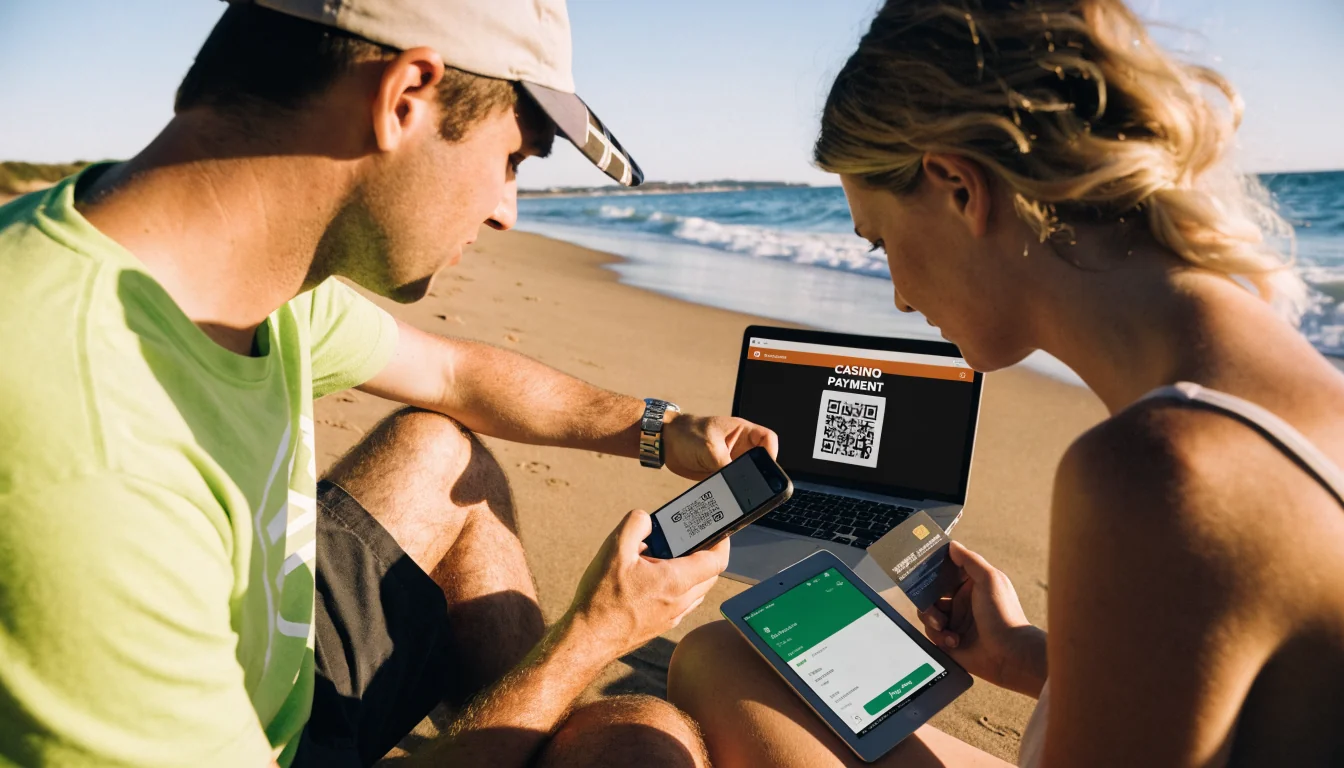
The cashier, third. Bitcoin being the most widely accepted coin, the operator should handle Bitcoin well; the rest is gravy. Ethereum, Litecoin, USDT, Dogecoin, Solana, Ripple and other altcoins may be available, and it is good if they are. But the user mistakes of the field — wrong blockchain, ignored fees, mistaken assumptions about identity checks — are made by depositors, not planners, and the operator whose cashier guide spells out the chain, the fee and the verification requirement is demonstrating the basic respect a player deserves.
Compliance, fourth. This one has acquired a sharper edge in 2026. One industry review reports that recent AML/CTF changes in 2026 require additional reporting for the gambling sector, mainly affecting providers. The claim comes from a single review, so it should be treated accordingly — but the general direction is consistent with Australia’s posture, and with the care ACMA takes with payments. A player who encounters an operator shrugging off AML/CTF obligations entirely, when one thinks of the regulatory winds, may want to wonder what else the operator is shrugging off.
Bonuses, fifth. The no-wagering bonus has become the term of art — that is how the market prefers to phrase the promise, versus the older "free spins with wagering" that still floats around — and the principle worth defending is simple: the platform should display wagering requirements clearly up front before any bonus is offered. If the conditions are buried, the player has been handed a box to open, not a gift.
And responsible gambling, sixth, because this section is a stage-setting and not a bypass. Australia, like most jurisdictions that take gambling seriously, imposes codes on advertising and messaging. Gambling Help Online exists for Australians who find the line between entertainment and compulsion thinning. This guide does not advertise; it describes. But the operator who uses light-hearted language about problem gambling, or who buries the complaint procedures, is signalling the culture the player will be living inside. The signal is usually accurate.
- Australian players may legally use offshore crypto pokies, while providers are prohibited from offering services domestically.
- Crypto casinos provide faster, verifiable transactions but carry risks such as withdrawal delays and residual KYC requirements.
- Evaluate platforms by licence display, provably‑fair mechanisms, clear cashier instructions and compliance with AML/CTF and responsible‑gambling standards.
Each of these is checkable. None requires the vanished list of named pokies. The verified criteria turn out to be the ones that were there all along.
The mistakes, named
A few of the recurring errors are worth gathering in one place, because they cost real money and gather no sympathy. They were flagged earlier and deserve a list of their own.
- Sending funds on the wrong blockchain. The cashier gives an address; the sender picks a network; the wrong network means the funds may as well have been burned. Nothing in crypto’s speed compensates for a wrong chain.
- Overlooking transaction fees. Low fees are typical, not promised, and the offshore operator who charges them without saying so is behaving exactly as the offshore operators who do not.
- Assuming crypto removes identity checks. The reader who has not yet completed verification will discover the requirement at the withdrawal desk, which is the least convenient possible place.
- Treating a review’s shortlist as a regulated endorsement. The names of top operators that surface in industry reviews are snapshots of a rotation. The review that names them is itself usually affiliate-driven.
- Believing the ban applies to the player. It does not. The provider is forbidden to offer; the player simply plays.
None of these is exotic. Each is the kind of error that occurs when a market’s newspapers are written by its vendors. The catalogue of Australian crypto pokies is offshore, fast, useful and incomplete. The reader who holds those four facts together is already safer than most of the market’s newcomers.
Pokies, the nation and 2026
A final word on the setting, because the setting is part of the story. Australia regulates gambling with unusual ferocity compared with other developed countries, and the Interactive Gambling Act, introduced as a harm-minimisation measure, shapes the atmosphere in which Australians play. The online casino format is banned at home. The crypto casino format is accessed abroad. The player, if she is over 18 — the minimum legal gambling age — steps into the offshore room knowing that the Commonwealth disapproves of the landlord but has not forbidden her the visit.
The same nation worries, with reason, about children and gambling. Data referenced in the source materials suggest something like a third of 12-to-17-year-olds in Australia gamble in some form, and nearly half of 18-year-olds do. The rules on not targeting minors, on carrying responsible-gambling messaging, on verification before withdrawal — these are not decorations. They are the main thing the Commonwealth does while the offshore market does the rest.

In that environment, "bitcoin pokies" as a phrase carries more than a technical meaning. It marks the spot where strict legislation, blockchain finance and a national fondness for the pokie machine have reached an informal truce. The truce holds in 2026 because it was written, more or less, into the law’s own structure: attack the operator; leave the player be. The player, for her part, has developed a set of consensuses — provably fair over unverifiable, offshore licence over no licence, transparent cashier over a silent one — that substitute, in some measure, for the regulator the market does not have. That substitution is imperfect and it is the one on offer. The rest of this guide takes the same consensuses and works them down into detail. The first impression, though, is the one that matters here: the country’s pokies are offshore, the money that feeds them is Bitcoin, and the reasonable player treats the arrangement as exactly what it is — a lawful indulgence at a forbidden venue, running as fast as the protocol allows. Offshore, and quick. That is the arrangement.
What are the best crypto casinos in Australia?
Top options for Australian players include GoldEx, King Johnnie, and Stellar Spins, all operating offshore.
Is online casino legal in Australia?
No. The Interactive Gambling Act 2001 makes it illegal to offer online casino games domestically and no local licences exist, though individual players face no penalties for using offshore casinos.
What does the future outlook look like for the Australian online casino market?
The market is pushed further offshore, with 2026 AML/CTF changes adding reporting requirements for providers while local platforms remain banned from accepting crypto payments.
What cryptocurrencies do casinos accept?
Bitcoin is the most widely accepted coin, followed by Ethereum, Litecoin, USDT, Dogecoin, Solana, Ripple, and various other altcoins.
Can I play online pokies for free?
Yes, many crypto casinos offer demo modes for their pokies, allowing you to play without wagering real cryptocurrency.
How do recommended online casinos ensure game fairness?
Reputable platforms use provably fair algorithms based on cryptographic hashes, letting you independently verify the randomness of each spin.
How to recognise problem signs and where to get help?
If gambling stops being fun or causes financial stress, contact local support services like Gambling Help Online for free, confidential assistance.