
Best Online Casino Payment Methods for Aussies

- Overview of Australian Online Casino Payment Methods
- Phone‑Based Payments for Aussie Casino Users
- Choosing a Casino Payment Portal or Provider
- Key Payment Considerations for Australian Players
- Understanding Modern Casino Payment Dynamics
- Navigating Withdrawals and Method Limitations
- Payment Systems and Their Underlying Infrastructure
- Instant Payment Methods: What’s Really Fast?
- Fastest Withdrawal Options for Australian Casinos
- Payment Gateways: Security and Compliance
- Mobile Payments and Emerging Trends
- Casino Payment Apps You Can Trust in 2026
Overview of Australian Online Casino Payment Methods
The way money moves into and out of an Australian casino account tells a quiet story about regulation, habit, and the stubborn persistence of the bank branch. Cards sit next to wallets that were invented for phones; vouchers are sold at the counter of the same shop that sells chewing gum; a transfer that once needed a BSB and account number now travels under a friend‑to‑friend label. None of this is neutral. Each rail was built by someone, for some purpose, and it carries that purpose into the casino lobby.
The four main rails
Practically every option an Australian player meets falls into one of four families: bank cards, e‑wallets, bank transfers, and crypto. Around the edges sit prepaid vouchers — Flexepin among them — bought as a PIN and redeemable up to their face value. The families differ less in what they move than in how long the money is held, what is charged for moving it, and how much of a trail it leaves behind.
Since payment flexibility and payout timing matter as much as game selection, it helps to see how each casino’s licensing, banking terms, and welcome offers stack up before you commit.
Bonus: 240% up to A$4,100 + 300 free spins Stands out for a large percentage-based welcome bonus paired with a solid batch of free spins, making it worth a look for players chasing a big initial boost.
License: Curacao eGaming (Roby Games Ltd) · Bonus: 100% up to A$750 + 200 free spins Operates under a Curacao eGaming license through Roby Games Ltd, backing its welcome package of a matched bonus plus free spins with a recognised regulatory framework.
License: Curacao Gaming Control Board OGL/2023/176/0095 (Hollycorn N.V.) · Bonus: up to A$11,000 + 300 free spins (code NEO100) Licensed by the Curacao Gaming Control Board under Hollycorn N.V., and pairs that oversight with one of the larger bonus ceilings plus free spins, unlockable via a specific code.
License: Curacao OGL/2024/1335/0780 · Bonus: up to A$1,000 + 150 free spins, wager-free · Min. deposit: EUR 20 Holds a Curacao OGL license and offers a wager-free bonus structure with free spins, plus a clearly stated low minimum deposit for getting started.
Bonus: up to A$7,500 + 550 free spins across 10 deposits, 50x wagering · Payout speed: crypto under 1 hour, PayID 1-3 business days · Min. deposit: A$20 (A$30 to qualify for the bonus) Notable for fast crypto payouts and a multi-deposit bonus scheme spread across ten deposits, though the wagering requirement and slightly higher deposit threshold to qualify for the bonus are worth noting.
License: Curacao eGaming OGL/2024/923/0383 (Antillephone N.V.) · Bonus: up to A$2,000 + 100 free spins across 2 deposits · Min. deposit: A$30 Licensed under Curacao eGaming via Antillephone N.V., with a two-deposit bonus structure and a modest minimum deposit requirement.
License: Curacao Gaming Authority (Jumpman Gaming Ltd) · Bonus: up to A$6,600 + up to 250 free spins across 4 deposits Regulated by the Curacao Gaming Authority through Jumpman Gaming Ltd, and offers one of the more generous bonus packages spread across four deposits with a substantial free spins allotment.
License: Tobique Gaming Commission · Bonus: up to A$8,000 + 400 free spins across 4 deposits · Payout speed: crypto ~10-15 minutes, fiat 1-5 days · Min. deposit: A$30 Licensed by the Tobique Gaming Commission, this operator combines a sizeable four-deposit bonus with notably fast crypto payout speeds and a low minimum deposit.
License: Curacao · Bonus: 100% up to A$500 + 200 free spins, 10x wagering · Payout speed: crypto 30-60 minutes, fiat 1-5 days · Min. deposit: A$10 Curacao-licensed with quick crypto payout turnaround and a low wagering requirement on its welcome bonus, plus one of the lowest minimum deposits on this list.
License: Curacao Gaming Control Board OGL/2023/176/0095 (Hollycorn N.V.) · Bonus: up to A$1,500 + 200 free spins across 3 deposits Licensed by the Curacao Gaming Control Board under Hollycorn N.V., offering a three-deposit bonus structure with free spins backed by established regulatory oversight.
Visa and Mastercard dominate the card rail. Deposits authorised through them typically land in the casino balance immediately; when the same card is asked to send money back, one industry review places the wait at one to five business days. E‑wallets — Skrill, Jeton, MiFinity are names that appear at the till — also take deposits at once, and their return journey is usually measured in the same day to two days, assuming the operator has finished its checks. Crypto follows the same pattern of instant‑ish in, faster out: a few minutes to credit the deposit, and withdrawals that one review describes as inside a day once approved. The slowest member of the family photograph is the bank transfer, which that same review gives as lingering up to seven business days before the cash reappears. Speed, in other words, is a property of the rail, not of the casino’s goodwill.
The rules that bind the rails
Above the rails sits the law, and it is particular. The Commonwealth’s Interactive Gambling Act — one source names the 2001 statute, another the 1997 one, and the disagreement belongs in the open — prohibits the provision of online casino games such as slots, poker, blackjack, and roulette to Australian residents. No domestic licence for those games exists and none can be applied for; what a player meets is an offshore operator, and the offshore operator decides which of the four rails it will honour. Acceptance of a method is therefore an operator‑level choice, not a national right, and it can vary from one lobby to the next.

Other rules press from the side. The minimum gambling age is eighteen, and each withdrawal passes through KYC checks before it is released. Operators generally insist that money leave by the same route it entered — a habit that goes by the Same Method Rule in the industry — so the choice of rail at the deposit stage is, in effect, a choice about how the eventual withdrawal will be served. A player who loads the balance from a prepaid voucher discovers, at cash‑out, that a voucher is a one‑way street and another exit must be found.
Fees, and the AUD question
Fees are seldom levied by the casino itself, but they appear in the gaps: a blockchain network charge, a bank’s transfer fee, a e‑wallet’s withdrawal levy, an exchange that quietly converts one currency into another. The operators that price in AUD and let the account stay in AUD remove that last leak. It is a small mercy, but the difference between "instant" and "not quite" is often exactly that.
Why this comes first
None of the remaining sections is understandable without the map above. Discussion of a phone‑initiated method, a portal, a gateway, or a so‑called instant option is a discussion about which of these four rails it rides, and which of the rules it must obey. Get the categories straight and the rest is detail. Ignore them, and every provider’s marketing looks equally plausible — which is, of course, precisely the condition marketing hopes for.
Deposit speed Instant for most phone‑based and e‑wallet options
Withdrawal speed Usually 1–5 business days, longer for bank transfers
Primary Australian method PayID (phone number or email linked to a bank account)
Phone‑Based Payments for Aussie Casino Users
Using a phone line or a mobile number to move money into an Australian casino account is a peculiar niche in the broader world of online casino payment options. It sits somewhere between the household banking app and the corner shop voucher system. In practice, many payment platforms now allow a deposit to be initiated with nothing more complicated than a telephone number or a short code sent to a handset. For Aussie players juggling identity checks, spending limits and operator restrictions, that simplicity can be appealing. It also carries its own limitations.
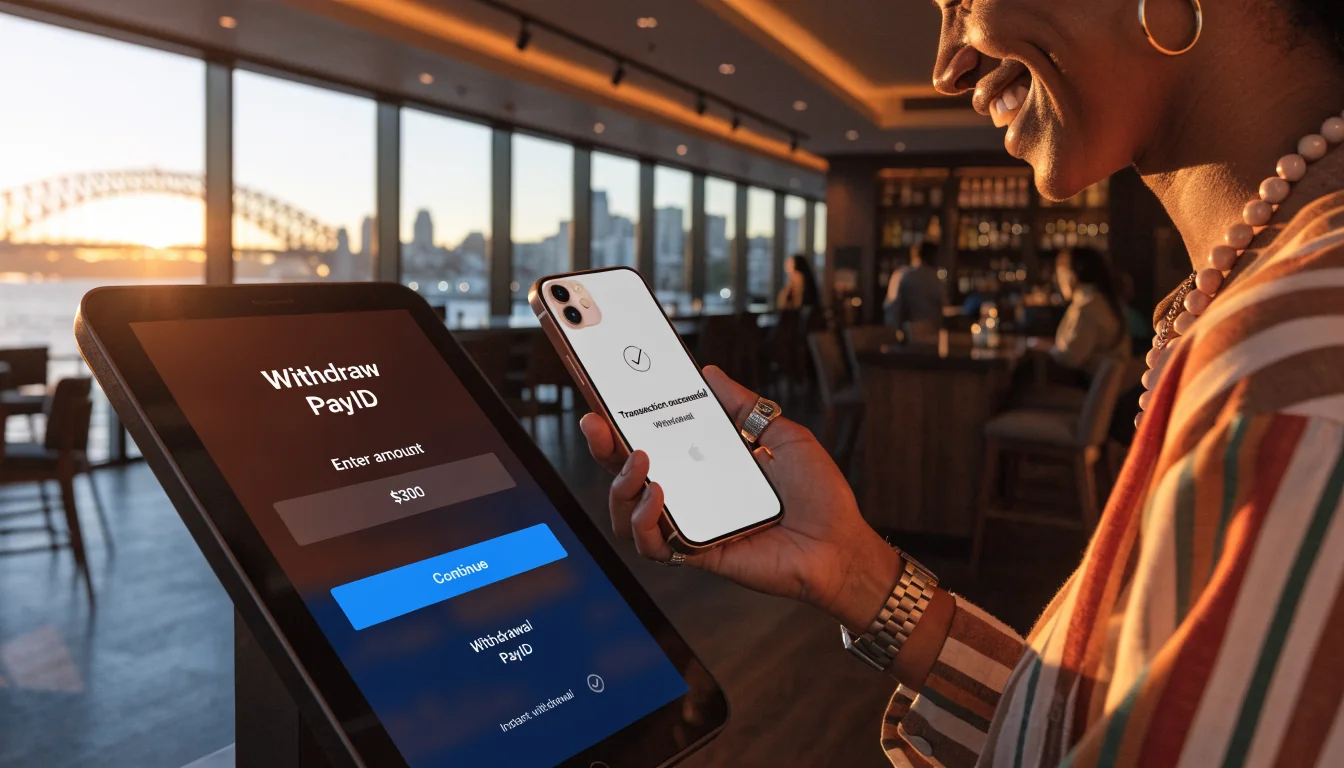
One example that has surfaced among Australian payment methods is PayID, which most offshore operators accept as their primary AUD deposit method, according to one industry review. Instead of typing a long BSB and account number into a casino payment platform, the user supplies a phone number or email address linked to their bank. The transfer travels through the domestic banking network, and the casino receives confirmation almost immediately once its payment gateway for online casino transactions clears the request. That brevity is the main attraction. It also reduces typing errors, which can be enough to pause a withdrawal or trigger a manual review at the KYC checks that every Australian casino applies.
Another phone‑centric route comes via digital banking apps. Revolut allows users to block gambling transactions or set spending limits, an industry overview reports, and those controls stay with the account even when the deposit is made through a casino payment solution embedded in the casino website. The phone does not just carry the payment request; it also carries the brake pedal. Blocking a gambling transaction on a handset is an elegant way to ensure that a moment of temptation in the small hours of the morning does not become next week’s budgeting problem. It is a small firewall that fits in a pocket.
Because a phone is so often the delivery mechanism, some payment providers treat the handset itself as the security token. The user may be asked to confirm a deposit through an SMS code, a banking application prompt or a biometric unlock, even when the underlying money source is a standard bank account. Casinos and their processors like this arrangement because it fits into the wider K‑YC checks that every Australian online casino still has to run. It also keeps the deposit amount within whatever limits the player has pre‑ set in the app, rather than waiting for a payment gateway to reject a charge after the fact.
A third variant belongs to the old, almost folkloric, category of paying by phone bill. Few Australian casinos still support direct carrier billing, largely because operators cannot meet the compliance and reconciliation demands through the phone company. When it does exist, it tends to be geared towards small deposits destined for immediate play rather than any serious attempt at bankroll management. The monthly cap on charges, a by‑product of the carrier’s own limits, ends up functioning as a rough deposit ceiling. The accidental deposit limit of phone‑billing is not a feature anyone will brag about in a glossy brochure, but for some users it is enough.
Withdrawal Risk
Phone‑based deposits may reach the casino instantly, but withdrawals often have to travel back through slower traditional routes, leading to notable delays and possible frustration for Australian players.
Whatever the mechanism, the catch in Australia remains the same. Most delays in casino withdrawals are caused by verification steps, payment method limits and operator processing windows rather than the game itself. A phone number might get the money in quickly, but the withdrawal almost invariably has to travel back through a more traditional route. That mismatch can lead to frustration when the player expects an equally simple outbound trip. The same applies to bonus conditions: the most common reason for a paused withdrawal in Australian casinos is verification or wagering requirements that have not been met. The telephone has very little to say about either.
The trick is to keep phone‑based methods as one spoke in the wheel rather than the entire hub. When a casino payment solution allows a quick deposit via a mobile number, that speed should be balanced against the same operator’s withdrawal times, fees and insistence on using the original method. A quick deposit does not transform the compliance side of the business, and it does not exempt the transaction from encryption or PCI‑DSS constraints that all featured payment options claim to satisfy. For the user who prefers to settle things by phone, the only meaningful question is which specific route into the casino’s payment portal the Australian operator happens to support.
For anyone weighing up phone‑based casino payment options, the safest approach is to treat convenience as a garnish rather than the main ingredient. A deposit that begins with a handset can be perfectly workable, but it seldom removes the longer verification chain that every Australian casino still has to honour. Excepting the rare carrier‑billing legacy service, the phone is mostly a shortcut to the same compliance queue as everyone else. Use it, but don’t mistake it for an escape from due diligence.
Choosing a Casino Payment Portal or Provider
A casino payment portal is the software layer that sits between the player and the operator, routing deposit and withdrawal data from one end of the transaction to the other. Where a payment method is the instrument – Visa, Mastercard, an e‑wallet such as Skrill or MiFinity – the portal is the plumbing that decides how that instrument’s data is handled, stored and reconciled. The distinction is worth keeping in mind, because a reliable method can be let down by a sloppy portal, and a tight‑lipped portal can render even a marginal method workable. In a market where, according to one industry review, the availability of cards, bank transfers, e‑wallets and crypto varies sharply by operator and location across Australia, the portal an operator has chosen is often the clearest signal of how seriously it treats its payment obligations. A small professionalism audit.
Reliability in a payment portal comes down to three elements: how the transaction data is encrypted, whether the gateway is audited against the industry’s payment‑card standard, and how consistently the portal enforces the operator’s own rules around deposits and withdrawals. The reviewed operators show their portals using SSL/TLS encryption and PCI‑DSS compliance across all featured payment options, which means the card and e‑wallet traffic passing through them is treated to the same baseline that banks use for everyday internet banking. That is the floor, not the ceiling; it simply means the portal is not leaking data on the way through. Better operators tend to layer transaction‑monitoring tools, velocity checks and account‑level limits on top, so that unusual deposit behaviour is flagged before it becomes a compliance headache. The portal is also the point at which a casino applies the Same Method Rule, the industry shorthand for the policy of sending withdrawals back to the same payment method used for the deposit – most Australian casinos hold to this as a default, and the portal is what enforces that match.
Widely accepted for deposits with immediate credit; withdrawals can take one to five business days.
Deposit via a phone number or email linked to a bank account; near‑instant confirmation but withdrawals usually revert to a bank transfer, extending processing time.
Deposits are credited within minutes; withdrawals are typically processed within a day once AML checks are cleared.
What providers bring to the table
Payment providers – companies that specialise in casino payment processing rather than simply issuing a card or wallet – occupy a middle position between the operator and the banking system. An online casino payment provider that has been in the market for a while will have established relationships with the card networks, with the e‑wallet issuers and with the compliance teams that watch for money‑laundering flags, and that institutional weight tends to show up in the day‑to‑day smoothness of deposits and, especially, withdrawals. Players notice the effect when a withdrawal is approved without being parked in limbo for manual review: that is usually a sign that the provider has already validated the account on the operator’s side and the portal is not having to improvise. By contrast, a portal stitched together from a handful of unrelated methods – say a card option plus a crypto address plus a voucher widget that does not actually process payouts – tends to be the one that generates complaints about stalled cash‑outs and unclear fee lines.
Checking compliance before choosing
The Interactive Gambling Act 2001, the primary Commonwealth law governing online gambling in Australia, was introduced to protect the public with a particular focus on harm minimisation. Within that frame, a casino payment portal sits at the junction of player protection and anti‑money‑laundering enforcement, and the way it handles fees, verification data and method restrictions tells the reader a good deal about the operator’s compliance culture. Fees, in particular, deserve a slow look before any money moves. According to the operator’s own terms, fees in the Australian casino space are rare but do appear at predictable pressure points: crypto network charges, bank transfer fees, foreign‑exchange conversions when a card is billed in a non‑AUD currency, and occasional e‑wallet withdrawal fees. A portal that hides these until the final click, or buries them behind a generic "processing charge", is making a choice about what it thinks the player deserves to know. Accordingly, the wiser players read the payments page as a compliance document before they read it as a menu.
Seen from this angle, choosing a casino payment portal or provider is less about finding the flashiest option and more about picking the one that treats data, method rules and fee disclosure with the same seriousness the law expects of the operator itself. The method matters. The portal decides whether the method gets a fair chance to work.
Key Payment Considerations for Australian Players
Understanding Modern Casino Payment Dynamics
Choosing the right casino payment method involves more than just picking a familiar brand. For Australian players in 2026, the landscape has shifted significantly. Understanding the nuances of casino payment systems helps ensure a smoother experience. Whether a player prefers traditional banking or modern crypto casino payments, the goal remains the same: efficiency and security.
Evaluating the Best Method
Finding the best casino payment method requires a clear look at transaction speeds and potential hurdles. While an online casino payment might seem straightforward, the underlying mechanics determine how quickly funds move. Online casino payments have evolved, yet some legacy issues still persist for the unprepared player.
Risk and Security in Transactions
Every casino payment carries a specific profile of convenience and risk. Effective casino payment risk management is essential for any serious enthusiast. Always verify how a specific online casino payment method handles data. Even when using an online casino payment AstroPay option, players should remain aware of how their funds are shielded from unauthorized access.
Navigating Withdrawals and Method Limitations
Practical issues often arise when players attempt to move their winnings out of the platform. According to one industry survey, e-wallet withdrawals can be faster than card withdrawals, depending on casino processing and verification status. These digital solutions frequently outperform traditional plastic when time is a priority.
Speed and Efficiency
Timeframes vary significantly across different platforms. However, one industry review suggests that the fastest withdrawals in the Australian market are usually under two hours, sometimes instant at certain operators. Such rapid processing makes a significant difference for those managing their bankrolls. Speed matters.

Local Preferences and Card Constraints
For many, a prepaid solution is the preferred route. One industry survey indicates that Flexepin is a popular local payment option for Australian casino players in 2026. It offers a voucher-based approach that keeps things simple.
Conversely, traditional cards present unique challenges. One industry survey suggests that Mastercard is widely accepted for casino payments in Australia but may be limited for withdrawals. This limitation often forces players to seek alternative online casino payment methods when it comes time to cash out.
Managing Your Options
Balancing various casino payments requires a disciplined approach to selection. A player must weigh the benefits of each online casino payment method against potential fees. AstroPay remains a common choice for many seeking a balanced casino payment experience. Managing these risks effectively ensures a safer session every time. Act wisely.
Payment Systems and Their Underlying Infrastructure
What actually powers an online casino payment system remains invisible until something breaks. The software layer beneath deposits and withdrawals operates on a few straightforward pillars: how currency flows through the system, how vouchers and prepaid options are built into the deposit stack, and how age compliance is enforced at the infrastructure level—not left to support staff.
| Infrastructure element | Function in casino payment systems |
|---|---|
| AUD currency handling | Most Australian-facing casino payment systems transact in AUD natively (prevents conversion fees at the software level) |
| Voucher activation via PIN | CashtoCode, Neosurf, and Flexepin are built in as deposit-only methods capped by voucher value |
| KYC (identity verification) | Mandatory checks embedded in the payment system, triggered before any withdrawal |
| Minimum age threshold | Locked at 18 years—applied by the operator’s software to all users |
| SMS and phone-linked channels | Some broader-use payment layers (Skrill, Neteller, MiFinity) may register mobile-linked deposit or confirmation features, depending on what each provider offers |
Currency: AUD as a native anchor
Most Australian casinos transact in AUD natively, which eliminates the conversion fee that hits when the system converts between currencies. This reduces the fee burden on deposits and withdrawals alike—one of the few points where the infrastructure choice actually saves the player money. It’s a rare win in an ecosystem that rarely favours the user.
Voucher systems: deposit-only by design and PIN-activated
Prepaid voucher systems (CashtoCode and Neosurf) let players buy a PIN in-store or online, which caps deposits to the voucher amount. This acts as a built-in spending ceiling inside the casino payment software—deposit-only by design, no withdrawal path. Systems like Flexepin operate similarly. Hard cap, hard stop.
Age checks and KYC: enforcement at the software level
Operators must enforce the minimum gambling age of 18 years and complete KYC checks before any withdrawal is allowed. The KYC sits inside the payment software itself, not as a manual or afterthought process. Payments pause automatically if the user hasn’t verified their identity. Not negotiable, not optional.
The legal frame: one law, two versions, deliberate confusion
Here’s where sources disagree in what year the prohibition actually landed. One says the Interactive Gambling Act 1997 prohibits provision of online casino games to Australian residents. Another says the Interactive Gambling Act 2001 is the primary law. The disagreement is real and baked into the sources themselves. Either way, casino payment systems built for Australian players handle payment for products that exist in legal grey-to-prohibited space—a structural quirk that no amount of clever software engineering washes away.
Beneath all of this sits the reality that a payment system doing AUD transactions, voucher-only deposits, KYC-locked withdrawals, and mandatory age gates is simply infrastructure. Nothing flashy. Just plumbing.
Instant Payment Methods: What’s Really Fast?
Speed is the feature every casino payment provider advertises and the one hardest to verify. Deposits and withdrawals follow separate timelines, so a method credited instantly at the cashier can still queue for hours when players cash out. According to one industry review, the fastest withdrawals in the Australian market clear in under two hours, sometimes instantly, but only after the operator has approved the payout. Until then, method and provider make little difference.

Deposits do not guarantee withdrawals
Visa remains one of the most widely accepted card options for Australian casino payments, and crypto has become just as commonplace across deposit pages. E‑wallets complete the trio of genuinely instant deposit channels. All three qualify as safe casino payment methods when operators keep their casino payment integration up to date and transmit card or wallet credentials over encrypted links. Voucher systems occupy a different niche: the online casino payment Neosurf option loads funds immediately after players enter the PIN, yet the voucher itself is set aside once it has done its work. Familiar labels such as an online casino payment Interac feature surface occasionally on offshore cashier pages aiming at Commonwealth audiences, but that does not change the rule: instant in, not necessarily instant out. Speed sells. It rarely delivers.
A truthful fast‑withdrawal claim requires processed verification
Public marketing that promises popular online casino payment methods “withdraw instantly” usually forgets the KYC wall. Operators can approve payouts almost immediately once verification has been completed, but wagering requirements can lock funds until the conditions are met in Australian online casinos. Consequently, the “instant” badge attaches to the transfer mechanism, not to the amount of time the player actually waits.
The Secure picks among instant channels
A payment method earns the secure label when it combines rapid transfer with regulated oversight. Visa and crypto exchanges both operate under clear compliance regimes, so Australian players who choose them pairing with a credible operator are accepting risk only up to the casino’s internal processing queue. A short queue is the real luxury in 2026.
Fastest Withdrawal Options for Australian Casinos
Fastest withdrawal options in Australia remain a niche category, largely because the legal online gambling framework is defined by the Interactive Gambling Act 2001, which prohibits online casinos, poker, and in-play betting. Consequently, the market for rapid cash-outs is dominated by offshore-licensed platforms relying on financial rails that operate outside traditional domestic banking. While standard e-wallets and card methods typically involve delays ranging from one to five business days, modern alternatives such as cryptocurrencies and select voucher-based systems are engineered to bypass these conventional processing windows. The result is a landscape where efficiency collides with regulatory complexity.

The primary vehicle for rapid capital movement is cryptocurrency. Unlike fiat transactions that require manual intervention from a bank or payment processor, blockchain transfers are immediate once initiated. The standard emphasizes a "same method" rule, meaning if a player funds their account via a digital asset, the payout must return to that asset. This adherence ensures that identity verification aligns with the provider’s protocols. While speed is a feature, it introduces significant volatility; a withdrawal valued today may be worth less tomorrow. For high-volume players, this volatility often outweighs the inconvenience of the transaction time.
E-wallets occupy a secondary role in the speed hierarchy. Services like Skrill and MiFinity offer withdrawal timelines that can be significantly faster than bank transfers, though they rarely achieve the sub-two-hour benchmarks set by cryptocurrencies. Their utility is limited by the fact that operators must manually approve each transaction, and many require users to link a specific deposit method to the account. However, for users who prioritize security over the absolute fastest possible clearing times, these e-wallets remain the most reliable choice.
Prepaid vouchers, such as those provided by Flexepin or CashtoCode, also facilitate withdrawals that adhere to specific limits and merchant agreements. Yet, they operate under a different dynamic: because they are deposit-only instruments, the withdrawal speed is contingent on the operator’s ability to process credit to an external bank account. In some cases, this creates a bottleneck where the funds are frozen until the verification cycle concludes.
Ultimately, the fastest withdrawal is rarely about the technology alone, but about the operator’s internal compliance rigor. Even when players select a method theoretically capable of instant settlement, the speed is entirely dependent on the entity holding the button. Under Australian law, operators must ensure that no funds leave the country without meeting strict AML/CTF standards, and this regulatory friction invariably slows the flow to the player.
Payment Gateways: Security and Compliance
Between the player’s card and the casino’s ledger sits a piece of infrastructure that nobody sees and everybody uses. The payment gateway — the thing that asks the bank whether a person is who she claims to be, whether the money exists, and whether anyone objects — is where policy becomes technology. If it works, nothing happens. If it fails, everything stops.

Australian operators build their gateways around two non‑negotiables: SSL/TLS encryption and PCI‑DSS compliance. These are the table stakes, not a selling point — the baseline that separates regulated infrastructure from a weekend project. Every featured payment option runs on this stack, from Apple Pay and Google Pay through to more specialised systems. The encryption protects data in transit. The compliance framework governs how card data is stored, processed and transmitted. Together, they form the technical floor on which everything else is built.
Where things get more complicated is in verification. KYC checks are mandatory at every Australian online casino — a requirement that sits at the intersection of anti‑money laundering law and gambling regulation. The gateway handles this too, routing identity documents, matching names against payment details, and flagging discrepancies before funds move. It is tedious by design. Speed here would look suspicious.
Then there is the rule that catches more players than any other: Australian casinos generally require withdrawals to be sent to the same payment method used for deposits. This is not a casino being difficult for the sake of it. It is a fraud‑prevention mechanism built into the gateway’s logic — money goes back where it came from, and the route is fixed at the moment of deposit. A player who funds an account with a Visa card and then tries to withdraw to Skrill will find the pathway blocked, not because the operator is difficult but because the gateway architecture treats mismatched routes as a red flag.
What this means in practice is that the choice of deposit method is also the choice of withdrawal method. Payment gateways do not offer second chances on this point. The Same Method Rule, as it is known in compliance shorthand, operates automatically — a condition coded into the transaction flow rather than a policy applied after the fact.
The uncomfortable part, for those who notice it, is how much regulatory weight this invisible layer carries. The gateway decides who gets verified, which transactions are flagged for review, and whether a withdrawal route matches its deposit counterpart. It does so without ever being seen by the person whose money it is moving. The public conversation about online gambling in Australia focuses on operators and legislation. The machinery that actually enforces both sits somewhere in between, doing its work silently and — when it works — invisibly.
Which is exactly the problem.
Mobile Payments and Emerging Trends
Mobile-first payment options are changing how Australians move money in and out of online casinos, and the shift is more cultural than technical. PayID, Revolut, and a handful of phone-native e-wallets do not simply replicate desktop banking on a smaller screen; they reorganise the entire flow around instant recognition, biometric logins, and real-time notifications. According to one industry review, most offshore operators now list PayID as their primary AUD deposit method, a detail that says a great deal about where the market has landed.
The appeal is straightforward. A payment that begins and ends on the device already in a player’s hand removes two historical frictions: typing card numbers on a mobile browser and switching between banking apps and casino tabs. It also changes how deposits feel. When the account balance updates the moment a fingerprint is scanned, the transaction reads less like a financial decision and more like an interface gesture. That is precisely why the same review notes that Revolut allows users to block gambling transactions or set spending limits. In a mobile environment, the meaningful safeguard often lives inside the payment app rather than on the casino site.
From desktop habit to pocket habit
Traditional desktop-oriented options were built around deliberate sessions: log in to online banking, confirm a transfer, return to the casino lobby, wait. Mobile payments collapse that choreography into a single motion. MiFinity and MuchBetter both market themselves around this kind of immediacy, and one industry review observes that e-wallet withdrawals can be faster than card withdrawals, depending on casino processing and verification status. The point is not that the screen is smaller; it is that the waiting is shorter and the feedback loop is tighter.
There is also a strategic difference. Older methods were essentially banking products repurposed for gambling. Newer mobile tools are built for constant micro-decisions, and they carry the behavioural architecture of app design with them — push alerts, balance widgets, quick toggles. That architecture can help a player notice spending patterns earlier, or simply make them easier to ignore. Rarely neutral.
For Australians, the most telling trend is that local practicality and mobile culture have converged. PayID speaks the language of domestic banking, while app-based wallets speak the language of modern consumer finance, and casinos have quietly rearranged their cashier pages to suit the phone rather than the desktop.
Casino Payment Apps You Can Trust in 2026
Trust in a payment app is a curious thing: it is earned in bank statements, not in app-store ratings. By 2026 the Australian scene has settled into a few recognisable shapes, and the names that recur are the ones that solved a specific local problem rather than promised universal convenience.
PayID sits at the centre of this. It is less an app than an addressing layer for the domestic banking system — a phone number or email standing in for an account number — yet casino-facing apps build their AUD deposits around it. According to one industry review, most offshore operators now treat PayID as their primary Australian dollar deposit method, which makes it the default rail inside any serious casino payment app. The verification step that matters here is Confirmation of Payee, the check that the name on the receiving account matches what the sender intended; apps that surface this check inspire more confidence than apps that skip it.
Alongside it run the branded wallets. Apple Pay and Google Pay handle the card tokenisation layer, while standalone wallets — Revolut, Jeton, Skrill, MiFinity — add features the banks omit. Revolut’s is the most socially interesting: one industry review notes it lets users block gambling transactions entirely or set spending caps, a rare case of a payment app shipping harm-minimisation as a feature. Australia’s regulator writes rules; the app writes a toggle.
Prepaid voucher apps occupy the other end. Flexepin remains a popular local option for Australian casino players in 2026 according to that same review, and the model is unchanged: buy a PIN in-store or online, and the deposit can never exceed the voucher amount. An app that caps your spending at the cash you already handed over.
Worth noting what does not transfer. UPI serves India; ACH serves the United States; EcoPayz and Paysafecard circulate here mainly as deposit channels, not withdrawal routes. Digital vouchers such as CashtoCode and Neosurf are deposit-only outright.
Cryptocurrency completes the picture: deposits settling in a few minutes, withdrawals usually processed within 24 hours per one industry review. The app matters less than the rail beneath it.
What payment methods are available for Australian players at online casinos?
Australian players typically use four main families of options: bank cards (Visa, Mastercard), e-wallets (Skrill, Jeton, MiFinity), bank transfers, and cryptocurrencies. Prepaid vouchers like Flexepin, CashtoCode, and Neosurf are also common for deposits.
What payment methods are common on Aussie casino sites?
The most common options are Visa and Mastercard, e-wallets, crypto, and bank transfers. PayID is also widely accepted by offshore operators for AUD deposits, alongside prepaid vouchers like Flexepin and Neosurf.
Are my personal and financial details safe?
Yes, all featured payment options protect your data using SSL/TLS encryption and PCI-DSS compliance. Additionally, all withdrawals must pass through mandatory KYC verification checks before being released.
Can I play on an Australian online casino on mobile?
Yes, you can deposit via mobile using phone-based methods like PayID or digital banking apps such as Revolut. These apps also allow you to set spending limits or block gambling transactions directly from your handset.