
Golden Pokies Casino Australia: What the Name Really Means
 Available in US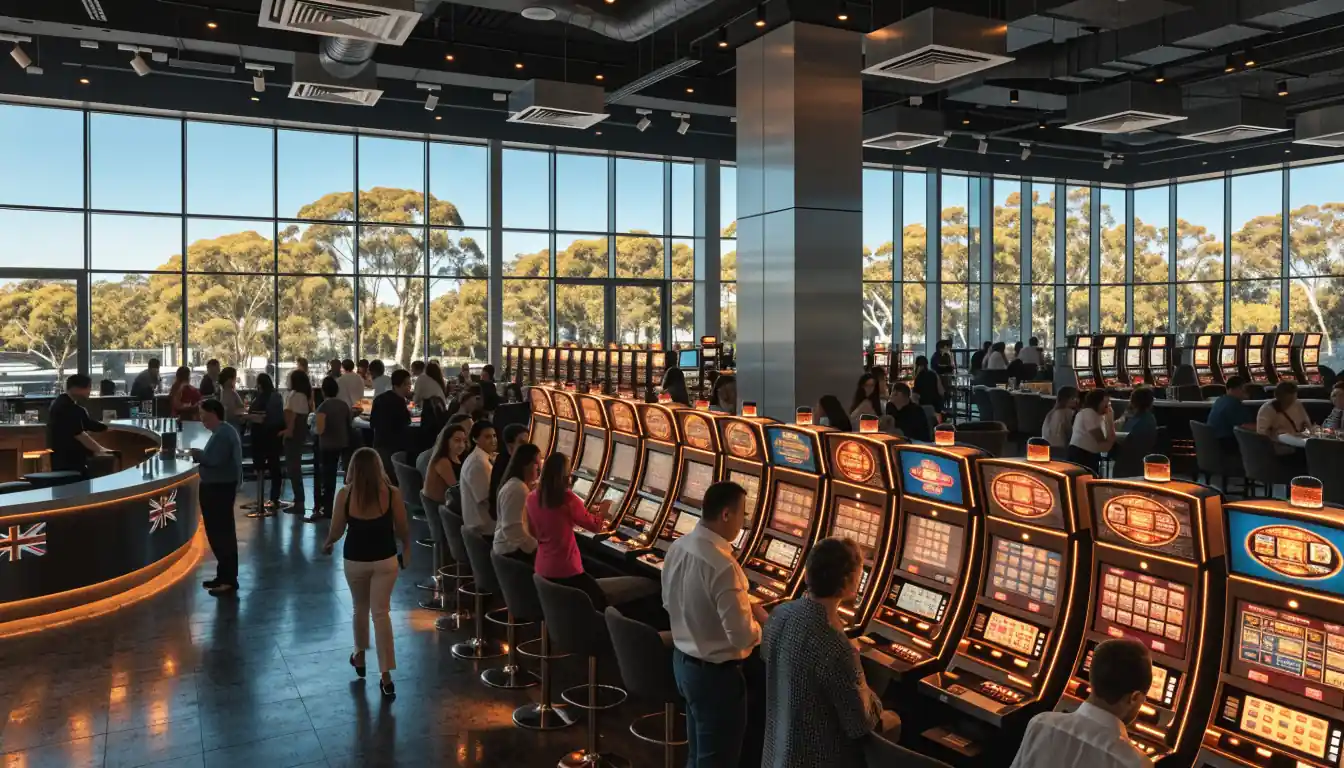
Pokies in Australia: Scope, Popularity and Economic Impact
The pokies Australia argument begins at the pub door, not at the border. Anyone trying to pin down what a “golden pokies casino” might mean in 2026—golden pokies casino, golden pokies Australia, or the longer golden pokies casino Australia 2026 label—has to reckon with a domestic market that is unusually clear on paper and stubbornly cash-heavy in practice. In Australia, gambling advertising during sporting events is treated as a regulatory trigger, not a playful tagline; that phrase belongs to policies and warnings, not to marketing copy. The same caution applies to gambling advertisements on sports jerseys; lawmakers have treated that route as a channel to be cut, not a theme to be celebrated.
So “the golden pokies” does not naturally refer to a licensed Australian online casino. The online casino question is handled elsewhere in this guide; this section stays with the bigger and more visible layer of the Australian pokies industry: the electronic gaming machine, the pub, the club, and the casino, all fed by cash and tracked—imperfectly—by regulation. That domestic scale is the context in which readers interpret online terms, offshore references, and compliance language.
A national habit built into licensed venues
Electronic gaming machines are operated in all Australian states, the Australian Capital Territory, and the Northern Territory. That line is not a metaphor for uniform enthusiasm; it is a straightforward administrative fact that sets the geography of the market. The pokies are not a set of scattered amusements with ambiguous status. They sit inside licensed premises in a way that makes them part of ordinary hospitality infrastructure, typically requiring only routine local entry and not a special gambling destination decision.

This is why the words “pokies casino golden” are incomplete as a geographic description. A casino is a licensed venue type, yet the broader Australian pokies footprint stretches across pubs and clubs, where the term “casino” is often used informally by players and marketers. The distinction is not pedantry. It matters because the legal and compliance environment that surrounds an EGM installed in a clubroom is not simply a call to the gaming floor of a casino resort. When one sees golden pokies casino online language floating around, the immediate question should be whether the phrase points to the physical, licensed venue base or to an online claim that, for Australian residents, is legally forbidden. The legal framework is dealt with in the next section; here, the important point is the scale of the physical market that the rest of this guide references.
Australia also hosts a regulatory network that includes AUSTRAC, the NSW regulator, the NSW Crime Commission, the ACT Gambling and Racing Commission, the Office of Liquor and Gaming Regulation, and ACMA, among others. The structure is fragmented in name but unified at the point of the machine: every premise that operates EGMs is part of a regulated environment that can be tightened, audited, and penalised. The presence of multiple regulators in the field does not mean a casino can invent its own terms. It means the rules are developed across layered jurisdictions, with the machine floor serving as the common interface.
None of this contradicts the everyday language of players. “Pokies” is the usual spoken label, and it covers the same regulated hardware that the law calls electronic gaming machines (EGMs). The vocabulary matters because it tags the same asset class for different audiences: hospitality operators, regulators, and the public. In a market where compliance is often framed as sophisticated engineering, the habit persists at the level of a social ritual. Normality is an administrative achievement.
Scale measured in turnover and losses
When the Australian pokies market is discussed in economic terms, the base figures are not estimates or industry folklore. In FY 2020–2021 Australians placed bets worth almost AUD 150 billion on electronic gaming machines. The sheer size of that annual figure matters less as an advertisement of appetite and more as a demonstration of throughput. Pokies, in aggregate, move enormous volumes of stakes across clubs, pubs, and casinos; the financial system that sits behind them has to process and reconcile that volume.
Also in FY 2020–2021, the total player loss from electronic gaming machines was about AUD 12 billion. Loss, here, refers to the consolidated outcome across player accounts and machine play, not a moral judgement; it is a measured accounting category. The same reporting period records per-capita losses from electronic gaming machines of AUD 608. In the simple arithmetic of that year, the machine sector’s impact is presented as a measurable burden. A figure like AUD 608 per person is not uniform risk; it is an average used to register the effect across a population where usage varies sharply by individual and venue. That average is, however, a fast way to move from the abstract “gambling economy” to a concrete per-person cost register.
Turnover source
The FY 2023 turnover figure of AUD 191.2 billion is reported by complyadvantage.com and should be treated as a source‑specific claim rather than a settled national statistic.
One additional datapoint appears sometimes in market narratives: pokies generated AUD 191.2 billion in gambling turnover in 2023. That figure is reported by one source, complyadvantage.com, and the claim should be treated as such. It is useful as an indicator of scale, but it should not be treated as a settled national statistic independent of the source’s framing. The FY 2020–2021 figures remain distinct in provenance and in period. In 2023 turnover language, the emphasis is on turnover rather than net loss; turnover and loss describe different moments in the player-venue exchange.
In the same breath, international comparisons infiltrate local self-descriptions, with statements like Australia accounts for 3% of the world’s pub and club poker machines. Other reports put the figure closer to about 18% of the world’s poker machines. Both versions circulate; neither should be silently chosen over the other. The discrepancy is acknowledged openly, because it signals a methodological choice in what is counted—pub and club machines, versus a broader stock of poker machines. Readers who discover this sort of divergence while sorting through “golden pokies casino australia” queries should know that the market’s image is shaped by competing statistical lenses. The practical effect is that headline scale statistics in commentary should be attributed and qualified, not absorbed as unambiguous facts.
The economics of a cash-operated machine business
The everyday mechanics of the pokies business keep the market legible and simultaneously vulnerable. Pokies are widely used in Australian pubs, clubs, and casinos. The machines accept stakes in a high-cash environment, which inevitably supports heavy volumes of small transactions. That cash throughput is what regulators call high volume; it refers to frequency and aggregate volume rather than the personal intensity of play. Where there is heavy cash movement, there is an inherent risk of opaque flows. Not because every player is suspicious, but because the record of cash is often fragmented across receipts and redemption slips.
In venues, the routine transaction is simple: cash is inserted, some activity occurs, and a ticket or voucher is produced. Criminals exploit that routine by inserting large sums of cash and performing minimal gambling activity before cashing out to create a false record of winnings. The mechanism is plain and repeatable: the machine provides a transactional timestamp and a printed record; the money moves in and out through apparently legitimate channels. The Australian pokies sector’s economic impact, therefore, includes not just losses and revenue but also a compliance surface to be defended against misuse.
Offenders also purchase winning tickets from other players to convert dirty money into clean, traceable funds. In this version, the machine’s output becomes the bridge between questionable cash and an apparently documented financial outcome. A further method, structuring across venues, involves spreading smaller cash deposits across different venues to avoid AML reporting thresholds. The pattern is a familiar one: distributed obscurity beats concentrated visibility.
That is the quiet economy of EGMs in Australia. It does not announce itself as scandal; it accumulates as an administrative exposure. The sector’s economic impact, therefore, is not only measured in total turnover. It is also measured in the burden of proving what the money was and how it moved. Policymakers and compliance officers do not treat the sheer popularity of the machines as a benign cultural trait. They see in it a system that demands controls, and the next sections address legal boundaries and enforcement directly.
Regulatory environment in outline, not in slogans
The regulatory framework around pokies is not a single rule book. It is a structure of obligations, thresholds, and enforcement expectations that vary by state and venue type. Taxation of gambling operators in Australia varies by state and by type of gambling service. The machine footprint of Australia’s EGMs crosses multiple jurisdictional boundaries at once, even when the player is stationary within a single club. From a compliance perspective, a “golden pokies casino” page that hides regulatory differences behind generic claims is not cautious; it is misleading. There is no domestic real-money online casino licence available to offer Australians the thing such phrases often imply, and offshore licences are not a recovery of legality.
Advertising ban
Advertising gambling on sports jerseys is prohibited by Australian regulation and breaches can result in enforcement action.
Gamblers’ winnings in Australia are not taxed. That statement is often read as consumer advice, but in the context of EGMs and land-based venues it is mostly a legal fact. In other settings, the financial treatment becomes part of a procedural layering: some operators are subject to different record-keeping requirements, with thresholds that depend on the number of pokies on premise. Regulators want both the broad picture—what is being gambled and lost—and the micro picture—whether logs, vouchers, and reports can withstand scrutiny.
The emphasis here must not slide into the full AML discussion that belongs to the next sections. Yet the edges matter because “scope, popularity and economic impact” includes the footprint of enforcement. AUSTRAC issued a guide in 2024 to help firms recognize money-laundering red flags. The guide summarises risk indicators and reminds operators that the machine is not exempt from basic financial hygiene. It names red-flag indicators like unusually high cash access, large deposits, cash transfers, casino disbursement checks, and certain occupations. The language is mundane because the risks are mundane; they occur at the point of transaction, not inside a policy abstract.
Operators are not treated identically. The thresholds engage as the machine count increases. Operators with up to 15 pokies must register with AUSTRAC, keep identification records, and submit suspicious matter reports. Operators with more than 15 pokies must appoint a compliance officer, conduct risk assessments, implement AML/CFT programs, perform customer due diligence, and report cash transactions over AUD 10,000. The two regimes are not arbitrary; they scale the burden to the scale of the operation. Small venues remain regulated, but the administrative rigor expected on large floors is heavier and more layered.
Non-compliance is not an abstract cost. Non-compliant operators may receive remedial directions, infringement notices, civil fines and suffer reputational damage. That sentence sits behind the industry’s public narrative because it is the alternative to a casual “institutional trust” claim. The Australian pokies environment, when read correctly, is one where scope and popularity have built a compliance market as well as a revenue model.
Cash exposure, ticket culture, and the routine of machine traces
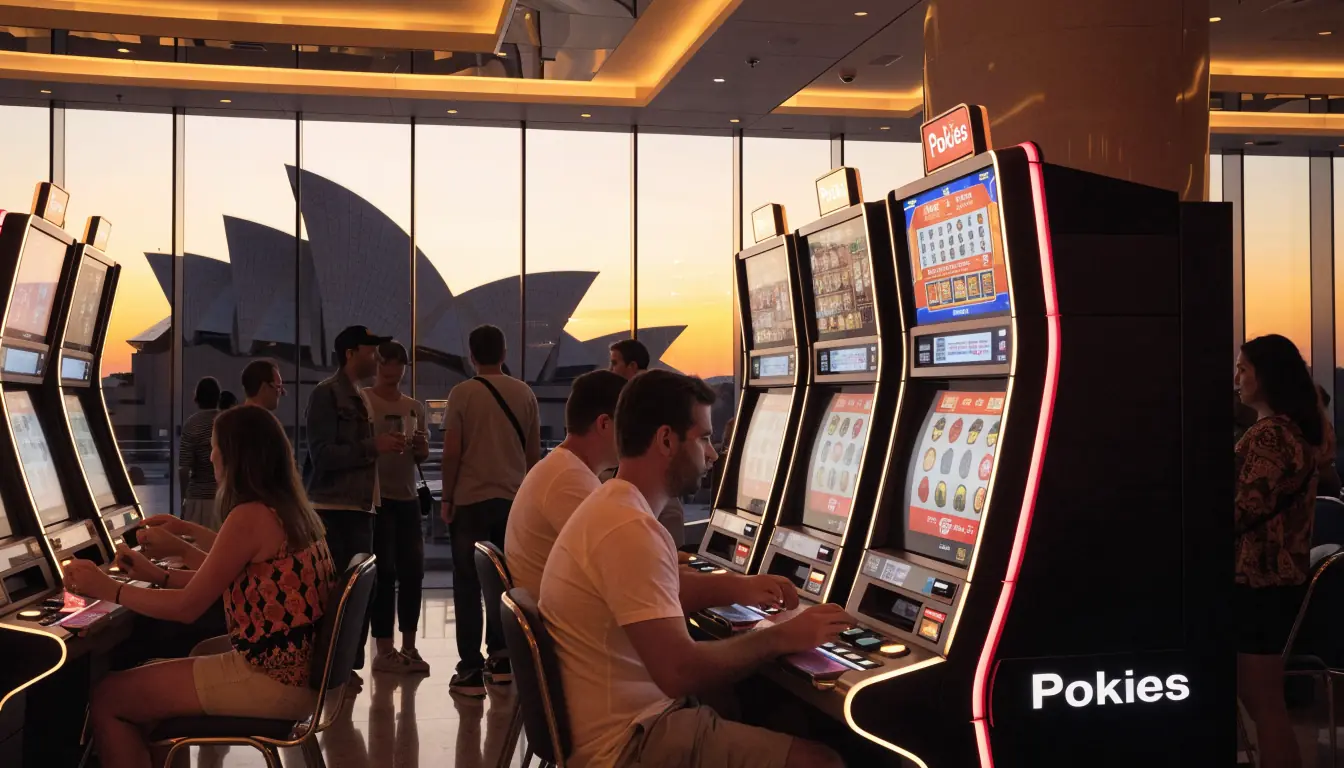
The physical pokies market still operates in a way that creates paperwork in the midst of apparent simplicity. Criminals insert large sums of cash into EGMs, perform minimal gambling activity, and cash out to create a false record of winnings. That behaviour is not a deviation from the market’s core; it is an exploitation of the market’s core functions. Think of the machines as repeat transaction terminals that create a trace, and the misuse loop becomes easier to teach and harder to prevent.
Offenders also purchase winning tickets in order to convert dirty money into clean funds. A ticket can be swapped or bought, but the trace still returns to a machine session and a cash movement. The market’s economic impact therefore includes a logistical shadow: vouchers, tickets, redemptions, and reconciliation. At scale, it is not enough to monitor one terminal; the operator must review the cycle across machines and across venues. That is why AML red flags include large or repeated cash insertions followed by a minimal play and immediate cash-out sequence. In aggregate, that is a cycle that resembles legitimate use at only a single point of observation.
Another pattern is the redistribution of suspicious behaviour over distance. Frequent small redemptions across different venues within a short period are a red flag. The structuring is often designed to avoid AML reporting thresholds, but the machine system still feeds the transactions into records that regulators can inspect. That is why customers refusing identification or using multiple player cards constitute a red flag; those details erode the traceability that regulators pursue. For operators and for regulators, “popularity” includes a certain kind of social legitimacy, and legitimacy weakens as identity and traceability weaken.
Operators with up to 15 pokies are required to register with AUSTRAC, keep identification records, and submit suspicious matter reports when necessary.
Regulators also refer to more general risk indicators, including unusually high cash access, large deposits, cash transfers, casino disbursement checks, and certain occupations. The indicators are not isolated to casinos; they are general financial-behaviour markers that can show up in a club’s day-to-day EGM operation. The machine, seen through the risk guide, is a cash instrument that sits in a highly regulated supportive ecosystem. The economy of the pokies sector therefore cannot be reduced to the player experience; it includes the administrative burden of verifying and documenting flows.
Traceability and pressure points in modernisation
The policy response to cash-associated vulnerability is not only punitive; it is also architectural. Account-based systems and data record keeping are increasingly positioned as the way to improve traceability and reduce anonymity. One source, facctum.com, argues that the adoption of cashless, account-based pokies improves traceability and reduces anonymity. That claim should be treated as the source’s perspective; it is a recommendation and an observed advantage rather than an established universal condition.
Transparent, account-based pokies provide full traceability of deposits, gameplay, and withdrawals, according to the same framing. Regulators recommend tighter customer due diligence, transaction monitoring, and the adoption of cashless gaming systems. Those statements form a policy preference, and they matter to the pokies’ market narrative because they change the economics from merely counting machines to building systems that render flows legible. A regulatory shift towards transparency does not repeal the history of cash; it overlays it with mandates and technical constraints.
There is also a law-and-enforcement layer sitting behind administrative advice. A 2022 NSW Islington Report recommended making NSW pokies cashless by the end of 2028. That recommendation comes from a single source and should be read with provenance. It is not a universal promise that every venue in every state will change overnight; it is a directional pressure on the way pokies are managed. Meanwhile, an amendment to the Casino Control Act 1992 allows NSW casino operators to be fined up to AUD 100 million for compliance failures. The existence of a very high maximum penalty shifts the incentives around machine compliance. Venue privacy becomes irrelevant; oversight becomes programmatic.

The behavioural pattern rests on a loop: cash introduction, tokenised play, ticket redemption, and record-keeping. Modernisation tries to insert stronger controls at the point where the records are generated. If the record exists, the regulator can pursue it; if the record is fragmented across cash transactions, the pursuit costs more and becomes less certain. Economic impact is, in this sense, partly about who bears the burden of demonstrating legitimacy. The costs are not only on the player; they are on compliance teams, auditors, and the reputation risk that follows any scandal.
The geography of the industry and the limits of a slogan
Australia has a complicated administrative geography. The ACT Gambling and Racing Commission supervises a territory that sits inside a larger NSW-regulated environment, while ACMA and AUSTRAC address communications and financial intelligence from Canberra. The Office of Liquor and Gaming Regulation in Queensland operates within its own state’s mix of licensing and enforcement. This does not make the pokies market chaotic; it makes it unevenly explicit. When a national debate invokes “Australia” as a single frame, granular regulators are simultaneously enforcing thresholds at the door of each club.
That unevenness matters for interpretation. Some readers enter this material via searches like the golden pokies, golden casino pokies, or golden pokies mobile. The search phrase is a consumer shorthand, not a legal map. Golden pokies mobile and pokies casino golden may suggest a portable, online product; yet the Australian public record treats real-money online casino play as prohibited to residents under Commonwealth law. The hierarchy of venues remains: casinos, clubs, pubs; regulators at multiple layers; and a market that must be observed within those layers.
Regulatory thresholds
- Up to 15 pokies: registration with AUSTRAC, basic record‑keeping and occasional suspicious matter reports.
- More than 15 pokies: appointment of a compliance officer, comprehensive AML/CFT program, customer due diligence, and reporting of cash transactions over AUD 10,000.
Even the regulatory vocabulary is instructive. FacctGuard, FacctShield, and FacctView show up as product names in compliance-analytics conversations. These are not mere decorative brands; they signal a tooling environment built to monitor transactions and to assist with due diligence. The names are less important than the direction of the industry, which is towards systems that can handle the regulatory burden created by the machines’ popularity.
Meanwhile, the Australian Institute of Criminology and the NSW Crime Commission influence the conversation by framing the harms and the methods that arise in cash-heavy industries. BetStop and Gambling Help Online exist beside the registered operators, using public health and consumer-support channels to keep the debate anchored. A market narrative that tries to isolate pokies economics from social response would be incomplete; the domestic infrastructure of support services is part of the sector’s environment.
Reading the numbers with care and with attribution
The FY 2020–2021 figures anchor the market in an administrative narrative. Bets worth almost AUD 150 billion on electronic gaming machines, total player loss of about AUD 12 billion, and per-capita losses of AUD 608 describe the sector at that period’s scale. The 2023 turnover figure—AUD 191.2 billion as reported by complyadvantage.com—sits alongside with less certainty as a general market norm. Each figure has a scope and a period, and the scope is essential. A turnover line is not the same as an aggregated player-loss line; it is a picture of money moved, not necessarily money lost. The difference is not technical to readers deciding where to allocate attention and where to place compliance controls.

The international share claim also carries a definitional burden. Australia’s share of the world’s pub and club poker machines is variously stated as 3%, while an alternative figure suggests about 18%. The disagreement is not hidden; it is part of the sector’s public record, and readers facing golden pokies casino Australia 2026 wording should treat those numbers as competing frames. A machine census depends on the categories included, and international comparisons often reflect definitions rather than dramatic undercounts or overcounts.
In modern Australian venues, the question of scale is also a question of concealment and pattern. Criminals insert large sums of cash into EGMs, perform minimal gambling activity, and cash out to create a false record of winnings; offenders purchase winning tickets to launder proceeds; structuring spreads smaller cash deposits across venues to avoid thresholds. These are specific patterns documented by AUSTRAC-style risk guidance. They exist as typologies and less as shocking misuses. The pokies’ popularity reads on the balance sheet, but avoidance patterns read in the compliance alert log.
The market says this publicly: pokies are widely used in Australian pubs, clubs, and casinos; high cash volume and limited traceability make them attractive for misuse. It would be inept to treat popularity as equivalent to innocence, and equally inept to treat the regulation as an unarguable burden. The correct frame is one of proportion: a national habit that has accumulated a huge transaction footprint, and a set of obligations designed to keep that footprint legible.
A hard but limited compliance layer
Regulatory thresholds define how much bureaucratic attention each venue receives. Operators with up to 15 pokies must register with AUSTRAC, keep identification records, and submit suspicious matter reports. Operators with more than 15 pokies must appoint a compliance officer, conduct risk assessments, implement AML/CFT programs, perform customer due diligence, and report cash transactions over AUD 10,000. The thresholds may look arbitrary, but they serve as a standard administrative form of proportionality; bigger operations produce more complicated audit trails.
- Register with AUSTRAC when operating up to 15 machines.
- Implement a risk‑assessment programme for larger venues.
- Report cash transactions exceeding AUD 10,000.
- Do not operate more than 15 pokies without a compliance officer.
- Do not overlook the need for customer identification records.
- Do not fail to submit suspicious matter reports when red‑flags arise.
AUSTRAC has a wide remit that includes collecting suspicious matter reports and providing guidance to industry. In 2024, that work included publishing a guide to help firms recognize money-laundering red flags. The guide’s language is deliberately plain: it is meant to be used at the point of transaction, not admired as a policy manifesto. AUSTRAC’s role also creates a distinction between domestic operators and offshore operators who might carry Malta Gaming Authority or UK Gambling Commission licences; those foreign licences do not restore legal status to online casino offers addressed to Australian residents. The domestic reality returns to the machine and to the local venue’s compliance program, not to layers of foreign marketing.
Regulatory non-compliance has material costs. Remedial directions, infringement notices, civil fines, and reputational damage are the tools available to authorities. The specific heavy penalty in NSW—up to AUD 100 million for compliance failures under the amended Casino Control Act 1992—signals that lawmakers are prepared to treat machine operations as a high-stakes enterprise. The pressure is not merely procedural; it is financial and reputational.
One narrow but consequential point: gambling operators should avoid repeating restricted promotional themes such as gambling advertising during sporting events, and gambling advertisements on sports jerseys are prohibited. The reason is legal, and it is not to be treated as a joke or a casual counter-position. A pokies overview is about venues and machines, not about dressing up policy constraints as a form of taste. Phrases that could trigger regulatory attention must be deliberately framed as legal prohibitions, not as marketing language.
The industry’s public mitigations and how they reshape the economics
The public mitigations recommended across reports and regulator notes point to a consistent conclusion: reduce anonymity, increase traceability, and improve due diligence. One source, facctum.com, stresses that adoption of cashless, account-based pokies improves traceability and reduces anonymity; another framing states that transparent (account-based) pokies provide full traceability of deposits, gameplay, and withdrawals. These claims belong to their sources and they recommend a direction, rather than asserting a completed national standard.
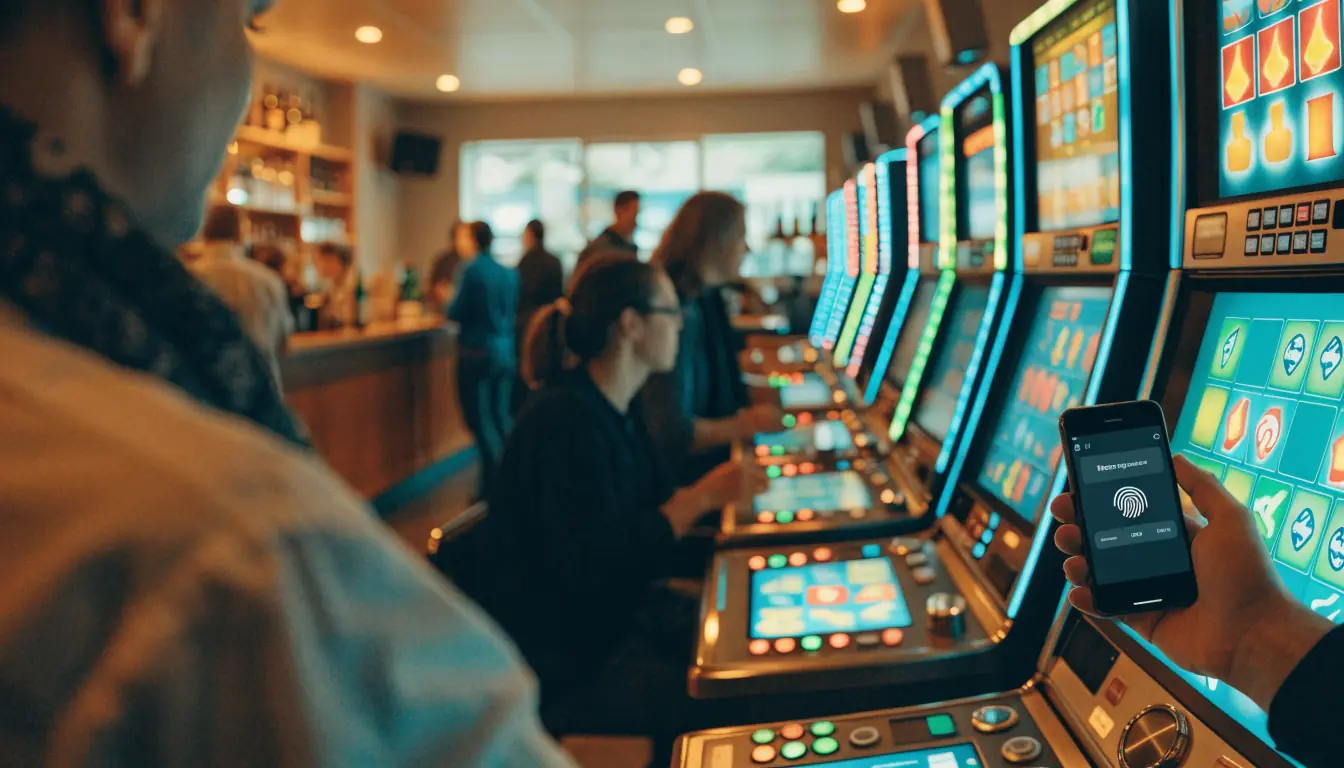
Regulators recommend tighter customer due diligence, transaction monitoring, and adoption of cashless gaming systems. This is the expected scaffold around a popular and heavily used cash technology. As the volume of transactions increases, the tolerable level of opacity decreases. The operator’s task is not to argue against regulation; it is to keep the machine records acceptable under scrutiny. In practice, the incentive is to remove suspicious ambiguity before it becomes a formal report.
Behaviourally, this translates into a set of recognisable patterns to monitor: large or repeated cash insertions followed by minimal play and immediate cash-out, frequent small redemptions across different venues within a short period, and customers refusing identification or using multiple player cards. Each pattern is an actionable regulator-defined flag because it represents a breakdown in traceability, not just a moral failing. The citizen playing the pokies at a club does not see all of this as a policing apparatus, but the industry’s compliance layer sees it as an audit culture.
The economic impact therefore includes a sort of invisible tax associated with maintaining legitimacy. Venue staff, compliance officers, and oversight bodies invest effort into the machinery of record-keeping. The scale of this commitment is a function of the pokies’ popularity. High adoption creates dense transaction trails, and dense trails require stronger systems to interpret. The machine economy in Australia is not only what players put into and get out of the terminals; it is what regulators and operators decide counts as acceptable evidence.
The politics of modernisation, the casino puzzle, and the data trail
The 2022 NSW Islington Report recommendation to make all NSW pokies cashless by the end of 2028 sits within a debate about modernisation rather than prohibition. It should be attributed as such; it is one source’s directional recommendation. Similarly, the assertion that cashless, account-based pokies improve traceability and reduce anonymity, as stated by facctum.com, is a coherent policy opinion rather than an uncontested national condition.
Positive impact
Adopting cashless, account‑based pokies enhances traceability and reduces anonymity, helping operators meet AML obligations more effectively.
Underneath these narratives is a practical consequence for how Australian society consumes gambling. In clubrooms and casinos, the traceability of a stake influences how it is reconciled, reported, and potentially flagged. A ticket bought from another player is different from a stake introduced and redeemed by the same person; the ticket swap conceals the true sequence. A contemporary compliance program tries to remove that concealment by demanding identity, consistent player cards, and verification.
The competitive global comparisons that float through market commentary—the 3% and the 18% versions—also illustrate the way a national industry sees itself. The market is politicised and measured at once. In Australia, the disputes are not merely about bet sizes or expected returns; they are about the infrastructure that produces the records. When a player reaches for “golden pokies mobile” on a search bar, they are often pinpointing a specific expectation of convenience. Domestic regulation treats convenience with a strong filter: online casino offers are not legal to Australian residents, and the local market remains anchored in land-based, audited machines. Regulators like AUSTRAC, NSW authorities, and the ACT Gambling and Racing Commission each frame how those machines should be operated.
Advising a reader to favour licensed operators is common sense in many markets, but in Australia the phrase needs to be checked against local facts. There is no domestically licensed real-money online casino operator available to Australians, and no public register to consult when an offshore site presents a licence from Malta Gaming Authority or UK Gambling Commission. The practical responsibility falls to the operator and compliance regime and to the clarity of local prohibitions. For physical machines, the operators are obliged to handle risk thresholds, identificationRecord keeping, suspicious matter reports, and—for larger floors—the structured controls that come with the higher-compliance burden.

BetStop and Gambling Help Online complement these legal constraints with assistance and responsible gambling messaging. That is part of the domestic environment too: while the machines are an economic engine, the public-health response is institutionally attached to the same industry. Economics and welfare are not balanced as an either-or choice; they coexist as a set of constraints that must be jointly observed. An overview that silently deletes one side is misrepresenting the sector.
Popularity measured through money, misuse and mandate
The recurring misuse patterns map onto the sector’s popularity precisely because popularity multiplies transaction volume. When criminals insert large sums of cash into machines and use minimal play to legitimise redemptions, they rely on the everyday habits of the venue. When offenders buy winning tickets from other players, they rely on the liquidity of the ticketing system. Structuring across venues turns geographic breadth into a defence against thresholds; the familiar landscape of clubs and pubs becomes, in that respect, a distribution network.
Regulators, meanwhile, are left to respond with procedural simplicity and operational heaviness. A venue with 15 or fewer pokies has obligations; a venue with more than 15 has heavier obligations. That stratification acknowledges that an EGM floor can either be modest or resembles a casino-scale operation. The ethical argument about gambling’s place in society is not settled by the threshold, but the administration is made slightly more legible by it. In Australia, the pokies ecosystem’s economics and its regulatory expectations are inseparable because the popularity is a national phenomenon that the state has decided to observe and to control.
The industrial actors who specialise in these controls—FacctGuard, FacctShield, FacctView among them—exist because machine play cannot be trusted to be transparent without systems. In any overview, provider names should be treated as signals of the ecosystem rather than as promotional anchors. They reflect the routine practice of making compliance verifiable. The public expects that normal gambling is a legal and socially acceptable activity, and regulation is the resting state of those expectations.
Physical pokies dominate Australian gambling
Physical electronic gaming machines remain the primary driver of gambling activity and regulatory focus in Australia.
Hence the economic impact of pokies in Australia lives in three layers simultaneously: the money and loss reported in official formats; the typology of misuse drawn in AML guidance; and the heavy administrative superstructure required to keep the whole activity legible. Each layer depends on the other. Without large-scale popularity, the data would be less significant. Without documented misuse, the oversight would be harder to justify. Without the oversight structure, the system’s legibility would decay, and the national habit would descend into opacity. Responsibilities follow scale; oversight follows cash.
A final note on language. Phrases like golden pokies casino, golden pokies, and the golden pokies should be read as search behaviour, not as certificates. The overview separates what the public looks for from what Australia regulates. It is the distinction that makes this section a base for the rest of the guide: subsequent sections on online casinos, money laundering enforcement, and bonus compliance all begin with the same recognition that the pokies in Australia are a large-scale, well-regulated, and cash-centred industry.
Online Pokies and the Australian Legal Landscape
Before you sign up anywhere, it’s worth comparing what each casino actually offers in terms of licensing, welcome bonuses, and cashout speed so you can pick a site that fits how you play.
Bonus: 240% up to A$4,100 + 300 free spins Stands out for its sizeable welcome package, combining a large percentage match with a generous batch of free spins for new players.
License: Curacao eGaming (Roby Games Ltd) · Bonus: 100% up to A$750 + 200 free spins Operates under a Curacao eGaming license and pairs that with a straightforward welcome bonus plus free spins for newcomers.
License: Curacao Gaming Control Board OGL/2023/176/0095 (Hollycorn N.V.) · Bonus: up to A$11,000 + 300 free spins (code NEO100) Holds a Curacao Gaming Control Board license and backs it with one of the larger bonus offers on this list, plus a bundle of free spins unlocked via a bonus code.
License: Curacao OGL/2024/1335/0780 · Bonus: up to A$1,000 + 150 free spins, wager-free · Min. deposit: EUR 20 Licensed under Curacao’s OGL framework, it offers a wager-free bonus with free spins and keeps the entry deposit relatively accessible.
Bonus: up to A$7,500 + 550 free spins across 10 deposits, 50x wagering · Payout speed: crypto under 1 hour, PayID 1-3 business days · Min. deposit: A$20 (A$30 to qualify for the bonus) Spreads a substantial bonus and hundreds of free spins across multiple deposits, and is notable for fast crypto payouts alongside PayID withdrawal options.
License: Curacao eGaming OGL/2024/923/0383 (Antillephone N.V.) · Bonus: up to A$2,000 + 100 free spins across 2 deposits · Min. deposit: A$30 Licensed via Curacao eGaming, it splits its bonus and free spins across two deposits with an accessible minimum deposit requirement.
License: Curacao Gaming Authority (Jumpman Gaming Ltd) · Bonus: up to A$6,600 + up to 250 free spins across 4 deposits Licensed through the Curacao Gaming Authority, it offers a large bonus and free spins spread over four deposits.
License: Tobique Gaming Commission · Bonus: up to A$8,000 + 400 free spins across 4 deposits · Payout speed: crypto ~10-15 minutes, fiat 1-5 days · Min. deposit: A$30 Licensed by the Tobique Gaming Commission, it combines a generous multi-deposit bonus with notably quick crypto payout times.
License: Curacao · Bonus: 100% up to A$500 + 200 free spins, 10x wagering · Payout speed: crypto 30-60 minutes, fiat 1-5 days · Min. deposit: A$10 A Curacao-licensed casino with a moderate bonus and free spins carrying low wagering requirements, plus fast crypto payouts and a low minimum deposit.
License: Curacao Gaming Control Board OGL/2023/176/0095 (Hollycorn N.V.) · Bonus: up to A$1,500 + 200 free spins across 3 deposits Licensed by the Curacao Gaming Control Board, it offers a solid bonus and free spins distributed across three deposits.
The line between a pokie and an online pokie, in Australia, is not a line between a machine and a browser. It is a line between what the Commonwealth tolerates and what it forbids.
The physical machines described above — in pubs, clubs and casinos across every state and territory — operate under a thicket of state regulation. The moment the same spinning reels move online, a single federal statute takes over: the Interactive Gambling Act 2001. Under that law, it is an offence for any operator to offer real-money online gambling to Australian residents. Not difficult, not risky, not discouraged — an offence. The prohibition covers the full spread of casino-style games: slots, blackjack, roulette, poker. Everything a screen can simulate.
What the Act deliberately does not do is criminalise the player. An individual Australian who logs into an offshore site breaks no law; the statute aims its penalties at those who supply the service, not at those who consume it. A curious asymmetry, and one that explains the strange geography of the market. Because operators cannot be licensed domestically, there are no Australian-regulated online casinos at all. The entire real-money online pokie scene lives offshore, beyond the reach of any local licence — which means it also lives beyond the reach of local consumer protection. Search for casinos like Golden Pokies and what surfaces is this unlicensed offshore layer, not a regulated home industry.
Sports betting, by contrast, sits on the legal side of the fence: state and territory licences exist for it. The Commonwealth drew a line that admits a punt on the races but forbids a spin on a digital reel. A line worth remembering.

Where "Golden" Pokies Actually Live
The search results tell the story. Queries for Golden Crown online pokies, Golden Goddess, Golden Egypt, Golden Jaguar, or a Golden Strike pokie online all land on the same shore: overseas operators offering named games to Australians whom the law prefers to treat as visitors rather than protected customers. Whether a title like Golden Goddess or Golden Jungle exists at any particular site is a matter for that site’s lobby — neither the offshore market nor official sources publish a verifiable catalogue. What can be verified is the category: every one of those searches leads away from anything an Australian regulator has approved.
The brick-and-mortar machines, for all their faults, are at least supervised. The online versions answer to no Australian authority. That is the distinction the entire legal landscape hangs on.
What the Law Leaves Untouched
Two features of the system sit oddly comfortably alongside this prohibition. First, gamblers’ winnings in Australia are not taxed — a rule that applies to the legal, physical machines and to whatever an individual happens to collect offshore. Second, the taxation of operators is not a federal matter at all: it varies by state and by the type of gambling service offered. The consequence is a patchwork in which the same machine can be licensed in a club in one jurisdiction under one rate, while no equivalent licence exists anywhere in the country for its online counterpart.
None of this makes the offshore access safer; it merely explains why the anomaly persists. The rules that apply to land-based pokies — and the AML obligations that section three will detail — stop at the offshore border. What crosses that border is, from a regulatory standpoint, nobody’s business but the player’s.
Real‑Money Pokies, Money Laundering Risks and Enforcement
The physical pokies scattered across Australian pubs, clubs and casinos handle enormous volumes of cash every day, and that cash intensity is precisely what draws criminal attention. Where money moves quickly and identity checks are thin, the conditions for laundering are created. The attraction isn’t accidental—it’s structural.

Money mules are recruited to launder money through pokies, according to complyadvantage.com, though this describes one documented scheme rather than a universal market norm. The mechanics are straightforward: criminal networks use intermediaries to feed dirty cash into machines, nominally "play" it, and convert the proceeds into apparently legitimate winnings. The machine becomes a washing cycle.
AUSTRAC responded by issuing guidance in 2024 designed to help firms recognise money‑laundering red flags before they ripen into serious‑matter reports. That guide identifies behavioural patterns rather than naming specific industries, but pokies venues feature heavily in the examples: unusually high cash access, large deposits, cash transfers, casino disbursement checks, and certain occupations all appear on the list. Operators are expected to notice these signals, not wait for a bank to flag them.
The reporting obligations follow a tiered structure based on how many machines a venue runs. Operators with up to 15 pokies must register with AUSTRAC, keep identification records, and submit suspicious matter reports when warranted. It’s a minimal baseline—light enough for small pubs, but still anchored in the national AML/CFT framework. Above that threshold, the compliance weight increases sharply, though the exact mechanisms sit elsewhere in this guide.
What makes pokies particularly vulnerable isn’t merely the cash they accept but the limited traceability of individual transactions. A player can insert notes, press a few buttons, and cash out without ever creating a meaningful record of who they are or where the money originated. Fidelity checks aren’t the venue’s strong suit. That gap is the opening through which laundering schemes slip.
Enforcement isn’t theoretical. AUSTRAC has signalled that gambling venues are active areas of surveillance, and the penalties for non‑compliance stretch from infringement notices to civil fines and reputational damage that no marketing budget can easily undo. Operators who treat AML obligations as optional administrative garnish tend to discover otherwise. The register is public, the guidance is clear, and the red flags are written down—there are no excuses left.
The deeper issue is cultural as much as technical. A gambling format built on anonymity and cash will keep attracting misuse regardless of how many compliance officers a venue appoints. Cashless, account‑based systems would close much of that gap by making every deposit, wager and withdrawal traceable, but adoption remains uneven. Until that shift becomes universal, the pokies will remain both a pastime and a processing facility—depending on who is feeding the machine.
Bonus Offers, Deposit Codes and Compliance Requirements
No-deposit codes, sign-up spins, free chips — the vocabulary of offshore sites that court Australians despite the Interactive Gambling Act 2001. Every one of those "golden" promises lands in the same regulatory net as casino payouts and AML breaches.
Compliance in Australia isn’t decorative. Operators who breach their obligations face remedial directions, infringement notices and civil fines, plus the reputational damage that follows. An amendment to the Casino Control Act 1992 now allows NSW casino operators to be fined up to AUD 100 million for compliance failures. A single penalty can erase a venue’s balance sheet; the menu of bonuses suddenly looks meagre.
What transparent wagering requirements actually demand
A promotion survives only if its conditions are unambiguous:
- Displayed before the deposit. Wagering multipliers, expiry and game weighting must appear first, not at withdrawal.
- No hidden hooks. Bonus terms linked from the promo banner, not in a footer.
- Identity-verified. Users have to verify identity before any withdrawal; bonus play can’t bypass KYC.
- Complaint access. Clear complaint procedures and ADR membership information must be visible to anyone chasing a forfeited bonus.
- Age gate. Only users who are 18 years or older can accept offer terms.
Where most offers fail the test
Offshore sites advertising a no-deposit bonus ignore the wagering preconditions. The code that looks generous is often the trap; the same venues seldom publish ADR or complaint details either. Bonuses require a licence and compliance regime. Australia simply doesn’t issue one for online casinos.
Are crypto casinos legal in Australia in 2026?
No, the Interactive Gambling Act (2001) makes it an offence for online operators to offer real-money gambling, including crypto casinos, to Australian residents.
Are my personal and financial details safe?
Operators with more than 15 pokies must implement AML/CFT programs and perform customer due diligence, while transparent account-based pokies provide full traceability of deposits, gameplay, and withdrawals to improve security.
How to recognise problem signs and where to get help?
Red-flag indicators include unusually high cash access, large cash insertions followed by minimal play and immediate cash-out, and frequent small redemptions across different venues within a short period.
Prepared by the Pokies Payouts Guide editorial staff.