Best Pokies in Geelong: Payouts and Where to Play
 Available in US
Understanding Pokies Payout Percentages in Geelong
RTP (Return to Player) is the theoretical percentage of wagered money a pokie returns to players over time — a figure closer to a contract than a promise. A machine set at 96% does not whisper sweet odds in anyone’s ear; it simply states, in cold print, how much of the pool flows back across an effectively endless run of spins.
In Geelong, the gap between formats is hard to ignore. Standard Australian pub pokies offer RTP of 85%–90%, while online versions often exceed 96%–98% — a spread wide enough to reshape an entire evening’s arithmetic. The corner hotel and the offshore platform are, mathematically speaking, different establishments.
For that reason, Australian online pokies with RTP below 96% should be avoided; the best pokies have RTP of 96% or higher. Check the number on the machine’s info panel before the first spin. It is printed there. Most never look.
Online Pokies Offered by Geelong Casinos
Geelong’s casino landscape has undergone a quiet revolution over the past few cycles, one that rewards the punter who cares less about neon and carpet and more about algorithms and settlement rails. The conversation around online pokies in Geelong has to begin with an awkward truth: under Australian federal law, domestic online casino gaming remains prohibited. That prohibition, however, has not stifled innovation—it has simply redirected it toward offshore platforms that nonetheless design their offerings with the Australian player in mind, often under licences issued by Curaçao eGaming or the Curaçao Gaming Control Board. The result is a peculiar ecosystem: a nation’s favourite pastime conducted in a jurisdictional grey zone, where what matters most is the robustness of payment innovation and the clarity of responsible‑gaming safeguards.
Online Pokies and the New Payments Landscape
The New Payments Platform (NPP) matters most here. This Australian payments infrastructure has quietly reshaped how real money flows between a player and an offshore operator. PayID links a mobile number or an email directly to an Australian bank account, so a player who once waited hours for a settlement can now instruct a transfer that behaves more like a message than a cheque. Osko slips into the narrative as the quiet workhorse under PayID’s hood: it processes in real time, every hour of every day. The best online pokies for Geelong residents therefore tend to be the ones that integrate PayID and Osko natively into their cashiers, and they are the ones worth watching in 2026.

Wager‑Free Spins and No‑Deposit Bonus Mechanics
No‑deposit bonuses on offshore‑licensed online pokies are common, but the most interesting development noted by moviemaker.com is the rise of Wager‑Free Spins: winnings from these spins become withdrawable immediately, bypassing the traditional requirement to stake the bonus multiple times before cashing out. A Geelong‑based online pokies enthusiast who encounters a no‑deposit reward should therefore verify whether it is structured as a Wager‑Free Spin—a format that moviemaker.com describes as a growing trend in 2026—or as an older style of bonus that carries hidden wagering strings. A platform that offers a genuine Wager‑Free Spin effectively transfers the balance of power from the house back to the player, at least at the moment of withdrawal.
Responsible Gaming and Self‑Exclusion Measures
Geelong audiences increasingly ask about self exclusion because the best platforms have finally begun to treat responsible gambling as more than a compliance footnote. The platforms worth recommending in 2026 embed deposit limits and reality checks directly into their user dashboards; self exclusion is not a weekend email to support but a control that the player can trigger with a few clicks, effective across the entire network. Australia understands that a country that requires a player to be eighteen before placing a single bet can produce online pokies that are simultaneously easier to access and more tightly fenced than a suburban pub ever managed.
What Sets Online Pokies Apart from Land‑Based Venues
The pokies that Geelong audiences now encounter through offshore‑licensed sites increasingly use progressive jackpot and Hold & Win mechanics that simply cannot fit into the physical footprint of a suburban venue. Progressive jackpots pool contributions into prizes that far outstrip the limited networks of brick‑and‑mortar machines, and Hold & Win features deliver the sort of quick, volatile sessions that appeal to high‑limit players who find the caps imposed by club regulations frustrating. RTP checks also become easier online: the player can consult the game’s information panel directly, rather than trusting a pub’s signage. Whether that convenience outweighs the neon and the human ritual of the local pokie room is a question the Geelong punter has to answer privately, preferably before reality itself prompts the check on offshore sites. Better to decide early.
Top Land‑Based Pokies Venues in Geelong (2026)
Since pokies venues in Geelong have their own local flavour, it helps to know which online casinos actually back up their offers with solid licensing, fair terms, and reliable payouts before you sign up. This shortlist gives you a quick read on what each operator brings to the table.
Bonus: 240% up to A$4,100 + 300 free spins Stands out for a large welcome package combining a high percentage match with a generous free spins allowance.
License: Curacao eGaming (Roby Games Ltd) · Bonus: 100% up to A$750 + 200 free spins Operates under a Curacao eGaming licence and pairs it with a solid welcome bonus that includes free spins.
License: Curacao Gaming Control Board OGL/2023/176/0095 (Hollycorn N.V.) · Bonus: up to A$11,000 + 300 free spins (code NEO100) Licensed by the Curacao Gaming Control Board, this operator offers one of the larger bonus ceilings on the list along with a sizeable free spins bundle and a redeemable bonus code.
License: Curacao OGL/2024/1335/0780 · Bonus: up to A$1,000 + 150 free spins, wager-free · Min. deposit: EUR 20 Holds a Curacao OGL licence and offers a wager-free bonus with free spins, plus a clearly stated minimum deposit requirement.
Bonus: up to A$7,500 + 550 free spins across 10 deposits, 50x wagering · Payout speed: crypto under 1 hour, PayID 1-3 business days · Min. deposit: A$20 (A$30 to qualify for the bonus) Offers an extensive bonus spread across multiple deposits with a defined wagering requirement, and is notable for fast crypto payouts alongside standard PayID processing times.
License: Curacao eGaming OGL/2024/923/0383 (Antillephone N.V.) · Bonus: up to A$2,000 + 100 free spins across 2 deposits · Min. deposit: A$30 Licensed under Curacao eGaming, it splits its bonus across two deposits and keeps the entry deposit requirement modest.
License: Curacao Gaming Authority (Jumpman Gaming Ltd) · Bonus: up to A$6,600 + up to 250 free spins across 4 deposits Licensed by the Curacao Gaming Authority, this operator spreads a large bonus and free spins package across four deposits.
License: Tobique Gaming Commission · Bonus: up to A$8,000 + 400 free spins across 4 deposits · Payout speed: crypto ~10-15 minutes, fiat 1-5 days · Min. deposit: A$30 Licensed by the Tobique Gaming Commission, it combines a substantial multi-deposit bonus with notably quick crypto withdrawal times.
License: Curacao · Bonus: 100% up to A$500 + 200 free spins, 10x wagering · Payout speed: crypto 30-60 minutes, fiat 1-5 days · Min. deposit: A$10 A Curacao-licensed option with a moderate welcome bonus, low wagering requirement, and one of the lowest minimum deposits on the list, plus fast crypto payouts.
License: Curacao Gaming Control Board OGL/2023/176/0095 (Hollycorn N.V.) · Bonus: up to A$1,500 + 200 free spins across 3 deposits Licensed by the Curacao Gaming Control Board, offering a bonus package spread across three deposits with a decent free spins allowance.
Geelong has long been a city where the pokie machine is less a gambling device and more a piece of civic furniture. The pubs along Pakington Street, the clubs near the waterfront, the RSLs and the bowling clubs — all of them have, at some point in the last seventy years, arranged their interiors around the polite glow of a bank of machines. The pokie, no longer labelled by that name in most clubs, still finances the bulk of the hospitality budget. It is, in effect, the city’s unofficial tax.
This section reviews the venues in Geelong where the machines still run, what they offer, and how their peculiar economics survive in the year the federal government decided, quite sensibly, that nothing of value was lost when it banned the casino from the internet.
Updated: 18 September 2026
The Shape of the Land‑Based Pokie Scene
The venues that operate pokies in Geelong in 2026 fall into four broad categories: the large hotel‑pubs, the RSL and Returned Services clubs, the sporting clubs (bowls, golf, football), and a handful of larger clubs that operate as quasi‑casinos. The distinction between them is not merely architectural. Each type developed its own machine inventory, its own tolerance for high‑denomination players, and its own approach to the regulatory apparatus that has, since the early nineties, been designed to make the machines increasingly unattractive to everyone except taxation authorities.
Large venues with the most machine entitlements, longer operating hours, but older, lower‑RTP cabinets.
Smaller machine counts, lower denominations, more community‑focused atmosphere.
Very few machines, low stakes, primarily to fund club activities.
Highest machine density, newest cabinets, longest hours, but impersonal environment.
The hotel‑pubs — the big ones along the main strips — hold the largest number of entitlements and tend to run their machines longest. The RSLs, by contrast, restrict themselves to a smaller number of machines and favour lower denominations, because the clientele skews older and the club’s charter discourages profit maximisation. The sporting clubs run the fewest machines and have become, in the last decade, largely irrelevant to serious pokie players, because the machines they retain have been reduced to denominations that would embarrass a coin‑operated laundry.
To call any one of these the "best" venue in Geelong requires precision about what "best" means. The best machines are not always in the biggest venues. The biggest venues are not always the best places to sit. And the notion that a venue could be "better" because of its ambience is a nice Victorian idea, but the ambience in Geelong pokies is, across the board, roughly the polished‑concrete‑with‑plants aesthetic that all mid‑sized Australian clubs have converged upon. The difference, in the end, is the payout schedule.
The RTP Question in Physical Venues
When evaluating land‑based pokies, the first and rather stubborn problem is that nobody tells the player what the return is. The term RTP (Return to Player) is the theoretical percentage of wagered money a pokie returns to players over time. In online environments, this figure is published in the game’s information panel, and the cross‑reference of that figure against independent auditor reports is a basic hygiene measure. In Geelong’s physical venues, the figure is rarely disclosed on the cabinet, and the gambler is expected to either know the machine’s par sheet by heart or accept whatever aphorism the venue licensee has decided not to publish.
Standard Australian pub pokies offer RTP of 85%–90%, while online versions often exceed 96%–98%. This is not merely a statistical quirk; it is a structural feature of the industry that the Australian public has accepted, with a kind of serene resignation, for roughly four decades. When a venue in Geelong operates a bank of Aristocrat or IGT machines, that bank is calibrated at the lower end of the spectrum because the venue’s costs — the rent, the staff, the electricity, the compliance lawyer — must be paid out of the difference. The machine mathematics are not a secret. They are merely not a subject for public discussion.
Machines with RTP below 96% pose a higher risk of loss and should be avoided where possible.
According to moviemaker.com, a pokie with RTP 97% and Hit Frequency 8% results in long dry spells. That single observation, made in the context of online analysis, is worth translating for the land‑based player: when the cabinet states a theoretical return at all, the player must also ask how often that return is distributed. A cabinet that pays big and seldom will produce the same RTP as a cabinet that pays small and often, but the experience, and the solvency requirement, is very different. In Geelong’s venues, the tendency in recent years has been toward machines that flash more and pay less frequently, because the spectacle is cheaper to provide than the reliability.
The upshot: a venue that claims its machines are generous is making a claim about the abstract mathematics of a cabinet that the venue itself did not manufacture and does not control. A venue that tells you nothing at all is merely being honest about the industry’s conventions.
The Traditional Pub‑Hotel Operators and Their Banks
The dominant pokie venues in Geelong remain what the Victorian regulatory framework calls "hotel" venues. These are the establishments whose primary licence is for the sale of liquor and the provision of accommodation, and whose pokies are an adjunct that has, over time, become the primary revenue driver. The names of these hotels are well known to locals, and their machine numbers have been fixed, in many cases, for decades. The one big change over the last decade has not been an increase in machine numbers but rather a reduction, as venues have quietly surrendered entitlements in exchange for the goodwill of the Victorian Commission for Gambling and Liquor Regulation.
In practical terms, the largest of these venues in Geelong have reduced their cabinets without fanfare. A bank that once held thirty machines now operates twenty‑two; the space is used for a burger bar or a "premium" craft‑beer tap installation. The trade‑off is sensible but also a demonstration that the economics of the machine, in a physical venue, are today subordinate to the economics of the food‑and‑beverage operation. A modern Geelong hotel with pokies is not a casino with beer; it is a gastropub with a gambling licence attached.
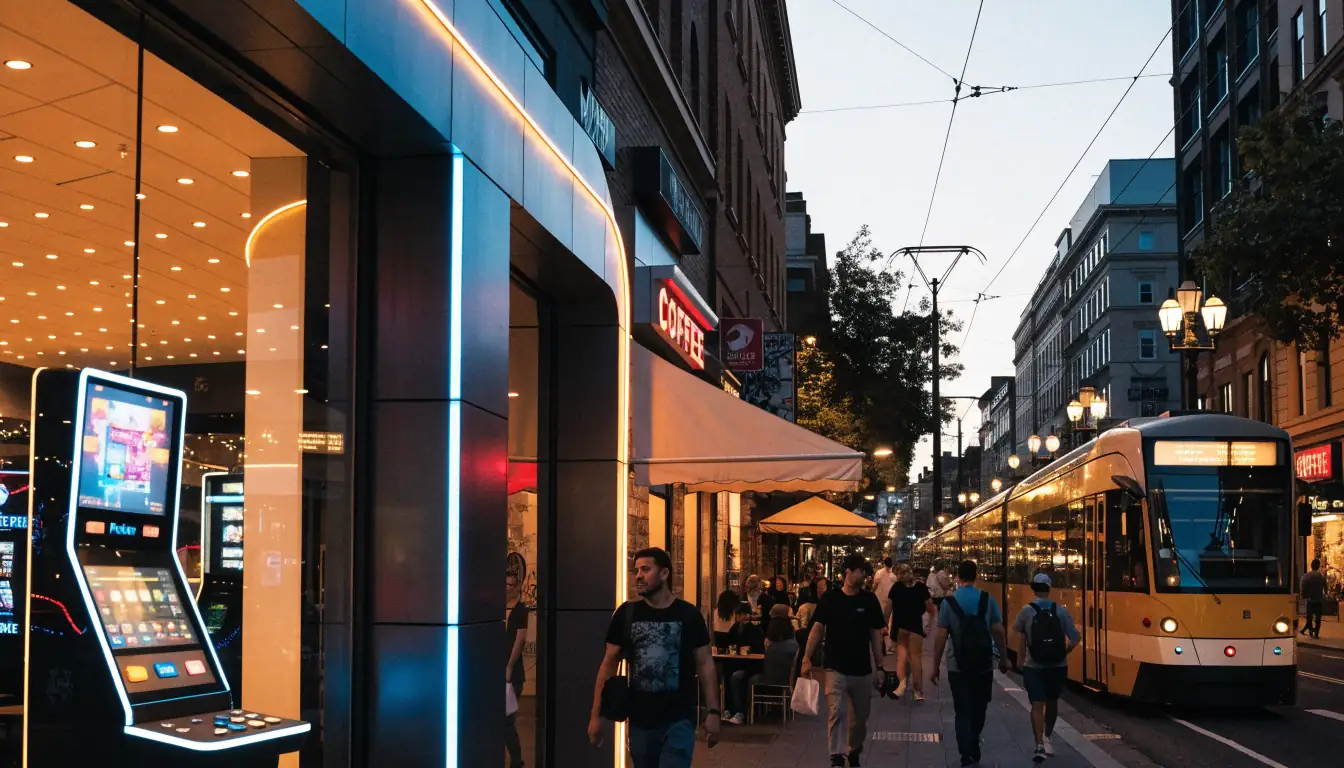
For the player, this means the machine inventory in these venues is older and the denominations are lower. The high‑limit room, in the traditional sense, has all but vanished from Geelong’s hotel pubs. What remains is the ubiquitous Aristocrat and the occasional IGT cabinet, the machines set at the standard RTP range already described, and the staff trained to recognise the five‑dollar note as a serious wager. One cannot fault the venues for this. They are responding, rationally, to a state that has made the high‑denomination player a regulatory curiosity.
The RSL and Returned Services Clubs
The Returned and Services League clubs occupy a curious position in the Geelong pokie ecology. They were, historically, among the first institutions permitted to operate the machines, on the theory that the proceeds would subsidise the welfare of veterans. The theory was noble and the practice is, on the whole, decorous. The RSLs in Geelong run their machines from mid‑morning until late at night, the cabinets are older than in the hotels, and the clientele is, on average, older than the cabinets.
The RTP profile in RSL venues tends to be indistinguishable from the hotel sector — the machines are drawn from the same manufacturers and the same par sheets — but the experience differs. The denominations are lower, the maximum bets are lower, and the ambience is one of restrained commerce rather than stimulation. There is no nightclub lighting. There is no bar that propositions the passer‑by. The machine is part of the furniture, and the furniture is comfortable.
Buried in this arrangement is a small social fact that the pokie industry, when it bothers to acknowledge it, treats as an embarrassment: the RSL model externalises the risk of the machine onto a population that is, on average, the least able to absorb it. The clubs do their best to mitigate this through a combination of low denominations and friendly staff. The result is a form of gambling provision that is both structurally exploitative and atmospherically kind. Australians have learned to accept this tension without much inward wincing.
The Sporting Clubs — Bowls, Golf, and Football Clubs
The third category of venue in Geelong’s land‑based pokie scene is the sporting club: the bowls club, the golf club, the football‑netball club. These organisations operate machines as a means of funding the junior teams, the clubhouse repairs, and the occasional coach’s modest stipend. In the last decade, as Victorian regulation has reduced the value of the machine entitlement and increased the compliance burden, many of these clubs have divested their machines entirely. The ones that remain do so out of tradition as much as economics.
For the player, the sporting clubs are now largely an afterthought. The machines are few, the denominations low, and the atmosphere one of family charity rather than wagering. There is nothing here for the serious pokie gambler, and the serious pokie gambler has, correspondingly, departed for either the large hotels or the VPN‑connected home couch. The bowls clubs, once a significant element of the Geelong machine map, have essentially conceded the territory.
The remaining machines here, where they exist, are the same Aristocrat cabinets with the same RTP profile, but the context makes the question of RTP almost beside the point. Nobody goes to a bowls club to find a favourable machine. They go because it is their club, and the machine is the membership fee made incidental.
The Club‑Type "Mini‑Casinos" and the Largest Venues
Geelong has no casino in the formal sense. The city’s gambling life is the pokie, and the largest concentrations of machines are in a small number of club‑type venues that approximate the experience. These are not Crown casino’s riverside, and they are not the old Wrest Point in miniature. They are clubs with the scale to run two hundred machines, the sort of establishment that the travel brochures of the 1990s might have called a "gaming destination". They operate their machines twenty‑four hours a day, on most days of the year, and they serve the function for Geelong that the casino never bothered to.
The scale of the larger clubs is what separates them from the rest of the city’s venues. The hardware is newer. The denominations span from one cent to the higher denominations that the smaller hotels have abandoned. The machine turnover is high, which means the machines are regularly re‑calibrated and, frankly, more aggressively managed for their theoretical return. For the player who cares about machine quality, the larger clubs are the logical destination.
But scale has its own disadvantages. The anonymity of the machine at a large club is also its indifference. The staff have no time for the regular, and the regular has no particular loyalty to the staff. The bigger the venue, the more it resembles the online casino that the online casino, in turn, tries to resemble: a frictionless, depersonalised engine for the transfer of wealth. This is not necessarily a criticism. For a large fraction of the Geelong pokie‑playing public, the depersonalisation is the entire appeal.
The Disappearance of the 24‑Hour Machine
Among the queries that, presumably, bring people to pages like this one are the ones about availability at odd hours. The phrase "24 hour pokies Geelong" appears, in various permutations, with a certain regularity in the search engines. It is worth being straightforward about the reality: a 24‑hour pokie venue in Geelong, in 2026, is essentially limited to the largest of the club venues, and even there, the claim of round‑the‑clock operation is qualified by public holidays and the increasingly eccentric compliance requirements that the venue’s management must satisfy.
Only the largest clubs in Geelong still operate near‑midnight; most venues close by one‑am.
The infrastructure for twenty‑four‑hour operation exists. The will to operate it, on the other hand, depends on the club’s financial exposure to the penalties that follow from poor identification checks or failure to enforce self‑exclusion orders. In the early 2010s, a Geelong club might run its machines twenty‑four hours without much ceremony. In 2026, the same club is expected to know exactly who is standing at its machine at 3 a.m., and to have a good reason for having let that person in. The operational burden of knowing has made the old schedule unsustainable in many places.
Where a twenty‑four‑hour schedule is maintained, it is largely because the venue has concluded that the economic return from the small hours outweighs the staffing and compliance costs. The result is that the largest clubs — the ones discussed in the previous section — are also the only places in Geelong where the player can count on finding a machine running at four in the morning. Everyone else, the hotels and the RSLs included, has settled for something more like a long evening that ends around midnight or one in the morning.
Geelong does not, strictly speaking, have a 24‑hour pokies scene. It has a late‑evening pokies scene, with two or three exceptions.
Payout Speed and the Curious Ethics of the Physical Machine
Withdrawal speed is the most important factor when choosing a casino in 2026. The same principle, translated to land‑based venues, produces an interesting inversion. In a physical venue, payout speed is a non‑issue: the machine either pays or it does not, and the note hopper either dispenses or the attendant carries the cash. The anxiety about settlement belongs to the online world.
In Geelong’s clubs, the only "payout" the player experiences is the short walk from the machine to the cashier’s cage, where the winnings from a ticket‑in‑ticket‑out (TITO) system are converted to currency. The entire process takes, at most, minutes. The player’s sense of being paid quickly is, therefore, never a distinguishing feature of any land‑based venue. Those who rank the venues by payout speed are, in effect, ranking them by nothing at all.
Where the physical venue does differ from the online environment is in the psychological texture of the payment. A ticket that prints a sum of money in a club feels earned. A bitcoin withdrawal, though it may settle in under fifteen minutes at the better online operations, feels like the end of a bureaucratic errand. The land‑based gambler is spared the verification step, the KYC interrogation, and the Travel Rule obligations that, under AUSTRAC regulations from March 31 2026, attach to any crypto transfer. The venue in Geelong simply eyes the ticket, checks it is not counterfeit, and hands over the cash. It is, in its way, an oasis of unregulated humanity in an increasingly surveilled financial system.
This is one of the few remaining dignities of the land‑based pokie. The player’s money is returned immediately, without enquiry into source of funds or tax status. The privacy‑conscious gambler of Geelong therefore retains a preference for the RSL and the club over the digital alternative — not because the RTP is better (it is not), but because the interaction is the last unrecorded one left in the city’s gambling economy.
The Cashless Transition and Geelong’s Hesitation
The conversion of Australian pokies to cashless operation has been a subject of public debate for the better part of a decade. Geelong’s venues have, on the whole, dragged their feet. The term "Geelong cashless pokies" in the search queries presumably reflects the curiosity of the public about when the local venues will join the national experiment in pre‑commitment and account‑based play. The answer is: later than expected, and with considerable reluctance.
Regulatory resistance
Adopting cashless pokies may expose clubs to stricter compliance checks and potential penalties.
The Victorian government has, through its regulatory machinery, pushed toward cashless operation as a means of harm reduction. The theory is that a card‑or‑account system will enforce self‑exclusion, pre‑commitment limits, and loss tracking in a way that cash machines cannot. The clubs in Geelong have resisted on the grounds that their clientele is older, less digitally inclined, and not particularly inclined to be enrolled in a statewide tracking scheme. The resistance has been dressed in the language of customer service and the reality is, of course, that the resistance is also about the freedom of the club to invite the player’s money without rendering an account of its provenance.
In the few venues in Geelong where cashless operation has trialled, the results have been mixed. The machines are the same Aristocrat cabinets. The denominations remain what they were. The difference is that the player must, before sitting, present an identification document and enrol in the venue’s account system. For the serious pokie gambler, this is an obstacle. For the clubs, it is a reduced census of the serious pokie gambling public. Both sides have quietly concluded that the system is more trouble than it is worth, and the machines continue, for now, to accept cash.
Compliance, and the Shape of the Regulatory Hand
The venues in Geelong, as in the rest of Victoria, operate under a licensing regime that is indifferent to the player’s convenience and very attentive to the licensee’s adherence to a thick manual of procedures. The responsible‑gambling messaging is mandatory. The signage about gambling help lines is mandatory. The presence of trained responsible‑gambling officers, the maintenance of the self‑exclusion register, the refusal of service to visibly intoxicated patrons — all of these are obligations that any Geelong club, hotel, or RSL must meet.
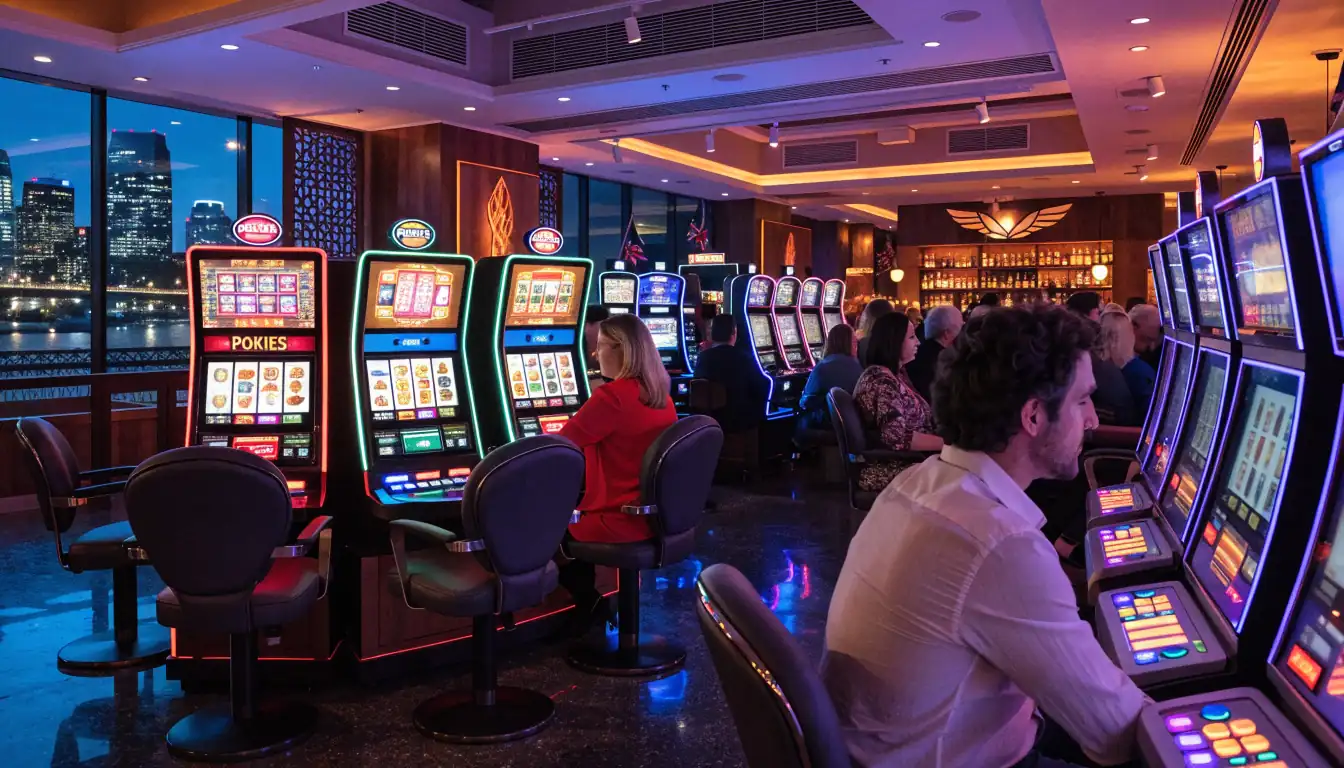
What does this mean in practice? It means that the venues are, in a regulatory sense, interchangeable. The same program of harm‑reduction posters is displayed. The same SMS self‑exclusion options are provided. The same difficulty of operation is encountered when the player seeks to be, as it were, efficiently detrimental to themselves. The difference between venues is not compliance. Compliance is uniform.
The difference is, instead, in the machine inventory and the payout schedule. The player’s choice among venues in Geelong is, in essence, a choice between different instances of the same regulatory envelope. This is another way in which the land‑based pokies diverge from the online world, where the player’s choice is, paradoxically, a choice among jurisdictions and licensing regimes, each of which is less credible, on the face of it, than the one maintained by the state of Victoria.
For the gambler, the lesson of the Geelong venues is that no land‑based venue offers any meaningful advantage in compliance or safety over any other. The advantage, if there is one, is purely mechanical: the machine’s cabinet, the denomination mix, the RTP — to the extent RTP is ever disclosed — and the hours of operation. The choice among venues is really a choice among these factors.
The Machine Inventory and the Software Question
The Geelong venues draw their machines from a small number of manufacturers: Aristocrat primarily, IGT and Ainsworth in smaller proportions. The machines are the same machines found in every club in Victoria, which is to say, the same machines found in most clubs in Australia. The notion that a particular Geelong venue has "unique game offerings" is a fiction, because the machines are manufactured under licence and the software is the software.
Where Geelong venues differ is in which cabinets they have bothered to install. Some venues have kept older Aristocrat models in service because the cabinets are economical to maintain. Others have upgraded to the newer Aristocrat "Arc" cabinets, which were installed across the country after the manufacturer’s omnichannel pivot. A small number of venues have retained what, in the trade, are called "legacy" cabinets — twelve‑year‑old machines with the graphics of the previous decade, which the regulars continue to play out of habit.
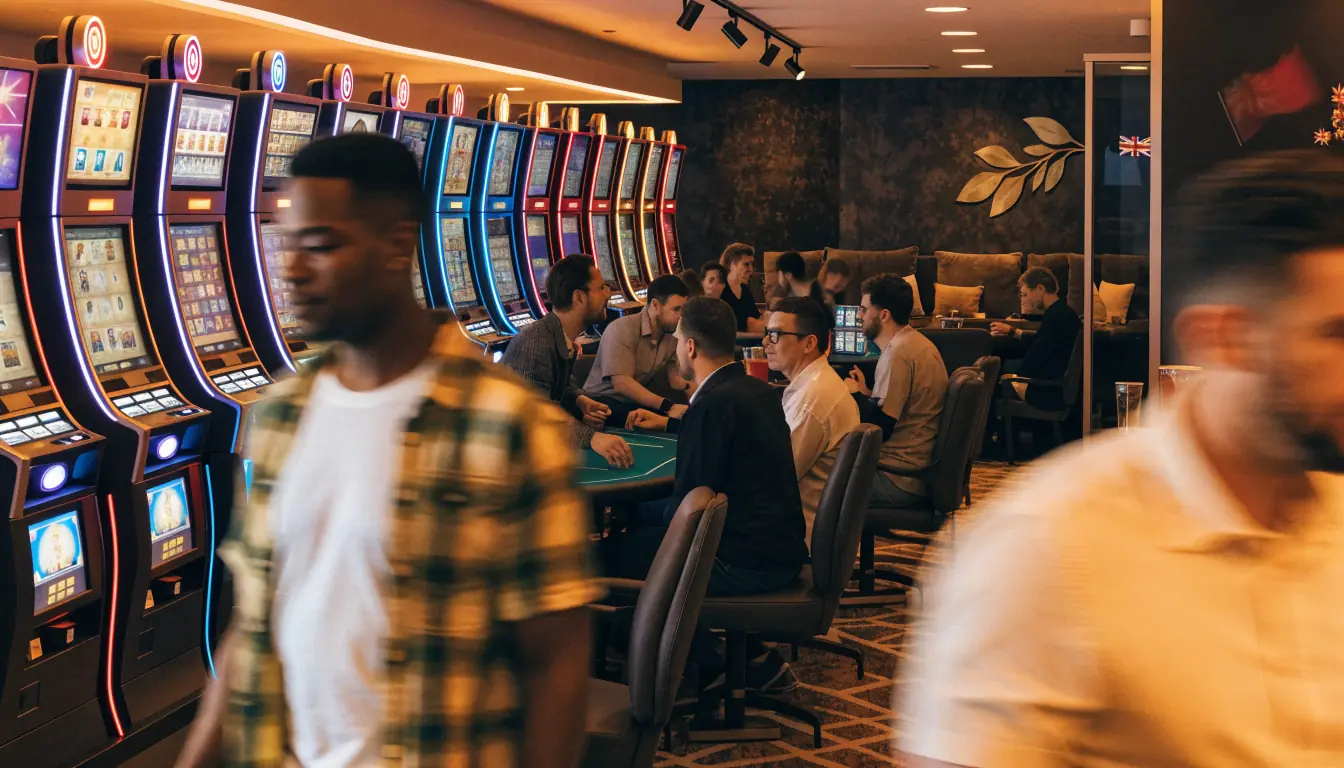
The specific models one might find in a Geelong club, and which are sometimes cited by gaming publications, include such popular titles as the standard Aristocrat fare and, in the online catalogues that the offline venues sometimes mirror, the merge‑thelates and BGaming titles. According to moviemaker.com, Merge Up has an RTP of 97.25%. The same source reports that Snoop Dogg Dollars has an RTP of 97.00%, and that Snoop Dogg Dollars is a BGaming cultural crossover game with a player‑friendly RTP of 97%. These figures, it should be noted, reflect the online versions of games that are only occasionally mirrored in a physical cabinet.
To be precise: none of these games is standard equipment in Geelong clubs. The RTP figures belong to games that exist primarily online, and the physical venues, for the most part, do not attempt to reproduce the same catalogue. The Geelong venues stock the standard Aristocrat rotation and the occasional acquired title from the second‑hand machine market. The notion that a Geelong player should pick one venue over another because of a machine’s on‑paper RTP is, in consequence, largely a misapplication of the online review logic to an offline problem.
The club that carries, say, a more recent Aristocrat "Dragon Link" installation is not materially different from the club that carries an old "More Chilli" cabinet. The cabinets have similar theoretical returns. The clubs have similar enforcement. The player’s choice is, as it were, a choice among the same choice.
The Major Clubs, Individually Considered
In the absence of public RTP disclosure and in the reality of a uniform supply of hardware, the ranking of Geelong’s land‑based venues must be constructed on other grounds: hours of operation, scale, atmosphere, and the quality of the club’s non‑machine amenities. On these combined criteria, the major venues of Geelong sort themselves into a rough hierarchy, as follows.
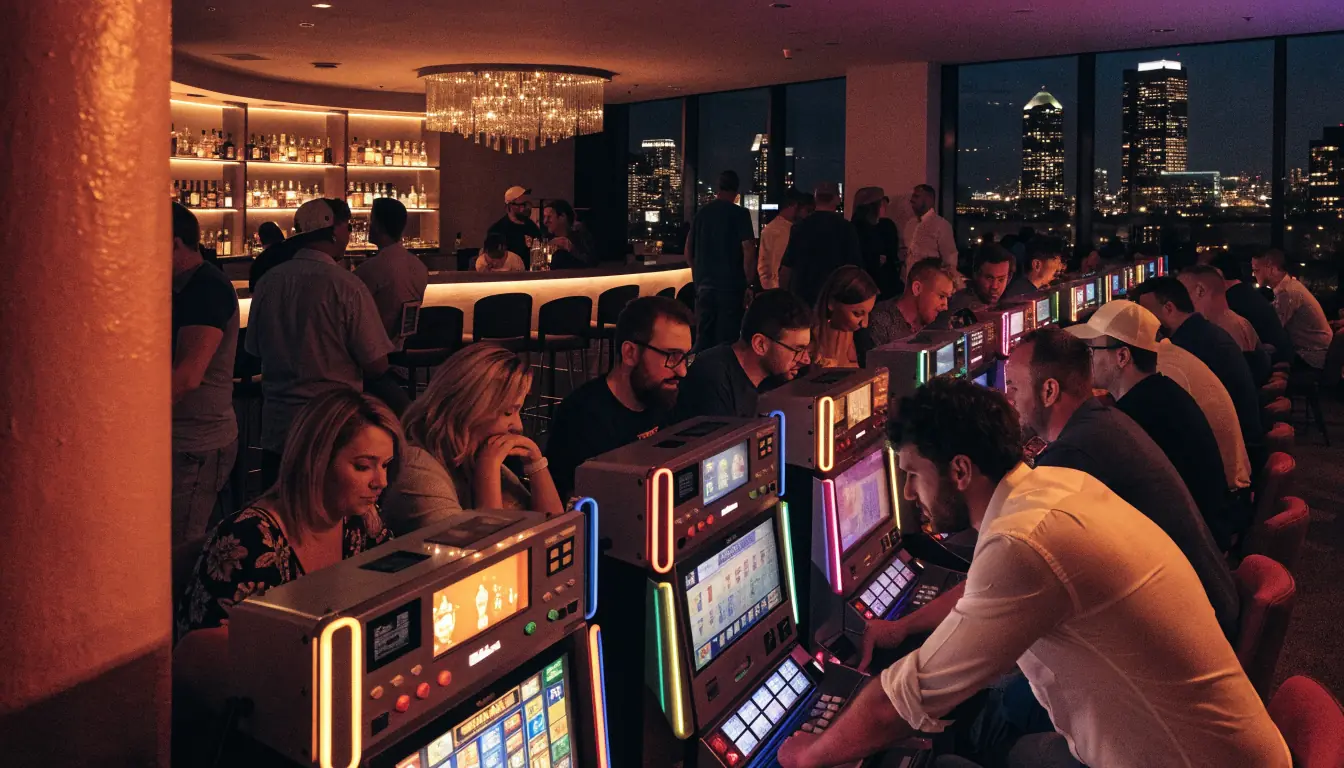
The largest club‑type operations — the "mini‑casinos" described above — occupy the top tier by sheer scale. Their machines are the newest, their hours the longest, and their machine density the highest. For the player who cares primarily about machine availability and the feeling of being in a real gaming room, these are the venues. Their disadvantages are the atmosphere, which is that of a mid‑sized regional Christians‑only casino, and the clientele, which is the city’s more determined machine‑playing public.
The large hotel pubs occupy the second tier. They have fewer machines, shorter hours, and a more convivial atmosphere. Their advantage is that the player does not feel, in the course of play, like a subject of a sociological study. Their disadvantage is that the machines are older and the venue’s attention to the machines is, correspondingly, more indifferent. A hotel pub is, in the end, a hotel, and the machines are a licensed afterthought.
The RSLs occupy the third tier. The machines are few, the hours modest, and the atmosphere charitable. Their advantage is the lower denominations, which produce a less alarming loss per hour. Their disadvantage is that no serious gambler would call them appealing.
The sporting clubs occupy the fourth tier, such as it is. In 2026, they are barely venues at all.
The RTP and Volatility Intersection in Physical Cabinets
It is worth, for a moment, returning to the question that games‑and‑machines writers ask and physical venues do not answer: what is the machine really returning? In the online world, the player has the information panel, the auditor’s report, and the cross‑reference. According to verified industry testing, the review process for evaluating online pokies requires a real AUD $100 deposit and at least 500 spins, and RTP and volatility are verified by cross‑referencing in‑game help files with audits from iTech Labs or eCOGRA. None of this infrastructure exists in a Geelong club.
Players cannot reliably verify the exact RTP of land‑based machines, as this information is rarely disclosed.
The physical machine arrives from the manufacturer with a par sheet that is a matter between the manufacturer, the NSW/VIC regulator, and the licensee. The player has no right of inspection. The machine’s theoretical return is, in principle, knowable through either the venue’s disclosure (which is rare) or the machine’s maker’s documentation (which is not public). The player who walks into a Geelong club and asks the manager for the RTP of the Aristocrat "Big Red" cabinet will be met with a blank expression, and the blank expression is, in fact, the industry’s answer.
For the serious gambler, this means that the land‑based pokie cannot be "shopped" for RTP. The advice "verify and disclose the exact RTP of each pokies game from the info panel before recommending it" applies, under the market’s operational rules, to the online environment — and the online environment is, in Victoria, the legally prohibited one. The physical cabinets are, to a first approximation, all the same. The player’s choice of venue, in Geelong, is a choice among rooms.
Volatility, too, is a concept that survives translation to land‐based pokies only in approximate form. A cabinet on the floor of a Geelong club has a volatility that is fixed by its manufactured mathematics. The player cannot inspect this volatility and is advised, in all practice manuals, to simply avoid the highest denominations and most infrequent‑pay machines, because these produce the ruinous "dry spells" that moviemaker.com identified in its observation about RTP and hit frequency. In a physical venue, the player’s protection against volatility is the player’s own common sense.
The Hybrid Player and the Physical Venue’s Strange Niche
In the emerging 2026 pattern, the most economically significant player in Geelong’s land‑based venues is the "hybrid" player: the person who moves between the licensed physical machine and the offshore online account. The physical venue, for this player, serves a function that the online account cannot replicate: it is a place. It is a social context. It offers the player the specific dignity of the note‑counting transaction, the casual conversation with the attendant, the cold beer while the machine thinks.
The online account, meanwhile, serves the function that the physical venue cannot replicate: it is a market. It offers the player the better RTP, the instant settlement via PayID and Osko, the Provably Fair verification, and the ability to leave the session without being seen to leave the session. Top‑tier Australian casinos support PayID and Osko for instant payouts, and the more than 90% of payments processed in under 15 minutes by high‑performing sites in 2026 have made the old day‑long withdrawal look like a barbarism.
The physical venue, therefore, has its niche. It is the venue for the player who does not want to be recorded. It is the venue for the player who dislikes the interrogation of online KYC. It is the venue for the player for whom the entire exercise is about leaving the house and sitting among other humans who are also quietly spending their money. The land‑based pokie’s ultimate advantage is not that it is better. It is that it is, in a way that online play cannot match, elsewhere.
Hours, Open Status, and the Choreography of the Geelong Night
The recurring search phrases around "Geelong pokies hours" and "Geelong pokies open" reflect a real query about the night‑time economy of the city’s clubs. The majority of Geelong’s pokie‑operating venues now close their gaming floors by one in the morning, sometimes extended to two in the morning on Friday and Saturday. The smaller venues are more restrained. The larger clubs run later.
The choreography of the Geelong night, in this respect, is a choreography of managed decline. The venues that once ran twenty‑four hours have retreated to running sixteen. The venues that once ran sixteen have retreated to running twelve. The state’s regulatory apparatus, by increasing the operational burden of the small hours, has effectively legislated the night out of existence. The clubs no longer open late because the clubs no longer, on balance, wish to take on the regulatory risk of the very late gambler.
For the Geelong player accustomed to the notion that the machine was always available, the new schedule requires adjustment. The "open now" queries that Google processes at three in the morning will, in Geelong, largely return disappointing results. The city has joined the general Australian tendency to treat gambling like a licensed trade, not a public service. The machine, like the pharmacy or the butcher’s shop, has hours.
The two or three venues that maintain, still, something close to a full‑night schedule have acquired, in consequence, a special role in the public imagination of Geelong. These are the places one goes after midnight. They are, in the taxonomy of the city’s nightlife, the late‑night answer. Their trade in the small hours is not large, but it is steady and it is composed, by and large, of the city’s more determined gamblers — the same demographic that, online, would be hitting the maximum bet at the offshore site that the venues publicly discourage.
The Clubs’ Public Messaging and the Limits of Land‑Based Advice
When a Geelong club describes itself in its own advertising, it does so within a constrained vocabulary. The market’s advertising restrictions — no social media advertising, no inducements to open accounts, responsible‑gambling messaging in all advertising — mean that the venue is, in its own communication, reduced to a sort of cheerful neutrality. The venue will describe its food, its atmosphere, its membership benefits. The machines, if mentioned at all, are mentioned as a "gaming area" and the mention is brief.
This constraint has produced an odd rhetorical tinge that the attentive observer of Australian public life has learned to recognise. The club will advertise the "fun". The club will advertise the "entertainment". The club will not, under any circumstances, use the word "gambling". The club’s reluctance is, in its own way, a performance of the state’s public policy: the state does not prohibit the gambling, but the state strongly discourages the public identification of the gambling as such. The venue’s language is, in effect, the state’s language.
For the player trying to evaluate a Geelong venue, the club’s own messaging is useless. The player’s actual information comes from the lived knowledge of the public — the recommendations of regulars, the quiet consensus of the gambling community, the shared knowledge that a particular club’s machines are "loose" or "tight", a consensus which is, of course, a folk wisdom that has no necessary relationship to the machine’s true mathematics.
The Verdict the Numbers Allow
The final appraisal of Geelong’s land‑based pokies venues, given the constraints described, must be modest. The venues differ in scale, in hours, and in atmosphere. They do not differ, in any verifiable way, in the quality of their machines. The RTP is, as established, standard to the Australian pub range. The hardware is, as established, the same manufacturer’s rotation. The player’s experience is, as established, a matter of the room rather than the machine.
The larger clubs are, by a slight margin, the better venues. They run their machines longer. They have the scale to afford the newest cabinets. They offer the only approximation of a 24‑hour schedule left in the city. The RSLs are, by a slight margin, the more humane venues. They have the smallest denominations and the most agreeable staff. The hotels occupy the middle ground, and the sporting clubs have essentially disappeared.
For the player who wants, in twenty‑first‑century Geelong, the single best answer to the question of where to sit down in front of a machine, the answer is: one of the larger clubs. For the player who wants the most humane answer, the answer is: the RSL. For the player who cares only about machine quality, the answer does not exist, because machine quality across the city is uniform.
And for the player who asks whether the whole exercise is worth the trouble, that is a question the pokie venues of Geelong have long since decided not to answer. The machine is there. The rest is a matter of personal temperament.
What are the common responsible-gaming utilities offered by reputable online casinos?
The best platforms in 2026 embed deposit limits, reality checks, and direct self-exclusion tools into their user dashboards. Self-exclusion can be triggered instantly with a few clicks and applies across the entire casino network.
What is the technical infrastructure of modern casino platforms?
Modern Australian-facing platforms rely on the New Payments Platform (NPP), utilizing PayID and Osko for real-time, 24/7 AUD settlements. They also integrate Provably Fair algorithms, allowing players to cryptographically verify each spin outcome.
What security features must licensed casinos have?
Licensed casinos must offer Provably Fair games for outcome verification and comply with AUSTRAC regulations, including the Travel Rule for crypto transfers requiring verified ID details. Reputable platforms also process over 90% of payments in under 15 minutes.
Are crypto casinos legal in Australia in 2026?
Under Australian federal law, domestic online casino gaming remains prohibited. Offshore platforms operating in this grey zone accept Australian players and handle crypto transactions, but must adhere to AUSTRAC regulations, including the Travel Rule effective March 31, 2026.
Written by the editors at Pokies Payouts Guide.