
Top Online Casinos in Australia for Real Money

- The Australian Online Casino Landscape in 2026
- Our Editorial Methodology for Ranking Real‑Money Casinos
- Core Casino Game Types Accessible to Australian Players
- What Makes an Online Slot Worth Playing
- Online Roulette Options for Australian Gamblers
- Understanding Australian Pokie Platforms
- Bonus Structures and Important Player Disclosures
- The World’s Most Popular Slot Machines and Why They Appeal
- How Australian Online Casinos Fit Into the Global Market
- Largest Physical Casino and Pokie Venues in Melbourne
The Australian Online Casino Landscape in 2026
No online casino operating in Australia holds an Australian licence. Not one. There is no domestic authority that grants such a thing, no local regulator sitting behind the scenes checking payout tables, and no register a curious player could consult to confirm anyone’s legitimacy. Every real-money slot, every roulette wheel, every live dealer table available to a player sitting in Perth or Hobart runs from somewhere else entirely — Curaçao, Malta, sometimes further afield still. The industry has a tidy name for this arrangement: offshore online casinos. It’s a polite term for a fairly blunt fact.
The reason for this arrangement is not accidental. The Interactive Gambling Act 2001, the Commonwealth’s answer to the internet arriving at the door of the gambling industry, makes it illegal for an operator to offer, host, or advertise real-money online casino games from within Australia. Slots, blackjack, roulette, poker against the house — all of it sits on the wrong side of the law if run domestically. Sports betting and lotteries got a different treatment and remain licensable at the state level. Casino games did not. The result is a peculiar split: Australia has a thriving culture of online pokies and table games, and none of it is allowed to be supplied locally.
With so many online casinos chasing Australian players in 2026, a quick side-by-side look at licensing, bonus structure and payout speed helps narrow down which sites are actually worth a closer look.
Bonus: 240% up to A$4,100 + 300 free spins Stands out for a large percentage-based welcome bonus paired with a generous batch of free spins, making it worth a look for players chasing sign-up value.
License: Curacao eGaming (Roby Games Ltd) · Bonus: 100% up to A$750 + 200 free spins Operates under a Curacao eGaming license and offers a straightforward welcome package combining a matched bonus with a solid number of free spins.
License: Curacao Gaming Control Board OGL/2023/176/0095 (Hollycorn N.V.) · Bonus: up to A$11,000 + 300 free spins (code NEO100) Licensed via the Curacao Gaming Control Board under Hollycorn N.V., this operator backs its offering with one of the larger welcome bonuses on the list plus free spins unlocked with a specific code.
License: Curacao OGL/2024/1335/0780 · Bonus: up to A$1,000 + 150 free spins, wager-free · Min. deposit: EUR 20 Holds a current Curacao license and offers a wager-free bonus structure with free spins, plus a clearly stated low minimum deposit requirement.
Bonus: up to A$7,500 + 550 free spins across 10 deposits, 50x wagering · Payout speed: crypto under 1 hour, PayID 1-3 business days · Min. deposit: A$20 (A$30 to qualify for the bonus) Spreads a sizeable bonus across multiple deposits with a defined wagering requirement, and backs it up with fast crypto payouts alongside PayID processing within a few business days.
License: Curacao eGaming OGL/2024/923/0383 (Antillephone N.V.) · Bonus: up to A$2,000 + 100 free spins across 2 deposits · Min. deposit: A$30 Licensed by Curacao eGaming under Antillephone N.V., this site splits its welcome bonus across two deposits and keeps the minimum deposit accessible.
License: Curacao Gaming Authority (Jumpman Gaming Ltd) · Bonus: up to A$6,600 + up to 250 free spins across 4 deposits Backed by a Curacao Gaming Authority license through Jumpman Gaming Ltd, it offers one of the larger multi-deposit welcome packages combined with a solid free spins allowance.
License: Tobique Gaming Commission · Bonus: up to A$8,000 + 400 free spins across 4 deposits · Payout speed: crypto ~10-15 minutes, fiat 1-5 days · Min. deposit: A$30 Licensed by the Tobique Gaming Commission, this operator combines a substantial multi-deposit bonus with notably fast crypto payout times and a low minimum deposit.
License: Curacao · Bonus: 100% up to A$500 + 200 free spins, 10x wagering · Payout speed: crypto 30-60 minutes, fiat 1-5 days · Min. deposit: A$10 A Curacao-licensed site with a lower wagering requirement on its welcome bonus, fast crypto payouts, and one of the lowest minimum deposits on the list.
License: Curacao Gaming Control Board OGL/2023/176/0095 (Hollycorn N.V.) · Bonus: up to A$1,500 + 200 free spins across 3 deposits Operating under the same Hollycorn N.V. Curacao license structure, it offers a multi-deposit welcome bonus with a solid free spins component.
So the supply comes from abroad, and has for years. This is not a grey area that recently opened up, nor a workaround discovered by enterprising operators. It is the entire structure of the market. Ask where an Australian-facing casino is licensed and the honest answer, every time, is: not here.
Who the law is actually aimed at
It’s worth being precise about what the Interactive Gambling Act does and doesn’t do, because the two get confused often enough to cause needless anxiety. The Act, along with its 2017 amendment, targets operators, advertisers, and payment or service providers — the businesses running the show, not the people logging in to play a hand of blackjack after dinner. An operator offering these games to Australians without appropriate standing is in breach of the law. A player opening an account with that same operator is not committing an offence by doing so.

This distinction matters because it shapes everything else in this guide. Individual Australians are not prosecuted for using offshore casino sites. The regulatory pressure — and there is real pressure, of the kind explored later in this guide — falls on the companies supplying the games, not the households playing them. That’s a deliberate policy choice, not an oversight, and it has held since the law’s amendment nearly a decade ago.
None of which amounts to an endorsement. A market built entirely on offshore supply, with no domestic licensing body to lean on, puts the burden of discernment somewhere it doesn’t usually sit in a regulated industry: on the player, and on whoever is doing the comparing on their behalf.
What "offshore" means for the player, practically
The offshore structure isn’t a footnote — it’s the operating condition for every recommendation that follows in this guide. It means there’s no local licensing authority whose seal can be treated as a guarantee. It means dispute resolution, complaint handling, and game fairness all trace back to whichever jurisdiction issued the operator’s licence, not to an Australian regulator. It means the phrase "check the register" doesn’t apply here, because there is no local register to check.
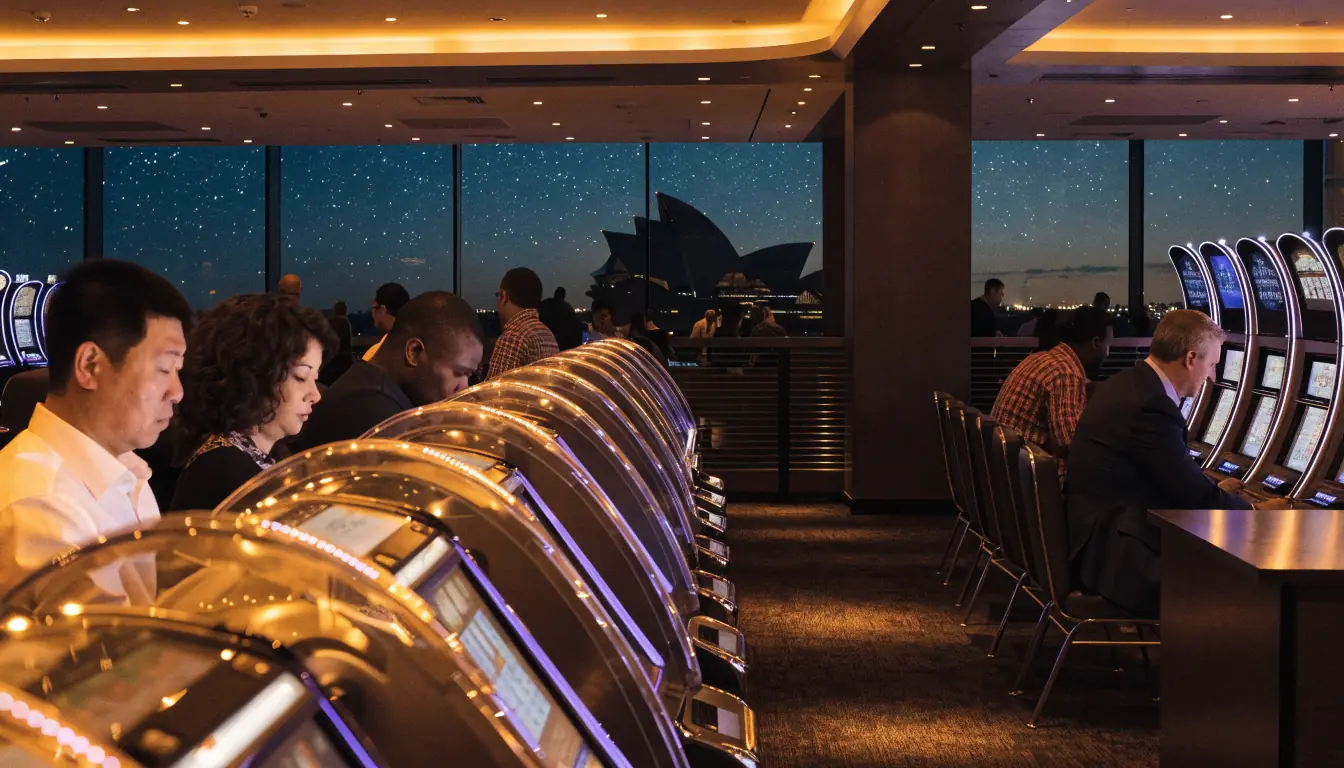
It also means the quality gap between operators can be wide, and rarely advertised honestly. Two offshore casinos can look nearly identical on the surface — same fonts, same promises of a warm welcome bonus, same grid of slot thumbnails — while differing enormously in how they handle withdrawals, verification, and the fine print of their terms. Nothing about the offshore model prevents a well-run casino from operating properly. Nothing about it stops a poorly run one from cutting corners, either. The label "offshore" describes a jurisdictional fact, not a quality signal in either direction.
That’s the gap this guide is built to address.
An independent read on a market with no referee
There being no domestic referee for this industry is exactly why an independent comparison matters more here than in a market with a functioning local licensing body. This site exists as an independent comparison resource for the offshore online casinos available to Australian players — not as a storefront for whichever operator pays best, and not as a rebranded advertising feed dressed up as editorial content.
The ratings behind every casino discussed in the sections ahead come from research and verification carried out on each operator’s terms, licensing claims, and player-facing conduct — not from advertising budgets or referral arrangements. Commercial relationships, where they exist, play no role in shaping which casino ranks where. A casino that pays well and behaves badly gets treated as a casino that behaves badly. That’s the whole point of doing this work independently rather than outsourcing judgment to whoever bids highest.

It would be easy enough — and cheaper — to build a list around commission rates and call it a ranking. It happens across this industry constantly, and it’s part of why so many "top 10" pages read identically regardless of which operators actually deserve the position they’re given. The offshore structure of this market, with no regulator standing behind any of it, makes that shortcut more dangerous here than most places, not less. There’s no licensing body to catch the difference between an honestly ranked casino and a paid placement. There’s only whoever wrote the ranking.
What this sets up
The chapters that follow work through the practical texture of that market: how casinos are actually assessed and why that process should hold up to scrutiny, what categories of games Australians can access and where payment restrictions bite, what separates a slot worth spending time on from one that isn’t, and the specific mechanics of roulette variants, pokie platforms, and bonus terms that Australian players run into in practice.
None of it changes the underlying fact laid out here. Every operator under discussion is offshore. None is Australian-licensed, because no such licence exists to hold. Playing at one is not an offence for the individual involved — the law was written, and later amended, to leave players alone and press instead on the businesses supplying the games. What changes from casino to casino, and matters considerably more than where the company happens to be incorporated, is how honestly it behaves once the account is open and the money is real.
That’s the landscape. Everything specific comes next.
Our Editorial Methodology for Ranking Real‑Money Casinos
A list of ten casinos is easy to produce and easy to fake. Anyone with a spreadsheet and an affiliate link can publish one by lunchtime. What separates a ranking from an advertisement is what happens before the list gets written: who checked the terms, who read the fine print on withdrawal limits, who noticed that a bonus voids itself the moment a player tries to cash out early.
All operators are offshore and hold licences from jurisdictions such as Curaçao or Malta.
Only casinos using recognised game studios are considered suitable.
Operators must provide transparent withdrawal terms; otherwise they are excluded.
That distinction is the whole point here. Rankings are built on research and verification, not on which operator pays the best commission. Advertising spend does not move a casino up the table, and no commercial arrangement is allowed to touch the ratings themselves. It would be convenient to claim otherwise sounds noble; it also happens to be true, which is the less common combination in this industry.
What gets checked, and in what order
Each operator under review is assessed against the same fixed set of questions, applied identically regardless of size or reputation:
- Licensing and legitimacy — whether the casino holds a recognised offshore licence and whether its terms match what it advertises.
- Game providers — whether titles come from established studios or from anonymous suppliers nobody can vouch for.
- Withdrawal conditions — how account verification is explained, and whether it appears only after a win rather than before deposit.
- Bonus structure — rollover multiples, maximum-bet caps, and whether the wagering can be voided by a technicality buried in clause nine.
- Payment options — which methods are supported for Australian players and what, if anything, they cost.
A casino that fails on withdrawal transparency does not get a lower score with a caveat. It does not appear on the list at all. The same applies to bonus terms that punish an early cash-out or hide behind unfavourable game-contribution tables. These are not stylistic quibbles; they are the difference between a genuine offer and a trap dressed as one.
Where the checking happens
The process leans on public terms and conditions, published payout policies, and direct testing of account creation and withdrawal flows where possible. None of it depends on a press release from the operator. A casino’s own marketing copy is treated as a claim to verify, not a source to quote.
Feedback as part of the process, not an afterthought
Readers who have actually deposited, played, and tried to withdraw notice things a desk review misses — a support line that never answers, a minimum that turns out higher than advertised. That feedback feeds directly into how entries are revised and how future coverage gets prioritised.
Anyone flagging an inaccuracy, a dead link, or a change in an operator’s terms can reach the editorial team by email at [email protected]. Email remains the most reliable route in; messages go to a person, not into a filter that sorts them by keyword. Replies come within two working days, which is slower than a chatbot and considerably more useful than one.

Reviewed on a cycle, not once and forgotten
Terms change. A casino with a fair rollover this quarter can quietly tighten it the next. Entries are revisited on an ongoing basis rather than published once and left to go stale, because a ranking that never gets updated is really just an old opinion wearing a fresh headline.
None of this guarantees a perfect outcome for every player at every table. It does mean the casinos that make the cut have been asked the same hard questions as everyone else, and the ones that couldn’t answer them aren’t here.
Core Casino Game Types Accessible to Australian Players
Offshore casino lobbies tend to sort themselves into a handful of families, and the sorting matters less for entertainment value than for how money moves in and out of them. The categories are familiar enough: pokies, table games, live dealer rooms, and a scattering of specialty formats like scratch cards or bingo variants tucked into a side menu nobody clicks until they’re bored of everything else.
Credit‑Card Ban
Credit cards have been banned for online gambling in Australia since June 2024, meaning deposits must use alternative methods such as e‑wallets or cryptocurrencies.
Pokies dominate by sheer volume, occupying most of the real estate on any lobby page. They ask nothing of the player beyond a stake and a spin, which is precisely why they’re the default entry point. Table games — blackjack, baccarat, various roulette wheels — require a little more attention and reward familiarity with odds rather than luck alone. Live dealer rooms sit between the two: a real person dealing cards or spinning a wheel on camera, streamed to a screen, designed to simulate the feeling of a floor without the floor.
None of these categories differ much in how they’re coded or hosted. Where they differ, sharply, is in how a player is allowed to fund them.
The payment layer nobody advertises
Every game type on the list assumes money arrives and leaves without friction. In Australia, that assumption doesn’t hold uniformly. Credit cards have been banned for online wagering nationwide since June 2024, which closed off what used to be the simplest route into any of these game categories. It wasn’t a niche restriction aimed at high-risk products; it applied across the board, pokies and table games alike.
Even before that ban, Australian banks were already declining most card payments sent to merchants coded as gambling operators. The 2024 prohibition formalised what many card issuers were already doing on their own initiative — treating a casino deposit as a transaction to be blocked rather than processed, regardless of which game the player intended to fund.

The practical effect is that the game type someone chooses to play has become slightly less relevant than the payment type they’re forced to use to reach it. A live dealer blackjack table and a pokie reel cost the same to access, in the sense that both now depend on a funding method other than a card. Whether that method is a digital wallet, a cryptocurrency transfer, or a local bank rail, the choice is made upstream of the lobby, not inside it.
What this means across categories
Table games and live dealer rooms, being closer in spirit to a physical casino floor, are sometimes assumed to carry different payment rules than pokies. They don’t. The card ban and the banks’ own reluctance apply to the merchant category as a whole, not to individual games within it. A roulette wheel streamed live and a five-reel pokie are, from a bank’s perspective, identical line items to be refused.
This is worth sitting with for a moment, because it inverts a common assumption. Players often imagine that the game determines the payment experience — that "serious" table games might come with smoother banking than casual slot spins. In practice, the funding bottleneck sits above the game selection entirely, applied uniformly by the institutions that never intended to be part of the entertainment industry in the first place.
The games themselves — their mechanics, odds, and pacing — are where the real distinctions between categories live, and those distinctions are worth exploring on their own terms. The money getting there, unfortunately, follows one set of rules regardless of which game is waiting at the other end.
The Interactive Gambling Act targets operators, not individual players – you won’t be breaking the law by playing offshore sites.
What Makes an Online Slot Worth Playing
RTP is the number worth reading before any other. It states, over a very long run, the share of wagered money a machine returns to players rather than to the house. Nobody wins on the strength of a published RTP in a single sitting — the figure describes the machine’s arithmetic, not a promise about any particular Tuesday night. Still, a higher published RTP is a better long-run proposition than a lower one, all else equal, and it is the closest thing a slot offers to a stated set of terms.
Volatility is the other half of the equation, and it gets far less attention than it deserves. A low-volatility pokie pays smaller amounts often; a high volatility pokie holds its money back for longer stretches and then pays in a larger burst. Neither is objectively better. They are different shapes of the same risk, and a player who dislikes long dry spells will find a high-volatility title exhausting regardless of what its RTP promises on paper. Matching volatility to temperament matters more than most bonus terms.
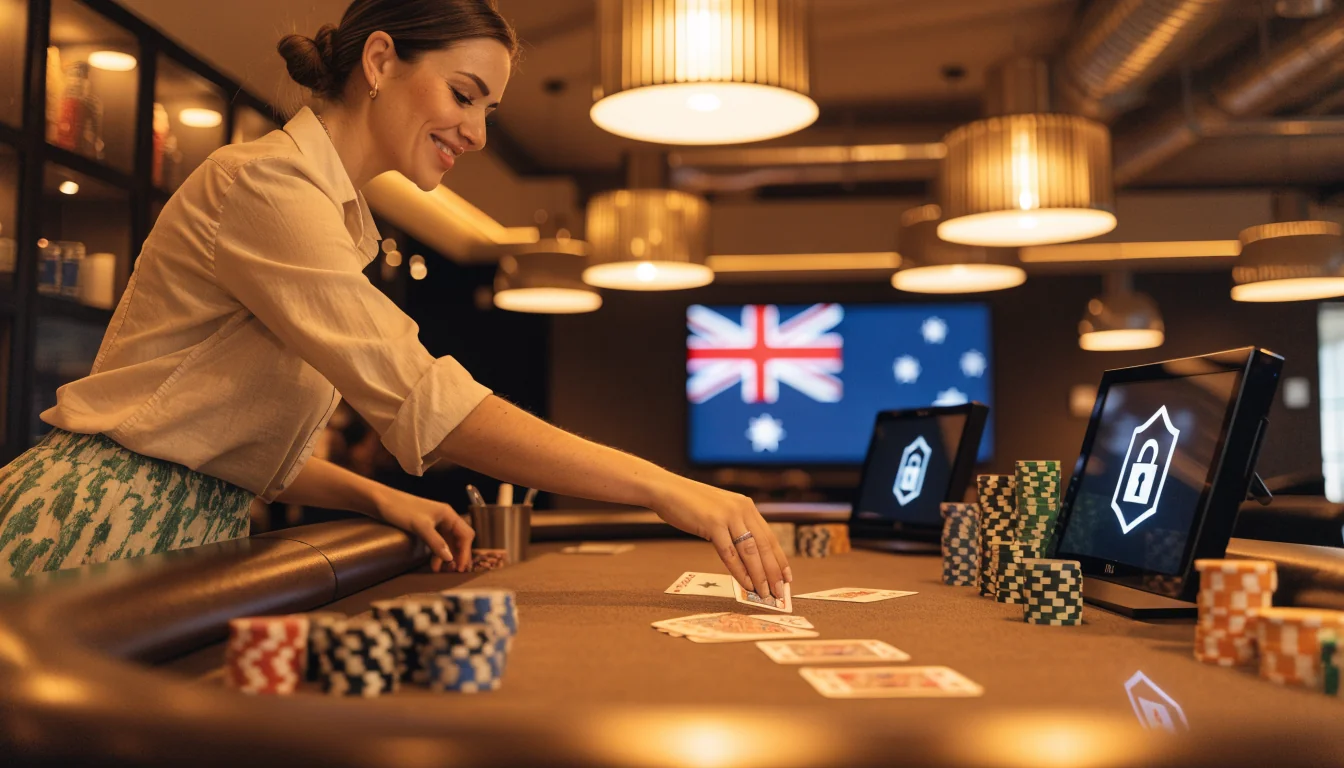
Payout handling is the part nobody markets but everyone eventually notices. It covers how a jackpot is structured — whether it sits fixed, rises progressively, or is capped in some way — and how the mechanics behind bonus rounds and multipliers actually resolve a win once it happens. A slot can carry an impressive headline number and still be a poor bet if the path from spin to payout is opaque. Technical quality lives in these mechanics: the maths behind the reels, not the marquee behind the title.
The arithmetic that doesn’t change
None of this arithmetic changes what happens once money leaves the machine. Recreational Australian players are not taxed on what a pokie pays out. The Australian Taxation Office treats gambling returns as the product of luck rather than assessable income, and that holds whether the win is modest or large — there is no threshold at which the classification flips, so long as the play stays recreational rather than a consistent income-generating activity. The slot’s RTP and volatility settle what a player is likely to see over time. Tax law has already settled what happens to it afterwards, and the answer is: nothing.
RTP
Return to Player (RTP) is the theoretical long‑term percentage of wagered money that a slot returns to players.
That said, the maths of any individual machine sits inside a wider pattern that isn’t flattering to dwell on. One industry review put the average annual loss per Australian adult gambler at over A$1,200 — a figure worth naming precisely because it belongs to a specific source and a specific year, not to some settled national average that repeats itself indefinitely. Treat it as a snapshot, not a constant.
Reading a slot before playing it
A short list of what to check before treating a title as worth the time:
- Published RTP — look for the figure directly, not a marketing description of it.
- Volatility rating — low, medium or high, and whether that matches the player’s patience for dry spells.
- Jackpot structure — fixed, progressive, or otherwise capped.
- Bonus round mechanics — how multipliers and free spins actually convert into a payout, not just how often they trigger.
- Provider transparency — whether the operator publishes these figures at all, or leaves players to guess.
None of these checks require trusting an operator’s tone. They require finding the number, or noticing its absence.
The absence is its own answer. A slot that hides its RTP has told a player something, just not in words.
Online Roulette Options for Australian Gamblers
Roulette survives the move online with less distortion than most casino games. A slot can be rebuilt entirely around a licensed cartoon franchise; roulette is a wheel, a ball, and a set of bets that has not needed reinvention since the format settled a century and a half ago. What changes for the player sitting in Melbourne or Perth is not the game but the layer wrapped around it: which software renders the wheel, whether a dealer is visible, and how long it takes to get money back out once the session ends.
The variants on offer
European roulette, with its single zero, remains the standard configuration across offshore platforms serving Australian players, and it is the version worth seeking out deliberately rather than accepting whatever loads first. American roulette, with the additional double zero, still appears on many sites, quietly carrying worse odds for the player under an identical-looking wheel. French roulette turns up less often but rewards the search when it does, through rules that soften losses on even-money bets under specific conditions.
Live dealer roulette is where the online version diverges most visibly from a random number generator spinning in a server rack. A camera, a real wheel, and a croupier working a table somewhere replace the animation, and the game runs at the pace of an actual spin rather than a computed one. For players who distrust the abstraction of software-generated outcomes, this is the closer analogue to a casino floor, transmitted rather than simulated.

Who builds the wheel
The variant a site offers is only half the picture; the studio behind it is the other half, and it explains why two tables labelled "European Roulette" can feel like different games. Live studios stream dealers from fixed sets with consistent camera work and betting interfaces, while RNG-based tables draw on software libraries built by providers who also supply slots and table games to the same operators. The practical effect for a player is continuity: the same studio’s roulette tends to share visual language and betting controls across the casinos that license it, so learning one table teaches the next.
Getting money back out
Placing a bet on red or black is the easy part. What separates a roulette table worth playing from one that isn’t shows up after the win, at the point of withdrawal, and this is where the game intersects with the payment questions that matter more to Australians than to players in markets with domestic licensing.
KYC verification is required before withdrawal at most Australian real money casinos, and roulette winnings are not exempt from that step regardless of how the bet was placed or how quickly the wheel stopped. The documents get requested, the identity gets checked, and only then does the payout process begin — a sequence worth expecting before it happens rather than discovering after a win, which is precisely the order some sites try to reverse.
Withdrawal Checklist
- Verify your identity documents are up‑to‑date.
- Check the casino’s KYC requirements before requesting a payout.
- Choose a payment method known for fast processing (e.g., crypto or e‑wallet).
- Review any minimum withdrawal limits.
- Confirm there are no pending bonus wagering conditions.
Once verification clears, the method chosen for cashing out determines the wait more than the game that produced the winnings did. Cryptocurrency withdrawals at Australian online casinos are often processed within minutes to a few hours, according to one industry report — a range that owes more to blockchain confirmation times than to anything the roulette table did differently from a slot machine. Withdrawal speeds at top Australian casinos vary more broadly, with some processing payouts within minutes and others taking a few days, per the same source, which makes the payment method a more useful predictor of the wait than the casino’s marketing copy.
E-wallets such as Skrill, NETELLER, ecoPayz, and PayPal are commonly used for smoother ongoing play, functioning as a holding account between the casino and a bank rather than a direct line to either. PayID is accepted by some offshore casinos as well, offering fast AUD deposits through local bank transfers — useful on the way in, though its role on the way out depends on the individual operator’s setup rather than any standard shared across the market.
None of this is specific to roulette in the way that volatility or RTP is specific to a slot. A roulette win and a pokie win draw from the same withdrawal pipeline, the same KYC gate, the same list of payment rails. What roulette adds to the equation is a game whose outcome a player can watch unfold in something close to real time, live dealer or not — a small mercy in an industry otherwise built on numbers generated somewhere out of sight.

The wheel, at least, doesn’t pretend to be anything other than what it is.
Understanding Australian Pokie Platforms
A pokie site is not a scaled-down casino. It is a different piece of architecture, built around one machine repeated in a thousand variations, and everything about the platform bends toward keeping that machine spinning with as little friction as possible. Table games ask a player to wait for a dealer, a shuffle, a seat. Pokies ask for nothing but a tap.
That difference shows up first in how the sites are structured. Lobbies are sorted by provider and theme rather than by stake, because the product being sold is variety of spectacle, not variety of odds. Search filters favour "new," "popular" and "jackpot" over any filter that would let a player compare payout mechanics side by side. It is a retail floor, arranged the way retail floors are arranged: to keep the trolley moving.
The money side is where the platform reveals what it actually is. Deposits are engineered to be trivial — small enough that hesitating over the amount never becomes a reason to close the tab. Withdrawals are the opposite kind of engineering, and they vary by the wallet used rather than by the operator’s goodwill. According to one industry survey of Australian-facing casinos, payout speeds at the leading sites range from minutes to a few days depending on the method chosen. The same survey noted that cryptocurrency withdrawals tend to clear faster than other channels, often within minutes to a few hours, while standard e-wallet transfers sit somewhere in between.
- Use a reputable e‑wallet for seamless deposits.
- Test the withdrawal speed of your chosen method before staking large amounts.
- Keep your KYC documents ready.
- Rely on credit cards for casino funding.
- Ignore the casino’s withdrawal policy details.
- Assume offshore licences guarantee player protection.
E-wallets occupy a specific niche in this ecosystem. Skrill, NETELLER, ecoPayz and PayPal are widely used at Australian-facing pokie platforms less for their speed than for the friction they remove from repeated play — a card has to be re-entered and re-verified in ways a linked wallet does not. That convenience is the entire pitch. It is also, on a platform built to keep a spin button pressed, exactly the feature worth noticing.
None of this makes a pokie site interchangeable with a live blackjack table or a roulette wheel with a dealer’s name attached to it. Those formats depend on pace being visible — a hand dealt, a ball dropped. Pokies depend on pace being invisible, on the interval between spins shrinking until it disappears. The platform’s job is to make deposit and play frictionless and to let withdrawal remain, structurally, the one point in the transaction that asks the player to wait.
That asymmetry is not an accident of poor engineering. It is the business model, described plainly.
Bonus Structures and Important Player Disclosures
A welcome bonus looks like generosity. It is, more precisely, a marketing instrument with a cost baked into its fine print, and the print is where the actual terms live. The offer that matters is never the headline figure but the rollover attached to it — how many times a deposit and its bonus must be wagered before the balance becomes withdrawable, which games count toward that target, and whether a maximum bet size can quietly void the whole arrangement if ignored.

Entry costs vary less than the marketing around them suggests. Across the five casinos reviewed here, a deposit of A$20 opens an account, and Neosurf users can start from A$10 where the payment method is accepted. That threshold, at least, is not buried in a footnote.
What deserves more attention than the size of a bonus is what happens to it. A rollover should be clearly stated before signup, not revealed after a win. Terms that void winnings for withdrawing early, or that lean on unfavourable game-weighting tables to make the wagering harder than it appears, are the kind of detail a bonus page rarely puts in bold.
There is also the matter of scale. One industry review puts the average annual loss per Australian adult gambler above A$1,200 — a figure worth sitting with before treating any bonus as free money. It is not a regulatory statistic, and it should not be read as one. It is one dataset, cited as such, and it points the same direction as common sense: promotional credit is a cost of doing business for the operator, recovered somewhere in the terms.
Legal disclosure sits alongside commercial disclosure. Operators offering these bonuses are offshore and unlicensed under Australian law, and the Australian Communications and Media Authority can request that internet providers block a domain outright — a risk with no bearing on whether the wagering terms were fair, only on whether the site is still reachable tomorrow.
None of this makes a bonus worthless. It makes the terms the actual product being offered, and the headline number the least useful part of it.
Offshore market realities
Players must focus on licensing transparency, payment method reliability, and clear bonus terms rather than assuming local regulation provides safety.
The World’s Most Popular Slot Machines and Why They Appeal
Every casino floor, whether in Vegas or streamed onto a phone in Melbourne, tends to circle back to the same handful of themes: Egyptian gods, fruit symbols, and roaming wilds that promise a multiplier just out of reach. The appeal isn’t mysterious. Familiarity sells. A player who recognises a title from a land-based visit or a friend’s phone screen is more likely to trust it than something entirely new, and providers know this well enough to keep reskinning the same mechanics under new names year after year.
What travels less well across borders is the paperwork attached to winning. In many jurisdictions, a big pokie hit triggers tax forms, identity checks, and a conversation with a revenue office before the money is even usable. Australia skips that step entirely. A $5,000 pokie prize and a $50,000 jackpot are treated identically under local tax rules — neither gets declared, and no paperwork is required at tax time regardless of the amount won.

That distinction matters more than it might first appear. Global slot popularity is often measured in markets where the win itself is only half the transaction; the other half is proving it to a tax authority. An Australian player hitting the same globally popular title faces none of that second half. The number on the payout screen is the number that stays.
It also explains why so much marketing language around "world’s favourite slots" doesn’t translate cleanly to a local audience. The mechanics are shared. The reporting obligations are not. What’s left, once the tax question is set aside, is a simpler one: does the game itself hold up on its own terms.
Reputation, in the end, outlasts novelty.
How Australian Online Casinos Fit Into the Global Market
No Australian jurisdiction issues licences for online casino games, so every operator serving this market is, by definition, an outsider looking in. That puts the country in an odd position among its peers. Elsewhere, regulators build tiered licensing systems and tax structures around the industry; here, the entire sector exists in the space the law was written to close.

The scale of the workaround is what stands out. This is not a handful of rogue sites slipping through a gap. It is a standing global industry, operating across dozens of licensing regimes, treating the Australian market as one more territory to route around rather than negotiate with. Operators registered thousands of kilometres away compete for the same players the Interactive Gambling Act 2001 was designed to keep out of reach.
The response has been blunt rather than clever. The Australian Communications and Media Authority can direct internet providers to block a domain outright, and it has done so repeatedly — more than 1,000 illegal gambling sites shut off from local access since 2019. A blocked domain rarely stays blocked for long; a mirror appears, a new address circulates, and the cycle resets. It is less a wall than a toll, one operators seem to have priced in.
Compared with markets that licence and tax online casinos directly, Australia’s approach produces a stranger equilibrium: enormous consumer demand, a thriving offshore supply chain, and a regulator whose main lever is address-blocking rather than oversight. The players are local. Almost nothing else is.
Largest Physical Casino and Pokie Venues in Melbourne
Melbourne’s brick-and-mortar scene sits on the other side of the fence from everything discussed so far: a licensed, state-regulated floor rather than an offshore server. The city’s flagship venue is a sprawling complex of gaming tables and pokie rooms, built to hold thousands of machines and operating under Victorian gambling licences that no offshore casino site could ever hold.
That distinction matters more than square footage. Onshore floors answer to state regulators; the operators covered in the rest of this guide answer to Curaçao and similar jurisdictions, with none of the local oversight a Melbourne venue takes for granted.
Payment habits differ too, if only by contrast. Inside the venue, it’s cash and cards. Online, e-wallets like Skrill, NETELLER, ecoPayz and PayPal carry the ongoing play, and PayID has become a fast route for AUD deposits through local bank transfers.
Same appetite for pokies. Entirely different paperwork behind them.
Is it legal to play at an online casino for real money in Australia?
Individual Australians are not prosecuted for using offshore casino sites. The Interactive Gambling Act 2001 targets operators, advertisers, and service providers, not the players logging in to play.
What are the typical withdrawal times for crypto casinos?
Cryptocurrency withdrawals at Australian online casinos are often processed within minutes to a few hours.
What is the minimum legal gambling age in Australia?
The provided text does not specify the minimum legal gambling age in Australia.
What are the best online casinos in Australia for 2026?
The guide highlights top-rated offshore casinos available to Australian players, based on independent research and verification of their terms, licensing claims, and conduct rather than advertising budgets.
What is the process of applying for a Licence for a Relevant Product?
The provided text does not cover the process of applying for a licence for a relevant product.
What is the role of the Australian Ad Observatory in monitoring online gambling ads?
The provided text does not discuss the role of the Australian Ad Observatory in monitoring online gambling ads.