Best Pokie Machines to Play in Australia: A Full Guide
 Available in US
- Online Pokie Gaming in Australia: What’s Legal and What’s Not
- Pokies in Australia: Scale, Turnover and Player Impact
- Physical Pokie Machines: Where They Live and How They Operate
- Free Pokie Play: Why It Exists and What It Means for Players
- Understanding Pokie Odds and Your Chances of Winning
- Pokies in Australian Casinos: Recent Regulations and Future Directions
- The Variety of Pokie Games: Themes, Features and Player Appeal
- Playing Pokies for Real Money: Legal Requirements and Player Responsibilities
- Pokie Apps and Digital Integration: What’s Available in Australia
- RTP, Return-to-Player and Practical Tips for Better Pokie Play
Online Pokie Gaming in Australia: What’s Legal and What’s Not
Australians play pokies everywhere — in pubs, clubs and casinos — but the legal situation changes drastically once those same games move from the corner of a bar to your laptop or phone. The Interactive Gambling Act (2001) forbids operators from offering real‑money gambling to Australian residents. That single provision is why there are no domestic online casinos, why offshore sites dominate the digital space and why physical venues with hundreds of flashing machines continue to control the legitimate market. Searching for an online pokie machine game often turns into a hunt through legal grey zones instead of a simple click‑and‑spin experience.
The Commonwealth’s Online Ban
The Interactive Gambling Act does not ban Australians from playing pokies themselves. The law targets the businesses that provide the service, whether they are based in Sydney, Melbourne or overseas. When someone opens a web page and plays a slot game for real money, that operator has usually committed an offence, even if the player never faces prosecution. Regulators therefore focus on shutting down the operators and payment providers rather than chasing individual gamblers, which explains why so many banned sites keep re‑appearing with new names.
Choosing where to spin pokies online in 2026 comes down to more than flashy reels — licensing, bonus terms, and payout speed all shape whether a site is worth your time. Here’s a quick verdict on each operator to help you weigh your options.
Bonus: 240% up to A$4,100 + 300 free spins Stands out for a large welcome package combining a high percentage match with a generous batch of free spins, appealing to players chasing extra playtime from the start.
License: Curacao eGaming (Roby Games Ltd) · Bonus: 100% up to A$750 + 200 free spins Operates under a Curacao eGaming license and backs it with a straightforward welcome bonus pairing a deposit match with a solid round of free spins.
License: Curacao Gaming Control Board OGL/2023/176/0095 (Hollycorn N.V.) · Bonus: up to A$11,000 + 300 free spins (code NEO100) Licensed by the Curacao Gaming Control Board, this operator offers one of the larger bonus ceilings on the list along with free spins and a dedicated bonus code for easy redemption.
License: Curacao OGL/2024/1335/0780 · Bonus: up to A$1,000 + 150 free spins, wager-free · Min. deposit: EUR 20 Holds a Curacao license and offers a wager-free bonus structure with free spins, plus a clearly stated low minimum deposit requirement.
Bonus: up to A$7,500 + 550 free spins across 10 deposits, 50x wagering · Payout speed: crypto under 1 hour, PayID 1-3 business days · Min. deposit: A$20 (A$30 to qualify for the bonus) Offers an extensive multi-deposit bonus with a large free spins allocation, and backs it with fast crypto payouts alongside a modest minimum deposit to qualify.
License: Curacao eGaming OGL/2024/923/0383 (Antillephone N.V.) · Bonus: up to A$2,000 + 100 free spins across 2 deposits · Min. deposit: A$30 Licensed under Curacao eGaming, it spreads its bonus across two deposits with free spins included, requiring a moderate minimum deposit to get started.
License: Curacao Gaming Authority (Jumpman Gaming Ltd) · Bonus: up to A$6,600 + up to 250 free spins across 4 deposits Regulated by the Curacao Gaming Authority, this operator offers a sizeable multi-deposit bonus package with a meaningful free spins allowance.
License: Tobique Gaming Commission · Bonus: up to A$8,000 + 400 free spins across 4 deposits · Payout speed: crypto ~10-15 minutes, fiat 1-5 days · Min. deposit: A$30 Licensed by the Tobique Gaming Commission, it combines a large multi-deposit bonus with free spins and notably fast crypto payout times.
License: Curacao · Bonus: 100% up to A$500 + 200 free spins, 10x wagering · Payout speed: crypto 30-60 minutes, fiat 1-5 days · Min. deposit: A$10 A Curacao-licensed option with a fair wagering requirement on its welcome bonus, quick crypto payouts, and a low minimum deposit that makes it accessible.
License: Curacao Gaming Control Board OGL/2023/176/0095 (Hollycorn N.V.) · Bonus: up to A$1,500 + 200 free spins across 3 deposits Licensed by the Curacao Gaming Control Board, it offers a multi-deposit bonus structure with free spins spread across several deposits.
This distinction matters because the Act recognises that gambling itself is a personal choice. The offence lies with the entity that profits from the choice. By framing the law this way, Parliament avoided the practical nightmare of policing millions of citizens while still restricting the market. The result is a system where physical venues glow wall‑to‑wall with machines, yet the online space remains officially barren. Weird, but effective.
Why Pokies Can Exist Offline but Not Online
Pub pokies and club machines are legal because they fall under state and territorial gambling licences. Electronic gaming machines are operated in all Australian states, the Australian Capital Territory and the Northern Territory. That blanket permission is what lets a suburban club advertise thousands of pokies while the same organisation cannot legally launch an online pokie machine real‑money product. The licence covers only the physical floor, not the internet.
Once a machine is plugged into a physical location, it faces constant surveillance. Regulators can inspect the hardware, track the cash and verify that earnings flow into the right accounts. This supervision collapses when a server can be spun up anywhere in the world and accessed from a smartphone. The Commonwealth law therefore took the simplest route: block the digital service altogether instead of trying to regulate an impossible frontier.

What Still Exists Online: Free Play and Simulated Machines
Because the Act only targets real‑money gambling, there is still a lively space for free online pokie machine games. Developers release demo versions of popular titles so Australians can spin with virtual coins and see what features might await them if they ever travel to a jurisdiction with looser rules. This keeps the game providers visible without breaching the ban. Software studios can also offer online pokie machine simulators that mimic the exact look and feel of a physical EGM.
Even within this limited presence, there are strict boundaries. If credits have no cash value, simply enjoying a few free spins stays legal. Experiencing the identical graphics and sounds of a legal machine is not gambling: it is software. That nuance is why researching online pokie machine software often finds demo portals rather than wagering sites.
Offshore Alternatives and Their Real‑Money Allure
Although the law restricts operators, it does not prevent players from reaching offshore‑licensed casinos. The policy gambles on inconvenience — most people shy away when the official option is missing. Those who persist can find real pokie machine games online hosted under licences from the Malta Gaming Authority or the UK Gambling Commission. These companies accept Australians because the Act penalises the provider only if enforcement reaches them, and international enforcement is difficult in practice.
This is also where tax policy intersects with legality. Gambling winnings in Australia are not taxed, regardless of whether the game is played at a suburban club or on an offshore server. The government views gambling as a personal hobby rather than taxable income. That makes offshore wins legally easier to retain than other forms of income, provided the operator is not dragged into a prosecution by the Australian Communications and Media Authority (ACMA).
Free‑play portals cannot offer real‑money payouts, so any claims of cash winnings from these sites are misleading and may breach the Interactive Gambling Act.
Free play portals, meanwhile, cannot tempt players with payouts and are therefore less attractive to those chasing jackpots. Players seeking legitimate excitement quickly learn that a truly legal pokie machine online cash experience does not exist inside Australia’s jurisdiction. The market has adapted to that reality, but only partially.
Paylines and Odds in Free versus Real‑Money Versions
Switching from a demo to a real‑money mode does not change how the pokies work. A spin still displays paylines, symbols and occasional bonus features. However, with real‑money play, the operator captures the monetary risk. Free versions mimic the mathematics but keep all winnings virtual, resetting balances when the game closes.
Paylines also act as a regulatory benchmark. When a machine is certified in a club, the number of active lines, the return‑to‑player percentage and the denomination of credits are audited. Anything labelled as a free online pokie machine normally copies that same structure so potential club visitors can try a machine before earning real losses. Developers thus rely on these simulations to advertise their land‑based products without offering prohibited services.
Enforcement Power Beyond the Act
The responsibility for policing pokies’ online presence is not confined to the Commonwealth. ACMA actively blocks gambling sites and restricts advertising. The Australian Transaction Reports and Analysis Centre (AUSTRAC) supervises the movement of funds to make sure offshore sites’ profits are not laundered back into Australian venues. Even regulated onshore venues must watch their internet promotions carefully — pitching an online pokie machine game can quickly revoke a state licence if the ad promises real stakes.
Where compliance fails, operators can confront civil penalties, remediation notices and reputational damage. Regulators approach the issue through layered enforcement to keep the digital desert as austere as the Act intended.
Bottom Line
Viewed practically, Australia’s pokies laws create a split reality. Spinners in clubs and pubs enjoy full legality while those online operate in a shadow economy. The Act makes operators criminal, but players remain untaxed and largely unpursued. That unusual mix keeps the market physical, wallets virtual and regulators busy.
Pokies in Australia: Scale, Turnover and Player Impact
Before anyone worries about which machine might be the best to play, the sensible question is what the machines, collectively, do. The numbers here are big enough to look abstract — so big that a player watching a single screen in a suburban pub might reasonably feel that none of this concerns them. It concerns them in the way that weather concerns the sailor: not personal, just ever-present.
The betting volumes, in plain figures
In the financial year 2020-2021, Australians placed bets worth almost AUD 150 billion on electronic gaming machines. That figure is turnover: the total volume of money fed through pokies in pubs, clubs and casinos around the country. It is the raw material from which everything else — losses, revenues, regulations, local debates — is eventually measured.
Player losses, over the same financial year, came to about AUD 12 billion. The difference between turnover and loss is what players got back, but the scale of the loss figure is its own quiet commentary. Per capita, Australians lost AUD 608 on electronic gaming machines. Per head of population — not per gambler, but per person — that is the average amount the machines absorbed. For context, this is not a figure disputed among sources; it is a national average, which smooths over some very different levels of participation but stays stubbornly high.
These are 2020-2021 numbers, and it is worth holding in mind that they include the pandemic-affected period. Restrictions and closures changed behaviour in various ways, and whether later years will look similar or different is a genuinely open question. The figures stand as the most recent verified ones; they should be treated as a snapshot, not a trend with a direction it has been persuaded to follow.
Australia’s share of the world’s machines — a figure-argue
One statistic about pokies sits in a slightly awkward position: Australia’s share of global machines. One set of sources reports that Australia accounts for 3% of the world’s pub and club poker machines. Another reports roughly 18% — a figure that changes the picture considerably if taken at face value. Both numbers circulate, and since sources disagree by this much, the honest thing to do is flag the disagreement rather than pick the version that looks tidier.
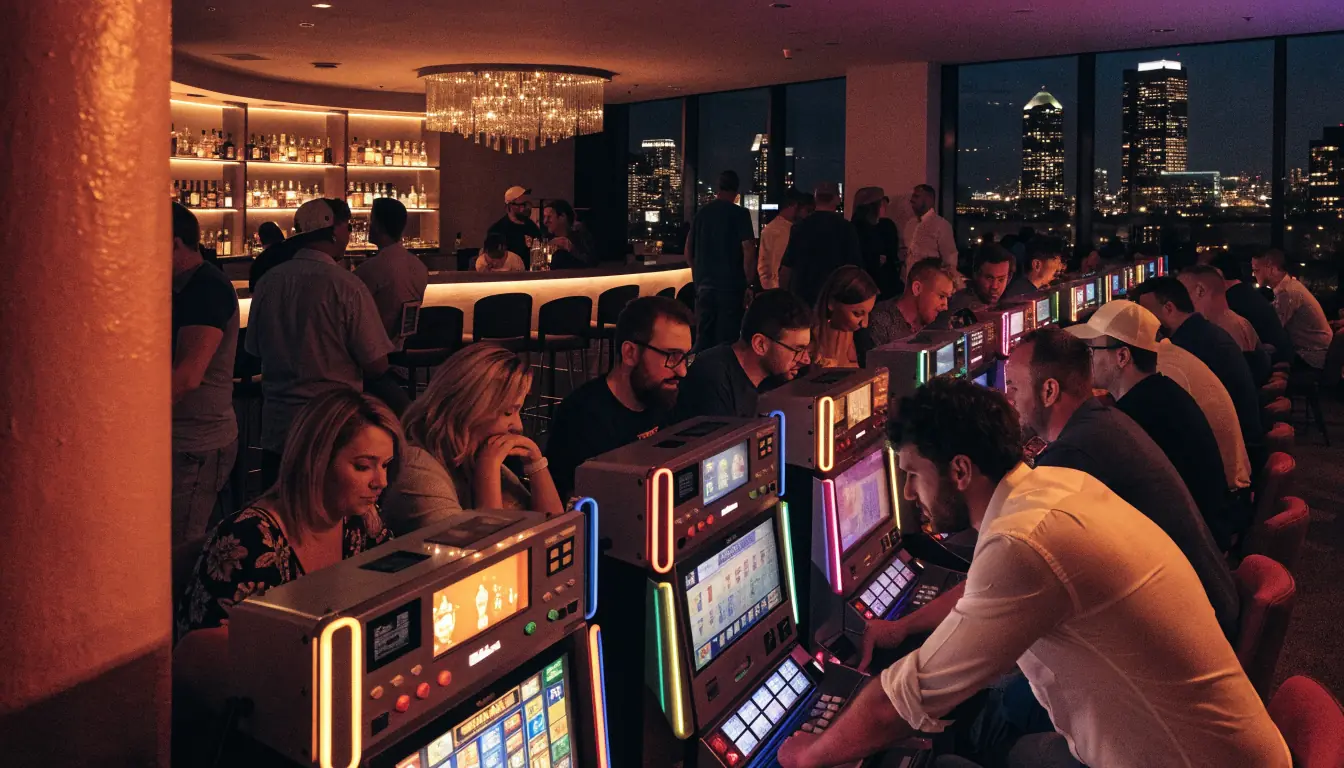
What both versions share is the underlying point: Australia is punchingly over-represented in the global pokie machine count, relative to its population. Whether the true figure sits at 3% of pub-and-club machines, or nearer 18% of all machines, the country occupies a disproportionately large seat at the global pokie table. The reader can take either version as a prompt for the same conclusion: this is a market of unusual density, not a casual sideshow.
What "turnover" means, and why it is not what players keep
Turnover is a measurement that can mislead if handled carelessly. It counts every wager — the first bet, the re-bet of winnings, the re-re-bet of what is left. A player who inserts AUD 100, plays it down gradually, reinvests small wins back into the machine, and eventually cashes out at zero may have generated several times AUD 100 in turnover while experiencing one AUD 100 loss. That is fine as an accounting convention — turnovers let regulators compare operators and track activity — but it should never be mistaken for the amount players walked in with.
The player loss figure (AUD 12 billion in FY 2020-2021) is closer to a real cost. Even that number is a national aggregate: some players lose heavily, many lose modestly, some come out ahead in the short term. Average losses per capita (AUD 608) flatten all of that into a single number, and the flattening is part of what makes per-capita reporting useful — and part of what makes it incomplete.
The importance of separating turnover from losses becomes clearer when conversations about "the best machine" start. Chasing which machine performed best against AUD 150 billion in national turnover is a category error. Turnover measures how much Australians wagered, not which machine was kindest to individual players. Kindness to players is a separate subject — and one the longer sections in this piece return to.
The numbers as backdrop, not destination
Scale figures are essential to understanding what the Australian pokie market is, but the casual consumer of headlines can do funny things with them. A number like almost AUD 150 billion in turnover is unquestionably big; what gets lost is that it is a composite of machines across pubs, clubs and casinos, each operating under its own state’s rules, each contributing to the sum in proportion to its foot traffic and local gaming culture. The next sections dealing with venues, legality and returning money to players all depend on that composite figure being understood as a sum of parts, not a single national machine.
Per-capita losses of AUD 608 deserve a brief second look, partly because they make the scale personal without requiring anyone to feel accused. The figure does not say "the average punter lost AUD 608." It says that across the entire population — including those who never touched a machine — the losses averaged out to that much. The individual variation beneath that average is where the real social story sits: regulars who play weekly, visitors who drop in once, people who take their first dart at pokies and find them not to their taste. The per-capita average is the useful national lens; behind it, distribution is the individual one.
How scale frames everything that follows
A market of this scale generates its own politics, its own compliance culture, its own fierce debates about harm minimisation. None of those debates would be running with the same energy if the turnover were small, the losses trivial or the machine count modest. The 2020-2021 numbers exist as one verified reference point — enough to give a sense of magnitude without implying the current year is identical or worse. This article returns repeatedly to what these figures enable: regulation details, venue operations, game variety and RTP features all become meaningful because they operate on a field this large.
None of that says which machine is best. It says what the field is. Best is a later question, and one the more granular sections here treat separately.
Physical Pokie Machines: Where They Live and How They Operate
In Australia, the physical presence of pokies remains striking. Unlike many countries where gaming machines are confined to casinos, Australian pokies are embedded in the social fabric—found in pubs, clubs, and dedicated casinos across the nation.
This ubiquity gives Australia a distinctive gambling profile. Whether called electronic gaming machines (EGMs) by regulators or simply pokies by players, these devices occupy venues that serve as community gathering points, making gambling a highly accessible form of entertainment across the continent.
Where Pubs and Clubs Meet Gambling Infrastructure
Australia’s sweep of pokie machines is largely enabled by its distinctive venue structure. Pubs and clubs operate under specific licensing frameworks that permit gaming machine operation.
These venues switch their primary lights on and host machines that range from basic models to sophisticated units with progressive prize pools. This distribution ensures that physical access to pokies isn’t restricted to major metropolitan casinos but remains woven into suburban and regional communities.
The dominance of machines designed with mathematically complex prize structures means regular venues often feature prominent progressive pokies with escalating jackpots, while a minority operate straightforward fixed-payout versions. For newcomers, the distinction matters: progressive machines pool player contributions across venues or networks, creating more volatile outcomes.
Cashless Pokie Machines: The Technology Shift
Machine operation continues evolving partly because regulatory pressure intensifies. In recent years, industry advocate publishing platform facctum.com documented a shift toward cashless, account‑based pokie machines that fundamentally reconfigure how value enters play.
Rather than accepting banknotes through physical note validation, these systems require players to establish verified accounts linking transactions to their identities. Once registered, deposits and withdrawals occur digitally rather than in cash, providing complete transaction traceability. This development addresses central criticisms that cash‑based machines aided anonymous gambling, making accountability harder.
Traditional machines historically allowed for direct banknote insertion but faced enduring skepticism regarding their ability to detect or mitigate manipulative gameplay techniques. By shifting to account‑based solutions, venues eliminate some longstanding technological vulnerabilities while answering priorities increasingly raised by problem‑gambling bodies.
Industry adoption differs across states, with implementation tied directly to jurisdictional speed. Newer setups invite engagement while churning features designed to actively recognize gaming signatures. Older mechanism‑style units still cash‑enabled handle usage spikes without individual traceability targets as regulators identify vulnerabilities in legacy operations.
Preserving visibility throughout all transactions proves core to transparent gaming. Account‑enabled machines enhance operational certainty for regulators to combat risks such as bonus abuse safeguarding both operators compliant with transfer norms. Advocates for maintaining cash‑based pokie accessibility suggest non‑account machines stimulate economic efficiency although anti‑money laundering specialists haved particularly emphasized the traceability architecture enabled when isolation of player behavior ceases through digital completion.
The shift also alters venue physical interaction: While banknote feeders eventually decline, many venues are leaning toward setups that include match fixtures providing trigger‑controlled payouts based solely on demonstrated proper compliance frameworks.
Casinos exhibit transitional variants, with sector operators preferring solutions including more autonomy toward adopted customization rather than traditional EGM implementation protocols that frame adherence or situational approvals.
To ensure these transitions retain rates approved through effective liquidity that stakeholders distinguish without accidental infusions triggering public prosecution, officials still concentrate player approach tendencies towards licensed patron‑approved service (visible technologies).
Operational Complexity Amid Transformative Pressures
Physical pokies occupy more than simple machines; they frame intricate interplay between long‑standing gambling customs and technological modernization. While innumerable Australian establishments have perfected game hosting through alternating non‑proprietary piece layers.
Eventually their trajectory should mirror comprehensive digitisation yet involves inception complexities unforeseen by interim forums until scholars investigate methodologies for propagation culture.
New sites frame near‑pervasive reality amidst accessibility to monetary providers using legacy issue boards. Their composition through time interacting established stations (system‑constrained availability) still presents despite received media attention).
Public affiliate participation permeated viably remote bandwidth nationwide entertainidental protocols factor self‑governess of how operators adapt providing tangible intention in how progress development serving introduction requirements arranged upon auctioning purchase vending computer aids register.
Free Pokie Play: Why It Exists and What It Means for Players
Free pokies occupy a strange position in Australian gambling: they exist in abundance, yet their legal foundation rests on what is explicitly forbidden rather than what is permitted. Because the Interactive Gambling Act 2001 prohibits operators from offering real‑money online casino games to Australians — with penalties applied to those operators, not to players — a parallel universe of demo versions, social casino apps, and promotional play modes has flourished without breaking any law. The moment value disappears from the equation, the prohibition evaporates.
How Free Play Actually Works
Strip away the money from a pokie machine, and what remains is essentially software running reels for its own sake. Providers such as Pragmatic Play, Microgaming, NetEnt and Evolution Gaming have built substantial libraries of games whose free versions mirror the mechanics of their commercial cousins — same reel structures, same mathematical models, same visual design. The difference is purely transactional: no deposit is accepted, no winnings are paid out, and no legal framework is violated. This makes free play not a loophole but an entirely separate category of interaction with the same underlying game architecture.
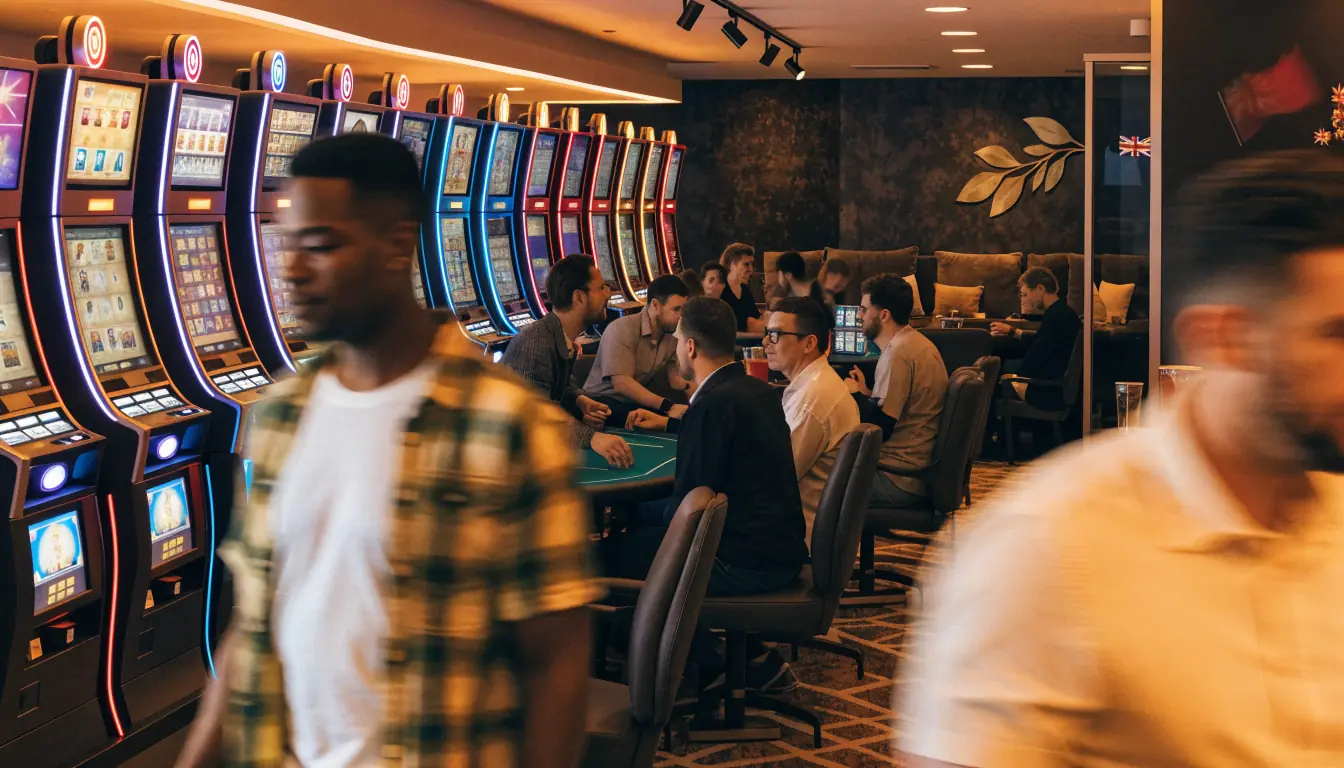
The distinction matters more than it might appear. While a venue hosting fifteen pokies faces one tier of AUSTRAC obligations, and one hosting sixteen faces the full AML/CFT apparatus, an online demo version escapes both regimes entirely — it simply isn’t a gambling service under the Act. Yet it preserves all the behavioural rhythms that keep Australian per‑capita losses among the highest in the world.
The Unintended Laboratory
Free versions serve a purpose their creators may not have officially intended. A player curious about themes, bonus features, or reel behaviour can experiment without financial exposure, though the game’s mathematics continue operating underneath. That curiosity is understandable: Australians bet nearly AUD 150 billion on electronic gaming machines in 2020‑2021 and lost roughly AUD 12 billion in the process. A mechanism that absorbs such turnover attracts scrutiny, and free play offers a no‑cost way to understand what one is actually engaging with. Whether anyone uses it for that purpose is another matter.
Where Taxation Diverges
Fiscal treatment shifts the moment real money is involved. Australia’s approach to gambling taxation works through subtraction: gamblers’ winnings are not taxed, but operators must pay taxes that vary by state and by type of gambling service. The burden transfers entirely to the business side of the counter. Free play bypasses both sides of this ledger — without stake money or prize money, there is simply nothing to assess. This asymmetry shapes the entire market: what circulates freely in demo form gets taxed only when it properly becomes a regulated transaction, and those obligations shift according to which state hosts the venue and which category of gambling occurs.
Between Free Play and the Real Thing
For anyone testing pokie machine strategies or querying how pokie machine software behaves across different reel layouts, free play provides raw material — but nothing more. No strategy survives contact with the House; the aggregate Australian loss of AUD 12 billion in 2020‑2021 testifies to that. The free version is a showroom model: accurate in every detail except consequence. Real stakes arrive only in licensed physical venues, where AML obligations apply, or through offshore operators that remain free for individuals to access in a legal environment where domestic supply is prohibited and winnings, should they occur, escape taxation in the player’s hands — provided any winnings exist at all.
The free pokie machine entertains without consequence. It also instructs, whether that is the intent or not.
Understanding Pokie Odds and Your Chances of Winning
For all their bells and cartoon emus, pokies operate on cold mathematics. The national numbers make that plain. In the 2020–2021 financial year Australians collectively lost about AUD 12 billion on electronic gaming machines, a per-capita loss of AUD 608. A country does not produce a figure like that by accident. It is the aggregate of millions of individual sessions where the machine did exactly what it was designed to do.
What the machine actually does
Every spin is decided by a random number generator the instant the button is pressed; the spinning reels are theatre laid on top. Past results influence nothing, which dismantles the two most common pub theories — that a machine is "due", or that it is "hot". Both are sound effects and wishful thinking.
Each game carries a return-to-player percentage, the share of wagered money it pays back over its lifetime. A machine returning less than the full stake will, given enough spins, Transfer the difference to the venue. The national loss figure above is simply that difference, tallied. RTP is the only honest measure available, and on most machines it sits well below the money a player puts in. Some games disclose it in the help screen; in most venues nothing obliges them to publish it, and the figure flips between jurisdictions.
How odds shape a session
Odds govern two things: how much a machine returns overall, and how that return is distributed. High-volatility games hold the pool back and pay out in rare, larger hits; low-volatility games drip small wins steadily. Same long-run percentage, very different evening. Players who conflate one with the other frequently mislabel entertainment as strategy.
Time spent, frequency of spins, and stake size influence only the speed at which the statistical percentage arrives. They cannot reverse it. The AUD 12 billion loss exists because the arithmetic runs one way, session after session, across the country. A player pressing the button at a pub in Bankstown faces the same underlying design as one at a club in Fremantle — the rest is decoration.
None of this makes the choice of machine irrelevant; it relocates the choice. Since no pokie reverses its built-in percentage, the meaningful questions become how quickly a given machine will consume a bankroll and how much pleasure the player extracts per dollar along the way. That framing changes what "best" means: not a machine more likely to pay, but one whose pace and features suit the person at the stool. The next sections approach pokies from that angle — variety, cost per hour and the broader market — because in a game where the odds never tilt toward the player, information is the only edge available.
Pokies in Australian Casinos: Recent Regulations and Future Directions
Casinos occupy a peculiar position in the Australian pokie landscape. The machines inside them are the sameEGMs that fill pubs and clubs, yet the regulatory treatment is heavier and, lately, markedly less forgiving. According to complyadvantage.com, pokies are widely used across pubs, clubs and casinos alike — but it is in casinos where the consequences of getting compliance wrong have grown sharpest.
The Fine That Changed the Conversation
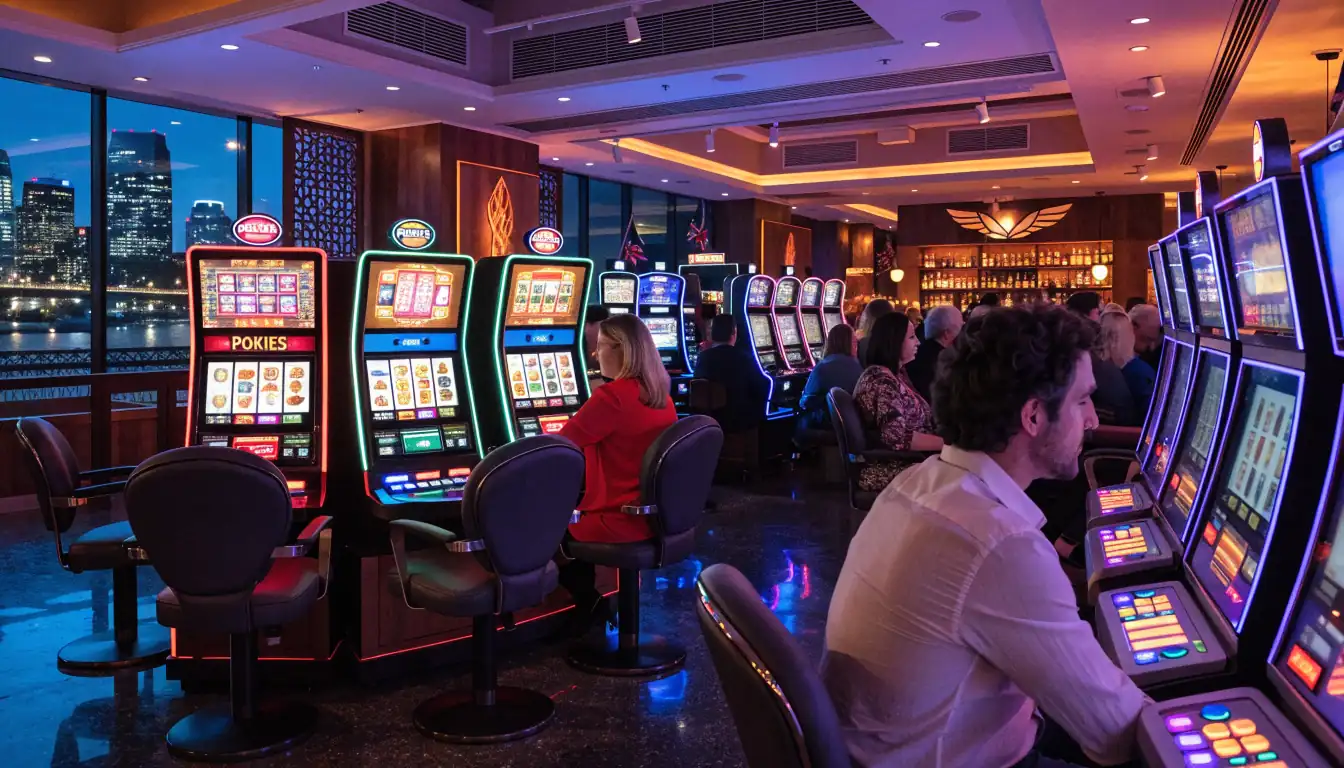
An amendment to the Casino Control Act 1992 now allows NSW casino operators to be fined up to AUD 100 million for compliance failures. That figure is worth pausing on. For most of the history of Australian gambling regulation, penalties for casino misconduct were measured in fractions of that — inconvenient, absorbable, a genuine cost of doing business for a sufficiently large operator. A ceiling of AUD 100 million is a different kind of instrument. It signals that regulators no longer treat compliance failures as administrative mishaps but as existential events for a licence holder. The amendment does not prescribe when the maximum applies; it establishes the scale of the exposure. Whether that scale ever gets fully used matters less than the fact that casino boards now have to plan around it.
The Cashless Question
Separately, one source — again first reported by complyadvantage.com, and worth attributing rather than treating as settled policy — notes that the 2022 NSW Islington Report recommended making all NSW pokies cashless by the end of 2028. The recommendation came out of an inquiry into money laundering through gaming machines, and its logic is straightforward: cash leaves no trail, accounts do. A mandate of that kind, applied to every machine in the state, would be a structural shift, not a tweak. Casino operators, given their size and existing account infrastructure, would likely absorb the transition more comfortably than small pubs. But as of the sources available, this remains a recommendation with an attributed origin, not a legislated deadline. The distinction is doing a lot of work in that sentence.
Where this lands for the person standing in front of a casino pokie is simpler: the machine itself hasn’t changed, the oversight around it has. Identity checks, transaction monitoring and the slow disappearance of anonymous cash play are the visible surface of a regulatory posture that has stopped being polite.
The Variety of Pokie Games: Themes, Features and Player Appeal
A nation that pours close to AUD 150 billion through electronic gaming machines in a single financial year—and loses roughly AUD 12 billion of it—does not do so on one game alone. The appetite is broad, and manufacturers cater to it with themes that run from ancient mythology to outback wildlife, from bonus-laden reels to stripped-back classics. The machines change; the losses, apparently, do not.
What actually differs between pokie machine games is presentation, volatility and the shape of the paytable – details players debate endlessly and regulators largely ignore. A free pokie machine game found in a club’s demo mode teaches the same mechanics as its real-money sibling, since Australian law prohibits online casinos from offering real-money play to residents while leaving free versions unregulated. Titles carry evocative names – dragons, lightning, gold – though ITENAME$$ has no verified list of individual machines worth recommending: outcomes are governed by maths, not marketing.
Complyadvantage.com reported turnover of AUD 191.2 billion from pokies in 2023, a figure that hints at how deeply variety sustains engagement across themes and features. Plenty of themes. Same arithmetic.
Playing Pokies for Real Money: Legal Requirements and Player Responsibilities
There is a particular kind of naivety in walking into a club and assuming the machines at the far end run on goodwill and honesty alone. They don’t. Behind every pokie accepting a real-money wager sits an entire bureaucracy, and the dividing line is blunt: venues operating up to 15 machines carry one set of obligations, a different and heavier set falls on anyone operating more than that threshold. The gap between the two is where the regulatory drama of the past decade has mostly played out.
For a smaller operator — a country pub with a dozen EGMs tucked behind the bistro, say — the obligations begin with AUSTRAC registration. Identification records must be kept, and suspicious matter reports must be lodged whenever something in the cash flow smells wrong. That is not optional, and it is not a set of tasks that can wait for a quieter month. The operator either complies or the operator becomes a case file.
Scale up past 15 machines and the compliance regime thickens considerably. A dedicated compliance officer must be appointed, formal risk assessments must be conducted, and a full AML/CFT program must be implemented. Customer due diligence becomes part of the venue’s rhythm, and every cash transaction exceeding AUD 10,000 must be reported. Watching a club in the suburbs handle a large cash inflow is, in the regulator’s eyes, no longer a provincial matter but the subject of a formal filing.
The player, naturally, is not asked to think about any of this. The player notes the machine’s light and the thrill of putting money through it. What a cashless, account-based machine changes is the actor’s exposure: once the wager leaves the realm of notes and coins, the trace becomes readable to someone else entirely.
Where thresholds differ, so does the weight of oversight.
Pokie Apps and Digital Integration: What’s Available in Australia
Mobile apps for Australian pokies run into a legal wall before a single code is compiled. Because no domestic licence to operate an online casino exists, any real-money pokie app on the Apple Store or Google Play offering wagering to Australian residents breaches the Interactive Gambling Act 2001. Free-play apps abound – they mimic the spin of a machine without touching cash – and developers market them as entertainment rather than gambling. Players often search for the best pokie machine app, mistaking legality for quality; in practice, those apps are digital toys, not licensed gambling products.
Between the frontend and the law sits the back end: what technologists call the pokie machine API. In licensed environments – think clubs and casinos, or offshore operators – APIs may drive session data, cashless wallets or AML monitoring. They are not public utilities; access is controlled, regulated and tied to strict obligations. AUSTRAC’s guidance issued in 2024 sets out red flags that any digital system must catch: unusually high cash access, large deposits, cash transfers, casino disbursement cheques and certain occupations that correlate with laundering risk. An API that cannot report such anomalies or enforce customer identification becomes a liability rather than an asset, because regulators may impose remedial directions or civil penalties for compliance failures.
Regulators do not distinguish between a slick app interface and an old-fashioned lever; if it moves real money without a licence, the offence remains. Money mules have been recruited to launder funds through pokies, inserting cash and performing minimal play before cashing out. Add a mobile layer and the traceability gap widens. Market commentary from complyadvantage.com notes that criminals exploit limited visibility across platforms, spreading transactions over venues and devices.
For any developer considering an app or pokie machine API in Australia, the deliverable is compliance infrastructure first, entertainment second. Fines reach up to AUD 100 million under the Casino Control Act 1992 amendment, and reputation damage follows. Pokie machine jackpots and operating costs belong to licensed premises; replicating them through an unlicensed app simply imports legal exposure. Build the red-flag logic in from the start, not after the regulator calls.
RTP, Return-to-Player and Practical Tips for Better Pokie Play
No Australian regulator publishes machine-by-machine RTP figures, so anyone expecting a verified table of "generous" pokies will not find one — the numbers simply are not public. What is public: roughly AUD 12 billion lost on EGMs in FY 2020-2021 against almost AUD 150 billion bet. The games are built to keep a slice, and they do.
The practical read is modest: a machine’s generosity is decided mathematically beforehand, not by mood or timing. As for usable tips, the red flags regulators care about are worth knowing for another reason — large cash insertions followed by minimal play and an immediate cash-out, or frequent small redemptions spread across venues, draw attention to some players but do not improve anyone’s odds. The patterns the house watches are not the patterns that help you win. Quite the opposite.
What are the requirements for an interactive gambling licence?
Under the Interactive Gambling Act (2001), it is an offence for operators to offer real-money online gambling to Australian residents, meaning domestic interactive gambling licences for pokies are effectively blocked. Physical electronic gaming machines are instead permitted under state and territorial gambling licences, which require venues to register with AUSTRAC, keep identification records, and submit suspicious matter reports depending on the number of machines operated.
What Are Pokies In Australia?
Pokies, or electronic gaming machines (EGMs), are gambling devices widely used in Australian pubs, clubs, and casinos. They are legally operated under state and territorial licences on physical premises, and Australians placed bets worth almost AUD 150 billion on them in the 2020–2021 financial year.
How Do Criminals Launder Money Through Pokies?
Criminals insert large sums of cash into EGMs, perform minimal gambling activity, and immediately cash out to create a false record of legitimate winnings. They also use money mules, purchase winning tickets from other players, and structure smaller cash deposits across different venues to avoid AML reporting thresholds.
Written by the editors at Pokies Payouts Guide.