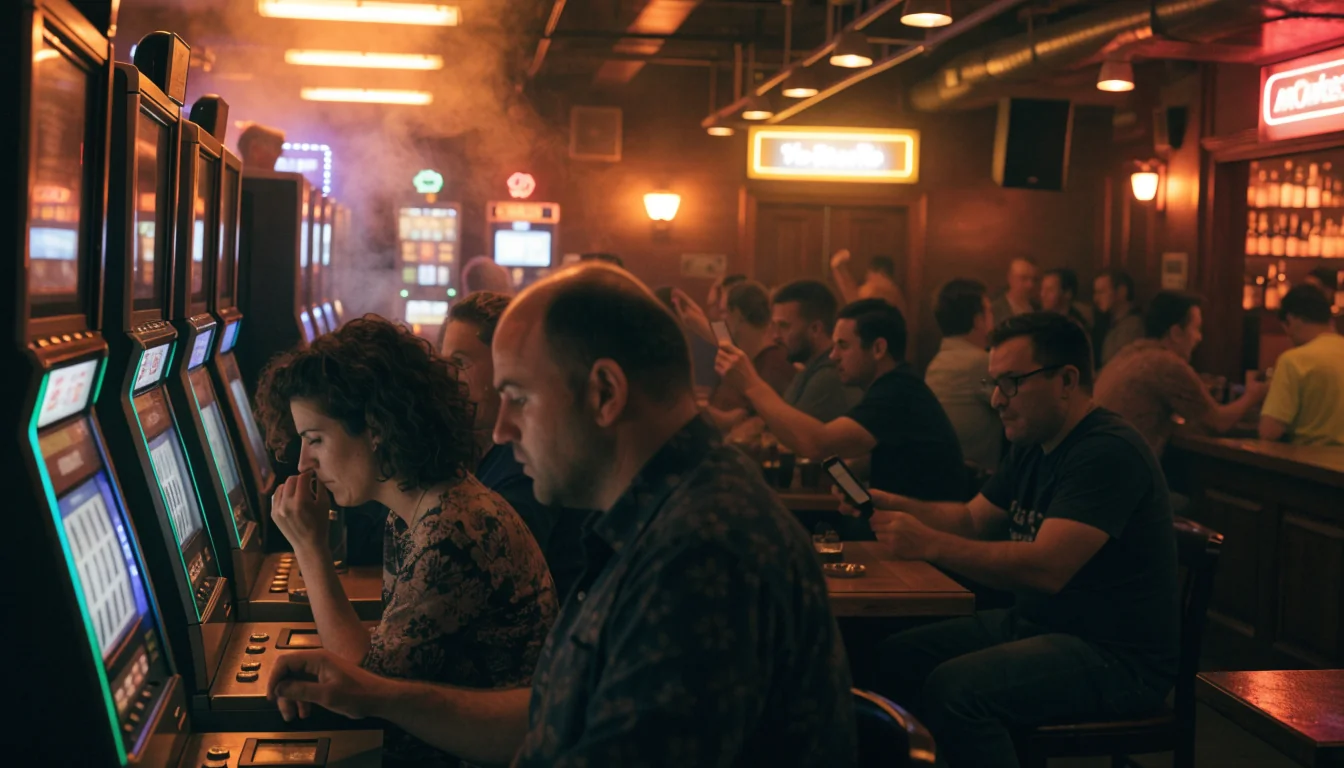
Lightning Link Online Pokies in Australia: What the Law Says
 Available in US
- Playing Lightning Link for Real Money: Legal and Practical Considerations
- The Physical Slot Machine Scene in Australia
- Free Online Pokies: Getting Started with Lightning Link
- Exploring Free Slot Variations of Lightning Link
- Free vs Real‑Money Lightning Link Slots: What Changes?
- How to Play Lightning Link Online Without Spending
- Lightning Link Slot Mechanics and Features
- Demo Games and Practice Modes for Lightning Link
- Understanding the Hold-and-Spin Feature in Lightning Link
- A Brief Review of Lightning Link Free Play Experience
Playing Lightning Link for Real Money: Legal and Practical Considerations
The starting point for any discussion about Lightning Link in Australia is a plain, unglamorous fact: no online casino games, whether pokies, poker, blackjack, or roulette, may lawfully be offered to Australian residents. That prohibition sits at the heart of the Interactive Gambling Act 2001, the Commonwealth’s principal legislation on the subject. A handful of references still cite an "Interactive Gambling Act 1997" on this point, but the publicly available record does not support that date. The framework Australians actually live under is the 2001 Act, and any earlier reference is a numerical stray, not a separate statute.
The Australian Communications and Media Authority (ACMA) administers those rules. It monitors the market, enforces where it can, and issues guidance about which products it considers unlawful. Lightning Link, treated as an online casino slot, falls squarely inside that prohibited category, and therefore the game cannot be supplied domestically in real-money form.
Who the law actually targets
The prohibition bites on operators, not on the person spinning the reels. It is not an offence for an individual to access an offshore site. Parliament deliberately chose to regulate supply rather than criminalize demand, which is a distinction that matters in everyday life. That does not make the underlying activity lawful; it simply means the legal exposure rests with whoever provides the service.
Before spinning the reels on Lightning Link and other pokies in 2026, it pays to check how each casino stacks up on licensing, welcome offers, and payout practicalities.
Bonus: 240% up to A$4,100 + 300 free spins Stands out for a hefty welcome package, offering a 240% match up to A$4,100 plus 300 free spins for new players.
License: Curacao eGaming (Roby Games Ltd) · Bonus: 100% up to A$750 + 200 free spins Operates under a Curacao eGaming licence via Roby Games Ltd, backing its offer of a 100% bonus up to A$750 plus 200 free spins.
License: Curacao Gaming Control Board OGL/2023/176/0095 (Hollycorn N.V.) · Bonus: up to A$11,000 + 300 free spins (code NEO100) Licensed by the Curacao Gaming Control Board through Hollycorn N.V., and pairs that with a large bonus of up to A$11,000 plus 300 free spins using a dedicated bonus code.
License: Curacao OGL/2024/1335/0780 · Bonus: up to A$1,000 + 150 free spins, wager-free · Min. deposit: EUR 20 Holds a Curacao OGL licence and offers a wager-free bonus of up to A$1,000 plus 150 free spins, with a modest EUR 20 minimum deposit.
Bonus: up to A$7,500 + 550 free spins across 10 deposits, 50x wagering · Payout speed: crypto under 1 hour, PayID 1-3 business days · Min. deposit: A$20 (A$30 to qualify for the bonus) Offers a substantial bonus spread across ten deposits totalling up to A$7,500 plus 550 free spins, with fast crypto payouts under an hour and PayID withdrawals within a few business days; a A$20 minimum deposit applies, though A$30 is needed to qualify for the bonus.
License: Curacao eGaming OGL/2024/923/0383 (Antillephone N.V.) · Bonus: up to A$2,000 + 100 free spins across 2 deposits · Min. deposit: A$30 Licensed under Curacao eGaming via Antillephone N.V., with a two-deposit bonus totalling up to A$2,000 plus 100 free spins and a A$30 minimum deposit.
License: Curacao Gaming Authority (Jumpman Gaming Ltd) · Bonus: up to A$6,600 + up to 250 free spins across 4 deposits Licensed through the Curacao Gaming Authority under Jumpman Gaming Ltd, offering a generous four-deposit bonus package worth up to A$6,600 plus up to 250 free spins.
License: Tobique Gaming Commission · Bonus: up to A$8,000 + 400 free spins across 4 deposits · Payout speed: crypto ~10-15 minutes, fiat 1-5 days · Min. deposit: A$30 Licensed by the Tobique Gaming Commission, offering a four-deposit bonus up to A$8,000 plus 400 free spins, with quick crypto payouts of around 10-15 minutes and fiat withdrawals within a few days; minimum deposit is A$30.
License: Curacao · Bonus: 100% up to A$500 + 200 free spins, 10x wagering · Payout speed: crypto 30-60 minutes, fiat 1-5 days · Min. deposit: A$10 Curacao-licensed with a 100% bonus up to A$500 plus 200 free spins on a low 10x wagering requirement; crypto payouts land within an hour and a low A$10 minimum deposit makes it accessible.
License: Curacao Gaming Control Board OGL/2023/176/0095 (Hollycorn N.V.) · Bonus: up to A$1,500 + 200 free spins across 3 deposits Operates under the same Curacao Gaming Control Board licence via Hollycorn N.V., with a three-deposit bonus totalling up to A$1,500 plus 200 free spins.
Only adults may gamble at all, and the floor age is 18 years across the country. Nothing about Lightning Link softens that threshold. Where a game is offered through a venue or channel that is lawful, the age floor still applies. Where it is not lawfully offered—online, in this case—the age question never arises because the offer should not exist in the first place.
Residency and eligibility in practice
A further baseline is residency: online casino participation is framed around Australian residents. There is no domestic licence to point to, so there is no legitimate domestic framework to step into. The eligibility conversation, such as it is, boils down to this: anyone of legal age and resident in Australia is free to seek entertainment, but no online casino may lawfully provide it here.
Offshore operators hold licences elsewhere. Those documents do not magically extend into Australian territory. A licence issued by another jurisdiction does not convert a prohibited service into a lawful one, and the presence of a familiar badge from a foreign regulator does not neutralize the Interactive Gambling Act. The practical result is an odd limbo: the individual is not committing an offence by playing, but the operator is still breaking the law by offering the game to Australians.
Lightning Link and the casino label
Because Lightning Link exists in physical venues across Australia, the phrase Lightning Link casino is often used loosely to describe the game itself rather than an online platform. In Commonwealth law, it is still classified as an online casino-style game and prohibited from being provided to residents. The label does little work; the prohibition rests on the product category rather than the branding.
That gap between the physical existence of the machine and the absence of an online offer creates confusion. The device is familiar, the name is entrenched in pub and club culture, and yet the regulated pathway stops at the venue door. Nothing in the Act carves out an exception because the machine is well known. Category, not familiarity, controls the outcome.
Anyone who chooses to look at offshore sites is stepping into territory that Australian law does not bless. The ACMA does not license or supervise those operators, and any oversight belongs to foreign regulators. That separation leaves the individual without a domestic safety net, and complaints have nowhere meaningful to land.
The regulator’s posture
Because no online casino can hold an Australian licence, no licence detail can be displayed, and no "check the register" advice can sensibly be given. There is no public register of online-casino licensees because there are no such licensees. In this context, marketing online casino services to Australians is itself prohibited, and social media promotion sits squarely within that ban. The regulator’s interest is less in policing individual play and more in choking the supply and the promotion that would drive it.
Illegal offer
Offering Lightning Link for real‑money play to Australian residents breaches the Interactive Gambling Act 2001 and can result in enforcement action against the operator.
Practical implications for real-money play
Anyone considering real-money Lightning Link should understand that the only pathway is an offshore operator, and that pathway sits outside Australia’s consumer protections. Age checks, identity verification, and responsible-gambling tools on those sites answer to other regimes, not to the ACMA. The individual decision, legally speaking, happens at the user’s own risk, even if criminal liability does not attach to the player.
For that reason, the language of "licensed" or "regulated" has to be used with care. There is no domestic licence to show, and offshore licences are only as reliable as the foreign authority that issued them. There is no meaningful way to verify a licence claim against an Australian register, because no such register exists for this category.
The story ends with a choice between a prohibited domestic offer and an offshore one. Neither is a domestic entitlement, and neither should be presented as legal in Australia. The only safe claim is that the individual will not be prosecuted for playing, while the operator remains in breach of the Act. Everything beyond that—age, residency, offshore licensing—follows from that single boundary.
The boundary is blunt. The category, not the name, decides.<|close|>response<|close|>message<|sep|>
The Physical Slot Machine Scene in Australia
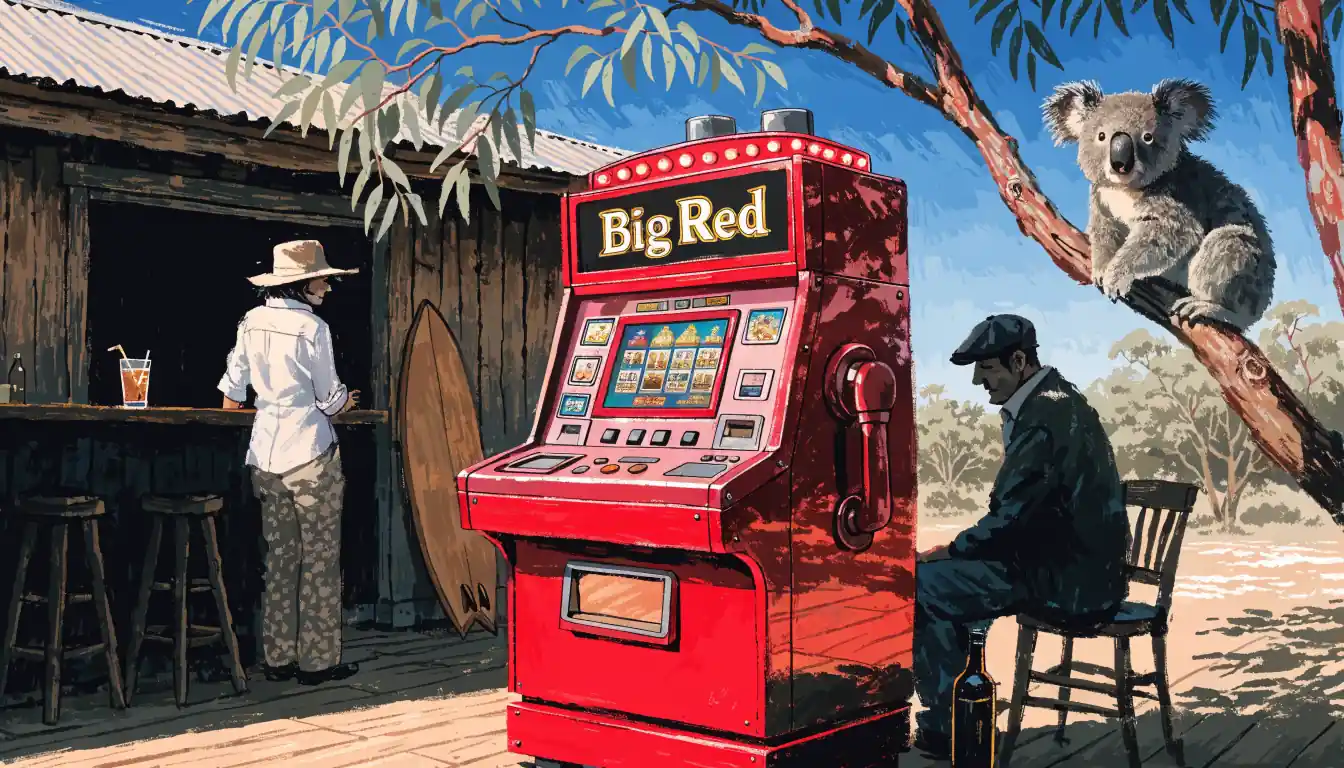
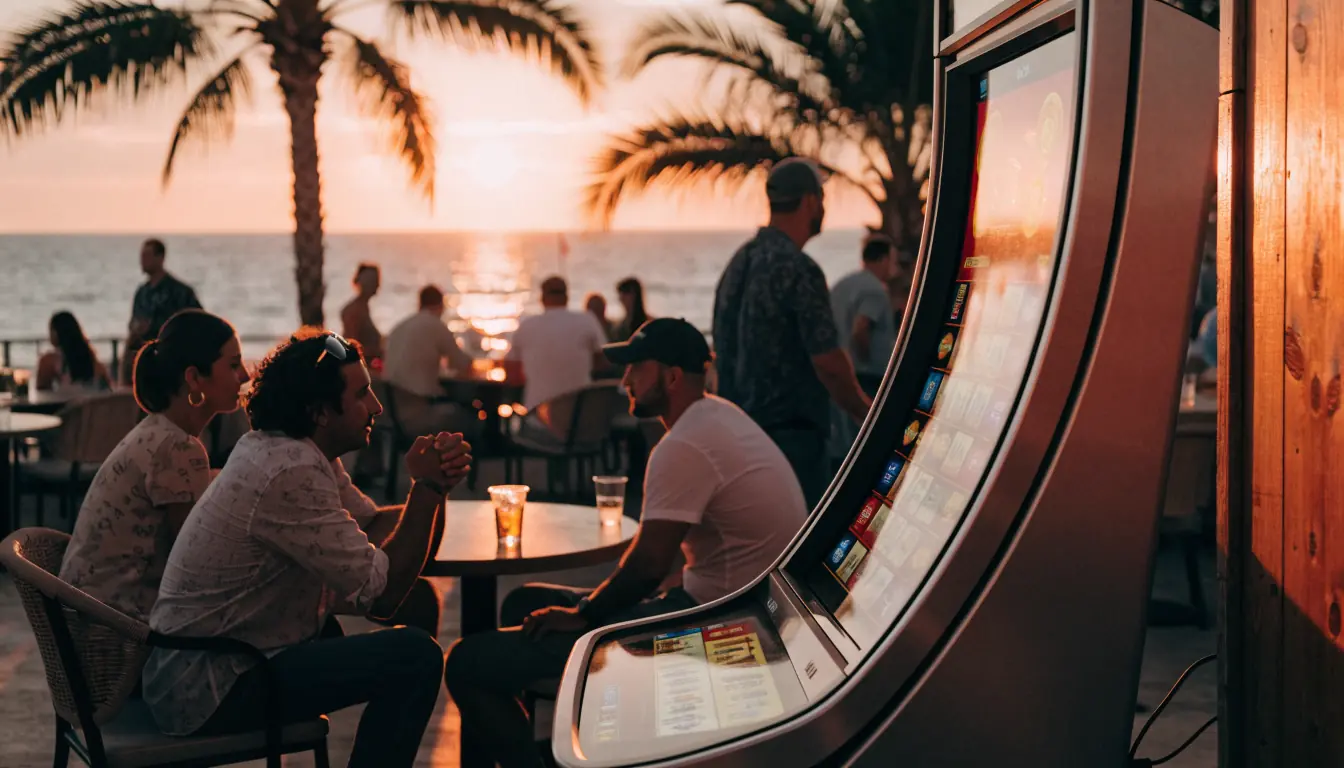
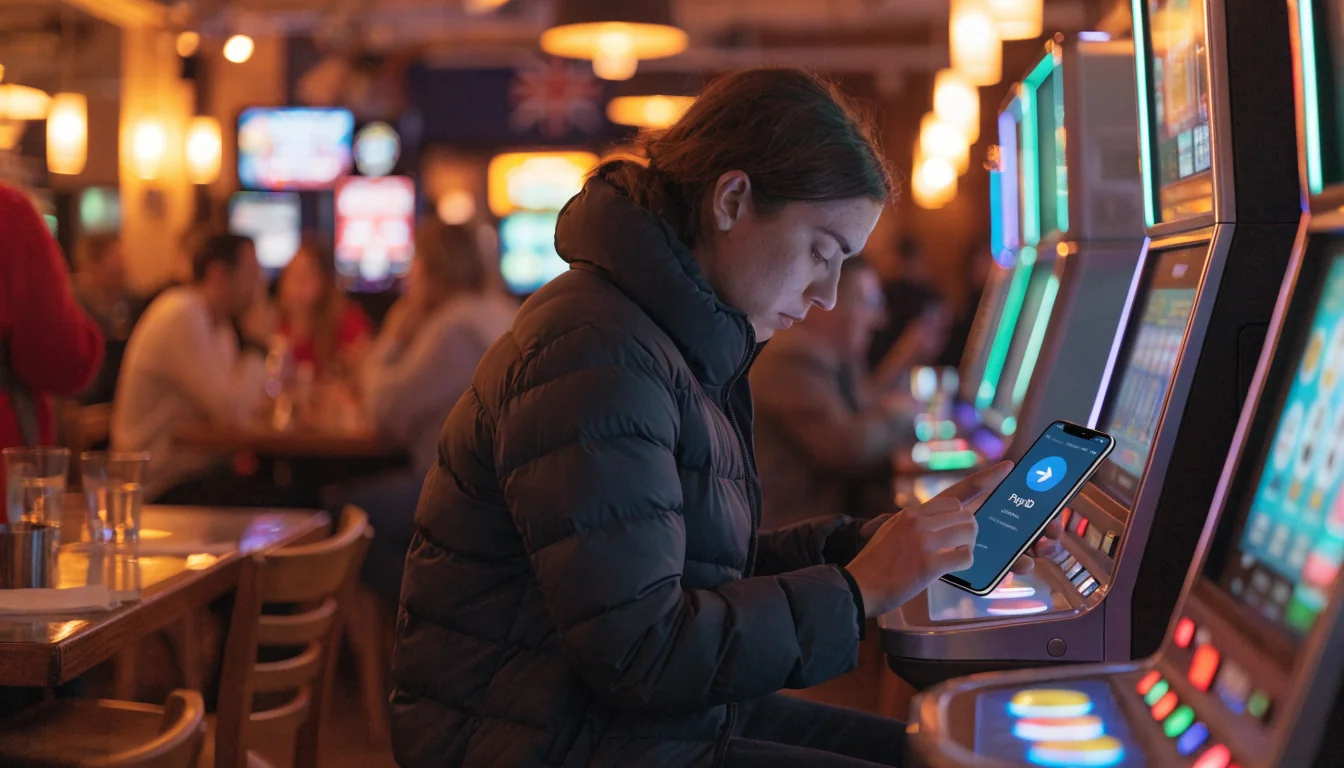
Walk into almost any pub or registered club between Byron Bay and Broome and the same greeting awaits: a wall of flashing cabinets that Australians call, almost affectionately, the pokies. The nation’s relationship with these machines is not a casual flirtation. In the 2020‑21 financial year, punters fed close to A$150 billion through electronic gaming machines and walked away A$12 billion poorer—about A$608 for every adult. Australia holds roughly 3 % of the world’s pub‑and‑club poker machines despite accounting for barely 0.3 % of the world’s population. The numbers are as sobering as a Saturday morning.
A geography written in neon
Nowhere is the saturation denser than New South Wales, which alone commands around 95,800 pokies. Drive north of Sydney and the concentrations thicken further: the Central Coast region claims 4,672 machines, or 2.37 % of the national total. In Gosford, roughly 1,928 pokies hum away—about one for every 71 adults. Head a few suburbs inland to Wyong and the ratio tightens still: 2,608 machines, one for every 47 adults. The geography is not accidental; machines cluster where legislation once let them, and tradition has kept them fed.
Where Lightning Link lives—and where it cannot
Among the cabinets, Lightning Link holds pride of place. Aristocrat’s hold‑and‑spin phenomenon dominates club floors from Albury to Armidale, its grand jackpot meter pulsing like a lighthouse. Players who first locked hearts on the machine at their local RSL now type lightning link slot machine online into search bars, hoping the same thunder might strike through fibre‑optic cables. The transition is not straightforward. Federal law—the Interactive Gambling Act 2001—prohibits operators from offering online casino games, including pokies, to Australian residents, and no domestic licence exists for such activity. One industry observer notes that the global online casino sector has nonetheless ballooned, buoyed by technological innovation, and that local operator sites continue to multiply—though that reviewer, being an affiliate survey, does not put its name to the claim.
That jump from licensed club carpet to offshore webpage is where nostalgia collides with regulation. The physical Lightning Link slot machine in Australia sits inside a venue governed by state and territory rules: mandatory spending limits, compulsory breaks, self‑exclusion registers, and a hard 18‑and‑over door policy. The atmosphere is tactile—a chorus of coin cup rattles, loyalty card chirps, maybe a laminated sign announcing the Lightning Link slot machine jackpot has been hit twice this week. Online, the same title may appear in free online lightning link slot machines demos or as real‑money versions offered by operators beyond ACMA’s reach. The licensed venue, for all its flaws, at least publishes its odds on a sticker beside the button.
Approximately 95,800 pokies, the highest concentration in the country.
Around 4,672 machines, about 2.37 % of the national total.
Roughly 1,928 terminals, one per 71 adults.
About 2,608 machines, one per 47 adults.
Club floors versus casino myths
It is worth remembering that clubs are not casinos—at least not in name. Pubs and RSLs rely on limited "gaming machine entitlements" and dens Italian dining to remain respectable. Yet the Central Coast corridor alone carries more Lightning Link terminals than many capital cities overseas*.* The country’s tolerance for such concentration tells a quieter story: community fundraising and taxation wrapped in a leisure activity that governments dare not switch off. The machines are woven into the civic fabric, a fiscal crutch disguised as Saturday night entertainment.
Reading the room before logging on
Understanding this terrestrial ecosystem matters before discussing hold‑and‑spin rules online. Physical pokies shape expectations: they teach the rhythm of anticipation, the strange patience of watching a grand jackpot accumulate without ever triggering. A Lightning Link slot machine review that ignores the pub‑floor context misunderstands the product. When later sections turn to demo modes, RNG certification and why free versions exist, the point is not that the internet has outrun the club—merely that the club never quite let anyone else own the lightning.
Whether under a ceiling that leaks cigarette legalised nostalgia or behind a screen hovering over an offshore licence, the machine remains the protagonist. Lightning on the link—storm or spark—starts in the physical world, where the nation’s spare change, and arguably its patience, first went to meet it.
Free Online Pokies: Getting Started with Lightning Link
The phrase «free online pokies» sits oddly in a country that spent the last century perfecting the paid kind. Australians wagered almost AUD$150 billion through gaming machines in FY 2020-2021 and lost AUD$12 billion of it, a per-capita bleed of AUD$608. Against that backdrop, a version of Lightning Link that never asks for a dollar is less a game mode than a philosophical correction. The machine that ate the national leisure budget now has an alter ego that eats nothing at all.
That distinction matters more in Australia than almost anywhere else, because this is the country holding 3% of the world’s pub and club poker machines while housing 0.3% of its population. The cultural familiarity with pokies is so complete that the free versions circulating online are not really teaching anyone what a pokie is. They are teaching something subtler: what the machine is like when the wallet stays shut.
The landscape free play actually sits in
Online, pokies dominate. On most Australian-facing casino sites, slot games are the dominant category, and the terminology settles quite naturally into «online pokies» — because that is what the audience calls them, whatever the supplier’s own naming convention may say. Lightning Link rides into that scene as a brand already famous from its physical form, and the free versions exploit that familiarity deliberately: the hold-and-spin mechanic, the linked progressive idea, the theme variants. The point is recognition, not discovery.
The broader catalogue matters too, because the free player is rarely loyal to one title. Demo libraries carry the whole spectrum of themes and mechanics, and Lightning Link tends to be the headline rather than the whole library. RNG-based versions sit next to live-dealer table streams, and slots sit among blackjack, roulette, and the rest. The pokies page is where the traffic goes, though; everything else is garnish.
Offshore licensing reality
Offshore operators may hold licences from other jurisdictions, but those licences do not exempt them from Australian law. The Interactive Gambling Act still prohibits them from offering real‑money casino games to Australian residents, meaning the service remains illegal even if the operator is licensed elsewhere.
That Lightning Link occupies a specific corner of this world tells you something about casino marketing. The real-money version, where it exists offshore, borrows legitimacy from the physical machine’s presence in New South Wales clubs and pubs. The free version borrows familiarity. Both are inheritance strategies, not invention.
What demo mode actually is
The mechanism itself is plain: the game client loads with a balance of virtual funds, the RNG runs the same code it would for a paying customer, and the «auditions» are identical in every way except the financial outcome. Many slot games across Australian-facing sites can be played this way, and Lightning Link’s various incarnations are usually among them, because the supplier benefits from the familiarity machine just as much as the player does.
Random Number Generators drive both the demo and the paid versions, and the independent testing agencies that audit casino software do not distinguish between the two. This matters to the player who wants to know whether free mode is «rigged to be generous.» On a properly audited build, it is not; the maths are the same, and only the accounting changes. The thrill, however, changes completely — and that is the true filter, not the RNG.
A fair warning belongs here: demo mode tells you what the game feels like, not what it costs. The AUD$12 billion lost nationally in FY 2020-2021 was lost on machines whose free cousins would have left the player AUD$12 billion richer. The practice version is genuinely useful for learning the rhythm of a game — how the hold-and-spin triggers, what the symbols pay — but it teaches the loop, not the discipline. Those are different lessons, and only one of them is safe.
Where the familiar machines came from
The context behind the free-play phenomenon is stubbornly physical. New South Wales runs approximately 95,800 pokies, more than any other Australian state, and the Central Coast region alone holds 4,672 of them, some 2.37% of the national total. In Gosford that density shrinks to roughly one machine per 71 adults; in Wyong it sharpens to one per 47. Against that baseline, an online demo of Lightning Link is less a novelty than a translation of an old habit into a harm-reduced dialect.
The free-versus-paid distinction is thus not just a toggle inside a casino lobby. It is a different social fact. A pub pokie in Wyong has been sitting in the local’s peripheral vision for decades; the free online version exists inside a frame of responsible-gambling language, deposit limits that do not apply, and self-exclusion tools rendered moot by the absence of anything to exclude oneself from. The game’s architecture stays the same; the moral architecture around it changes completely.
Which is why the demo question is rarely «how do I play Lightning Link» and more often «what does it feel like when the machine cannot hurt me.» The answer is genuinely interesting, and not in a slogan sense. Watching the hold-and-spin trigger without flinching at the balance teaches the player which parts of the ritual were fun and which were just expensive tension. Few games reveal their mechanics as nakedly as a well-audited demo.
Legal frame, domestic and otherwise
The Australian situation deserves a paragraph, because free play and real-money play share a regulatory umbrella whether they like it or not. Online casino-style games — slots, roulette, blackjack, that entire class — are prohibited to Australian residents under the Interactive Gambling Act 2001. Some sources describe a 1997 precursor, but the 2001 law is the operative framework, and both versions agree on the prohibition. The Australian Communications and Media Authority oversees this space at the Commonwealth level.
Crucially, the law targets operators, not the individual trying a spin at an offshore-licensed site. That distinction is the reason «free play», which usually means offshore-hosted demo lobbies, remains accessible at all. There are no domestically licensed real-money online casinos in Australia, and the federal prohibition makes issuing such a licence impossible. The free pokies scene exists inside that gap: operators abroad, Australians at home, and a national habit translated into the only format regulators did not fully close.
The age floor remains 18, whether the stake is real or imaginary, and a responsible site will say so. The free lobby is still a gambling lobby, and harm-reduction language applies to it as much as to real-money pages. Australians below that age are excluded by policy rather than by the payment ledger alone.
One more note on the machinery of fairness. Whether the balance is virtual or funded, every accredited build of Lightning Link runs on RNG software audited by independent testing agencies. The certificates attached to the supplier’s licence apply to the game code itself, not to the player’s deposit method, so a demo spin is — technically — as regulated as a real one. In a legal void, that is not nothing; it is the kind of assurance Australians have learned to look for precisely because their own government will not provide it.
So:
- the free lobby is a fair window into a national pastime;
- the regulator finds the «window» itself offshore;
- the window is 18+, no matter how harmless it looks.
A small mercy, then. The pokies that raised Australia now sit in a frame that does not take their rent. Whatever else one says about Lightning Link online in 2026, that one fact has earned its headline.
Exploring Free Slot Variations of Lightning Link
The phrase "free Lightning Link slots" covers considerably more ground than it appears to at first glance. What a player encounters under that umbrella ranges from a stripped-back demo on a casino website to a social casino app where coins regenerate on a timer, and the differences between these formats matter more than the shared branding suggests.
On most Australian-facing sites that carry pokies at all, the dominant category is slot games — referred to locally as online pokies, a usage so entrenched that "slot machine" sounds like something imported. Within that category, the Lightning Link family typically surfaces in at least three distinct free formats, each with its own logic.
The Website Demo Mode
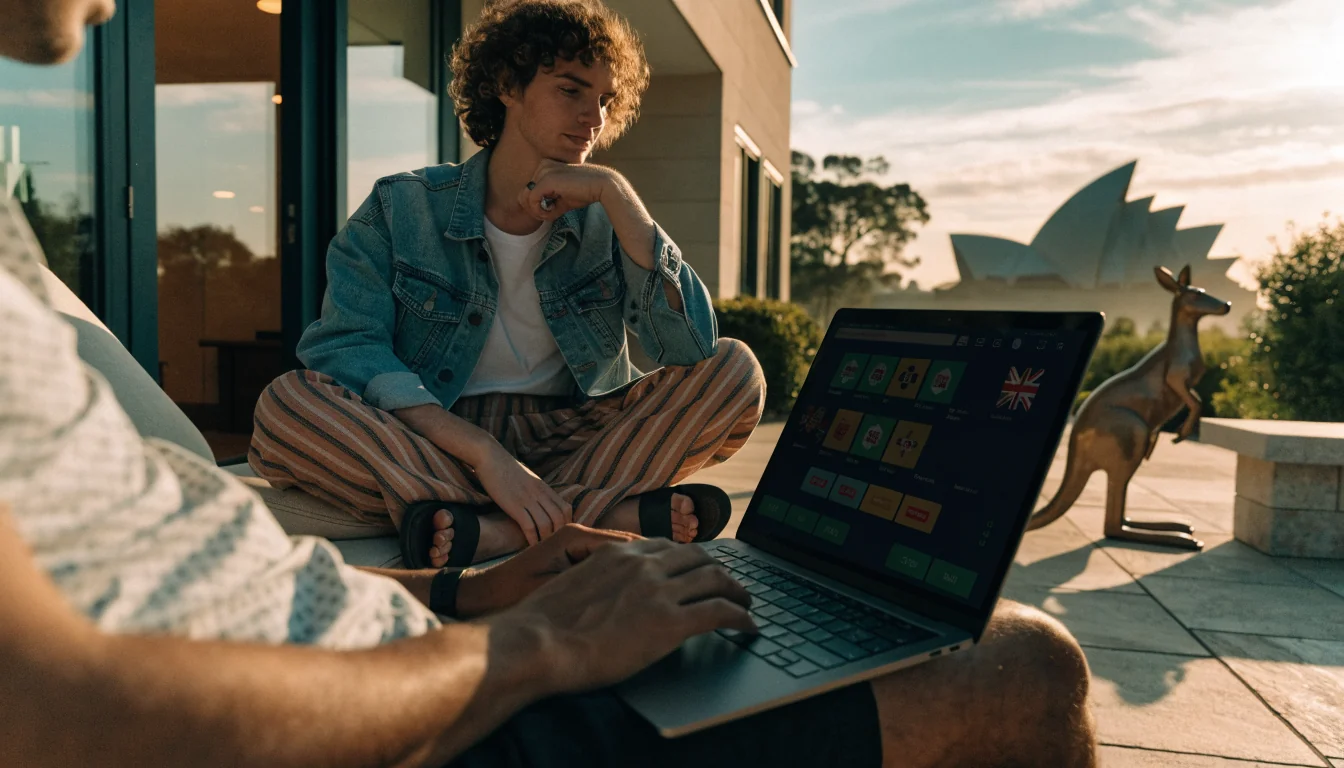
The first format is the demo mode embedded directly on a gaming site. Here, the game loads in a browser or a mobile wrapper with a balance of virtual funds, and the player spins without depositing anything. This is the version most people mean when they search for Lightning Link slots online in free form. The mechanics mirror the real-money build: the same reel layout, the same hold-and-spin trigger, the same jackpot tiers displayed across the top of the screen. What changes is the ledger. Losses come out of a refillable credit supply, and wins accumulate into a figure that cannot be withdrawn, cashed out, or even carried between sessions in most implementations.
One source of industry commentary notes that the number of sites offering such demos, including those aimed at Australian players, continues to grow — a trend attached to the broader integration of new technology into online casino platforms. That observation comes from a single sector overview rather than any official registry, so it is best read as a directional remark rather than settled market fact.
The Social Casino App
The second format lives inside an app — often the same publisher’s social casino product, where Lightning Link appears alongside Aristocrat’s other titles. Downloading Lightning Link slots through these apps is free on both major mobile platforms, and the game hands out coins on a schedule: a login bonus here, a timed refill there, occasionally a promotional drop. The structure resembles the paid version closely enough that players often fail to notice the transition between formats, which is precisely the point of the design.
Mechanically, though, an app-only free build frequently differs from the web demo above. The app tends to gamify the path to credits — levels, daily streaks, unlock conditions — wrapping a slot that was designed for pubs in the trappings of a casual mobile title. Where the browser demo pretends to be a casino, the app pretends to be a game about casinos. A subtle distinction, but a real one.
The No-Download Browser Variant
The third format sits somewhere between the two: aggregator sites and review pages that host a playable build without requiring a download or an account. These carry the Lightning Link online slots brand in the loosest sense. A page declares itself devoted to the game, offers a spin widget, and the player never leaves the browser. Whether the widget loads the genuine Aristocrat build or a third-party clone is not always easy to tell, and public sources do not publish a verified list of which embedded versions are authentic. That absence is worth naming plainly, because it is the kind of thing an owner of the trademark would clarify if the matter were simple.
Across all three formats, one consistent technical claim holds: outcomes are determined by a Random Number Generator, the same class of algorithm that powers paid versions. Independent testing agencies audit these RNG implementations, which in principle means the free mode should not quietly tilt the odds to be kinder than the real game’s. Whether every unofficial app clone meets that standard is a different question, and the audited claim applies only where the software provider actually submits to such testing — a condition that official sources do not always confirm publicly.
Where Free Builds Drift From the Physical Machine
The physical Lightning Link cabinet in an RSL or a pub runs on hardware and software certified for that venue. The free online equivalents can differ in screen ratio, button layout, and the presence of features the original cabinet never had — autoplay toggles, session timers, balance displays styled after mobile games. A player who has only ever seen the machine in a club may find the free pokies online version busier, or emptier, depending on which element the publisher decided to foreground.
Bonuses complicate the comparison further. Where a site attaches a promotional structure to its free or paid pokies, those bonuses typically carry wagering requirements, game restrictions, and expiry windows. None of that machinery exists on the cabinet; the machine takes notes and pays out, and that is the entirety of the contract. The online slot wraps the same spinning reels in a contract that runs several pages. Which of these the player prefers is largely a question of appetite for paperwork.
The free Lightning Link slot, in any of these formats, is recognisably the same game. It is the surrounding apparatus — coin timers, demo credits, bonus terms, lobby levels — that varies between them. The reels spin; the scaffolding changes. That is the full extent of the variation.
Free vs Real‑Money Lightning Link Slots: What Changes?
When the Credits Aren’t Real
Online pokies in demo mode run on virtual funds rather than deposited money. That difference changes more than the balance. Free play strips away wagering requirements, bonus expiry dates and game restrictions that typically accompany real‑money offers. It also removes the legal complications that surround offshore‑licensed operators in Australia’s current regulatory environment.
The mechanics themselves remain consistent. Aristocrat’s Lightning Link uses Random Number Generator software to determine outcomes, and that RNG operates identically whether a session involves money or practice credits. Independent testing agencies regularly audit these RNGs across both modes, so the randomness of each spin holds regardless of stake. The visual presentation, bonus triggers and hold‑and‑spin sequences also mirror the paid version, meaning the game behaves the same even when the wallet does not.
Where the Difference Shows
The contrast appears less in the reels and more in the conditions attached. Real‑money play often comes with bonuses that carry wagering requirements, time limits and restrictions on which pokies contribute. Demo mode avoids all of this. There is no expiry date, no hidden clause, no surprise when a win cannot be withdrawn. This distinction matters because players transitioning from free sessions to real‑money sessions sometimes expect the same conditions to follow them.
They should not. Free play exists as a clean trial of mechanics, while real‑money play exists within a commercial framework that includes obligations and constraints. Recognising that separation helps a player evaluate Lightning Link as a game rather than as a promotional vehicle.
Choosing the Mode
For anyone drawn to lightning link slots free online formats, demo mode offers access without commitment. For those considering lightning link slots real money options, the legal landscape in Australia adds extra weight to the decision. The key is understanding what changes when credits become currency. The game itself remains stable; the surroundings do not. That separation is the quiet difference between practice and participation.
How to Play Lightning Link Online Without Spending
Getting into Lightning Link free play mode takes minutes, and the process holds a few pleasant surprises for anyone expecting complicated hoops. Here is the practical path from opening a browser to spinning the reels.
Choose a site that hosts Lightning Link demo versions. These come in two flavours: offshore casino platforms that include play-money modes alongside real stakes, and standalone review pages where the game loads directly in the browser. Both grant immediate access without deposit requirements, though the latter tends to be quicker for a casual test run.
Registration requirements vary. Some venues let visitors click straight through to the pokie; others ask for an email address before unlocking the lobby. That is a minor hurdle either way, but worth knowing in advance. Once inside, the interface usually presents a toggle between “real money” and “demo” or “practice” mode. Selecting the latter loads Lightning Link with a stack of virtual credits instead of dollars.
From there, gameplay mirrors the paid version exactly. Set the bet size, hit spin, and watch the RNG-based outcomes unfold. This matters more than it might seem: the same Random Number Generator that powers real-money sessions also drives the demo, ensuring the hold-and-spin features, free games, and jackpot triggers behave identically. Independent testing agencies regularly audit these systems, so free play offers a genuine preview rather than a rigged advertisement.
The Lightning Link app presents another avenue. Mobile versions often sit separately from browser lobbies, downloadable directly to a phone or tablet. These portable copies include titles like Happy Lantern and other themed variants in the Lightning family, all running on virtual funds.
One warning applies across every method: demo credits do not convert to cash, no matter how large the displayed balance grows. Treat the session as entertainment and education, not an investment opportunity.
Lightning Link Slot Mechanics and Features
The Lightning Link pokie operates on a Random Number Generator (RNG) system, ensuring each spin is independent and unpredictable. This mechanism is fundamental to how the game functions, and its fairness is regularly audited by independent testing agencies.
Hold and Spin Feature
One of the distinctive mechanics of Lightning Link is its hold-and-spin feature. Unlike standard spin mechanics where all reels move together, this feature allows certain symbols to lock in place while others continue spinning. The mechanics create a different dynamic compared to machines without this capability.
Technical Framework
Online versions of Lightning Link use certified RNG technology to generate random outcomes. The software undergoes regular audits to verify randomness, ensuring that the game operates fairly. This RNG-based approach differs significantly from live-dealer games, which are a separate category of online casino entertainment.
The game’s structure combines base gameplay with bonus features that activate through specific combinations, creating varied playing experiences across different sessions.
Demo Games and Practice Modes for Lightning Link
Free versions of Lightning Link run as RNG-based software: a certified algorithm generates outcomes just as it does in paid play, only the stakes are virtual funds rather than dollars. This means a demo session is a faithful rehearsal of mechanics. Independent testing agencies regularly audit these Random Number Generators, so the free game isn’t a softened simulator.
Demo mode suits anyone unsure whether the theme, the volatility, or the hold-and-spin chase is worth actual money. It removes the pressure to learn while losing. The practice is stripped of consequence. Understandable. Yet practice stripped of consequence can distort as easily as it prepares.
Understanding the Hold-and-Spin Feature in Lightning Link
The hold-and-spin mechanic differs fundamentally from standard spin cycles. Where typical spins resolve and clear, this feature locks specific symbols—usually bonus icons—onto the reels while granting a fixed number of respins. The goal shifts from line hits to accumulating values across consecutive attempts, often culminating in a jackpot trigger when all positions fill.
This distinction matters when bonus terms intervene. Since bonuses carry wagering requirements, game restrictions, and time limits such as expiry dates, the hold-and-spin round can consume restricted timeframes or excluded game types. A feature labelled as free spins within the game may still count toward wagering obligations under the operator’s terms, a nuance overseen by the Australian Communications and Media Authority (ACMA).
The mechanic rewards patience and resets expectations with each respin, diverging from the immediate resolution of base gameplay.
A Brief Review of Lightning Link Free Play Experience
Playing Lightning Link in free mode strips the game down to its essentials: the spinning reels, the hold‑and‑spin trigger, the rhythm that made the machine famous in pubs across the country. Without money at stake, the experience becomes oddly diagnostic — a way to observe whether the appeal was ever the gameplay itself or merely the proximity of cash. The demo reveals a polished but repetitive loop, engaging for a short session and increasingly mechanical beyond that.
Access remains restricted to Australian residents aged 18 and over, even when no wager changes hands. Worth knowing before the first spin.
Can I play online pokies for free?
Yes, many slot games can be played in demo mode using virtual funds without risking real money.
Is online gambling legal in Australia?
Online sports betting is legal under state or territory licences, but the Interactive Gambling Act 2001 federally prohibits online casino games, poker, and in-play betting.
How can a player verify that an online casino holds a valid licence in Australia?
There is no domestic online casino licence or public register to check, because the provision of these services to Australian residents is prohibited by the Interactive Gambling Act 2001.
Where can I complain about an online casino in Australia?
The Australian Communications and Media Authority (ACMA) regulates the market, but because it does not license or supervise offshore operators, there is no domestic safety net for complaints.
What law governs online gambling in Australia?
The primary Commonwealth law is the Interactive Gambling Act 2001 (IGA), which targets operators and was introduced to protect the public with a focus on harm minimisation.
What is the minimum legal gambling age in Australia?
The minimum legal age to participate in any gambling activities, including online casinos, is 18 years old across the country.
Prepared by the Pokies Payouts Guide editorial staff.