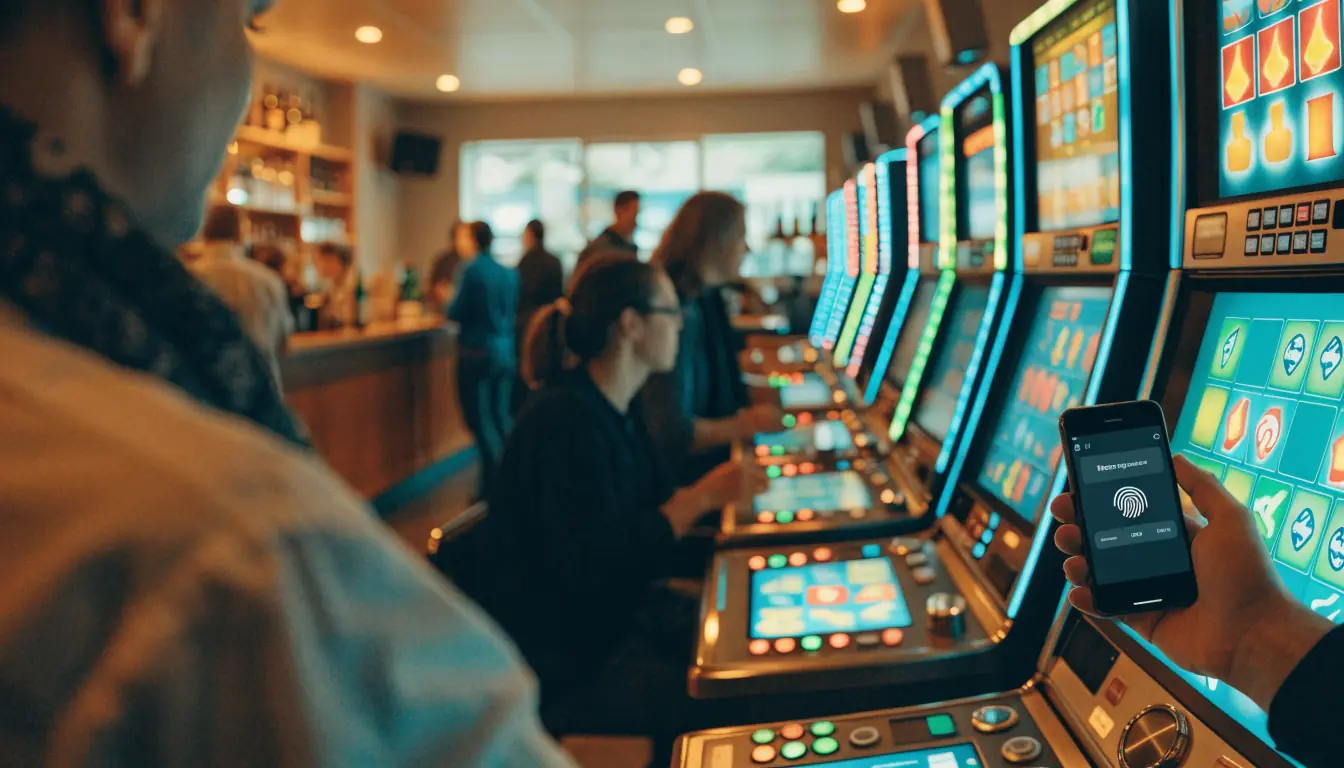
New PayID Pokies in Australia: What the Term Really Means
 Available in US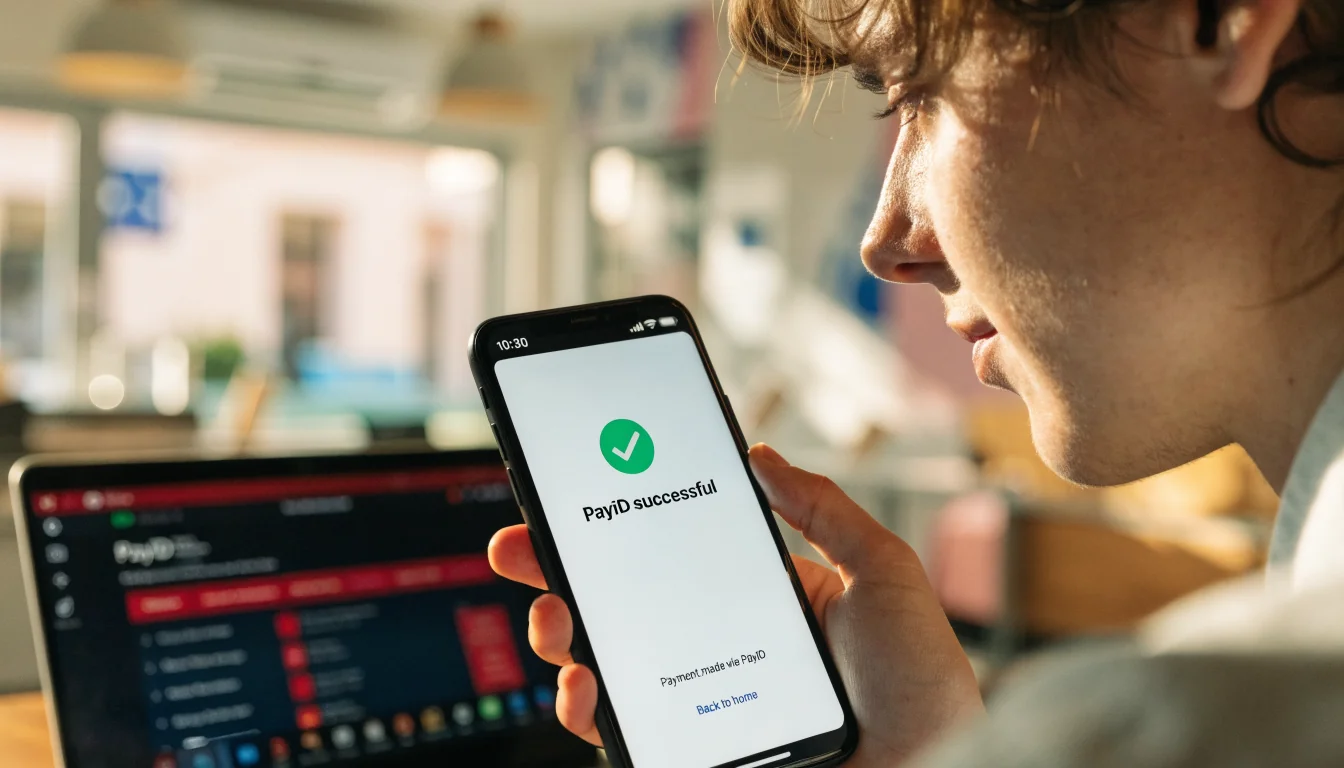
Understanding New PayID Pokies in Australia (2026 Outlook)
The phrase "PayID pokies" has become something of a riddle in Australian gambling circles. It sounds technological, almost reassuring — a payment layer wrapped around a gaming habit. What it actually describes sits somewhere between genuine innovation and legal fiction, and understanding that gap matters in 2026 more than it ever has.
PayID, for those who haven’t encountered it, is not a gambling product. It’s an Australian payments platform built on the New Payments Platform (NPP), designed to let people transfer money using a phone number, email address, or ABN rather than a BSB and account number. Banks built it. Regulators approve of it. It’s the kind of infrastructure that makes sending money to a mate feel like sending a text message.
The problem arrives when offshore gambling operators bolt the word "PayID" onto their deposit pages and market themselves to Australians as a new breed of pokies. This is where the story gets interesting — and where the legal architecture matters far more than most players realise.
With so many new PayID pokies sites launching in Australia for 2026, it helps to see at a glance what each casino actually offers before you sign up.
Bonus: 240% up to A$4,100 + 300 free spins Stands out for a large welcome package, with 240% up to A$4,100 paired with 300 free spins for new players.
License: Curacao eGaming (Roby Games Ltd) · Bonus: 100% up to A$750 + 200 free spins Operates under a Curacao eGaming license via Roby Games Ltd, backing its welcome offer of 100% up to A$750 plus 200 free spins.
License: Curacao Gaming Control Board OGL/2023/176/0095 (Hollycorn N.V.) · Bonus: up to A$11,000 + 300 free spins (code NEO100) Licensed by the Curacao Gaming Control Board under Hollycorn N.V., offering a sizeable bonus of up to A$11,000 with 300 free spins redeemable via a bonus code.
License: Curacao OGL/2024/1335/0780 · Bonus: up to A$1,000 + 150 free spins, wager-free · Min. deposit: EUR 20 Holds a Curacao license and offers a wager-free bonus of up to A$1,000 plus 150 free spins, with a low minimum deposit requirement.
Bonus: up to A$7,500 + 550 free spins across 10 deposits, 50x wagering · Payout speed: crypto under 1 hour, PayID 1-3 business days · Min. deposit: A$20 (A$30 to qualify for the bonus) Offers an extensive multi-deposit bonus reaching A$7,500 with 550 free spins, plus fast crypto payouts and PayID withdrawals processed within a few business days.
License: Curacao eGaming OGL/2024/923/0383 (Antillephone N.V.) · Bonus: up to A$2,000 + 100 free spins across 2 deposits · Min. deposit: A$30 Licensed under Curacao eGaming via Antillephone N.V., with a two-deposit bonus package worth up to A$2,000 and 100 free spins.
License: Curacao Gaming Authority (Jumpman Gaming Ltd) · Bonus: up to A$6,600 + up to 250 free spins across 4 deposits Runs under a Curacao Gaming Authority license from Jumpman Gaming Ltd, offering a four-deposit bonus scheme totalling up to A$6,600 and up to 250 free spins.
License: Tobique Gaming Commission · Bonus: up to A$8,000 + 400 free spins across 4 deposits · Payout speed: crypto ~10-15 minutes, fiat 1-5 days · Min. deposit: A$30 Licensed by the Tobique Gaming Commission, with a four-deposit bonus up to A$8,000 and 400 free spins, plus notably quick crypto payout times.
License: Curacao · Bonus: 100% up to A$500 + 200 free spins, 10x wagering · Payout speed: crypto 30-60 minutes, fiat 1-5 days · Min. deposit: A$10 Curacao-licensed with a low-wagering bonus of 100% up to A$500 and 200 free spins, alongside fast crypto payouts and an accessible minimum deposit.
License: Curacao Gaming Control Board OGL/2023/176/0095 (Hollycorn N.V.) · Bonus: up to A$1,500 + 200 free spins across 3 deposits Operates under the same Hollycorn N.V. Curacao license, offering a three-deposit bonus structure totalling up to A$1,500 and 200 free spins.
What "PayID Pokies" Actually Means
When an online casino site advertises "PayID pokies," it’s describing a transaction method, not a game category. The pokies themselves are the same digital slot machines that have circulated on offshore gambling sites for years — titles from providers like Pragmatic Play, Microgaming, NetEnt, and Evolution Gaming. The innovation, if it can be called that, lies in the deposit mechanism: the player sends Australian dollars via PayID from their bank account to the operator, bypassing card networks and (in theory) avoiding the friction of international wire transfers.
This distinction matters enormously. The Interactive Gambling Act 2001, passed on 28 June 2001, prohibits the provision of online casino games — including slots, poker, blackjack, and roulette — to Australian residents. It doesn’t matter whether the deposit method is PayID, Bitcoin, Ethereum, or a carrier pigeon. The prohibition applies to the operator, and it covers any real-money online casino product regardless of how the player funds their account.
It is not illegal for individual Australians to play at offshore-licensed online casinos. The law targets operators, not players. That asymmetry creates a strange market: thousands of offshore sites accept Australian players, process their deposits through whatever payment channel is convenient, and operate in a regulatory grey zone that no domestic authority has licensed or endorsed. There are no domestically licensed real-money online casino operators available to Australian players. A PayID prefix on the deposit option doesn’t change that legal geography by a millimetre.

The Scale of Australian Pokies Culture
To understand why the term "pokies" carries such weight in this market, it helps to appreciate the sheer scale of Australia’s gambling infrastructure. The country is home to roughly 3% of the world’s pub and club poker machines, despite accounting for only 0.3% of the global population. One source — complyadvantage.com, in an analysis of the gambling sector’s AML exposure — puts the figure even higher, at about 18% of the world’s poker machines. That claim is a single estimate, not a settled norm, but even the conservative figure confirms an extraordinary concentration of gaming machines per head of population.
In New South Wales alone, there are approximately 95,800 pokies. These machines, formally known as electronic gaming machines (EGMs), are embedded in pubs, clubs, and casinos across the state. Between December 2017 and May 2018 — a six-month window — NSW clubs earned $1.945 billion in net profit from pokies. That figure reflects old data, but it illustrates the revenue engine that underpins the club industry’s business model.
In FY 2020–2021 Australians wagered roughly AUD 150 billion on electronic gaming machines, with player losses of about AUD 12 billion and an average per‑capita loss of AUD 608.
In FY 2020–2021, Australians bet almost AUD$150 billion on electronic gaming machines. Player losses amounted to AUD$12 billion. The per-capita loss across the country was AUD$608. These numbers are staggering, and they help explain why poker machines are considered the most harmful form of gambling in NSW. They also explain, in part, why offshore operators find the Australian market so attractive: the appetite for pokies is enormous, and the legal domestic online supply is zero.
Where "New PayID Pokies" Fit — and Where They Don’t
Given the legal framework, the "new" in "new PayID pokies" refers almost exclusively to offshore sites that have recently added PayID to their list of deposit methods. There is no domestic product, no licensed Australian online casino, and no regulated channel through which PayID pokies exist legally. The product is, by definition, operating outside Australian law.
This creates a branding paradox. PayID itself is a legitimate, bank-backed Australian payments innovation. It’s instant, it’s traceable, and it works within the formal financial system. When an offshore casino advertises PayID deposits, it’s borrowing the credibility of a domestic payment rail to lend legitimacy to an illegal product. The transaction, when it leaves an Australian bank account, is visible to the bank — which is more than can be said for many offshore gambling payment channels — but visibility doesn’t equal legality.


That’s the tension at the heart of the "new PayID pokies" phenomenon: the payment layer is transparent and traceable, while the underlying product sits outside the regulatory perimeter entirely.
What Distinguishes PayID Deposits from Cash at the Venue
Australia’s physical pokies — the real machines in pubs and clubs — have been a longstanding concern for anti-money laundering regulators. The attraction is structural: high volumes of cash transactions and limited traceability make pokies attractive for money laundering. Public inquiries and sector guidance from bodies including AUSTRAC and the NSW Crime Commission have repeatedly identified pokies as a major AML risk area.
The typologies are well documented. Criminals place large amounts of cash into an EGM and withdraw it after little or no gameplay — the classic cash-placement-with-minimal-play pattern. Other schemes involve purchasing winning tickets from legitimate players, structuring deposits across multiple venues to avoid detection thresholds, or colluding with venue staff to move illicit cash through the machines. Large cash insertions followed by minimal play and immediate cash-out are red flags. So are frequent small redemptions across venues, multiple patrons working together to move cash, and customers who refuse identification or use multiple player cards.
Legal Risk
Offering “PayID pokies” to Australian players breaches the Interactive Gambling Act 2001, exposing offshore operators to criminal sanctions for providing illegal gambling services.
The remedy that regulators and several operators have been pushing — cashless, account-based pokies — improves traceability by forcing every transaction through an identified account. Customer verification and patron profiling become possible. Red flags become visible.
Ironically, PayID deposits at offshore casinos offer some of the same traceability advantages. The money moves through the NPP, the bank records it, and the operator receives a named, identifiable transfer. The difference is that no Australian regulator oversees the offshore operator’s AML/CFT program, customer due diligence, or transaction reporting. The traceability exists in the payment channel but evaporates at the product level.
When odds, payouts, and player accounts are administered by an operator outside any Australian regulatory framework, the payment trail is only as useful as the operator’s willingness to cooperate with authorities — which, in the absence of a domestic licence, is minimal.
The Broader Market: Land-Based vs. Offshore Online
Australia’s physical pokies market is vast and heavily regulated. In 2023, one source — again complyadvantage.com — reported pokies generating $191.2 billion in Australian gambling turnover. That’s a single data point and should be treated as such, but it aligns with the broader picture of Australians spending more on gambling than anyone else on earth, per capita.
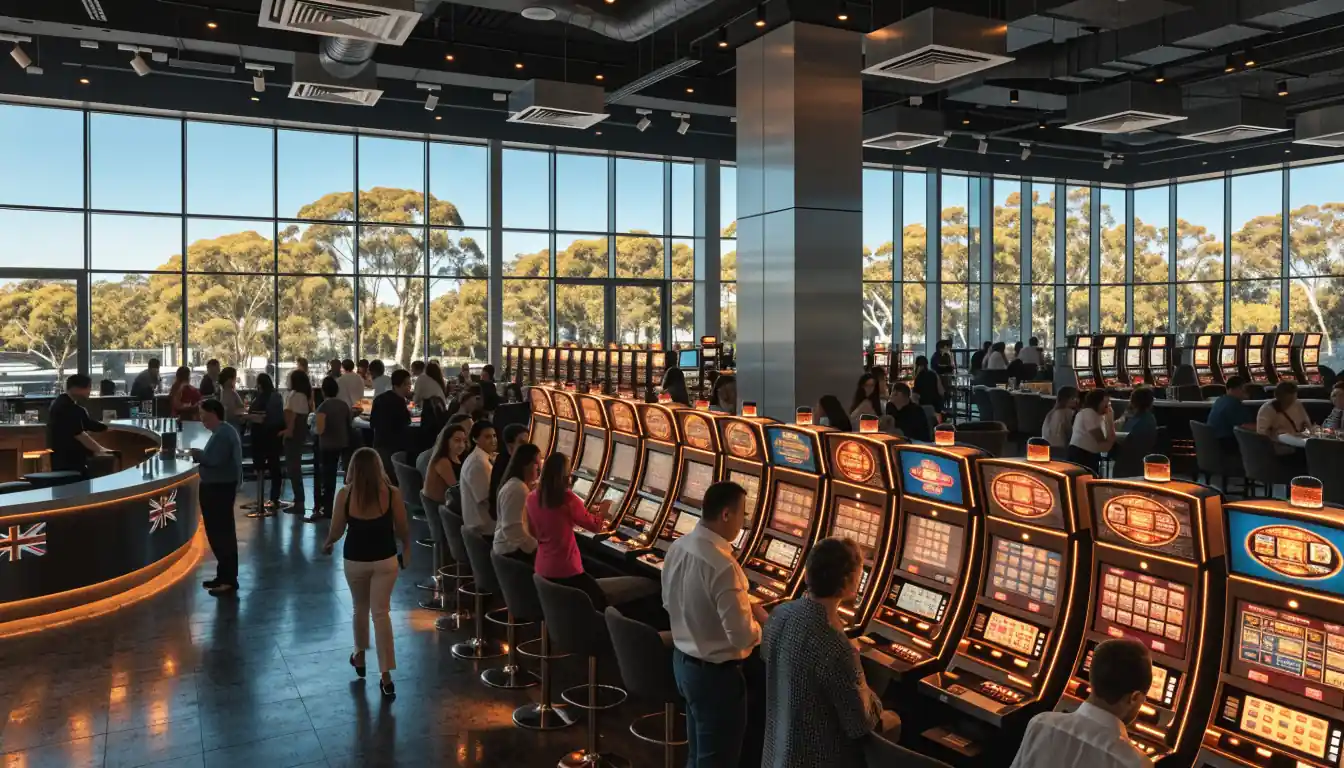
The land-based market operates under state and territory licences, with venues required to comply with conditions that include AML/CFT programs, customer due diligence, transaction reporting for cash above $10,000, and responsible-gambling messaging. Operators running more than 15 pokies must appoint a compliance officer. They must register with AUSTRAC. They must display their gambling licence prominently.
Offshore online casinos accepting Australian players face none of these obligations. No domestic licence exists for them to hold or display. No AUSTRAC registration applies. No responsible-gambling messaging is mandated. No wagering-requirements-disclosure framework governs their bonus offers. The regulatory delta between a NSW club and an offshore online casino is total.
That delta is precisely where the term "new PayID pokies" does its marketing work. By presenting an instant, bank-grade deposit method, offshore operators signal reliability, modernity, and convenience — all while operating in a jurisdiction-free zone where none of the consumer protections that govern physical pokies apply.
Operated under state licences, subject to AML/CTF obligations, responsible‑gaming messaging, and AUSTRAC reporting.
Licensed abroad (e.g., Malta, UK), none of the Australian AML, responsible‑gaming or BetStop requirements apply, and the product itself is prohibited for Australian residents.
The Commercial Architecture Behind the Term
The companies that appear on offshore pokies sites constitute a familiar roster of international game providers. Pragmatic Play, Microgaming, NetEnt, and Evolution Gaming supply the actual games — the visual and mathematical engines behind the spinning reels and bonus rounds. These are legitimate, licensed game development studios with global distribution. What happens at the operator level — who holds the licence, who processes the payments, who is accountable to which regulator — is a separate question entirely.
Offshore casinos may hold licences from the Malta Gaming Authority or the UK Gambling Commission, among others. These are real regulators with real standards, but they don’t extend jurisdiction into Australia. An Australian playing a "PayID pokie" on a Malta-licensed site is, from a legal standpoint, engaging with a product that the Interactive Gambling Act prohibits being offered to them, regardless of where the operator is licensed or how sophisticated its compliance framework appears.
This doesn’t make the games fake or the providers complicit — it makes the Australian-facing marketing of those games a legal violation by the operator, not the player. The distinction matters but is rarely communicated with any clarity at the point of deposit.
Responsible Gambling and the Asymmetric Protection Gap
Australia has invested heavily in responsible gambling infrastructure, and the contrast with the offshore environment is stark.
BetStop, the national self-exclusion register, was launched in August 2023 and registered 18,000 users within its first six months. Gamblers can exclude themselves from all licensed interactive wagering services — sports betting and racing — through a single mechanism. Gambling Help Online provides support services that are free and confidential. The regulatory framework for licensed operators mandates harm-minimisation messaging, age verification (18+), and restrictions on advertising — including a prohibition on targeting minors and advertising on social media platforms. Operators must not accept credit cards or digital currencies for deposits. They must cap gambling advertisements to a maximum of three per hour in relevant contexts. Sports jerseys are off-limits.
None of this applies to offshore pokies sites. No BetStop integration. No mandatory messaging. No advertising restrictions within Australian law — though ACMA does attempt to block offending websites and has been doing so with increasing aggression since 2019. The protection gap is structural, not incidental.
An Australian who self-excludes through BetStop and then opens an account at an offshore "PayID pokies" site has circumvented the system entirely — and the offshore operator faces no Australian-law consequence for enabling that circumvention. Whether the operator faces consequences in its own licensing jurisdiction depends on the jurisdiction and the operator’s willingness to comply with its own regulator’s standards, which vary considerably.
By using an offshore PayID casino, an Australian who has self‑excluded via BetStop can easily circumvent the national exclusion system, leaving them unprotected.
Taxation: The One Thing That Stays Simple
Gambling winnings are not taxed in Australia. This holds true regardless of whether the winnings come from a licensed domestic operator or an offshore site. The Australian tax treatment of gambling proceeds is consistent: winnings are not income, and they are not subject to income tax.
In 2015–16, gambling revenue accounted for 7.7% of state and territory taxation revenue — money flowing to governments through gambling taxes, not through player taxation. The tax burden sits with operators in the licensed market, not with players. For offshore operators who don’t pay Australian taxes at all, that’s an additional layer of value extraction that no domestic framework captures.
What "New" Actually Means in 2026
The word "new" in this context has almost no substantive meaning beyond marketing recency — a site that launched in the last year or two, or one that has rebranded, or one that has added PayID to its payment methods list. There is no product innovation, no newly regulated category, no technological advancement that distinguishes the current wave of offshore sites from their predecessors.
What has changed, modestly, is the payment rail. PayID offers better traceability than some older offshore deposit channels, and it’s more convenient than international bank wire transfers. It’s also, from a compliance perspective, more visible than cryptocurrency — though Bitcoin and Ethereum remain available options at many of the same sites.
The traceability potential is real, but it exists in a vacuum. Without a domestic regulatory authority with jurisdiction over the operator, the NPP’s transaction visibility doesn’t feed into any AML/CFT program, any customer due-diligence framework, or any suspicious-matter reporting obligation. The data exists. Nothing legal or regulatory attaches to it.

That’s the paradox that defines the "new PayID pokies" category in 2026: better payment plumbing feeding an unlicensed, unregulated, and federally prohibited product. The payment layer has been upgraded. The product layer hasn’t changed at all.
The Persistence of the Model
Australia’s pokies culture didn’t emerge from offshore markets, and offshore "PayID pokies" wouldn’t survive without a pre-existing appetite built on the physical machine network. The two are bound together: the appetite was trained in pubs and clubs, and the offshore operators intercept that demand with a legal fiction dressed in payment-fintech clothing.
The phrase itself — "new PayID pokies Australia" — functions as a keyword cluster for search engines rather than a description of any coherent product category. It aggregates a genuine payment method, an illegal product offering, and a national gambling habit into a marketable search term. Sites that rank for it are, almost without exception, affiliate-marketing platforms or offshore casinos that have identified a gap between demand and legal supply and filled it with whatever content converts best.
That gap is the story. Not the games, not the payment method — the gap itself. Australia has one of the world’s densest concentrations of electronic gaming machines and simultaneously prohibits the entire category online. The offshore market exists to absorb the overflow. PayID makes the absorption smoother. But the legal and regulatory reality is unchanged: the product is prohibited, the operators are unlicensed, and the newness is entirely cosmetic.
Everything else is window dressing.
What Are Pokies In Australia?
Pokies, formally known as electronic gaming machines (EGMs), are digital slot machines widely used in pubs, clubs, and casinos across the country.
How can I manage deposits and withdrawals responsibly?
You can manage your gambling habits by registering with the BetStop self-exclusion registry, which was launched in August 2023 to block you from licensed wagering operators.
What Controls Help Prevent Pokies Money Laundering?
Key controls include customer verification, patron profiling, and transitioning to cashless or account-based pokies, which improve transaction traceability.
Published by the Pokies Payouts Guide team.