Plinko Casino Australia: Rules, Legality and Where to Play
 Available in US
- Slot Landscape in Australia: Pokies, Online Slots and Market Size
- The Rise of Online Casinos in Australia
- Playing for Real Money: Legal Boundaries and Player Protections
- Game Types and Variations Available to Australian Players
- Choosing an Online Casino: What to Look For
- Understanding Casino Reviews: Reading Between the Lines
- What Is Plinko in the Casino Context?
- Free Play and Demo Modes: Trying Games Without Risk
- Cryptocurrency and Plinko: Current Regulatory Landscape
- Bonuses, Promotions and Their Conditions in Australian Casinos
Slot Landscape in Australia: Pokies, Online Slots and Market Size
In the 2020‑2021 financial year, Australians fed almost AUD$150 billion into electronic gaming machines. The ledger on the other side of that transaction showed a player loss of AUD$12 billion. Divided across the population, the machines extracted AUD$608 per head. The country holds 0.3 per cent of the world’s people and somehow 3 per cent of its pub and club poker machines. A distribution of burden, or of enthusiasm, depending on who is counting.
That weight concentrates sharply. New South Wales alone runs approximately 95,800 poker machines — pokies, in the language the rest of the world had to learn. The state’s Central Coast region accounts for 4,672 of them, 2.37 per cent of the national total. Break it further and the arithmetic gets intimate: Gosford holds roughly 1,928 machines, about one per 71 adults. Wyong tops that with about 2,608, one per 47 adults. A town where every forty-seventh adult has a machine is not an outlier here. It is the template.
The physical fleet
The machines in clubs and pubs form the older, and still the larger, half of the Australian slot landscape. They are not amusement arcade decoration. They are the mechanism by which AUD$150 billion moved in a single year, and calling them "gaming machines" in polite company has always been a gentle euphemism. The pokies are where the wager meets the lever, or button, in a nation that has built its gambling identity around them.
New South Wales, with its near 96,000 units, sets the pattern. The Central Coast corridor, from Gosford to Wyong, shows how machines cluster where retirees, workers and tourists converge. Density like that does not emerge from accident. It comes from decades of club licensing, venue agreements and a taxation system that learned to depend on the loss figures it officially deplores.
The online half of the picture
And then there are the online pokies. Slot games dominate most Australian online casino sites, and on those sites they go by the same nickname, online pokies, because the market could not imagine calling them anything else. The digital versions run on Random Number Generators — RNGs — that independent testing agencies audit on a regular basis. That arrangement dispenses with the lever, the glass panel, the loyalty card on a coiled lanyard. What it retains is the wager.
Online slots in the Australian scene occupy an odd position. The games exist, the players exist, yet locally licensed real-money operators do not. The result is a split: a physical fleet of machines that dwarfs almost any other country’s, and an online supply routed entirely through offshore platforms. Both halves count as "the slot market". They simply file their returns in different jurisdictions.
Plinko and the slot family
Searches for a "plinko slot", a "plinko slot machine" or "plinko slots" treat the game as one more branch of the slot family. So do most casino lobbies, which file Plinko alongside the pokies rather than with the cards. Whether the venue calls it plinko slots, a plinko slot or a plinko casino slot machine, the mechanic is the same: wager, drop, settle. Not a reel machine, but taxed and grouped with one.
Playing Plinko on unlicensed offshore platforms may leave you without consumer protection and with the risk of losing money.
Review pages and demo listings for "plinko slots" describe the game with the same vocabulary they apply to pokies — volatility, pace, demo availability. That borrowing is telling. It suggests the game is sold to Australians as another form of pokie, one where the pegged board replaces the spinning drum. The demand exists. The kind of licence to serve it locally does not.
Scale, briefly
AUD$150 billion wagered, AUD$12 billion lost, AUD$608 per head, in one financial year. Australia contains a fraction of the world’s population and a disproportionate slice of its pub and club poker machines. New South Wales holds the densest share; the Central Coast shows the tightest clustering; Gosford and Wyong show what per-adult machine density looks like when you stop rounding. Online pokies extend the arrangement offshore, where RNG-audited software takes over from the lever. The physical and digital fleets between them define the shape of the Australian slot market, and whichever label the market puts on Plinko — slot, pokie, RNG-based — the numbers already belong to the same ledger.
The Rise of Online Casinos in Australia
Choosing a Plinko casino for 2026 comes down to the fine print behind the flashy welcome offers, so it pays to weigh licensing, bonus terms, and payout speed before you drop a single coin on the boards.
Bonus: 240% up to A$4,100 + 300 free spins Stands out for a sizeable percentage match bonus paired with a generous free spins package, making it a strong pick for players chasing extra bankroll upfront.
License: Curacao eGaming (Roby Games Ltd) · Bonus: 100% up to A$750 + 200 free spins Operates under a Curacao eGaming licence via Roby Games Ltd, backing its welcome bonus of a matched deposit plus free spins with a clear regulatory footing.
License: Curacao Gaming Control Board OGL/2023/176/0095 (Hollycorn N.V.) · Bonus: up to A$11,000 + 300 free spins (code NEO100) Licensed by the Curacao Gaming Control Board under Hollycorn N.V., it offers one of the larger bonus ceilings on this list along with free spins unlocked via a bonus code.
License: Curacao OGL/2024/1335/0780 · Bonus: up to A$1,000 + 150 free spins, wager-free · Min. deposit: EUR 20 Holds a Curacao OGL licence and pairs its bonus and free spins with wager-free terms, plus a clearly stated low minimum deposit for easy entry.
Bonus: up to A$7,500 + 550 free spins across 10 deposits, 50x wagering · Payout speed: crypto under 1 hour, PayID 1-3 business days · Min. deposit: A$20 (A$30 to qualify for the bonus) Spreads a large bonus and free spins allowance across multiple deposits, and backs it with fast crypto payouts and defined PayID processing times for Australian players.
License: Curacao eGaming OGL/2024/923/0383 (Antillephone N.V.) · Bonus: up to A$2,000 + 100 free spins across 2 deposits · Min. deposit: A$30 Licensed under Curacao eGaming via Antillephone N.V., it splits its bonus and free spins across two deposits with a clearly stated minimum deposit requirement.
License: Curacao Gaming Authority (Jumpman Gaming Ltd) · Bonus: up to A$6,600 + up to 250 free spins across 4 deposits Regulated by the Curacao Gaming Authority through Jumpman Gaming Ltd, offering a substantial bonus and free spins spread across four deposits.
License: Tobique Gaming Commission · Bonus: up to A$8,000 + 400 free spins across 4 deposits · Payout speed: crypto ~10-15 minutes, fiat 1-5 days · Min. deposit: A$30 Licensed by the Tobique Gaming Commission, it combines a large multi-deposit bonus with notably quick crypto payout times and a modest minimum deposit.
License: Curacao · Bonus: 100% up to A$500 + 200 free spins, 10x wagering · Payout speed: crypto 30-60 minutes, fiat 1-5 days · Min. deposit: A$10 Curacao-licensed with a straightforward matched bonus and free spins, backed by fast crypto payout speeds and a low minimum deposit for quick entry.
License: Curacao Gaming Control Board OGL/2023/176/0095 (Hollycorn N.V.) · Bonus: up to A$1,500 + 200 free spins across 3 deposits Operating under the same Curacao Gaming Control Board licence via Hollycorn N.V., it offers a bonus and free spins package spread across three deposits.
From Mechanical Reels to Digital Platforms
The Australian gambling scene has undergone a profound transformation over recent decades. While pokies once dominated pub corners and club lounges, the landscape has shifted toward digital platforms where games like Plinko and online pokies attract players through entirely different delivery methods. This shift reflects broader technological integration globally—the online casino sector has experienced a boost in popularity due to innovations that moved gambling from physical venues to browser tabs and mobile apps.
The mechanics behind these platforms differ fundamentally from traditional machines. Physical pokies rely on mechanical randomness or licensed Random Number Generators (RNGs) housed within the machine itself. In contrast, online casino games include both RNG-based versions and live-dealer versions, with the former using software algorithms and the latter streaming real dealers in real time. For Australian players, this means access to online pokies and RNG-based table games through platforms that operate under distinct regulatory oversight—and often without domestic licensing at all.
The regulatory environment adds a peculiar twist to this growth. There are no domestically licensed real-money online casino operators available to Australian players. The Australian Communications and Media Authority (ACMA) oversees regulation, yet the Interactive Gambling Act 2001 prohibits provision of online casino games to Australian residents. This creates an unusual market tension: the number of online casino sites, including Australian operators, is increasing according to one industry review, but these services exist in a legal grey area where the law targets offshore operators rather than individual players.
Technology and Game Availability
The infrastructure supporting online casinos involves regularly audited RNGs, ensuring random outcomes are verifiably fair. Most Australian online casino sites feature online pokies as a dominant category, with many slot games available in demo mode using virtual funds. This allows players to experience RNG-based versions without immediate financial commitment — a distinct advantage over traditional club pokies where physical presence and cash are typically required.

Live-dealer versions add another layer of technological integration, streaming professional dealers with real equipment and real-time interaction. The minimum age to play at online casino operators in Australia is 18 years, matching the national minimum legal gambling age. However, because no domestic licensing pathway exists for online casino operators, Australian players access offshore-licensed platforms that comply with their home jurisdictions’ regulations rather than ACMA’s enforcement of the IGA.
The Distinction from Traditional Gambling
Traditional pokies operation, by contrast, relies on state and territory licensing of physical venues. Electronic gaming machines generated almost AUD$150 billion in bets during FY 2020-2021, resulting in player losses of AUD$12 billion. These numbers reflect the scale of the physical infrastructure that online platforms now compete with or complement, depending on one’s perspective.
The separation between physical and digital gambling environments becomes apparent in how players interact with content. Online pokies use software RNG-based versions, while live-dealer games recreate the social aspect of table play through video streaming. Both differ from the solenoid-driven mechanics of club pokies, though the underlying gambling principles remain consistent. The market’s evolution has expanded access options for Australian players, creating new engagement patterns that exist alongside — and sometimes instead of — the pokies that have long defined the nation’s gambling culture.
Playing for Real Money: Legal Boundaries and Player Protections
The legal architecture that surrounds real-money online casino gambling in Australia is, at once, remarkably simple and strangely confusing. Simple, because the Commonwealth prohibition on providing casino-style online games could not be plainer. Confusing, because the prohibition is framed around providers rather than players, which means an entire market exists in a kind of legislative twilight that ought to be understood properly before anyone wagers actual money.
The Commonwealth Law and Its Line on Casino-Style Gambling
The primary Commonwealth instrument is the Interactive Gambling Act 2001, introduced to protect the public with a stated focus on harm minimisation. It should be said plainly that at least one source of information refers instead to an Interactive Gambling Act 1997 as the law that prohibits the provision of online casino games to Australian residents. The two references cannot both be correct, and there is no reason the discrepancy should be passed over in silence. The consensus view, however, points to the 2001 Act as the operative framework.
Casino-style games, including slots, poker, blackjack, and roulette, are prohibited federally. Online poker and live (in-play) online betting fall under the same prohibition. The law targets the purveyor of the service, not the individual who consumes it. That distinction matters enormously for what follows.
What Remains Permitted and What Does Not
Online sports betting is legal in Australia under state and territory licensing, which demonstrates that the prohibition is category-specific rather than an across-the-board rejection of interactive wagering. The provision of online casino gambling, by contrast, is illegal in its entirety, and it is not possible to obtain a domestic licence to operate such a service. There are accordingly no domestically licensed real-money online casino operators available to Australian players. That absence is not an oversight or a bureaucratic backlog; it is the direct consequence of the design of the law.
For the individual Australian, the terrain is different. It is not illegal for a resident to access an offshore-licensed online casino. The prohibition binds operators, not customers. A person who opens an account and deposits money at an offshore site does not thereby breach Commonwealth law. The Commonwealth’s displeasure is aimed squarely at the party that supplies the product.
A paradox worth noticing. The state loudly bars the provider while quietly sparing the purchaser, and the resulting market survives through offshore venues the regulator cannot practically close. This is the peculiarity on which the whole arrangement depends.
Legal risk
Providing online casino games, including Plinko, to Australian residents is prohibited by the Interactive Gambling Act 2001.
Protections That Apply at the Individual Level
None of the above would matter much without practical protections around the individuals who do participate. The Australian Communications and Media Authority oversees online casino regulation, which includes enforcing the Commonwealth prohibition against operators that provide the prohibited services. The minimum wagering age is 18, and residency requirements apply to eligibility to participate at all. Those conditions are not optional ornaments; they constitute the bare boundaries of lawful play.
Responsible-gambling protections are a further and indispensable layer. BetStop is the national self-exclusion mechanism, available to Australians who wish to bar themselves from participating, and services such as Gambling Help Online and Lifeline exist for precisely the moments when gambling ceases to be an entertainment. Such services are not incidental features of the online environment; they are the counterbalance that the law advertises when it speaks of harm minimisation.
Diagnosing a Lawful Offshore Operator
Because domestic licences cannot be issued, the licensing that does exist necessarily comes from elsewhere. Jurisdictions with functioning regulatory regimes include the Malta Gaming Authority and the United Kingdom Gambling Commission, and an operator carrying such a licence is answerable to an authority with power to act. That answerability is a real thing rather than a decorative badge; it implies auditing of random number generators by independent agencies, accessible complaint and dispute-resolution procedures, and verified identity checking before any withdrawal is processed.
These practices are the substance of legitimacy. An operator that cannot show a recognisable licence, a transparent complaints process, and audited randomization has no business asking for real money from anyone. AUD$150 billion in wagers and AUD$12 billion in losses flowed through gaming machines in a single recent financial year, which illustrates vividly what unguarded access can cost. Regulatory accountability is not a decoration to admire; it is the only thing that separates a legitimate venue from one that will quietly empty the purse.
Why the Distinction Matters for Real-Money Play
A person deciding to gamble real money online deserves to know the difference between prohibited provision and permitted personal play. The Commonwealth has decided the former cannot happen domestically. The latter remains open to the individual, with the consequence that the entire Australian real-money online casino scene operates offshore. That single structural fact frames every subsequent question about game categories, bonus conditions, and the presence of casual games that others here discuss. Without this distinction, all the rest is noise.
Game Types and Variations Available to Australian Players
The Australian fascination with games of chance is aslayered as it is storied, with the casino game plinko sitting alongside pokies, card tables and live-dealer offerings in the taxonomy of wagering. Category boundaries matter: the differences between them are differences in how chance itself is packaged and sold.
Traditional mechanical or electronic slot machines found in clubs and pubs across Australia.
Digital slot games offered by offshore operators, using audited RNGs.
A board‑drop game often grouped with slots, available both in physical venues and online.
Real‑time streamed tables where human dealers manage the game, also offered by offshore sites.
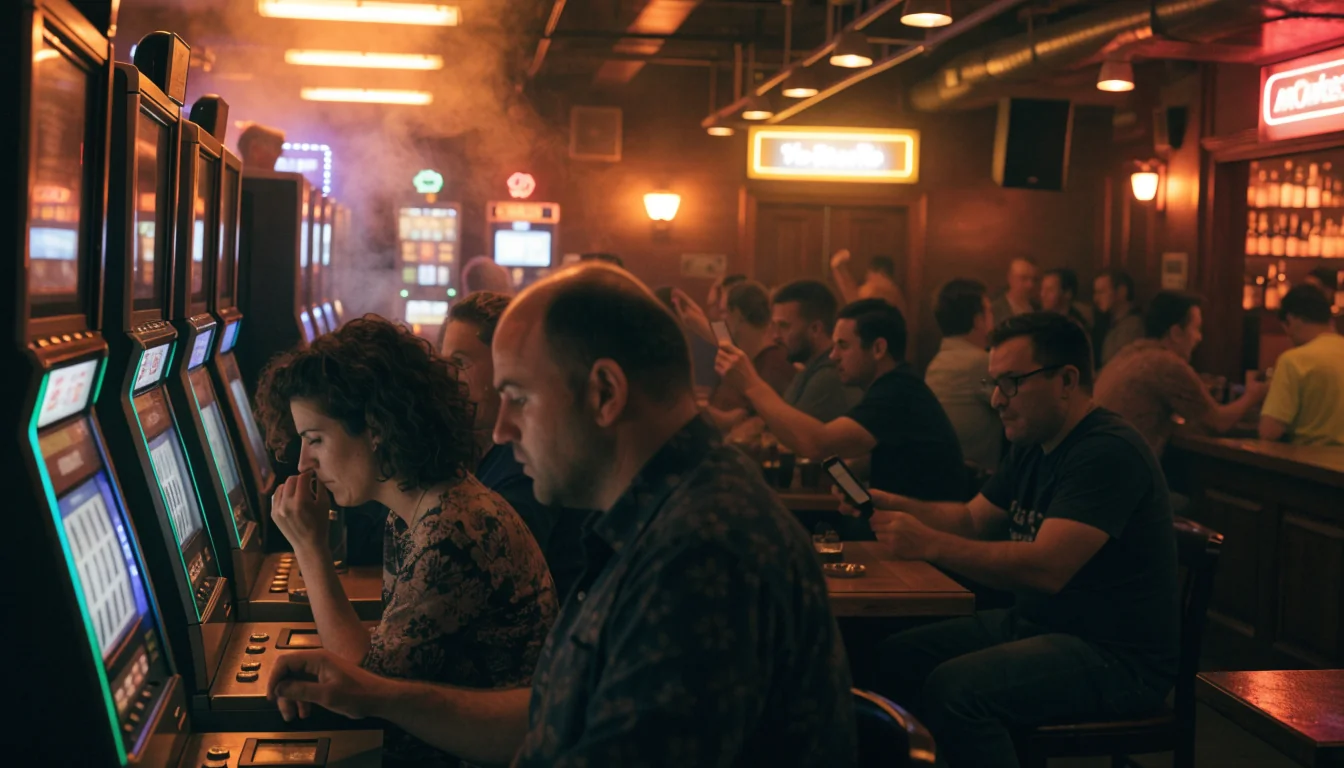
Consider the poker machine. The pokies are the backbone of the Australian gaming scene, and they are called "online pokies" when they appear on internet platforms. A plinko casino game, by contrast, does not rely on spinning reels or paylines; instead, it uses a simple mechanical drop – a ball disorderly bouncing off pegs – to generate an outcome. The plinko game casino concept is often compared to slots precisely because it borrows some visual language from them, yet it is structurally closer to a miniature pachinko parlour than to a traditional pokie. That distinction is small but not trivial.
Card games such as poker, baccarat and blackjack are available in many variations online, each variation altering a rule here or a payout there. Table casino games available online include roulette, craps, Pai Gow and Sic Bo: a roll of dice reversed into a wager, a wheel turned into a mathematical certainty. Both categories are governed by Random Number Generators (RNGs) to ensure random outcomes; the software is regularly audited by independent testing agencies so that the house edge remains a fixed, not an arbitrary, quantity.
Where the live-dealer format enters, the experience shifts. Live dealer games are streamed in real time with professional dealers, providing an immersive experience that RNG-based versions cannot mimic. Instead of algorithms alone, the player sees a human being deal a card or spin a wheel; the randomness is no longer merely certified, it is visible. The difference between an RNG-based table and a live-dealer table is less about odds than about the psychology of trust.
A Closer Look at Plinko and Slot Variants
Plinko, for its part, tends to appear in the catalogue of games that casinos label "casino game" or "slot-adjacent." A player searching for plinko games casino will find that it is often presented in both RNG-based and demo modes. Many slot games can be played in demo mode with virtual funds, and the same applies to the plinko ball game casino when operators wish to soften the learning curve. The availability of free play and demo options is a quiet acknowledgment that not all gambling needs to be for real money; sometimes the game is the lesson.
This is the point where the category system runs headlong into the legal system. Online casino games – whether pokies, card games, table games or plinko casino games – are prohibited federally under the Interactive Gambling Act 2001, insofar as they are offered to Australian residents by operators. The list of permissible and impermissible forms does not always map neatly onto the categories that platform lobbies display. The result is a disjunction: the game exists in one place, the law in another, and the player somewhere in between. Nothing new under the sun.
The Subtle Art of Variation
Variations within a game type – say, blackjack or poker – matter less to the mathematician than to the enthusiast. Game providers such as Pragmatic Play, Microgaming, NetEnt and Evolution Gaming provide the titles; how many variations each provider contributes to a given operator’s library is not a public quantity. Poker can be dealt as Texas Hold’em, blackjack as Classic or Multi-Hand; baccarat shifts from Punto Banco to a squeaky-cheeked speed version. The house edge may be constant in principle, but the experience of it is anything but.
Plinko
A casino game where a disc is dropped down a pegged board and lands in a slot that determines the payout, similar in feel to a pachinko machine.
The Australian who has grown up on pokies may find the plinko casino game a curiosity – a brief nostalgia for the collision of plastic and fate. But the categorisation impulse remains strong: to put a game into a box is to claim, however silently, that its outcomes are respectable, regulated, and properly random. That claim is easier to make when a Random Number Generator has been audited, and harder to make when the only available operator is based offshore and unlicensed.
In sum, the categories are not merely convenient; they are a map of how Australians have learnt to gamble, and of what they will and will not call a "game."
Choosing an Online Casino: What to Look For
The Australian situation presents an unusual paradox. Since offshore operators provide the only access to online casino games, the usual advice about selecting a licensed provider becomes circumspect. There is no domestic licence to seek.
What remains are markers of professionalism rather than official endorsement.
The Australian Communications and Media Authority oversees regulation of online casino activity in Australia. While the body blocks prohibited providers, it does not endorse operators for players. That distinction matters. A site blocked by ACMA has failed a basic test; a site accessible in Australia has merely not yet been caught.

Operators displaying the logos of respected foreign regulators signal something, though the signal is limited. The Malta Gaming Authority and the United Kingdom Gambling Commission both licence casinos, and both have public registers. The complication arises from the domestic prohibition: neither body licences operators to serve Australian players legally. A Curacao or Anjouan licence, by contrast, signals little at all.
Age and residency requirements occupy a curious position. Australian law sets eighteen as the minimum age for gambling, and only Australian residents may lawfully participate under the domestic framework. Offshore sites accepting Australian players are not operating within that framework, even when they impose their own checks. A site that asks a player to confirm age and residency is performing compliance theatre — the performance is not nothing, but it is not much either.
The absence of a domestic licence shifts the burden of assessment onto details that would otherwise seem minor. A responsible operator will show its licence information clearly, display its corporate registration visibly, and maintain accessible complaint procedures. An operator that buries or omits those details has made a choice about transparency. The choice tells a reader something.
What a reader can ascertain is limited. Offshore operators describe themselves in terms that mix fact with optimism, and nothing about an Australian market exists to separate the two. The ACMA publishes a list of prohibited sites and operators; checking whether a given site appears on that list remains one of the few concrete steps available.
Offshore‑only market
All real‑money online casino services for Australian players are provided by offshore operators due to domestic licensing restrictions.
Prudence here is unusually hollow.
The criteria normally recommended — current licensing, third‑party audits, accessible dispute resolution — still apply, but no operator can meet the first one for the Australian market. A site can meet some of the others. Between those that publish their arrangements plainly and those that hide behind vague assurances, the first group is preferable. That preference is thin comfort.
Understanding Casino Reviews: Reading Between the Lines
Most Plinko casino reviews available to Australians read every offshore site through the same polite fiction: that some regulator stands behind it. There is no Australian licence to cite, because there is no Australian licence. A review that says a casino is "fully regulated" and names the Malta Gaming Authority or the UK Gambling Commission is still accurate in its own way — it just describes a regulator that has no jurisdiction here and no complaint route for this reader.
Bonuses are where reviews hardest blur. A reviewer will call a welcome offer generous; the offer’s actual shape is wagering requirements, restricted games, and an expiry date. Reviews that quote the headline figure without those conditions are describing the advertisement, not the product. The previous section covers what to look for on the operator’s own page; what reviews omit is often the same thing.
Player-versus-operator framing matters too. A review that warns Australians may be "breaking the law" by playing offshore has the target wrong. The provision of online casino games to Australian residents sits on the operator; individual play is not the offence. A review that gets that backwards is not parsing its own legal claims — it is reprinting the casino’s disclaimer.
Association can be a quieter tell. A Plinko game attached to a celebrity name plumbs a different signal than the same game presented plainly; the reviewer’s job is to note the difference between a brand licence and a verified product. Most do not.
What remains is a thin habit: reviewers who cite the Interactive Gambling Act correctly, reviewers who name the regulator whose licence they mean, reviewers who say wagering terms before they say bonus size. Three things. Few do them.
What Is Plinko in the Casino Context?
Plinko is a game of chance that operates on the casino principal of fixed odds, where a disk is dropped down a pegged board and its final resting slot determines the payout. In the broader casino landscape, it stands next to conventional slot offerings, which Australians universally refer to as pokies — the term that dominates local gaming discourse regardless of whether the action occurs on a casino floor or a browser tab.
Where slots rely on spinning reels and Random Number Generators to determine outcomes through a mathematical algorithm, Plinko relies on a distribution mechanism. It is an intriguing study in contrast: while the outcome of a pokie is decided instantly by a hidden code, the path of the puck down the Plinko board appears almost physically random to the eye, though the result is just as mathematically determined as any spin of a reel. This distinction matters mainly to the policing of outcomes, which are rigorously audited by independent testing agencies just like their RNG-based counterparts.
You will encounter this game on that subset of online platforms that hold licences offshore, where it is usually possible to test the paytable without staking anything of value. Much like the majority of slots, many versions of Plinko are available in demo mode using virtual funds, providing a zero-stakes entry point for players curious about its mechanics before ever parting with real money.
Free Play and Demo Modes: Trying Games Without Risk
Demo mode strips Plinko down to its mechanics without touching a wallet. Virtual funds drop down the board, the pegs bounce them exactly as they would with real stakes, and the balance at the top of the screen resets whenever the session reloads. For a game built on pure chance, that rehearsal matters: the player learns the rhythm of the board, the difference between low and high risk settings, and how quickly a session can swing — all before a single dollar is involved.
The same logic extends to most Plinko-style titles and other chance-based games in the free section. Online casino software runs the same Random Number Generators in demo play as in paid play, and those RNGs are regularly audited by independent testing agencies. The bounce is genuinely random; only the money is pretend.
Free spins attached to deposits belong to a different conversation — the bonus section — because conditions quietly re-enter through the side door. Demo play has no wagering requirements, no expiry window, no eligibility check beyond loading the game. It is the only corner of an offshore casino site that asks nothing and owes nothing. Peculiarly generous, for this industry.
Cryptocurrency and Plinko: Current Regulatory Landscape
Plinko itself is a simple game — drop a ball, watch it bounce, land a multiplier — but paying for it with Bitcoin or Ethereum changes nothing about its legal status in Australia. The Interactive Gambling Act 2001 does not distinguish between payment methods: a Plinko game funded with crypto is still an online casino service, and offering it to Australian residents is prohibited.
That matters because the crypto route is often presented as an alternative set of rules. It is not. There are no domestically licensed real‑money online casino operators available to Australian players, so any site currently offering Plinko for digital coins operates offshore, outside the ACMA’s remit.
Some Australian operators do reference crypto in their own materials, according to one industry review, but marketing language does not create a local licence. For Plinko specifically, that means the only access point today is an offshore platform — the same legal position as every other online casino game, regardless of whether the balance is held in dollars or in Bitcoin.
Bonuses, Promotions and Their Conditions in Australian Casinos
A promotional offer reads like a gift until its conditions arrive. Bonuses in the casino context typically carry wagering requirements, game restrictions, and time limits such as expiry dates. Each of those conditions is a boundary between the headline figure and what the promotion actually allows. The figure is the advertisement; the boundaries are the contract.
That contract is what separates a bonus from free play or demo mode. Demo balance carries no conditions at all, because nothing in it is real. A bonus carries conditions precisely because something in it is. The difference is not generosity. It is documentation. And the document only survives until its expiry date.
What does RTP mean in pokies?
RTP stands for Return to Player. In pokies, it represents the theoretical percentage of all wagered money that a game will pay back to players over time.
What is the impact of gambling advertising on young Australians?
The Interactive Gambling Act 2001 was introduced with a focus on harm minimisation to protect the public, including young Australians, from the negative impacts of gambling and its advertising.
What is the regulatory scope of Anjouan Gaming?
Anjouan Gaming provides regulatory oversight for online casino platforms, ensuring that games operate under a specific licensing jurisdiction.
Published by the Pokies Payouts Guide team.