
Casinos That Accept Neteller in Australia

- Online Pokies That Accept Neteller in Australia
- Neteller‑Friendly Australian Online Casinos in 2026
- Low‑Stake Deposits with Neteller: $10 and Beyond
- Instant Real‑Money Withdrawals: How Fast Can You Cash Out?
- Neteller‑Compatible Slots and Popular Games
- Withdrawing Your Winnings: Neteller and Other E‑Wallet Options
- Best Bonus Offers for Neteller Deposits
- Neteller Casino Sites to Try in Australia
- Paying with Neteller and PayID: What You Need to Know
- Australian Regulatory Landscape for Online Gambling
Online Pokies That Accept Neteller in Australia
There is a particular breed of Australian gambler who has never set foot in a licensed casino because, legally speaking, such a thing does not exist in this country. The Interactive Gambling Act 2001 made it impossible for any operator to hold an Australian-specific licence for online pokies, which means the entire local market consists of offshore-licensed platforms that Australians access by choice. Not illegal for the player, not permissible for the operator. This creates an odd situation where the games people love, and the payment methods they prefer, exist in a grey zone that regulators have never bothered to clarify.
That grey zone happens to be well-served. The pokies themselves, from classic titles to the newest releases, are available at sites that cater to Australian players even while operating from Malta or Curaçao. And Neteller, the e-wallet that has somehow become associated with online gambling almost as much as the games themselves, remains one of the more practical ways to fund an account without handing over banking details or remembering yet another password.
Why Neteller for Pokies Specifically?
The distinction between "casinos that accept Neteller" and "pokies that accept Neteller" is worth dwelling on briefly, because it matters more than it first appears. The casino as a whole may accept the payment method, yet individual games within that casino might have minimum bets or deposit thresholds that do not align with what a Neteller-funded account prefers to risk. More importantly, the players who gravitate toward pokies tend to prefer smaller, more frequent deposits rather than large transfers, and Neteller accommodates this style of play well.
According to one industry overview, Australian players have certain expectations when they sit down at an online casino: payouts in Australian dollars without painful currency exchange, bonuses that genuinely add value rather than merely window-dressing the terms page, security that goes beyond the basic checkbox, and games that actually load properly on their devices. These are not unreasonable demands. The offshore market delivers them, or it should, and pokies occupy the fulcrum of that conversation.

Which Pokies Can Be Funded via Neteller
The short answer, satisfyingly simple, is: most of them. The longer answer involves understanding that the games themselves do not differentiate payment methods. When a player deposits via Neteller and selects Starburst or Book of Dead or Queen of the Nile, the game accepts the credit from the account without caring whether that account was funded by e-wallet, card, or cryptocurrency. The games are agnostic; the deposits are not.
Yet this agnosticism has its limits. Some pokies have minimum deposits that exceed what Neteller might charge as a nominal fee, which occasionally creates confusion. The Deposit button leading into Neteller will process the amount, and the game will treat it as available credit, but awareness of minimum thresholds matters. Fair wagering requirements, according to one industry source, hover between 30x and 40x the bonus amount, and this applies regardless of how the deposit was made. The payment method does not alter the mathematics of wagering.
Here is where it gets interesting. Over 65% of online casino sessions in Australia now occur on mobile devices, which suggests players are not lounging at desks deliberating between payment options. They are on trains, in cafes, killing time between meetings, or settling into the couch at odd hours. The mobile-first design of modern pokies has created a micro-second decision environment, and the payment method that requires the fewest taps tends to win.
Neteller’s mobile app handles deposits without needing a desktop confirmation, which aligns with this pattern. The sequence is: open app, authorize, sit down anywhere. This brings the mobile pokies and mobile-payment conversation into alignment, and suddenly the two work together rather than as separate processes.
Getting Started Without Friction
The reader who has never used Neteller might reasonably ask what setting up entails. The registration process mirrors most financial apps: name, email address, a strong password, and then a verification step that confirms the email. Funding the Neteller account itself can happen through bank transfer, card, or occasionally other e-wallets, with the latter being somewhat recursive but functional.
Setting up Neteller for pokies
Create an account by providing name, email, and a strong password, then verify via the confirmation email.
Add money using a bank transfer, card, or another e‑wallet; the funds become instantly available in your Neteller balance.
Log into the casino, choose Neteller in the cashier, enter the amount, authorize the transaction in the Neteller app, and return to the pokies lobby with credit.
Once funded, the sequence for pokies access is straightforward. Navigate to the casino of choice, open the cashier or banking section, select Neteller as the deposit method, enter the amount, authorize in the Neteller app, and return to the pokies lobby with available funds. The whole sequence typically finishes within moments, allowing for immediate play without waiting for bank processing timelines.
Here is where the transaction speed matters. eWallet withdrawals, whether Skrill or Neteller, take between two and twenty-four hours according to industry overview data. This sits comfortably between the two extremes of ledger: debit and credit card withdrawals occupy one to five business days, while bank transfers stretch across three to seven business days. The eWallet position in this hierarchy is neither the fastest nor the slowest, but exists in that practical middle where speed and familiarity balance out.
This positioning affects player behavior. Those playing pokies with genuine intent to cash out winnings tend to prefer having their funds in an account they can withdraw to their bank within a reasonable timeframe. The 2-24 hours figure means a weekend win can materialize in the account by Monday, which sits within most people’s tolerance for pending funds. Not instant, but adequately prompt.
Mobile Accessibility Meets Payment Method
The mobile-first transformation has changed more than graphics and loading times. It has altered how people think about funding their accounts and about which payment methods feel natural in a thumb-driven environment. Neteller’s mobile application pairs with casino apps or mobile-optimized websites in a way that credit card entry cannot match. No card numbers to retype. No security codes to squint at. Just a quick authorization and the deposit is ticketed.

This matters particularly for the casual player who might deposit twenty dollars during a lunchbreak or fund an account while commuting. The friction-versus-security tradeoff works in Neteller’s favor here because the e-wallet itself holds the security layer, and the casino only touches the e-wallet reference rather than raw payment details.
Reputable casinos, according to one licensing perspective, use at minimum 128-bit SSL encryption, which means the connection between device and server is protected regardless of which payment method is chosen. For pokies players this translates to confidence that the casual Saturday deposit is as secure as the serious player attempting four-figure swings.
The New Payments Platform (NPP) that underpins PayID offers another alternative, though PayID remains sectionally discussed elsewhere in this article. The point remains that multiple paths to funding an account exist, and Neteller continues to occupy that comfortable space for pokies players who value neither the dormancy of bank transfers nor the immediacy sometimes associated with cryptocurrencies.
Security Considerations That Actually Matter
The security question when depositing for pokies use often gets reduced to an encryption statistic, which is the technical minimum. What matters more in daily play is whether the casino is held to account by a respected licensing authority. Malta and Curaçao both issue licenses under which Neteller-accepting pokies operate, and knowing the jurisdiction of the license suggests the player has grounds to dispute if problems arise.
Here the payment method’s layer of separation adds genuine value. If the casino holds Neteller credentials rather than direct banking information, the player’s actual bank accounts remain insulated from whatever marketing or malice might affect the casino operator. It is a modest protection, but modest protections accumulate.
Legal risk
While depositing with Neteller is legal for Australian players, operators that appear to specifically target Australian residents may be subject to enforcement action, potentially leading to account closure.
The verification process standard to reputable casinos adds further safeguard. Neteller itself verifies users, the casino verifies account ownership, and the e-wallet confirms the transaction chain. This triple-check creates an audit trail that benefits the player when questioning a deposit or tracking a withdrawal.
There are no guarantees in online gambling, and responsible play remains the player’s own responsibility. The technical framework, however, does provide markers of relative safety. The games themselves, from NetEnt’s catalogue to Betsoft’s newer releases, operate on random number generators that licensing authorities verify regularly, which means the pokies are what they claim to be.
The Pokies Conversation Continues Elsewhere
This article separates its particular concerns into other sections. The broader question of which Australian online casinos currently accept Neteller as a payment method receives its own treatment. The specific matter of minimum deposits, those $10 and $20 entry points that matter to the true casual player, gets addressed where it belongs. And the withdrawal question, how quickly can a player actually access their winnings, moves into a dedicated section because cash-out timing differs fundamentally from deposit convenience.
But for the pokies player specifically, the practical question resolves nicely. Most online pokies accept Neteller funding through their casino’s banking system, without the games themselves treating the payment method as particularly notable. The games simply grant access to credit that matches the deposit processed, and Neteller’s role is ensuring that deposit clears without requiring the sharing of bank information or card details.

The transaction happens, the game loads, and the spinning begins. Sometimes simplicity is its own virtue.
Add to this the regulatory reality that Australian-specific licensing does not exist for online casinos, along with the statistic that indicates Australians are gambling on mobile devices in the majority of sessions, and the picture becomes clearer. Players accessing offshore pokies via e-wallet deposits are not doing anything prohibited by law. The law targets the operator, not the player. And the practical details, deposit timing, security layers, mobile compatibility, actually support this pattern of play rather than obstruct it.
Withdrawal speed, though, is where casino-selection becomes consequential. The eWallet timing of 2-24 hours can be satisfactory or frustrating depending on which end of that range the specific operator delivers. This variance across sites means pokies players should consider cash-out timing when selecting their casino, not merely deposit convenience. Deposits that process instantly are pleasant; withdrawals that take the full 24 hours suggest the operator is slower than necessary.
The mobile-first conversation brings one final observation to bear. If most Australian gambling now happens on smartphones, and the pokies themselves are designed for that environment, then the deposit method matters primarily in terms of whether it enables mobile play. Neteller succeeds here. It does not require desktop confirmation or multi-step verification. It simply moves funds from account to game with minimal friction.
That is mostly what matters. The pokies are the destination; Neteller is one reliable road to get there.
e‑wallet withdrawals (Neteller or Skrill) typically complete within 2–24 hours, offering a practical middle ground between instant card deposits and slower bank transfers.
Neteller‑Friendly Australian Online Casinos in 2026
For Australian players in 2026, finding a casino that accepts Neteller remains something of a paradox. While the Interactive Gambling Act 2001 prohibits operational domestic online casino licensing, individual Australians continue to access offshore platforms where Neteller functions as one of several accepted e‑wallets, alongside POLi, Skrill, and various cryptocurrency options. According to one industry overview, these payment methods consistently appear on the deposit pages of international sites that welcome Australian traffic. There is no local regulator stamping these operations; legitimacy comes from foreign jurisdictions such as Curaçao or Malta, which lends a particular flavour to the term “Australian‑friendly.” It means little more than a site accepting AUD and offering local payment routing.
The landscape itself is sparse. A handful of recognisable brands maintain Neteller integration, though availability shifts with regulatory pressure and payment processor policies. Among the better‑known names, 888 Casino has historically supported the e‑wallet for both funding and cashing out, while Clubhouse Casino also lists the method in its cashier. Beyond these, the selection narrows considerably. The distinction between a “general” casino and a “Neteller‑friendly” one often rests on whether the cashier page actually loads the option for Australian IP addresses, rather than merely advertising the logo in the footer.
What distinguishes these sites
Licensing in this context tends toward the permissive. Since no offshore casino can hold an Australian‑specific licence, trustworthiness gets measured against foreign regulators. Curaçao licences appear frequently among operators targeting the Australian market; Malta Gaming Authority seals are less common but suggest deeper compliance structures. The practical difference lies in how withdrawals get handled. According to one industry overview, e‑wallet cashouts via Neteller or Skrill tend to clear within 2–24 hours at the better venues, contrasting with the longer queues associated with bank transfers or cheque disbursements. Card withdrawals, where permitted, stretch to one to five business days; bank transfers can take three to seven.

Yet payment method availability does not imply universal access. Some banks decline gambling transactions regardless of the operator’s offshore status, meaning Neteller sometimes serves as a workaround rather than a preference. The e‑wallet creates a buffer between the player’s bank account and the casino, which matters when domestic financial institutions apply blocks to direct card deposits.
Security infrastructure varies by operator, but reputable sites employ at minimum 128‑bit SSL encryption. Players who value their data typically check for this standard before uploading identity documents, since KYC procedures remain mandatory across jurisdictions. The absence of an Australian licence does not absolve operators from verifying age—minimum legal gambling age is eighteen—and enforcing responsible gambling tools, though the implementation quality differs between a Curaçao‑licensed outfit and one supervised in Malta.
The legal backdrop
The Interactive Gambling Act 2001 makes it impossible to obtain a domestic online casino licence in Australia, though the prohibition targets operators rather than players. This means any site accepting Australians for casino games operates in a legal grey zone, tolerated because enforcement focuses on providers. The result is a market where “Neteller casinos Australia” describes offshore entities that happen to service the region, not locally regulated businesses.
This legal reality affects how payment processors behave. Neteller itself maintains relationships with gambling merchants, but the Australian banking sector sometimes restricts transactions to offshore sites. The e‑wallet’s utility lies in circumventing those blocks, while still allowing traceability where required. According to one industry overview, the convenience of Neteller for Australians stems largely from this intermediary position, rather than any inherent advantage in cost or speed.
PayID limits
PayID deposits require a correct reference code; missing or incorrect codes can delay the transaction by several hours or days.
What defines quality here
Within this constrained field, quality indicators extend beyond mere acceptance of the e‑wallet. Fair wagering requirements for bonuses fall within the 30x–40x range, according to one industry overview, with any higher figure suggesting predatory terms. Withdrawal limits, fee structures, and processing queues matter more than the mere presence of Neteller in the cashier. Some operators impose charges reaching 4% on withdrawals, a cost that erodes the speed advantage of e‑wallets.
Mobile accessibility dominates usage patterns; over 65% of online casino sessions in Australia occur on phones and tablets, according to one industry overview. This shapes which casinos actually suit Australian preferences: those with responsive sites or dedicated apps where Neteller deposits can be completed without desktop redirects.
The modern player navigating this environment finds a narrow corridor between prohibition and access. Neteller serves as one of the few conduits through that corridor, available at select international venues while domestic options remain legally absent. The distinction between a functional casino and a merely advertised one often reveals itself only at the cashier.
Low‑Stake Deposits with Neteller: $10 and Beyond
Small deposits have long been the testing ground of online banking in casinos. A ten dollar transfer is not about risk; it is about confidence. Players use it to gauge how fast a site handles money and whether the cashier page works as cleanly as it claims. Neteller, one of the longest‑running e‑wallets in the market, remains a favourite for that trial stage because it moves funds without banks ever seeing the transaction.
According to one industry overview, Neteller sits among the accepted payment methods at most offshore casinos available to Australian players, alongside Visa, Mastercard, POLi, Skrill and cryptocurrency wallets. The same overview notes that e‑wallet deposits through Neteller or Skrill are fee‑free and processed instantly, meaning a ten dollar top‑up lands in seconds, without the card‑issuer dramas that Australians know too well. Banks on this continent still treat gambling payments with suspicion, and some decline them outright. Neteller lets players side‑step that culture war between bank policy and player habit.
The concept of a “$10 Neteller casino” is less about bargain hunters and more about usability. Many operators advertise flexible minimums precisely because players prefer to test the cashier before committing larger sums. It is the modern equivalent of tapping a coin into a pokie to see whether the lights blink.

How low can a deposit go?
There is no single industry threshold, but $10 has become the symbol of accessible entry. It represents a psychological line between casual play and serious staking. With Neteller, that small payment behaves like any online purchase; confirmation appears on both sides instantly, and the wallet doubles as proof of transaction. Because funds remain in the e‑wallet ecosystem, reconciliation is cleaner than with debit cards that occasionally flag gambling merchants.
That approach also shields the user from unnecessary volatility. Players who deposit minimal sums through Neteller can manage spending caps more easily than those linking full bank accounts. Discipline in banking often mirrors discipline at the table. Small beginnings.
Neteller versus new local systems
Australia’s newer transfer network, the New Payments Platform, powers PayID — a domestic scheme designed to make bank transfers almost instantaneous. In most cases PayID clears within one to three minutes. Its speed, however, depends on one technical detail that players forget: every PayID deposit must carry a unique reference code generated by the casino. Omitting it can pause the transaction for hours or even days, while support teams hunt for the missing match. Neteller removes that risk by linking automatically to the casino account once authorisation completes.

Both systems share real‑time ambitions, yet they suit different temperaments. PayID appeals to players who like using their own bank app and keeping money under Australian oversight. Neteller attracts those who want an independent purse in a separate ecosystem — a habit formed in the early 2000s when e‑wallets were the only way to play without involving banks at all.
Fees, limits and expectations
The industry data referenced above indicates that e‑wallet deposits, including Neteller, avoid processing fees entirely. Cards, transfers and some crypto rails, by contrast, may attach small charges depending on the operator’s gateway. Clarity on costs matters far more at the deposit stage than during withdrawal, because players watching a ten dollar balance notice even small deductions. Nothing spoils a cautious start like ten cents missing in transit.
Operators themselves adjust minimums over time as payments evolve. That is why the safe approach is to treat the $10 figure as a benchmark rather than a universal rule. Some casinos lower it during promotions; others raise it to control churn from bonus hunters. The mechanics change, but the principle stays: money should move instantly, cleanly, between two systems that trust each other enough not to ask questions at every transaction.

Culture likes to pretend it regulates gambling for safety, yet often ends up shaping how people handle risk. A $10 Neteller deposit survives because it suits the cautious player — and because systems built around speed tend to outlive systems built on permission.
Instant Real‑Money Withdrawals: How Fast Can You Cash Out?
Speed is the first thing players check when a win actually lands. On this topic, all timings cited in one industry overview are worth treating as a snapshot rather than a promise. The first thing a player notices is that the promised word can be instant wait while the clock says otherwise, because processing depends on the channel, the casino’s queue and the player’s bank. A single review confirms one route is consistently fastest under stated conditions; none of the others are automatically slow, and a bit of context clears the picture.
The four real contenders
The market separates into four practical families. Crypto sits at one extreme: under the operating hours one industry overview says it can take under one hour to reach the wallet once the casino approves the request. That is genuinely fast — faster than most Australian payment chores — but it assumes the operator has no backlog and the player’s KYC is clean.

eWallet options — Skrill and Neteller — are the realistic workhorse for many players. They sit between card and crypto on speed: the same overview reports 2–24 hours, which in practice is usually same‑day or next business day if the player is already verified and a smaller amount is involved. Friction matters more than raw seconds; an eWallet route only becomes fast when the account is already validated, and the wallet has been linked before the first big win.
PayID has a separate advantage: the system is tied to Australia’s New Payments Platform (NPP) and, because it runs locally 24/7, most reputable casinos aim for same‑day or next‑business‑day withdrawals. It is not universally available though: not every casino that accepts PayID for deposits also lets players cash out this way, and cash‑out availability is never guaranteed. Players should also remember that PayID has no chargeback — a convenience for deposits has safety implications for withdrawals.
Cards sit at the other end. Debit/Credit card withdrawals take 1–5 business days under the same overview; that is a wide band, and for a casual “I want it tonight” moment it most often simply does not fit.

What that ranking really tells an Australian player
Put simply, crypto~Neteller/Skrill~PayID~cards in rough order if everything is smooth, and PayID or eWallet deposit channels if everything is not. It is a sensible decision to match payout method to deposit channel: some sites will block mismatched routes, some Australian banks may decline gambling transactions altogether, and a PayID reference code omitted can add hours or days. Some operators may also charge up to 4% on withdrawals, and any no deposit bonus that sparked the win usually sits inside wagering requirements before a cash‑out can happen.
In short, the slowest option often feels safe — until the player wants the money.
Neteller‑Compatible Slots and Popular Games
The pokies that accept Neteller are not a special category — every game in a casino’s lobby runs on the same deposit regardless of how it was funded. What matters is which titles Australians actually load, and whether the operator’s payment page lists the e‑wallet alongside Visa, Mastercard, POLi, Skrill and crypto. One industry overview notes that local players care about quick AUD payouts, decent bonuses, solid security and games that open properly on a phone — so the names below are the ones that tend to dominate mobile lobbies where Neteller sits in the cashier.

Most‑played titles
- Starburst — NetEnt’s long‑running fixture, still the default first spin on many mobile lobbies.
- Big Red — Aristocrat’s outback‑themed pokie, a domestic staple that migrated from club floors to offshore sites.
- Queen of the Nile — another Aristocrat evergreen, carried over from land‑based venues.
- Lightning Link — the hold‑and‑spin format that dominates club gaming rooms across the country.
- Wolf Gold — a regular in offshore lobbies aimed at Australian traffic.
- Book of Dead — the standard high‑volatility pick in curated popular‑games lists.
- Bonanza Megaways — the title that mainstreamed the Megaways mechanic.
- Buffalo Blitz — a frequent mobile‑lobby fixture under Playtech branding.
- Divine Fortune — NetEnt’s progressive jackpot entry.
- Imperial Riches — another jackpot option common in NetEnt‑heavy catalogues.
- Age of Gods pokies — Playtech’s mythology series, often grouped as a single lobby tile.
- Reactoonz — a cluster‑pays title that recurs in provider‑filtered lists.
- Tome of Madness — Play’n GO’s grid pokie, stocked where the provider’s catalogue runs deep.
- Win‑A‑Beest — another Play’n GO grid title in the same shelf space.
- Slingo Online — the pokie‑bingo hybrid that appears in casual‑game sub‑lobbies.
Why mobile dominates the list
According to one industry overview, more than 65% of online casino sessions in Australia now happen on mobile devices. Lobby curation reflects that: titles that churn through portrait‑mode play get pinned to the front page, while heavier desktop‑era games sink. Providers such as NetEnt and Betsoft build their releases phone‑first, so the popular row is effectively a mobile row.
Security behind the spin
Funding any of these with Neteller means the casino never touches card or bank details — the e‑wallet sits between. Reputable operators run at minimum 128‑bit SSL encryption on the cashier, so the wallet login and the game session travel under the same shield. A small mercy.
Withdrawing Your Winnings: Neteller and Other E‑Wallet Options
Neteller sits at the quicker end of the cash‑out menu, according to one industry overview. E‑wallets like Skrill and Neteller often pay out within 2–24 hours once the casino lifts its internal hold. That gap — the operator’s “pending period” — is where most of the wait actually lives, not in the wallet itself.
Cards sit further down the scale: one to five business days is the stated range for debit or credit payouts. Bank transfers stretch longer still. So a player choosing Neteller over a card is usually buying days, and the choice rarely looks clever in hindsight when the winnings are frozen anyway.
PayID plays the same trick locally. Reputable casinos aim for same‑day or next‑business‑day payouts, which puts it roughly level with e‑wallets on paper. The catch is that not every site offering PayID deposits will send money back the same way — so a player who deposits via PayID may still be funnelled into Neteller on the way out. Or a cheque. Australian gambling has a long memory.
Before any of this matters, the first cash‑out usually triggers KYC: identity papers uploaded before the pending period even starts. And no route — wallet, PayID, or otherwise — is ever guaranteed to be open on the day; casinos shuffle or suspend methods without notice. The advertised timeline starts when the release button is pressed, not when the win lands. Small print, as ever, clocks in first.
Best Bonus Offers for Neteller Deposits
If you’re looking to fund your account with Neteller, it’s worth checking each casino’s licensing, bonus terms and deposit requirements before signing up, since these details shape how smoothly your Neteller experience will go.
Bonus: 240% up to A$4,100 + 300 free spins Stands out for a large welcome package, combining a hefty percentage match with a generous batch of free spins for new players.
License: Curacao eGaming (Roby Games Ltd) · Bonus: 100% up to A$750 + 200 free spins Operates under a Curacao eGaming licence and offers a straightforward welcome bonus paired with free spins, giving new players a decent starting boost.
License: Curacao Gaming Control Board OGL/2023/176/0095 (Hollycorn N.V.) · Bonus: up to A$11,000 + 300 free spins (code NEO100) Licensed by the Curacao Gaming Control Board, this operator offers one of the larger bonus ceilings on the list plus free spins, unlocked with a specific promo code.
License: Curacao OGL/2024/1335/0780 · Bonus: up to A$1,000 + 150 free spins, wager-free · Min. deposit: EUR 20 Holding a Curacao OGL licence, it offers a wager-free bonus with free spins and a clearly stated low minimum deposit, making the offer easy to evaluate upfront.
Bonus: up to A$7,500 + 550 free spins across 10 deposits, 50x wagering · Payout speed: crypto under 1 hour, PayID 1-3 business days · Min. deposit: A$20 (A$30 to qualify for the bonus) Notable for a multi-deposit bonus structure spread across ten deposits with a large total spin count, plus fast crypto payouts and quick PayID processing.
License: Curacao eGaming OGL/2024/923/0383 (Antillephone N.V.) · Bonus: up to A$2,000 + 100 free spins across 2 deposits · Min. deposit: A$30 Licensed under Curacao eGaming, it spreads its bonus across two deposits with free spins included, and keeps the minimum deposit accessible.
License: Curacao Gaming Authority (Jumpman Gaming Ltd) · Bonus: up to A$6,600 + up to 250 free spins across 4 deposits Licensed by the Curacao Gaming Authority, this operator offers a sizeable bonus spread over four deposits along with a solid batch of free spins.
License: Tobique Gaming Commission · Bonus: up to A$8,000 + 400 free spins across 4 deposits · Payout speed: crypto ~10-15 minutes, fiat 1-5 days · Min. deposit: A$30 Licensed by the Tobique Gaming Commission, it combines a large multi-deposit bonus with free spins and notably fast crypto withdrawal times.
License: Curacao · Bonus: 100% up to A$500 + 200 free spins, 10x wagering · Payout speed: crypto 30-60 minutes, fiat 1-5 days · Min. deposit: A$10 A Curacao-licensed operator offering a moderate bonus with free spins, low wagering requirements, quick crypto payouts, and a very low minimum deposit.
License: Curacao Gaming Control Board OGL/2023/176/0095 (Hollycorn N.V.) · Bonus: up to A$1,500 + 200 free spins across 3 deposits Licensed by the Curacao Gaming Control Board, it offers a bonus spread across three deposits along with free spins for newly registered players.
A welcome bonus attached to a Neteller deposit is only worth the commitment if the fine print survives a second reading. The headline figure matters far less than the conditions wrapped around it — and in the offshore casinos open to Australians, those conditions vary considerably.
What to look for in the terms
According to one industry overview, wagering requirements in the 30x–40x range are considered fair for matched deposit bonuses. Anything listed well beyond that threshold effectively turns the bonus into a longer, less attractive commitment, regardless of how generous the advertised percentage appears.
This range is a useful benchmark, not a guarantee — the actual figure lives in each casino’s own promotional terms.
The usage window
The same industry overview notes that bonuses at these operators must be used within 90 days of being credited, after which any unclaimed bonus funds and associated winnings expire. A player who deposits casually and spins occasionally needs to weigh that window against their playing habits before opting in.
Worth noting: some casinos exclude e-wallet deposits from bonus eligibility entirely, so the Neteller route should be confirmed as qualifying before the first deposit is made. A quick check of the promotional terms settles that question in under a minute.
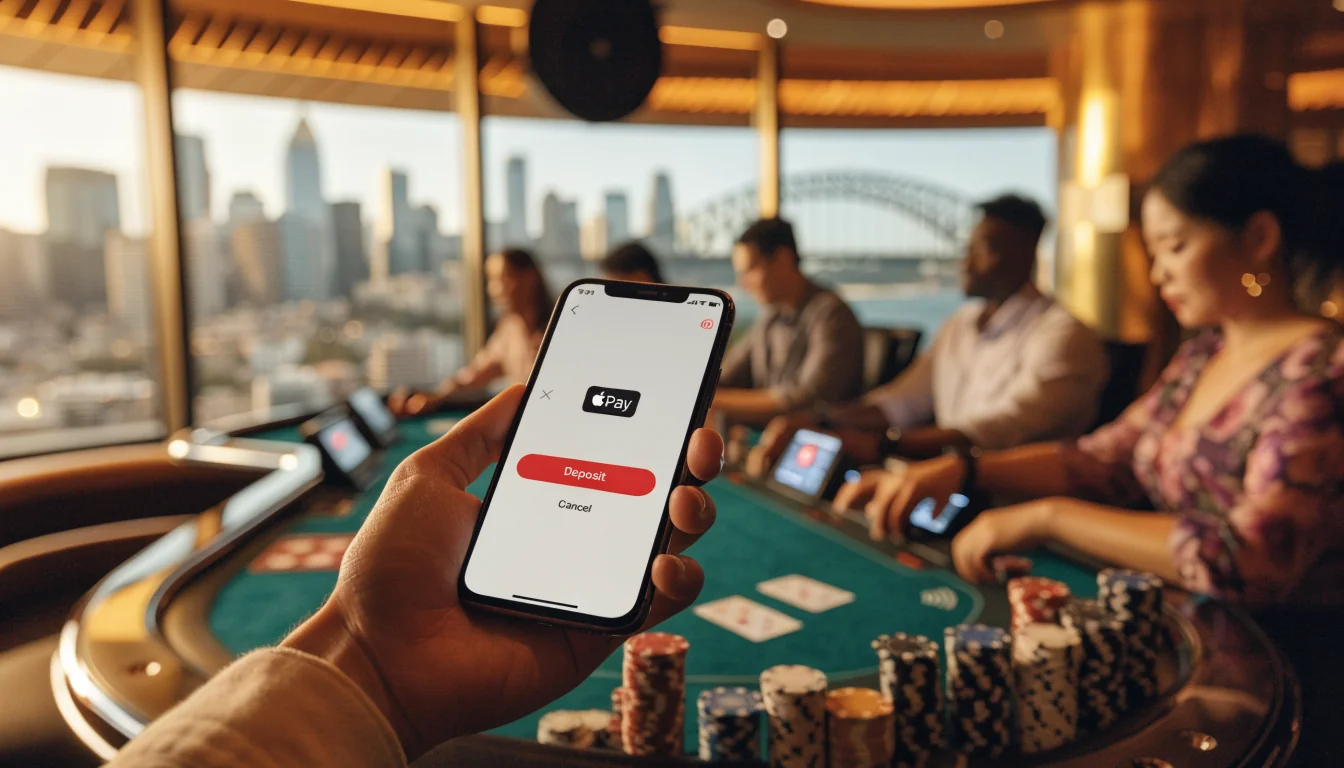
The best bonus, in practice, is the one whose conditions can actually be met.
Neteller Casino Sites to Try in Australia
The catalogue of Neteller casino sites open to Australians is, strictly speaking, a catalogue of offshore operations. The Interactive Gambling Act forbids any company from running online pokies domestically, so every name on the list below holds a foreign licence — Curacao and Malta being the familiar pair. That is the legal reality of this market, and any trusted Neteller casino sites ranking that skips it deserves scepticism.
What separates a worthwhile entry from filler is verifiable licensing. A valid licence from a recognised authority is the foundation of a trustworthy operation, not a decorative footer badge. Payment versatility matters too: according to one industry review, the methods on offer typically span Visa, Mastercard, POLi, Skrill, Neteller, and cryptocurrency wallets — a breadth that tells the reader whether a site treats banking as an afterthought or as infrastructure.
- 888 Casino — a long‑established offshore brand that accepts Neteller alongside mainstream cards and e‑wallets.
- Clubhouse Casino — another offshore option where Neteller pokies list entries sit beside the same multi‑method cashier.
New Neteller casino sites appear regularly, but novelty is not a qualification. A licence that can be checked and a cashier that lists verifiable methods count for more than a recent launch date. The list above stays short because the crucial checks — licensing legitimacy and genuine payment versatility — eliminate most candidates.
Lists should end somewhere.
Paying with Neteller and PayID: What You Need to Know
Neteller remains one of the most familiar routes into offshore casinos for Australian players. It is an e-wallet, so deposits move from the wallet balance into the casino account rather than directly from a bank. The appeal is privacy and organisation: casino transactions are separated from the main banking app, and the wallet can be topped up in advance.
PayID works differently. It is built into Australia’s New Payments Platform, so the money moves straight from a bank account to the casino using a linked email address, mobile number or ABN. Where Neteller is a separate account to manage, PayID is more like a shortcut inside existing internet banking.
The trade-off is speed versus structure. Neteller requires the wallet to be funded first, while PayID sends bank funds directly. Both are widely used, but they behave differently at the cashier page.
One detail matters more than most: every PayID deposit needs a reference code. Without it, the payment can sit unmatched for hours or days.
Reference code. Always.
Players who use e-wallets such as Neteller usually do so for the buffer between bank and casino. For those who prefer to keep everything inside their normal banking app, PayID is increasingly the simpler option.
Australian Regulatory Landscape for Online Gambling
Australia’s framework is unusually clear on where prohibition lies and where it merely pretends to lie. The Interactive Gambling Act outlaws the provision of online casino games to residents, which means no offshore casino can hold an Australian-specific licence. A foreign operator’s licence may be perfectly respectable—Curaçao, Malta, Gibraltar—but it is not an Australian credential, and the distinction matters exactly when a site claims “licensed for Australian players.” There is no such thing to display.
Given that, the sensible marker becomes technical rather than governmental. A well-run Neteller casino serving Australians should implement at minimum 128-bit SSL encryption, because payments and KYC data travel across borders before they touch the game lobby.
The oddity is the target of the law. Players are left unmolested; operators bear the burden. Entirely sensible, if rarely satisfying to those consulting a registry that does not exist.
What payment methods are available for Australian players at online casinos?
Accepted payment methods include Visa, Mastercard, POLi, Skrill, Neteller, cryptocurrency wallets, and PayID.
How long does it take for PayID deposits to appear in a casino account?
PayID deposits are processed almost instantly, typically appearing within 1 to 3 minutes, and are available 24/7.
What are the common responsible‑gaming utilities offered by reputable online casinos?
Common responsible-gaming tools include deposit limits, self-exclusion options, reality checks, and links to professional support services.
How can a player verify that an online casino holds a valid licence in Australia?
No operator can hold an Australian-specific licence for online pokies due to the Interactive Gambling Act, so local players use offshore-licensed platforms. To verify safety, players should confirm the casino holds a valid licence from a recognised international authority and uses at minimum 128-bit SSL encryption.