
Instant Bank Transfer Casinos in Australia

- Online Pokies and Bank Transfer Payments in Australia
- Casinos Accepting Bank Transfers: What to Expect
- Which Australian Casinos Accept Bank Transfers?
- Top Australian Casino Sites Offering Instant Bank Transfer
- Depositing with Bank Transfers and Other Methods
- Instant Bank Transfer Casinos: Availability in 2026
- Fast Bank Transfer Options for Australian Players
- PayID and Other Direct Bank Transfer Methods
- Withdrawals via Bank Transfer: Payout Times and Considerations
- Real‑Money Mobile Casinos with Instant Bank Transfer
Online Pokies and Bank Transfer Payments in Australia
Australia has a strange relationship with the pokies. The country that perfected the "pokie" as a social ritual—a post-work beer, a few spins, a chat in the corner of a local pub—now treats the same game as an online contraband. The Interactive Gambling Act 2001 (IGA) prohibits the provision of online casino games to Australian residents, while sources disagree on whether an earlier 1997 act with the same name already contained that prohibition. Either way, there is no domestic licence for an online casino in Australia, and no register to check. When an Australian plays pokies for money, they play offshore, and the whole question of how to pay becomes the question of how to move value through a regulatory gap.
Within that gap, bank transfer occupies a peculiar position. It is the oldest method in the cashier, the one players know from everyday life—rent, bills, salaries—and yet in the casino context it is also the most misunderstood. Depositing with a bank transfer feels like buying a stamp; withdrawing feels like waiting for a court summons. The method connects the offshore operator directly to the player’s everyday accountancy, and that directness has consequences for verification, for fees, and for the speed at which money appears to move.
This is not a technical manual. It is an account of how a particular financial habit behaves when it crosses from the licit economy into the offshore casino lobby, and why the slowest method on the menu sometimes still gets chosen.
What "Bank Transfer" Actually Means at the Cashier
The term "bank transfer" in an offshore casino cashier rarely describes a single instrument. It can mean PayID, the near-instant transfer system that most offshore operators accept as their primary AUD deposit method, according to one industry review. It can mean a classical SWIFT or domestic wire transfer. It can mean a bill payment method (BPAY) routed through a third party. The label is a category, not a protocol. That ambiguity matters, because the player’s experience—"instant" or "days"—depends on which exact pipe the operator has plumbed into the cashier.

For the purposes of this analysis, "bank transfer" refers to any method where value travels directly between a licensed financial institution and the operator’s acquiring account, without an intermediate e-wallet or card scheme. The distinction is not academic. E-wallets and cards insert a buffer between the player’s bank and the operator; a bank transfer removes the buffer. Removal has two consequences. First, the transaction becomes more transparent to the player’s bank, which under Australian AML/CTF rules must report any fiat conversion over A$10,000 to AUSTRAC. Second, the operator’s KYC checks and the Same Method Rule—the requirement that withdrawals return to the deposit method—become absolute. There is no intermediary to blame.
In practice, this means the bank transfer is the payment method most exposed to the operator’s own compliance machinery. It is also the method that most clearly reveals the operator’s actual processing speed, stripped of payment-rail branding.
The Withdrawal Asymmetry
For deposits, bank transfers are not especially disadvantaged. PayID-based deposits land near-instantly, according to one industry review, and traditional transfers fund within the same window as most other methods if the bank clears quickly. The real divergence appears at withdrawal.
According to one industry review, bank transfers are the slowest withdrawal method available to Australian players, taking up to 7 business days. That figure is not a law of physics; it is an aggregate of operator processing windows, interbank settlement, and the manual review queues that a direct bank method triggers. The 7-day ceiling is the worst confirmed case, not the universal experience, but it is the only number the verified record supports. It is enough to make the bank transfer the outlier in a market where e-wallet withdrawals usually complete within same-day to 48 hours, according to one industry review, and where cryptocurrency withdrawals are usually processed within 24 hours, according to one industry review.
Why the asymmetry? The delay is rarely in the transfer itself. Most delays in Australian casino withdrawals are caused by verification steps, payment method limits, and operator processing windows rather than the game itself. The most common reason for a paused withdrawal is verification (KYC) or unmet bonus conditions. A bank transfer, by removing the intermediary, makes those operator-side pauses visible in a way that an e-wallet, with its own ledger mask, conceals. The player sees the transfer as "slow" when it is actually the compliance queue that is slow; the rail just doesn’t hide it.
The Same Method Rule means any withdrawal must be sent back to the exact bank account used for the deposit, which can expose personal banking details and tie your gambling activity to everyday transactions.
The Same Method Rule turns this visibility into a trap. The operator must send the withdrawal back to the same bank account that deposited. If that account is a everyday transaction account—not a private vault—the player is wiring offshore winnings into the ledger they use for groceries. That is an auditable link most players did not anticipate when they chose the familiar option. Familiarity, here, is the hazard.
A Short Remark on Familiarity
Australians trust banks more than they trust regulators. That is not a paradox; it is a cultivated habit. The same public that cannot obtain a domestic online casino licence still measures an operator’s legitimacy by whether the cashier accepts a recognisable bank rail. The pokies move offshore; the trust does not.
Fees, Verification, and the Cost of Certainty
Fees in Australian-facing offshore casinos are rare but not absent. Where they appear, according to the verified record, they present as crypto network fees, bank transfer fees, FX conversions, or e-wallet withdrawal fees. The bank transfer fee is typically the most predictable—a fixed charge or a percentage of the wire—but it is also the most avoidable if the operator supports PayID, which behaves like a domestic transfer and usually bypasses the wire fee. Avoidance, however, is operator-specific; the verified record does not name which operators waive it.
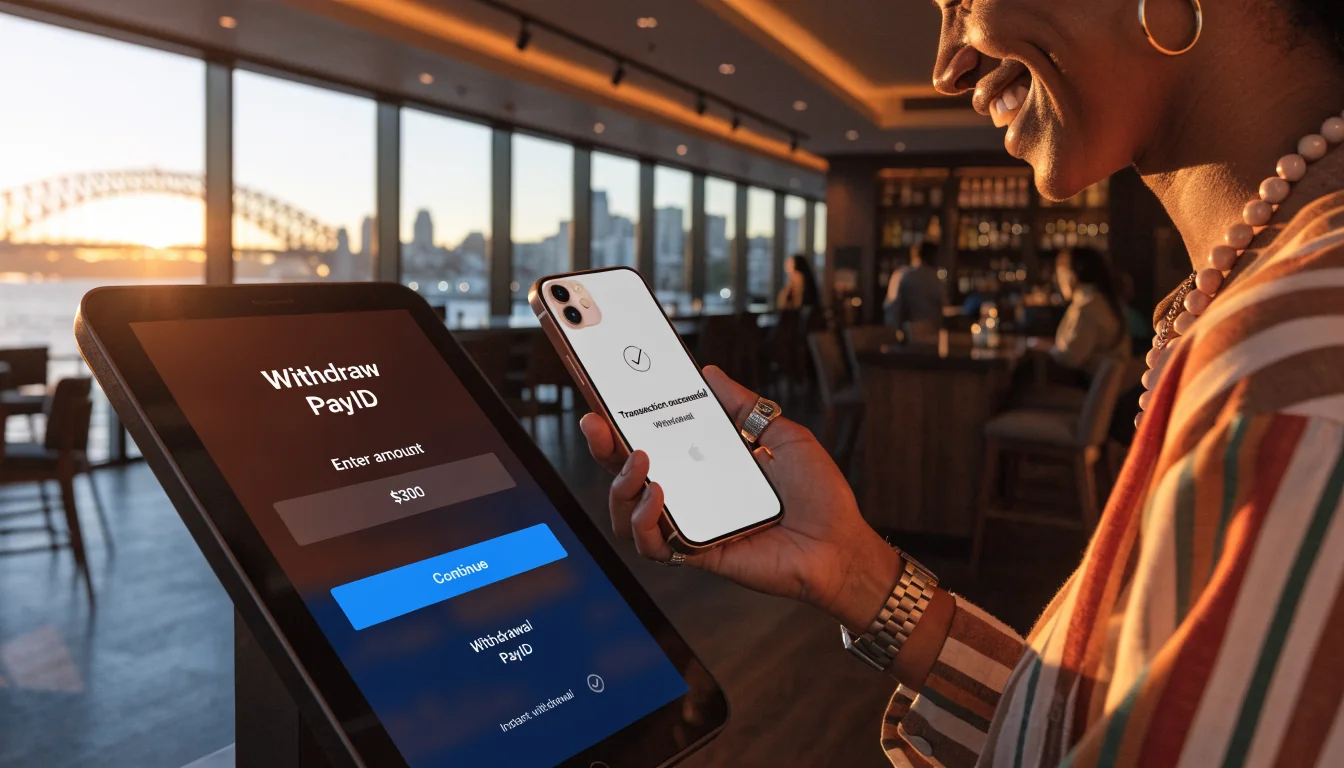
Verification is the second cost. KYC checks are mandatory at every Australian online casino, and for a bank transfer they bite harder. The player must supply a government-issued ID before any withdrawal; the bank account must match the identity; and under AUSTRAC’s rules, large transfers trigger reporting. The result is that the bank transfer, chosen for its straightforwardness, becomes the method most likely to demand documentation. The straightforwardness is a facade. What the player buys with a bank transfer is not speed but certainty—certainty that the money enters the regulated system, and certainty that it can be traced. For some players, that certainty is worth the wait.
One industry review notes that e-wallet withdrawals can be faster than card withdrawals, depending on casino processing and verification status—an example of how the "fastest" method shifts with the operator’s internal queue. The bank transfer never wins that race, but it always finishes it.
Where Bank Transfers Fit Among the Other Ways to Pay
An Australian player banking via transfer is not choosing in a vacuum. The cashier will offer cards, e-wallets, prepaid vouchers, and crypto. Visa and Mastercard are widely accepted for casino payments, with Visa and Mastercard deposits instant but withdrawals taking 1–5 business days according to one industry review. E-wallets—Skrill, Jeton, MiFinity—offer that same-day-to-48-hour withdrawal corridor. Cryptocurrency is widely accepted in Australian online casinos, with deposits taking a few minutes and withdrawals usually processed within 24 hours, according to one industry review. Prepaid vouchers such as Flexepin, CashtoCode, and Neosurf are deposit-only and cannot be used for withdrawals, which immediately eliminates them as a Same Method candidate.
Near‑real‑time domestic transfers, usually processed within seconds, but withdrawals still follow the standard bank‑transfer timeline.
Older international wires that can take several days both ways, with possible fees on both deposit and withdrawal.
Instant deposits and same‑day to 48‑hour withdrawals, but funds pass through an intermediary rather than a direct bank link.
Within that menu, the bank transfer is the conservative instrument. It does not ask for a new app, a new wallet, or a new chain. It asks only for the player to accept that the pokies, even when they pay, pay slowly. For a player whose primary concern is auditability—perhaps because they move larger sums, perhaps because they prefer their bank to see the whole picture—the bank transfer remains a rational choice. For everyone else, the rational choice is usually faster.
The rarity of fees and the predictability of the transfer timeline make bank transfer something closer to a savings mechanism than a payment method. It is the financial equivalent of taking the train rather than the bus. Slower, but on rails you can see.
The Legal Frame the Transfer Crosses
No discussion of pokies and bank transfers in Australia is complete without the frame they cross. The IGA targets operators, not players. It is not illegal for an individual Australian to play at an offshore-licensed online casino; there are no domestically licensed real-money online casino operators to license. The bank transfer, therefore, is a wire into a prohibited supply. That status does not make the player’s act illegal, but it does mean the transfer lacks any local regulatory protection. If the operator stalls the withdrawal for 7 business days, there is no Australian ombudsman to call. The player’s recourse is the operator’s own complaint procedure, which offshore operators are required to display clearly, and any ADR membership information they provide—both obligations that exist because the operator chooses to be bound, not because an Australian statute binds them.
In that vacuum, the bank transfer functions as a kind of private enforcement. The player can see exactly where the money went and when it arrived. The transparency is the only audit available. It is also why the method remains popular despite its slowness: it substitutes for the absent regulator.
The pokies were never about the spin. They were always about the settlement. The bank transfer, in its blunt, slow way, reminds the player of that every time the cashier opens.
Casinos Accepting Bank Transfers: What to Expect
The phrase "bank transfer casinos" covers a rather odd landscape in Australia, because the venues in question are all offshore operations. No domestically licensed online casino exists: the Interactive Gambling Act 2001 prohibits operators from offering casino-style games to Australian residents, and the law targets the provider rather than the individual player. So when someone searches for casinos with bank transfer facilities, they are looking at a set of foreign-licensed sites that accept Australian traffic — and the banking picture they encounter has a few consistent features worth knowing before a single dollar moves.
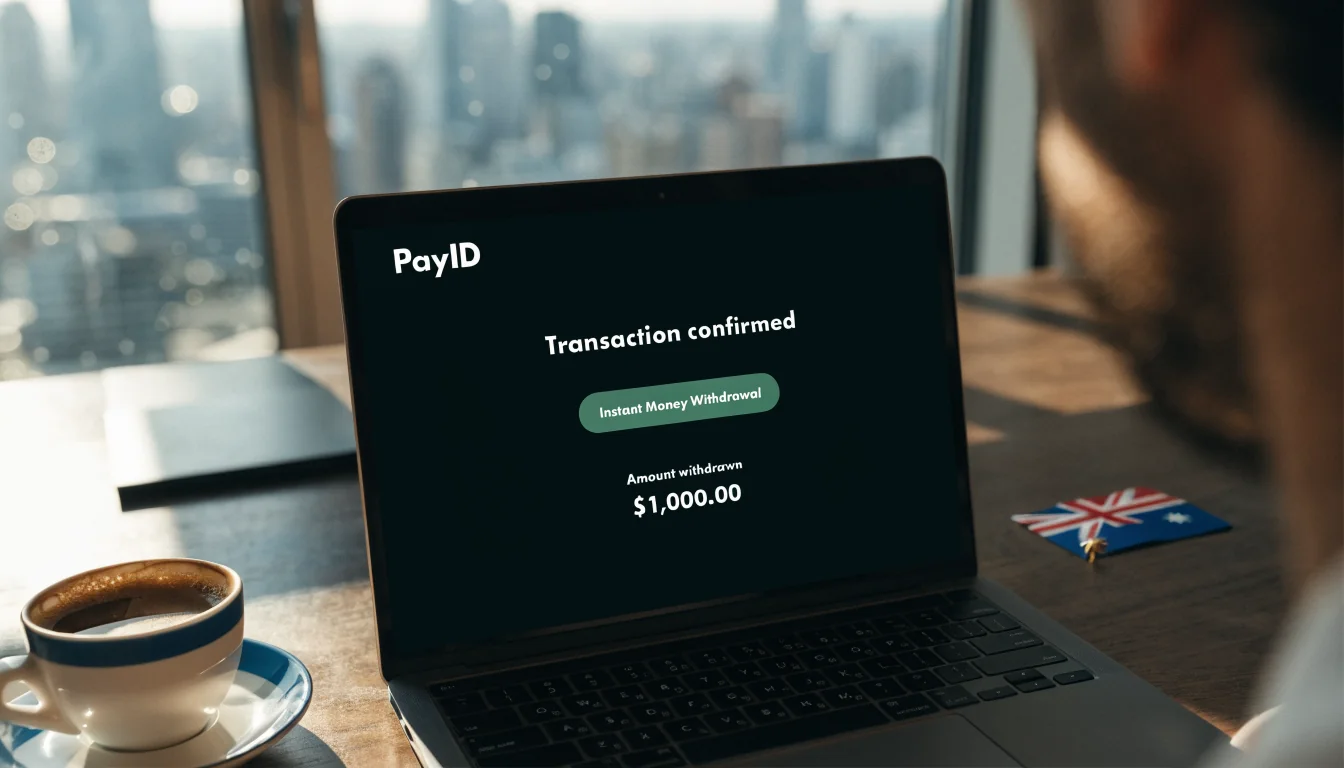
The first thing to understand is what "bank transfer" actually means at these sites, because the term covers two quite different rails. One is the traditional wire — money sent from an Australian bank account to the operator’s account, possibly overseas, subject to all the delays and fees that implies. The other, far more common in practice, is PayID: Australia’s own New Payments Platform overlay that moves AUD between local accounts using a phone number or email rather than a BSB and account number. According to one industry review, most offshore operators now accept PayID as their primary AUD deposit method. That means when a site advertises bank transfer deposits, the actual mechanism is usually this faster domestic rail rather than an old-fashioned telegraphic transfer — though it pays to check which of the two a given operator means before assuming anything about speed.
AUD, Vouchers and the Same Method Rule
Most Australian-facing casinos accept AUD as a native currency, which avoids the conversion fees that would otherwise nibble at both ends of every transaction. For players who prefer not to link a bank account at all, prepaid voucher systems offer an alternative: a PIN bought in-store or online, with deposits limited to the voucher’s face value. That is a hard ceiling on spending built into the payment method itself — a quiet piece of harm-minimisation architecture, whether intentional or not.
One policy governs withdrawals regardless of the method chosen. Australian casinos generally require payouts to return through the same method used for the deposit — the Same Method Rule, designed to close off laundering routes. Where a deposit-only channel such as a prepaid voucher was used, a bank transfer becomes the natural fallback for the withdrawal leg. That is worth keeping in mind for anyone weighing up the best bank transfer casinos against voucher-based alternatives: the wire option often becomes relevant precisely when the deposit channel cannot pay out.

KYC Checks Are Not Negotiable
KYC checks are mandatory at every Australian-facing online casino, and this shapes the experience of bank transfer users in a specific way. Card and e-wallet deposits are processed instantly, but the dance of verification begins the moment a withdrawal is requested — and a bank transfer payout is exactly the kind of transaction that triggers the full document check. The operator asks for government-issued identification before releasing funds; AML obligations leave no discretion on that point. Anyone trying top bank transfer casinos for the first time will find that the payment method’s speed matters less than the state of their verification file. Get the paperwork done early, and the banking side becomes far less eventful.
What the Search Terms Actually Land On
The cluster of queries people type — direct bank transfer online casinos, casinos that accept bank transfer, all bank transfer casinos — tend to resolve into the same handful of operator categories. There are the large international sites where Visa, Mastercard, e-wallets, bank transfer and crypto all sit side by side in the cashier. There are PayID-first sites aimed squarely at the Australian market. And there are wire-only holdouts whose "bank transfer" genuinely means an international transfer with all the associated friction.
A PayID vs bank transfer comparison, then, is really a comparison between the modern domestic rail and the legacy international one. The former uses Australian infrastructure and settles through the New Payments Platform; the latter crosses borders and correspondent banks. The fact that both get labelled "bank transfer" in a casino cashier is a small taxonomic confusion that costs real time when the wrong assumption is made. Names are stubborn things.
Worth noting is the regulatory frame each operator works under. Because no Australian casino licence exists, every site in this space trades under a foreign licence, and that shapes everything from dispute resolution to which payment providers will touch the account. SSL/TLS encryption and PCI-DSS compliance are standard across the featured payment options, but the recourse a player has when a withdrawal goes wrong depends entirely on the jurisdiction that issued the licence. The Commonwealth’s rules target the operator, and an Australian playing offshore sits outside that domestic complaint architecture — a point most comparison pages glide past without comment.
Legal Risk
Playing at offshore casinos is not illegal for Australian residents, but any dispute or loss is outside Australian regulatory protection and must be resolved under the offshore licence jurisdiction.
Between PayID’s rise, the Same Method Rule, mandatory KYC and the wire fallback for voucher users, the bank transfer landscape in Australian-facing casinos is less a single method than a set of roles the transfer plays. The "best bank transfer casinos" tend to be the ones that accept PayID on the deposit side and process the returning wire quickly on the withdrawal side. Everything beyond that is window dressing.
Which Australian Casinos Accept Bank Transfers?
Acceptance is not a single yes‑no flag on a casino’s cashier page. It is a chain of small decisions the operator makes about which rails to connect, which cards to trust, and which workarounds to tolerate when the direct route is blocked. The headline "bank transfer accepted" usually hides several different arrangements underneath, and the gap between those arrangements is where players either save time or lose it.
Operators that genuinely support bank transfers tend to fall back on card networks first, since Visa is widely accepted for casino payments in Australia. Mastercard is widely accepted for casino payments in Australia as well, but may be restricted for payouts rather than deposits, according to one industry review that tracks the cashier menus of offshore operators. That distinction matters. A card that works at the deposit screen may still funnel winnings back through a slower bank route, because casinos generally require withdrawals to go to the same payment method used for deposits.

What counts as "bank transfer" at the cashier
Three different products get lumped under that label, and they are not interchangeable. Some venues wire money directly to a bank account. Others route through PayID, the primary AUD deposit method most offshore operators lean on, according to a single industry review. A third group tucks the transfer behind e‑wallets such as Skrill, MiFinity or Jeton, so the bank effectively underwrites the wallet rather than the casino. POLi still appears on older lobbies, though it has slipped from the main menu in recent years. Flexepin, a prepaid voucher redeemed with a PIN bought in‑store or online, remains a popular local option in 2026, one review notes, and it caps the deposit at the voucher amount.
KYC checks are mandatory at every Australian online casino, so acceptance rarely comes down to raw geography. It comes down to whether compliance can match a name to an account before funds move either way.
If a withdrawal stalls, the most common reason is verification, sometimes tangled with bonus conditions. Wagering requirements can lock funds until the conditions are met in Australian online casinos, which means the cashier may refuse a bank payout even when the transfer route itself is fully wired up.
Mobile‑first brands that accept instant bank transfers—Moonwin Casino, Spinfest, Spinline, Spinrise Casino, Gamblezen, Gangsta Casino—and legacy lobbies all screen transfers through the same KYC gate. Instant at the deposit end, glacial at the payout end. The badge is mostly marketing.
The practical filter, then, is not the logo on the banking page but the fine print beneath it: which cards work both ways, whether the Same Method Rule sends winnings back down the deposit rail, and whether vouchers or wallets sit between the player and the bank. Everything else is decoration.
Top Australian Casino Sites Offering Instant Bank Transfer
If fast, hassle-free banking matters to you, it’s worth checking how each casino’s welcome offer and payout process actually work before you commit to depositing.
Bonus: 240% up to A$4,100 + 300 free spins Stands out for a large percentage match bonus paired with a generous batch of free spins, giving new players plenty of extra credit to start with.
License: Curacao eGaming (Roby Games Ltd) · Bonus: 100% up to A$750 + 200 free spins Operates under a Curacao eGaming license via Roby Games Ltd, and backs its welcome offer with a solid deposit match plus a sizeable free spins package.
License: Curacao Gaming Control Board OGL/2023/176/0095 (Hollycorn N.V.) · Bonus: up to A$11,000 + 300 free spins (code NEO100) Licensed under the Curacao Gaming Control Board through Hollycorn N.V., it offers one of the larger bonus ceilings on this list along with free spins unlocked by a specific code.
License: Curacao OGL/2024/1335/0780 · Bonus: up to A$1,000 + 150 free spins, wager-free · Min. deposit: EUR 20 Licensed under Curacao, its bonus is notable for being wager-free, combined with free spins and a clearly stated low minimum deposit requirement.
Bonus: up to A$7,500 + 550 free spins across 10 deposits, 50x wagering · Payout speed: crypto under 1 hour, PayID 1-3 business days · Min. deposit: A$20 (A$30 to qualify for the bonus) Spreads a substantial bonus and free spins package across multiple deposits, and is worth noting for quick crypto payouts alongside a short PayID processing window.
License: Curacao eGaming OGL/2024/923/0383 (Antillephone N.V.) · Bonus: up to A$2,000 + 100 free spins across 2 deposits · Min. deposit: A$30 Holds a Curacao eGaming license through Antillephone N.V. and splits its bonus across two deposits with a modest minimum deposit requirement.
License: Curacao Gaming Authority (Jumpman Gaming Ltd) · Bonus: up to A$6,600 + up to 250 free spins across 4 deposits Licensed by the Curacao Gaming Authority via Jumpman Gaming Ltd, it offers a large combined bonus and free spins package spread over several deposits.
License: Tobique Gaming Commission · Bonus: up to A$8,000 + 400 free spins across 4 deposits · Payout speed: crypto ~10-15 minutes, fiat 1-5 days · Min. deposit: A$30 Licensed by the Tobique Gaming Commission, it pairs a sizeable multi-deposit bonus with notably fast crypto payout times and quick fiat processing.
License: Curacao · Bonus: 100% up to A$500 + 200 free spins, 10x wagering · Payout speed: crypto 30-60 minutes, fiat 1-5 days · Min. deposit: A$10 Curacao-licensed with a straightforward deposit match and free spins offer, low wagering requirement, fast crypto payouts, and a very low minimum deposit.
License: Curacao Gaming Control Board OGL/2023/176/0095 (Hollycorn N.V.) · Bonus: up to A$1,500 + 200 free spins across 3 deposits Licensed under the Curacao Gaming Control Board through Hollycorn N.V., offering a bonus and free spins package distributed across three deposits.
Anyone who has watched a pending withdrawal sit untouched for a week develops a sharp eye for what distinguishes one casino site from another. Among the offshore‑licensed operators that accept Australian players, a handful of bank‑transfer‑friendly sites manage to pair rapid processing with low fees and the sort of data‑protection standards that make hand‑over of account details less uncomfortable. The very best of these compress deposit time to nearly instant, support speedy cash‑outs well under two hours in some cases, and build every page of their cashier on SSL/TLS encryption with PCI‑DSS compliance. According to one industry review, that combination separates the strongest sites from merely adequate ones.
Speed with low fees
The label “instant bank transfer” can mean different things on different sites. Some operators describe truly instantaneous deposits: funds arrive in the casino wallet before the player has left the bank’s confirmation page. Others reserve the word “instant” for withdrawals, which can be misleading when a bank transfer may still take days to land in a linked account. The sites worth singling out make both halves of the equation fast. Because most Australian‑facing casinos bank in AUD and avoid cross‑border conversions, the absence of unnecessary FX fees is itself a marker of quality, while crypto fees or bank‑transfer surcharges remain rare rather than routine.
Security as a differentiator
The strongest contenders lean on encryption and compliance rather than on clever marketing. All of the featured payment options on these sites use industry‑standard SSL/TLS encryption and maintain PCI‑DSS data security practices. The payoff is subtle but real: account details and personal documents travel across fewer vulnerable points, which matters more than any splashy bonus banner.
Quick withdrawals as proof
A site that clears withdrawals in under two hours is effectively advertising its solvency, its respect for KYC checks, and its confidence that there will be no last‑minute objection from the payments team. Because verification and bonus conditions account for many stalled payouts everywhere, sites that perform rapid transfers are showing off something beyond mere speed. Speed proves discipline. Many of the best sites also accept cryptocurrency widely, which in the right circumstances can shave settlement time further, though bank transfers remain the measure that most Australian players use to judge an operator’s competence.

A considered top‑ten list would be premature here, since published sources do not yet agree on a set of itemised operators that can be named with confidence. But the criteria above – near‑instant processing, consistently low fees, and first‑rate encryption/compliance – allow players to mark the leaders without waiting for a formal ranking. That pragmatic approach, rather than a promised checklist, is what separates a dependable instant bank transfer casino site from one that merely claims the label.
Depositing with Bank Transfers and Other Methods
Getting money into an offshore casino account from Australia is a study in the country’s own banking quirks. A law that forbids domestic operators leaves Australians routing deposits through international channels, and the channels on offer range from the genuinely swift to the endearingly archaic. Picking between them is less a question of trust than of temperament: some players want the funds visible before they have finished their coffee, others are content to wait while the payment system does whatever it does between Austrians and algorithms. Speed, however, is not the only variable, and this is where the comparison gets interesting.
According to one industry comparison, the fastest deposit channels divide fairly cleanly. Visa and Mastercard deposits land instantly. E‑wallets, likewise, credit the account on the spot. Cryptocurrency takes a few minutes, which on a bad exchange day can feel longer than a business day. Bank transfers sit at the other end of the scale — slower to confirm, less forgiving of a mistyped BSB, and yet stubbornly popular among players who would rather hand the casino a payment instruction than hand it a card number.
PayID deserves a paragraph of its own, because it has quietly reshaped direct bank deposits for Australians. Most offshore operators accept it as their primary AUD deposit method, according to the same industry comparison — a payment rail that moves money bank-to-bank using nothing more mysterious than an email address or phone number. It bypasses the BSB-and-account-number ritual that has defeated many a careful typist, and it does so inside the domestic banking system the player already uses. That combination explains its popularity better than any marketing could.

Card deposits, as noted, arrive instantly; withdrawals through the same channel take one to five business days, which tells you something about where the friction actually lives. E‑wallet deposits are equally immediate, and e‑wallet withdrawals run from same‑day to forty‑eight hours in most cases. Crypto deposits settle in minutes; crypto withdrawals usually clear within twenty-four hours. These are the figures from one industry comparison rather than universal law, and any operator’s terms can complicate them, but they sketch the pattern accurately enough: depositing is easy everywhere, withdrawing is where the method earns its keep.
Bank transfers, then, are the tortoise in this particular race — and some players, having watched hares lose to KYC holds and weekend processing windows, pick the tortoise deliberately. A direct bank transfer deposit asks for a working familiarity with BSB numbers and a tolerance for pending statuses, and in exchange it offers a payment trail that neither a card scheme nor an e‑wallet intermediary touches. Whether that trade is worth making depends on how much one values the separation, and how patient one’s bank happens to be on a public holiday. Fair trade.

Fees deserve a mention while we’re comparing. Australian casinos rarely charge deposit fees outright, but bank transfer fees, crypto network fees, and currency‑conversion spreads exist, and they appear exactly where one would rather they didn’t. Most operators accept AUD natively, which at least spares the cardholder the indignity of paying a conversion margin on a Friday-night deposit. Crypto network fees fluctuate with the blockchain’s mood; bank transfer fees fluctuate with the bank’s. Neither fluctuates in the player’s favour particularly often.
The upshot is a payment menu where every option has its defender and its detractor. Cards are instant but draw the longest withdrawal queues. E‑wallets split the difference. Crypto is fast on both ends where it’s accepted. Bank transfers are slow on both ends where they work at all. PayID threads through the middle, Australian by design and faster than the rail it piggybacks on. The honest answer to which method suits a given player depends on what that player is optimising for — speed, separation, or simply not having to type a sixteen-digit card number into a form. Reasonable people differ.
Instant Bank Transfer Casinos: Availability in 2026
True instant banking is a narrowing field. By 2026, the term has been stretched to cover everything from genuinely real‑time AUD rails to a casino that merely starts processing a payout the same day. For anyone weighing an instant bank transfer casino in Australia, the distinction between those two ideas is where the year’s main confusion lies — and the gap between the promise and the settlement is exactly where delays breed.

The three things "instant" can mean
In 2026 the word describes one of three quite different mechanics. First, a deposit routed through a real‑time payment rail, where funds clear in seconds. Second, a withdrawal the operator approves on the spot but which still travels across the conventional banking network. Third, a marketing label that covers little more than a prompt internal queue. Australia’s financial plumbing now supports the first of those; the offshore casinos that serve Australians, however, often still run cashouts through older batch‑based channels. An instant bank transfer casino therefore guarantees a fast deposit, but far less often an equally fast exit.
What regulation removes from the menu
The Interactive Gambling Act 2001 sits behind this scarcity. Introduced to protect the public with a focus on harm minimisation, it prohibits operators from offering casino‑style games to Australian residents rather than prohibiting Australians from playing. Because no domestic licence for online casinos exists, every instant bank transfer casino Australia sees this year is an offshore operation, and offshore operators choose their own banking partners. Some build on Australia’s faster payment infrastructure; many do not. The awkward result is that legislation written to minimise harm has left payment speed entirely to the discretion of operators based elsewhere.
The withdrawal ledger, honestly kept
On the withdrawal side, bank transfer remains the slowest common route. One industry review reports funds taking up to seven business days to arrive, longer than comparable card or e‑wallet payouts. The phrase "up to" is doing real work in that sentence, since operator processing windows and intermediary banks move those figures around week to week. Fees tell a slightly kinder story. Charges at the casino end are rare across Australian‑facing sites, but they surface in predictable corners: bank transfer handling costs, foreign‑exchange conversions when an account is held offshore, crypto network tolls, and the occasional e‑wallet withdrawal levy. The advertised zero‑fee cashier can still invite its own deductions.

Reading an operator in 2026
Offshore casinos do not publish their banking pipeline. Most describe a method as instant without separating internal approval from bank settlement, and they seldom commit a payout window to print. Official disclosure of actual settlement times largely does not exist. That absence is itself the finding: availability of instant bank transfers in 2026 cannot be confirmed from public documentation, only inferred from the rails an operator happens to use. Deposits arrive quickly. Withdrawals, mostly, do not.
Fast Bank Transfer Options for Australian Players
Speed in bank transfers is not a property of the bank. It is a property of the route the operator has built around the bank, and in Australia in 2026 that distinction decides everything. A standard transfer lodged through the standard rails is the slowest withdrawal method in the country, taking up to seven business days according to one industry review, and yet the same market contains cash-outs completed in under two hours, occasionally instantly. The gap between those two figures is the entire subject of fast bank transfer options here.
The quickest routes are not really "bank transfers" in the traditional sense. PayID, which most offshore operators accept as their primary AUD deposit method according to a single industry tracker, moves money through the New Payments Platform and clears in near-real time – which is precisely why it keeps appearing in any serious list of fast bank transfer casinos for Australian players. It is a bank transfer the way a smartphone is a telephone: technically true, practically a different species.
Where operators still push withdrawals through conventional bank rails, players are better served by methods that merely look like bank products. E-wallet withdrawals, per the same industry review, usually complete anywhere from same-day to 48 hours, while cryptocurrency withdrawals are typically processed within 24 hours. Card deposits are instant, but their withdrawals run one to five business days – which is to say, still quicker than the classic bank transfer, though without the comforting label.
So the realistic answer is this: true instant payouts on bank transfers exist only where the operator has wired itself into the fast rails, most often PayID. Everything else branded as a bank transfer is merely a slower promise wearing a familiar name. Choose accordingly.

PayID and Other Direct Bank Transfer Methods
One industry review identifies PayID as the primary AUD direct-deposit channel used by most offshore casino operators. PayID routes payments through the New Payments Platform using an email address, phone number, or ABN-linked identifier instead of BSB and account details, which reduces misdirected funds and eliminates the need for Confirmation of Payee screens common in other jurisdictions. The system delivers near-real-time settlement between Australian bank accounts, making it the closest thing to a true "instant bank transfer" for casino deposits in 2026.
A separate Revolut feature lets account holders block gambling transactions entirely or set spending limits, according to one review. This control mechanism sits at the bank side rather than the casino side.
Neither method solves the fundamental problem: online casino games remain prohibited under the Interactive Gambling Act 2001, and no domestic licence exists. PayID is merely a faster way to move money into an account held with an offshore operator, not a stamp of approval.
Withdrawals via Bank Transfer: Payout Times and Considerations
Withdrawals at Australian casinos slow to a crawl not because of the pokies themselves, but because of verification (KYC) and bonus conditions. That’s the most common reason for a paused payout, and it stalls every method equally.
Bank transfers rank as the slowest option: one industry review pegs them at up to 7 business days. E-wallets, by comparison, can clear same-day to 48 hours; crypto lands within 24 hours; cards sit in the 1–5 business day band. Fees rarely surface in Australian casinos, but when they do, bank transfer charges are among the likeliest culprits.
In short: pick a bank transfer only if every faster channel is unavailable.
Real‑Money Mobile Casinos with Instant Bank Transfer
Mobile casinos that focus on the Australian market usually present instant bank transfer as a way to fund real‑money play without long card forms. The same apps and mobile sites handle AUD as the native currency, so players avoid conversion fees that would otherwise quietly eat into a deposit.
Access remains restricted to adults: the minimum gambling age in Australia is 18 years, and mobile platforms block under‑age users at registration and again during KYC checks. Within that legal boundary, instant bank transfer deposits appeal to players who prefer familiar banking rails on a phone screen rather than loading an e‑wallet or prepaid voucher. The result is a narrow, grown‑up lane of mobile play: quick top‑ups, local currency, and no illusions about who is allowed to tap “deposit”.
What payment methods are available for Australian players at online casinos?
Players can use bank transfers (including PayID), cards like Visa and Mastercard, e-wallets, cryptocurrencies, and prepaid vouchers such as Flexepin, CashtoCode, and Neosurf. Availability ultimately depends on the specific operator and location.
What are the benefits of an ADR?
ADR, or Alternative Dispute Resolution, is an external body used to settle conflicts between players and casinos without going to court. It provides a structured process to handle complaints independently when internal operator support fails.
Do eWallets withdraw faster than cards?
Yes. E-wallet withdrawals usually complete within the same day up to 48 hours, whereas card withdrawals take 1 to 5 business days. The exact speed still depends on the casino’s processing queue and verification status.
Are my personal and financial details safe?
Yes. Featured payment options protect your data using SSL/TLS encryption and PCI-DSS compliance. Additionally, all Australian online casinos conduct mandatory KYC checks to verify user identity.
What payment methods are common on Aussie casino sites?
Bank transfers (primarily PayID for instant deposits), Visa and Mastercard, cryptocurrencies, and local prepaid vouchers like Flexepin are widely used. Most operators also accept AUD as the native currency to avoid conversion fees.