
Casinos That Accept Tether (USDT) in Australia

- Which Casinos Accept Tether (USDT) in Australia? Legal Landscape Explained
- Online Tether Casinos: How the Platform Works in Australia
- Evaluating the Best Tether‑Accepting Casinos: What Matters for Australian Players
- Live Dealer Tether Casinos: Key Features and What to Expect
- Tether Slot Bonuses and Deposit Strategies
- Game Variety at Tether Casinos: Slots, Table Games and More
- Crypto‑Powered Live Dealer Experience
- Playing Slots with USDT: Practical Tips
- Using Tether for Deposits and Withdrawals: Speed and Fees
- Deposit Requirements and Safety Measures for Tether Users
Which Casinos Accept Tether (USDT) in Australia? Legal Landscape Explained
The short answer is: none that are based in Australia can legally offer Tether casino games — and offshore ones that do exist in a legal grey zone that is surprisingly player‑friendly.
Australia’s gambling regulation is famously fragmented: there is no single overarching statute or sole gambling authority. Instead, control is shared between the Commonwealth and the states and territories, with the federal Australian Communications and Media Authority (ACMA) enforcing the Interactive Gambling Act 2001 (IGA) and, on the practical licensing side, the Northern Territory Racing Commission (NTRC) acting as Australia’s de‑facto online gambling regulator by licensing most national online bookmakers who benefit from lower tax.
What the Law Actually Says
The IGA criminalises the supply of online casino‑style games — slots, poker, blackjack, roulette — by operators anywhere in the world to persons located in Australia. That prohibition is directed squarely at the operator, not the individual player. In other words, no company can legally offer Australians online casino games, and no Australian licence for such a service exists.

At the same time, it is not illegal for Australians to play at offshore casinos that accept Tether. The legal risk to a player using Tether at an offshore casino is effectively zero. A peculiar arrangement, on paper.
Cryptocurrency itself is legal in Australia and regulated by the Australian Transaction Reports and Analysis Centre (AUSTRAC). So, while an Australian‑based operator cannot offer online casino games at all, a person in Australia may hold and use Tether without breaking the law.
The Player’s Position
Because the IGA targets supply rather than consumption, Australians who choose to gamble at offshore‑licensed casinos do so without committing an offence. Offshore platforms often hold licences in jurisdictions such as Curaçao, Gibraltar or Malta, and some of those casinos accept Tether (USDT) as a payment method. The legal position is thus asymmetric: the operator is barred, but the player is not.
Anyone considering this route should still weigh the practical protections that offshore jurisdictions provide, since the player has no recourse to Australian regulators. The law permits the activity; it does not vouch for the operator.

Grey Zone, Not a Guarantee
To call a casino “Tether‑accepting” is only a statement about payment, not about legitimacy. The same legal framework that forbids domestic supply of online casino games also means there is no Australian public register of licensed online casinos, and no domestic body that can verify one. A player’s safest information is the casino’s own offshore licence and the operator’s published terms, not an Australian seal of approval.
The Absurdity lies in the detail
One regulator, the ACMA, enforces the prohibition; another, the NTRC, effectively issues the licences that keep legal sports betting running. The result is a system that prosecutes the supply of online casino games while leaving the individual gambler free to seek them abroad. Tether simply rides on that anomaly.
Online Tether Casinos: How the Platform Works in Australia
The operational mechanics of Tether-based gambling platforms represent a departure from conventional digital payment infrastructures, particularly in how value transfers between user wallets and gaming accounts. Unlike traditional banking intermediaries that routinely impose multi-day settlement lags, USDT transactions leverage blockchain settlement to compress processing windows. This architectural difference underpins the primary appeal for users navigating Australia’s offshore casino environment, where domestic licensing does not exist and overseas operators fill the vacuum.
Deposit confirmation typically completes within 5 to 15 minutes when routed through the Tron network, according to one industry overview’s technical assessment. This velocity contrasts markedly with the wire transfer delays common in legacy finance, enabling rapid fund availability for gameplay initiation. The efficiency stems from TRC-20 protocol optimization, which prioritizes throughput over the congested Ethereum network’s higher-fee structure.
Transaction Costs and Network Selection
Network fees generally span $1 to $5 per transfer, with TRC-20 often under $1 based on aggregated fee analyses. These costs accrue at the blockchain layer rather than the casino platform itself, creating a predictable expense model distinct from percentage-based payment processor charges. The variance between ERC-20 and TRC-20 execution reflects differing consensus mechanisms and validator economics across the respective chains.
Irreversible Transfer
Sending USDT to an incorrect address results in permanent loss; there is no charge‑back mechanism.
Operators typically abstract these micro-costs into the user experience by batching withdrawals or absorbing minor network charges as operational overhead. However, users transferring funds directly from external wallets retain full visibility into these granular expenditures. The cost asymmetry between networks explains the market preference for Tron-based routing among cost-conscious participants, particularly when moving funds between exchanges and gaming accounts.
Withdrawal Architectures and Limits
Withdrawal processing windows compress to under one hour at operators advertising instant-withdrawal capabilities, per tracked settlement times. The actual duration depends on whether the platform employs automated processing or manual review queues, with the former eliminating human-in-the-loop delays. Minimum withdrawal thresholds frequently settle between $10 and $20 USDT, according to operator terms aggregations. These floors prevent micro-transaction spam while remaining accessible to casual participants.
The irreversibility of blockchain transactions introduces a finality dimension absent from reversible payment rails. Sending to an incorrect address results in permanent loss, a risk profile that demands precision when copying destination addresses. This attribute, while enhancing security against fraud, removes traditional recourse mechanisms available in conventional finance. Users must verify destination addresses meticulously, as no central authority can reverse erroneous transmissions.

The Regulatory Vacuum and Practical Consequences
Australia’s prohibition on domestically licensed online casinos, stemming from the Interactive Gambling Act 2001, means these platforms operate exclusively offshore under foreign jurisdictions. The ACMA actively blocks offshore domains at the DNS level, yet Australian players retain legal access to these sites through the legislative gap that targets operators rather than individual users. This regulatory asymmetry creates the structural space where offshore Tether casinos function without domestic oversight.
Platforms typically establish headquarters in jurisdictions such as Curacao, Malta, or Gibraltar to secure operational legitimacy while circumventing Australian licensing impossibilities. The absence of a domestic licensing pathway forces reliance on foreign regulatory regimes, which vary significantly in consumer protection rigor. Consequently, the technical performance metrics become the primary evaluation criteria when assessing platform viability.
Account creation demands minimal disclosure compared to traditional banking channels, with Know Your Customer protocols varying by jurisdiction. Cryptocurrency-native platforms often require only email verification for initial deposits, though withdrawal thresholds frequently trigger enhanced due diligence. The pseudonymity inherent in crypto transactions aligns with the regulatory reality that no Australian regulatory body monitors these offshore activities.
Platform Interface and Mobile Accessibility
Mobile compatibility dominates the user experience, with browser-based interfaces optimized for smartphone navigation rather than native applications. The elimination of app store distribution barriers—particularly relevant given Australia’s restrictions on unlicensed gambling applications—shifts user engagement toward responsive web architectures. These interfaces provide access to full gaming suites, from pokies to table games, without download requirements that might violate platform policies.
Mobile interfaces are typically web‑based to avoid app‑store restrictions, delivering the full casino experience via responsive browsers.
Live dealer integrations stream high-definition content directly through these mobile interfaces, utilizing cryptocurrency settlement for real-time wagering. The convergence of live-streaming technology and blockchain settlement creates a cohesive environment where USDT serves as both deposit method and in-game currency. Cross-device synchronization ensures account continuity as users transition between desktop and mobile sessions, preserving bet history and wallet balances across access points.
The stablecoin peg eliminates volatility exposure during gameplay sessions, transforming digital currency from speculative asset into functional casino chip. Tether’s 1:1 US dollar parity ensures that a win of 500 USDT retains identical purchasing power from session start to withdrawal initiation, unlike variable cryptocurrencies that might gain or lose value during gameplay. This stability enables precise bankroll management without market fluctuation risk, addressing a primary concern for players transitioning from volatile crypto assets.
Offshore operators structure their banking interfaces to accommodate Australian users despite the regulatory prohibition, presenting USDT as the primary settlement method alongside other major cryptocurrencies. The architectural preference for TRC-20 routing reflects cost sensitivity among users, while withdrawal speed differentiates competitive positioning in an environment devoid of domestic alternatives.
Evaluating the Best Tether‑Accepting Casinos: What Matters for Australian Players
If you’re looking to deposit and withdraw with Tether (USDT) at an online casino in 2026, it helps to know upfront what each site offers in terms of licensing, bonuses, and payout speed before you sign up.
Bonus: 240% up to A$4,100 + 300 free spins Stands out for a large welcome package, offering 240% up to A$4,100 plus 300 free spins for new players.
License: Curacao eGaming (Roby Games Ltd) · Bonus: 100% up to A$750 + 200 free spins Holds a Curacao eGaming license and pairs it with a 100% match bonus up to A$750 plus 200 free spins.
License: Curacao Gaming Control Board OGL/2023/176/0095 (Hollycorn N.V.) · Bonus: up to A$11,000 + 300 free spins (code NEO100) Licensed under the Curacao Gaming Control Board, this operator offers a sizeable bonus of up to A$11,000 plus 300 free spins, unlockable with a bonus code.
License: Curacao OGL/2024/1335/0780 · Bonus: up to A$1,000 + 150 free spins, wager-free · Min. deposit: EUR 20 Operating under a Curacao license, it offers a wager-free bonus of up to A$1,000 plus 150 free spins, with a modest minimum deposit requirement.
Bonus: up to A$7,500 + 550 free spins across 10 deposits, 50x wagering · Payout speed: crypto under 1 hour, PayID 1-3 business days · Min. deposit: A$20 (A$30 to qualify for the bonus) Offers an extensive bonus spread across multiple deposits totaling up to A$7,500 and 550 free spins, with fast crypto payouts and accessible minimum deposit terms.
License: Curacao eGaming OGL/2024/923/0383 (Antillephone N.V.) · Bonus: up to A$2,000 + 100 free spins across 2 deposits · Min. deposit: A$30 Licensed via Curacao eGaming, it provides a bonus of up to A$2,000 plus 100 free spins spread over two deposits, with a low minimum deposit to get started.
License: Curacao Gaming Authority (Jumpman Gaming Ltd) · Bonus: up to A$6,600 + up to 250 free spins across 4 deposits Under a Curacao Gaming Authority license, this casino offers a generous multi-deposit bonus totaling up to A$6,600 plus up to 250 free spins.
License: Tobique Gaming Commission · Bonus: up to A$8,000 + 400 free spins across 4 deposits · Payout speed: crypto ~10-15 minutes, fiat 1-5 days · Min. deposit: A$30 Licensed by the Tobique Gaming Commission, it combines a substantial bonus of up to A$8,000 and 400 free spins with notably fast crypto payout processing.
License: Curacao · Bonus: 100% up to A$500 + 200 free spins, 10x wagering · Payout speed: crypto 30-60 minutes, fiat 1-5 days · Min. deposit: A$10 Curacao-licensed with a straightforward 100% bonus up to A$500 plus 200 free spins, backed by quick crypto withdrawals and a low minimum deposit.
License: Curacao Gaming Control Board OGL/2023/176/0095 (Hollycorn N.V.) · Bonus: up to A$1,500 + 200 free spins across 3 deposits Licensed under the Curacao Gaming Control Board, it offers a bonus of up to A$1,500 plus 200 free spins spread across three deposits.
Judging a Tether casino in Australia is an exercise in judging the gap between what a site promises and what the law actually delivers. Because the Interactive Gambling Act 2001 makes it impossible to obtain a domestic online casino licence, every USDT‑accepting venue available to an Australian player is, by definition, an offshore operation. That single fact reshapes the whole notion of “best.” Since no local licence exists, the question becomes which foreign framework, if any, stands behind the site, and how honestly the operator presents that framework.
A casino worth considering will therefore be rated against criteria that are practical rather than rhetorical. Regulation is the first of them, even though Australia offers no domestic regulator for casino games. In the absence of an Aussie licence, the most credible venues generally rely on jurisdictions such as Curaçao, Gibraltar or Malta, with the Malta Gaming Authority and the UK Gambling Commission both sometimes cited as benchmarks for compliance. The point is not which badge a site displays, but whether its stated licence can be traced to an actual authority and whether that authority accepts Australian players. The legal framework section of this article explains why the Australian Communications and Media Authority (ACMA) targets operators rather than players, and the same logic applies here: the regulator whose seal a casino carries should be one that genuinely supervises that operator, not merely a familiar logo pasted into a footer.
Security, anonymity and the stablecoin ledger
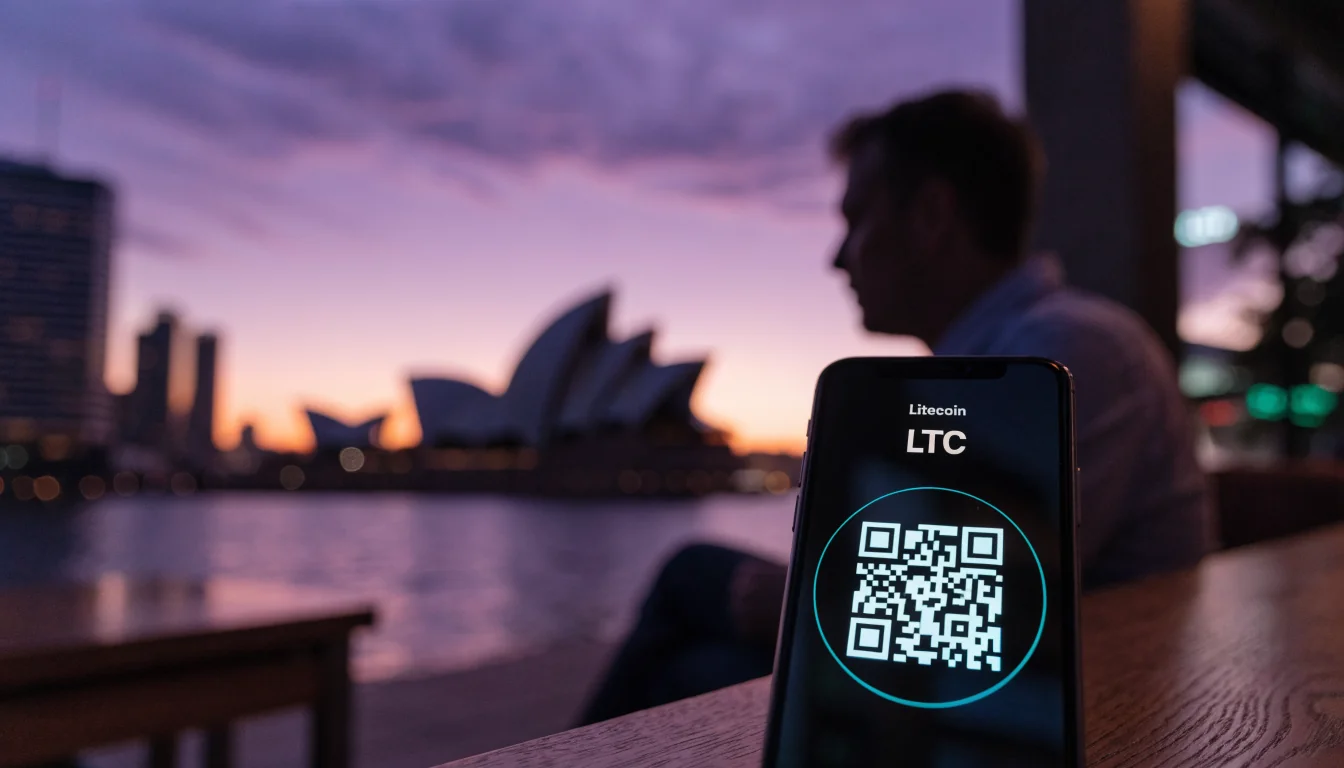
Tether betting is repeatedly recommended for security, reliability, and anonymity, and these are precisely the qualities to test. Security begins with the way the casino handles the pegged 1:1 dollar value of Tether. Because USDT is a stablecoin, volatility is removed from the equation, so the safety checklist shifts from price risk to procedural risk. A site that requires two‑factor authentication, segregated cold storage for customer funds and clear audit trails for each transaction is demonstrating that it treats crypto deposits as money, not as an anonymous stream. The anonymity claim deserves a dry caveat: anonymity stops at the blockchain address. Once a player converts winnings to fiat through an Australian exchange, the Australian Transaction Reports and Analysis Centre (AUSTRAC) will be interested in the trail. An honest casino will not promise complete invisibility; it will promise that data is handled responsibly and that privacy‑policy details are visibly displayed.
Anonymity Limits
While crypto purchases hide card details, KYC is required before any withdrawal, limiting true anonymity.
The same caution applies to transaction reversibility. Crypto transfers are irreversible, and a mistaken wallet address results in permanent loss, so a best‑in‑class Tether casino will emphasise address confirmation and test‑amount deposits rather than celebrating raw speed. It is a small thing, but it distinguishes an operation that understands crypto from one that merely markets it.
Fees, taxes and the South Australian wrinkle
The fees that matter are not always the ones a casino advertises. Since Australia has no single overarching gambling statute, regulation occurs at both state/territory and federal levels, and each state and territory retains its own gambling regulator. This patchwork matters for the player because taxation can shift. The South Australian Government introduced a 15% Place Of Consumption Tax (POCT) in June 2016, a reminder that the “price” of gambling in Australia is partly decided long after a bet is placed. For a Tether casino, the equivalent concern is how it passes on network charges, conversion costs and any state‑based point‑of‑consumption obligations. A quality venue will disclose fee layers plainly, rather than tuck them into a generic terms page.
Here the earlier platform section of this article provides the technical backdrop: deposits and withdrawals have costs and timings, and the best casino is the one that tells a player exactly how much of a Tether deposit reaches the gaming balance and how much is shaved by intermediaries. The aim is to know the real cost of playing, not to be told that everything is free.

Customer support, complaint procedure and the question of responsibility
Support is a quality criterion that becomes visible only when something goes wrong. A strong Tether casino will provide clear complaint procedures and identify whether it belongs to an alternative dispute‑resolution scheme. Reputable jurisdictions such as Malta and the UK require visible ADR membership information; an offshore‑licensed site that omits it should be rated lower. Responsible gambling is likewise not a decorative banner. Australia’s own Gambling Help Online exists because gambling here is a regulated social activity, and any casino that market itself to Australians without acknowledging the reality of problem gambling is failing a core test of quality. Trivialising language around addiction is a red flag, because the Australian legal framework was originally designed to minimise harm rather than to embellish entertainment.
Sorting the criteria without a scorecard
Australian players, then, are left with a curious evaluative puzzle. There is no local licence to rely on, no domestic registry to check, and no local regulator to complain to. The check therefore moves to how the offshore casino stitches together the jurisdictions it claims. That evaluation can feel almost absurd: a resident of South Australia, living under a tax introduced in 2016 and governed federally by the Interactive Gambling Act 2001, must nonetheless weigh the credibility of a licence granted in Malta or Gibraltar. There is something faintly comical about such homework being a prerequisite for a Friday‑night spin. It does, however, preserve the distinction between casinos that accept Tether merely as a payment method and casinos that accept responsibility for Tether‑based players. The first is common; the second is rare. That rarity is what “best” ultimately means, and that is why criteria, rather than any ranking, form the only trustworthy list.
Australian players must rely on the offshore licence disclosed by the casino, as no domestic regulator can verify its legitimacy.
Live Dealer Tether Casinos: Key Features and What to Expect
Live dealer titles differ from their automated counterparts in that real‑time video streams connect participants with a human dealer rather than a random number generator. In Australia, the legal landscape makes one distinction very clear: the Interactive Gambling Act 2001 prohibits the provision of online casino‑style games—including live dealer formats such as blackjack, roulette, and poker—to Australian residents. As a result, no domestically licensed real‑money online casino operators exist, and it remains impossible to obtain a licence to offer such services within Australia.
Nevertheless, many offshore platforms continue to accept Tether deposits. These sites blend live dealer experiences with cryptocurrency payment options, promising fast settlement and Global accessibility. A handful of industry reviews indicate that deposits often settle swiftly, though specific figures vary and are not officially published. Without a public registry, the term “best live casino accepting tether” is a marketing label rather than a designation backed by any authoritative source.
Live dealer games offer an immersive alternative to standard, algorithm‑driven play, but regulatory clarity matters just as much as the streaming quality. Offshore sites may advertise engaging tables and professional dealers, yet Australian players must acknowledge that any casino‑style game—including live dealer formats—is prohibited when offered to residents by operators based within Australia.
The distinction between standard online games and live dealer titles with Tether is subtle but crucial. The former rely purely on software, while the latter incorporate human croupiers from abroad. Tether’s role here is solely as a payment mechanism—rapid and pseudonymous—yet the underlying legal framework remains unchanged. Casinos that accept tether usdt australia 2025 continue to fall outside domestic licensing structures; even when Tether streamlines deposits, it does not legitimize the supply of casino‑style games under federal law.

In live dealer environments, the interactive features—real‑time chat and the pacing of the game—create a different atmosphere than click‑to‑spin slots. Still, using Tether introduces all of the usual risks: potential volatility of stablecoins, irreversible transfers, and limited regulatory recourse if a dispute arises. Offshore platforms that host live dealer games often face minimal oversight, so while payment may be nearly instantaneous, any resolution of client concerns is largely unprotected by domestic consumer laws.
On these sites, deposits and withdrawals via Tether typically emphasize speed—some industry publications note quick settlement under certain network protocols (like TRC‑20). Yet Australian players should recognize that the convenience of USDT cannot override the statutory prohibitions on live dealer games in the domestic market.
A polished interface or a professional dealer cannot mask the absence of local licensing; the intangible quality of a “real person at the table” still comes without domestically enforced safeguards. Australian players who choose this route are engaging in a realm that operates beyond the scope of federal regulation, licensing, and consumer protection.
Live dealer rooms today look glitzy, but in the eyes of Australian law, they remain prohibited offerings, regardless of how quickly USDT may be applied to a deposit.
Tether Slot Bonuses and Deposit Strategies
The bonus page of a Tether‑accepting casino is where Australian marketing restraint quietly ends. A jurisdiction that bans inducement advertising domestically has left offshore operators free to compose the welcome package however they see fit, and slot players are the intended audience.
Bonus Fine‑Print
Offshore bonus terms often hide wagering requirements; always read the conditions before accepting a USDT offer.
How Slot Bonuses for USDT Are Usually Structured
The structures themselves are fairly standard across the industry.
Deposit‑match offers form the backbone of most promotions: the casino converts your USDT into a boosted balance, and slots count fully toward whatever playthrough conditions are attached. Because USDT is pegged 1:1 to the US dollar, the stated amount stays constant between the deposit snapshot and the moment the conditions are cleared — the arithmetic does not shift mid‑spin.
Free‑spin packages appear frequently, either bundled with a match or issued on cryptocurrency deposit. Where they are offered as no‑deposit credits, the balance is usually modest and the terms are the tightest in the catalogue. For the Australian player, these details matter more than the headline figure. An operator that lists its conditions before the deposit button is pressed is preferable to one that hides them.
Reload deals for returning players exist too, although the advertising restrictions that shape Australian marketing do not bind offshore sites; the offers appear in the promotions lobby with Tether alongside the rest of the accepted coins. The wagering contribution is what actually decides the value, and that contribution is often full for slots.
Funding the Session Efficiently
Stablecoins remove some of the guesswork from this calculation, but not all of it.
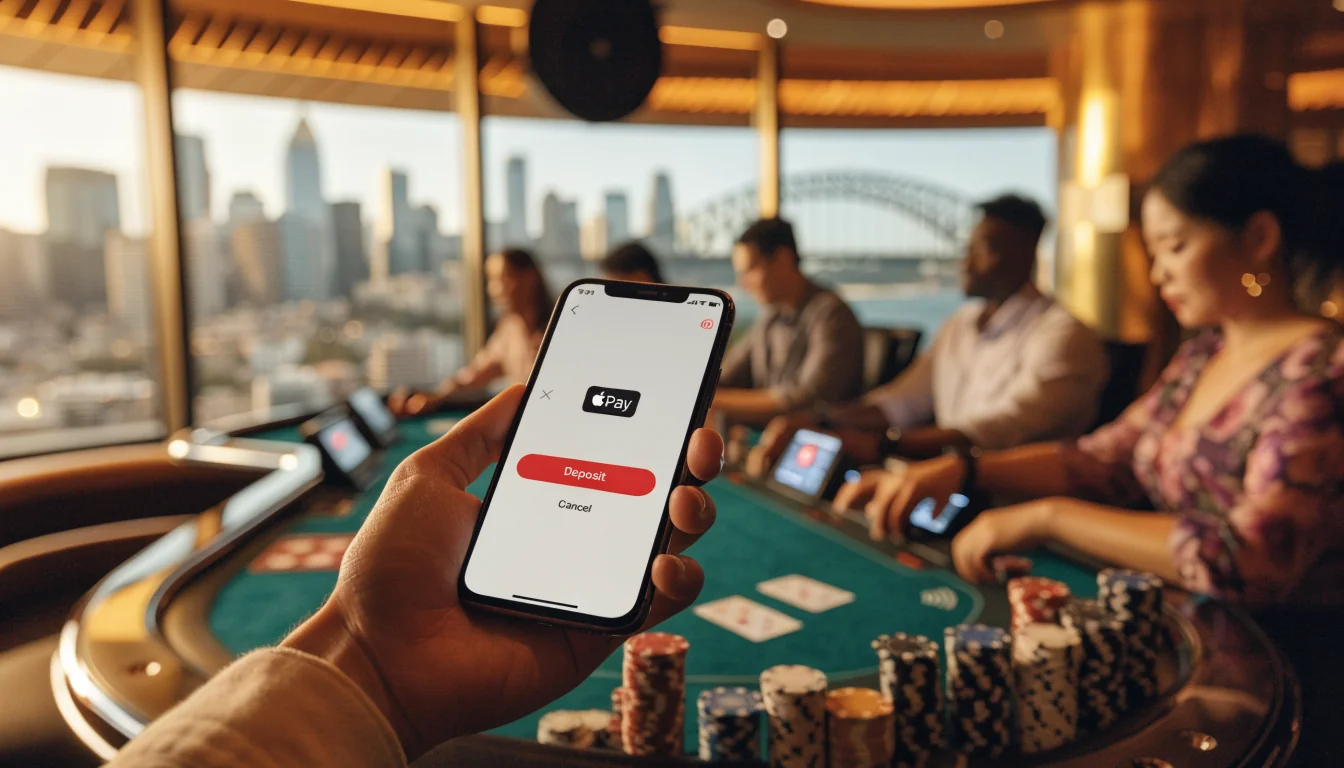
Choosing the right network is the straightforward part. According to one industry review, USDT moved via TRC‑20 typically costs under $1 in network fees, whereas ERC‑20 and similar pathways often carry $1–$5. A player spinning video slots on a modest balance does not want the toll to rival the wager.
Consolidating deposits into fewer, larger amounts is wiser than dribbling the funds across multiple small transactions. Each transfer pays the network fee separately, and the minimum withdrawal thresholds — often $10–$20 USDT, according to the same industry review — can leave small winnings temporarily stranded on the casino ledger.
Stablecoin accounting also helps when the slot session ends early. A win denominated in USDT can be set aside in a wallet without its dollar value melting back to a lower region while the player decides whether to withdraw or keep playing.

Warning: Irreversibility and Bonus Terms
No honest discussion of slot funding can skip the caution that every crypto transaction is final
A deposit sent to an address copied incorrectly, a chain selected wrongly, or a fat‑fingered digit is a permanent loss of the amount moved. Unlike a chargeback on a card, there is no unwinding a USDT transfer. Bonus terms deserve similar scrutiny, because a requirement that is unclear before the deposit becomes a dispute afterwards.
Volatility, of course, is modest for a Tether balance, which is why slot players often prefer it over more fashionable coins for bankrolling. Modest, but not absent.
Game Variety at Tether Casinos: Slots, Table Games and More
Offshore platforms accepting USDT offer the full catalogue — spinning reels, card tables, roulette wheels — all funded through the same stablecoin wallet. The variety looks generous until you remember what Australian law actually permits.
The Interactive Gambling Act 2001 doesn’t merely restrict; it prohibits online casino‑style games outright. Slots, poker, blackjack, roulette: all fall under the federal ban, regardless of whether the payment method is dollars, bitcoin, or tether. The distinction matters because the prohibition targets operators, not the cryptography behind a deposit.
What’s Technically Available Anyway
Australians accessing offshore platforms will find standard casino lobbies organised by category. Tether slot games dominate numerically — hundreds of titles spanning classic three‑reel formats to video slots with bonus rounds. Table games follow: blackjack variants, roulette wheels (European and American), baccarat, and poker formats ranging from Caribbean Stud to Texas Hold’em against the house. Some venues also carry specialty options — scratch cards, keno, virtual sports — though these shift between operators without much consistency.
A tether casino bonus sometimes attaches to particular game categories. Slots typically qualify fully toward wagering contributions; table games often count partially or not at all. Since we cannot verify specific percentages, treat any bonus claim with caution until you read its terms at the source.

The Regulatory Reality
Playing casino games with tether while physically in Australia involves navigating this gap: games exist offshore, accept your USDT, process your bets — but offering them to you from within Australia remains illegal. Individual players face no prosecution for anonymous tether casino participation; the law penetrates operators, not their customers. Yet availability doesn’t imply endorsement. What exists in the offshore market exists precisely because Australian authorities cannot shut it down, not because they permit it.
The stablecoin angle changes little about game selection itself. Whether you deposit USDT via TRC‑20 or another network, the slot library stays identical. What changes is the transactional layer — speed, fees, relative anonymity — not which games load afterwards. Tether games casino catalogues mirror their fiat counterparts; the currency merely determines how you fund the session.
For Australians, the practical question becomes: does a platform accept players from this jurisdiction, and does it process USDT at all? Once inside, game variety depends on which providers that operator licenses — we cannot list specific titles here because supply agreements vary constantly and sources do not publish reliable inventories.
Crypto‑Powered Live Dealer Experience
Live-dealer tables occupy an unusual corner of the offshore casino market: they are simultaneously the most "real" product available and, under Australian law, among the most clearly prohibited to supply. The Interactive Gambling Act 2001 treats streamed roulette, blackjack and baccarat as casino-style gaming, so no domestic licence exists for them. Australians who sit down at a live table funded with Tether therefore do so on platforms registered abroad — often in Curaçao, Malta or Gibraltar — where the dealer, the studio and the legality question are all comfortably offshore.
The mechanism itself is straightforward. A player converts Australian dollars into USDT through an exchange such as CoinSpot or Swyftx, transfers the stablecoin to a wallet like Exodus or Trust Wallet, and from there into the casino cashier. Because Tether is pegged one-to-one to the US dollar, the balance shown at the table doesn’t swing mid-hand the way Bitcoin or Ethereum tend to do — a practical advantage when a blackjack session runs long.
Live‑dealer rooms work the same as standard tables; the only difference is that settlement uses USDT, which speeds up payouts.
Advocates of this setup argue that Tether betting offers security, reliability and anonymity. The claim has a kernel of truth: blockchain settlement removes the need to share card details, and the stable peg removes volatility from the stake itself. Anonymity, however, ends where the casino’s compliance desk begins — verification under a government-issued ID is standard before any first withdrawal, regardless of the coin used.
Where crypto genuinely changes the live experience is at the exit. One industry review of instant-withdrawal casinos reports that USDT payouts can clear in under an hour, far quicker than the card-based channels most Australians are used to. At a live table, where winnings feel immediate, that pace matters.
The table runs the same. Only the rail beneath it changed.
Playing Slots with USDT: Practical Tips
Spinning slots with Tether is less about the game itself and more about how the money moves in and out. Because USDT tracks the US dollar, a player can leave it in a session balance for days without watching the value drift. That stability changes otherwise reckless crypto play: wins stay wins, deposits stay deposits, and bonus calculations remain simple arithmetic rather than exchange-rate roulette.
According to one industry overview, deposits in Tether tend to confirm within about 5–15 minutes. That window matters when a player wants to hop into a session without hanging around for block confirmations. It also matters when switching between slots, checking a favourite title, and returning to a preferred provider. The speed is closer to a bank transfer than a Bitcoin transfer, but the sentiment is pure crypto: move small, verify, then spin.
Treat each deposit as a single unit, not a stream of tiny top-ups. Each time a player sends USDT, there is a network fee and the possibility of a mis-typed address — irreversible by design. A mistake costs coins, not credit. So a player should copy addresses rather than type them, save them in a wallet like Trust Wallet or Exodus, and confirm the right chain (TRC‑20 versus ERC‑20) before hitting send. Those few seconds of checking are the difference between playing slots and losing the stake before the first reel.

Using Tether for Deposits and Withdrawals: Speed and Fees
Tether moves through casino accounts with a rhythm that differs sharply from card banking, and the difference is the point. One industry review puts USDT network costs at roughly $1–$5 per transfer, with the TRC‑20 route often coming in under a dollar — a comparison that favours it over ERC‑20 every time. The same source cites minimum withdrawal thresholds of $10–$20, which shapes how a session is planned more than any bonus table does. Deposits confirm on the blockchain within minutes at the operator’s own terms, and withdrawals at the faster end of the market clear in under an hour, though no operator publishes a universal standard. Stability helps: a coin pegged to the US dollar means the amount leaving the wallet is the amount that arrives. So the maths stays simple. That matters in Australia, where no domestic casino licence exists to set rules.
Deposit Requirements and Safety Measures for Tether Users
A casino that accepts Tether deposits will generally set its floor in the 10–20 USDT band, according to the operator’s own terms — low enough that a cautious first deposit is genuinely possible. Account verification still applies even with a stablecoin: expect identity checks before larger withdrawals, regardless of the token used. The risk profile is asymmetric, and this deserves clarity. The legal exposure for an Australian player funding offshore play is effectively zero, since the Interactive Gambling Act 2001 targets operators, not players. The financial safety sits elsewhere: Tether’s dollar peg removes volatility between deposit and withdrawal, and an irreversible blockchain transfer makes each funding step final. Choose the platform, not the coin, for its own sake. No verified list of no-deposit USDT offers exists here; treat any such page cautiously.
Are crypto casinos legal in Australia in 2026?
Domestic online casinos cannot legally operate, but it is not illegal for Australians to play at offshore casinos that accept Tether, as the law targets operators rather than players.
What are the key limits on providing services to customers?
Australian players must be at least 18 years old to gamble online, and minimum Tether withdrawal amounts at offshore platforms frequently settle between $10 and $20 USDT.
How do I file a complaint against a casino?
You have no recourse to Australian regulators for offshore casinos, so your safest route is relying on the casino’s own offshore licence and the operator’s published terms.