
Pay by Phone Casinos in Australia: How They Work

- Mobile Phone‑Bill Payments for Australian Casino Slots
- Overview of Pay‑by‑Phone Casinos in Australia (2026)
- Which Australian Casinos Accept Pay‑by‑Phone Deposits?
- Pay‑by‑Phone Casinos Not Listed on Betstop and Related Restrictions
- Playing Online Slots with Phone‑Bill Payments
- Wagering Requirements When Using Phone‑Bill Deposits
- General Guide to Casino Pay‑by‑Phone Transactions
- Understanding Phone‑Bill Acceptance Policies Across Operators
- Pay‑by‑Phone Options for German‑Language Players and Cross‑Border Deposits
- Boku as a Phone‑Bill Payment Method in Europe and Its Availability in Australia
Mobile Phone‑Bill Payments for Australian Casino Slots
Funding a slot session by charging it to a phone bill sounds like a trick from the early mobile era, back when phones had ringtone stores and televisions had curves. The mechanism survives, though, because it solves a genuine problem: cards can be clumsy on a small screen, and not everyone wishes their bank statement to itemise recreations. Australian players looking at casino pay by phone bill options are choosing, essentially, one of three routes — a carrier‑billed deposit, a phone‑linked e‑wallet, or a prepaid PIN. They behave rather differently.
Publications sometimes file these under the same heading, which greases the search statistics but flattens the distinctions. Phone‑billing to a carrier invoice sits apart from e‑wallets in terms of caps, reversals, and eligibility for bonus terms. The difference is not trivial, and slots tend to expose it slower than table games, since slot browser play amplens small increments rather than decisive stakes.
How the carrier‑billed phone‑bill deposit works
The canonical example is simple on the surface. The slot lobby’s cashier page offers a phone‑bill option, the player types in their mobile number, a confirmation SMS arrives, and the amount migrates to the next phone invoice or diminishes the prepaid balance. There is no cashier conversation, no card number, no bank authorisation. The phone company acts as a temporary creditor.
Australian carriers, unsurprisingly, do not market this as a casino‑friendly feature. Most industry reviews note that carrier‑billing tends to appear only where offshore operators accept Australian traffic, and that operator terms tend to specify it rather than the national regulator. The practice exists in the gaps between domestic prohibition and offshore licence regimes, not because Canberra drafted it for slots players.
Because the payer is the phone provider, there is an automatic distinction from cards and e‑wallets. One industry snapshot suggests card deposits are instant, but their withdrawals can take 1‑5 business days in Australia, while e‑wallets often finish same‑day to 48 hours. Phone‑bill deposits sidestep card rails entirely, but the ceiling is modest precisely to prevent phone companies becoming accidental lenders.

Slots benefit here, because they are already segmented by spin size and session rhythm. A slow drip of carrier‑billed top‑ups suits a casual spinning style, where increments stay small and the invoice endpoint is manageable. Table game players sometimes deposit with larger bursts, which slots players rarely need unless they chase feature‑buy mechanics.
What distinguishes this from card‑on‑file or phone‑linked e‑wallets
Phone‑billing occasionally gets confused with having a card stored on a phone, or with tapping through an e‑wallet app. They are not equivalent. A stored card transaction still rides on Visa or Mastercard rails, with its speed and fee footprint. An e‑wallet such as Skrill, Jeton or MiFinity behaves like a portable bank balance, often with instant deposits and a different withdrawal trajectory altogether.
One industry review found availability of cards, bank transfers, e‑wallets and crypto varies by operator and location in Australia, so players should not assume the phone‑bill option appears everywhere. The same single source flags that cards and e‑wallets have different speed and fee profiles for Australian casino payments — a point that drags phone‑billing out of the uniform blob.

Carrier‑billed phone‑bill deposits matter most to players who do not want to share card details, do not want their bank app cluttered with casino receipts, or simply prefer to use prepaid phone credit in a controlled way. It is also relevant for younger‑adult adjuncts of a household plan, where a family member’s account could settle wager‑related invoices — which the market’s responsible‑play institutions tend to regard with scepticism.
PayID, vouchers and phone‑adjacent methods
Sometimes the cashier will not offer direct carrier billing but still demand only a phone‑linked credential. PayID can work that way, since it binds a mobile number or email to a bank transfer, and one source notes most offshore operators accept PayID as their primary AUD deposit method. Prepaid vouchers, on the other hand, are popular locally: Flexepin is described in one industry review as a popular local payment option for Australian casino players in 2026.
These adjacent methods flatten the comparison if lumped together, but matter on withdrawal. According to the same cross‑section of industry literature, vouchers such as Flexepin are deposit‑only and cannot be used for withdrawals, whereas phone‑bill carrier methods have their own return‑path peculiarities. That asymmetry gives slots players the habit of thinking about redemption paths before they chase any pay by phone bill casino australia deposit option.
Using phone‑bill deposits can make it easy to lose track of spending, as charges appear on the monthly invoice and may bypass typical gambling safeguards.
Slots‑specific use: session rhythm, micro‑deposits and control
For slots specifically, the phone‑bill method tends to align with session psychology rather than bankroll bulk. Slot mathematics encourages frequent small stakes, and micro‑deposits match that pacing. There is a natural overlap between mobile slots pay by phone bill habits and the game design itself: both encourage fragmentation.
People wiring the slot lobby from a commuter train or a sofa often want the cashier to occupy the same device screen. Modern Australians play slots on their phone browser, use the Same Method Rule their operators advertise, and prefer handset‑native cashier screens. So a pay by mobile phone bill casino lobby is essentially an interface that says: this deposit should feel like a native handset action.
Critics point out the obvious — it insulates wage‑packets from bank verification, but also removes some checkpoints that might trigger restraint. That lessening of checkpoints is not automatically virtuous. According to one industry summary, the most common reason for a paused withdrawal in Australian casinos is verification (KYC) or bonus conditions — so depositing softly does not excuse anyone from compliance later.
How casino operators treat phone‑billing within the cashier stack
Operators do not usually treat carrier billing as their flagship method. Cards, e‑wallets, and bank transfers occupy the standard tier; phone‑billing slips in as an auxiliary checkbox with defined limitations. Each operator sets its own rules: who can see the phone‑bill option, what bonus eligibility attaches to it, and how tightly the numbering encrypts.
The picture changes when wager‑clients explore mobile casino games you can pay by phone bill bonuses. Terms attach differently because phone‑billing transactions often act like voucher‑style loads, and some bonus engines treat them with alternative wagering paths. Australian players must remember that casinos regulated for the domestic market do not exist — meaning the operator’s own terms carry the weight that notional local regulators might otherwise impose. All featured payment options use SSL/TLS encryption and PCI‑DSS compliance, so the encrypted pipe is standard regardless of the deposit flavour.

Operators also juggle responsibility signals: Chaptered responsible‑gambling messaging sits underneath every cashier page, whether the user tries online casino pay by phone deposits or any other rail. Behind that compliance‑heavy interface, the cashier page is simply a ledger of methods each with their own caps, refund paths and KYC annexes.
E‑wallets and cards as comparison baselines
e‑wallets are the most honest comparison. According to one industry overview, e‑wallet withdrawals can be faster than card withdrawals, depending on casino processing and verification status. That vacillation is not a guess: it depends on the operator’s window and the player’s completed KYC checks. Equally, an e‑wallet sits on a phone and looks similar in a tap‑and‑go lifestyle, but its settlement and reversibility differ from phone‑billing carrier invoices.
Visa and Mastercard remain widely accepted in Australian casinos, with one source noting Mastercard may be limited for withdrawals. Their deposits are instant and withdrawals can take 1‑5 business days according to the same industry observation. For slot play, that factor matters when someone expects weekend cash‑outs; phone‑bill deposits do not necessarily solve that expectation, because the return path might still funnel through cards by the Same Method Rule stipulation most casinos print.
Understanding those baselines lets the user figure out whether their slot session is served best by phone‑billing, by a padlocked e‑wallet, or by a direct card deposit. Each has its own rhythm and price — even if the price expresses itself as time rather than a debited fee.
Regulatory and legitimacy contours of phone‑billing in Australia
The federal Interactive Gambling Act 2001 is the primary Commonwealth law governing online gambling in Australia, introduced to protect the public with a focus on harm minimisation. Some sources call it the Interactive Gambling Act 1997, but the 2001 framework is the one most Australian compliance materials settle on. Either way, the prohibition targets operators providing online casino games to residents, not the individuals placing bets.
Consequently, phone‑billing for casino slots inhabits the offshore intersection: local carriers, offshore operators, and Australian users converging through contracts none drafted for gambling. Regulators such as AUSTRAC exist more for the money‑laundering side than the slot mechanic. Their presence — along with state‑level bodies and advertising limits set down nationally — means the phone‑bill deposit method operates within a tightly patrolled perimeter.

That perimeter’s existence matters because robust compliance does not vanish just because a carrier‑billing page is less intimidating than a bank transfer screen. KYC checks are mandatory at every Australian online casino, and the operator’s ledger still attaches identity — merely through the phone as the proxy. Phone‑billing compresses the exact distance, not the accountability.
What happens at withdrawal time
The deposit conversation should not ignore the return path. According to one industry review, bank transfers are the slowest withdrawal method in Australia, taking up to 7 business days. Slot players funding via phone bills are still subject to the Same Method Rule most operators enforce, which says withdrawals return to the method used for deposits where feasible. That catches people out if phone‑billing deposits only let them reload, not cash‑out.
Thus phone‑bill deposit methods often necessitate an eventual link to cards, e‑wallets or bank transfer extractors anyway. The carrier invoice funnel is one‑way. Slot enthusiasts who view online slots pay by phone bill as seamless should picture reconciliation day rather than merely launch day. In market vernacular, the convenience of emptying a phone balance meets the inconvenience of trying to refill it via invoice.
Banking on the device, sorting the method
Most slots players are not in hunt of a philosophical payment method; they want the cashier to clear, the spin to resolve, and the receipt to look tidy. That said, choosing a phone‑bill option delivers a quiet affirmation: the wager appears at the device where the game already lives, and the invoice settles alongside connectivity, streaming subscriptions, and other squirched‑in services. Locally, people use PayID, prepaid voucher options and carrier‑billing occasionally — not to create a labyrinth, but to smooth the between‑bank‑and‑slot distance.
In an environment where Visa deposits are instant and e‑wallet withdrawals can be faster than card withdrawals depending on operator verification, choosing how to feed a slot account still behaves like a variable with texture. Carrier‑billing has its own ledger logic; the trick is simply knowing how the invoice settlets, and whether the session’s stakes rhyme with that cadence.
Overview of Pay‑by‑Phone Casinos in Australia (2026)
If you’re looking to fund your play conveniently while comparing what’s on offer in 2026, it helps to see how each casino’s welcome package and payment setup stack up before you commit.
Bonus: 240% up to A$4,100 + 300 free spins Stands out for a large percentage-based welcome bonus paired with a solid batch of free spins, making it worth a look for newcomers chasing extra value on their first deposit.
License: Curacao eGaming (Roby Games Ltd) · Bonus: 100% up to A$750 + 200 free spins Operates under a Curacao eGaming licence and backs sign-ups with a matched deposit bonus plus free spins, offering a straightforward entry point for new players.
License: Curacao Gaming Control Board OGL/2023/176/0095 (Hollycorn N.V.) · Bonus: up to A$11,000 + 300 free spins (code NEO100) Licensed via the Curacao Gaming Control Board, it pairs a sizeable welcome offer with free spins and a bonus code, giving players a clear, high-value starting incentive.
License: Curacao OGL/2024/1335/0780 · Bonus: up to A$1,000 + 150 free spins, wager-free · Min. deposit: EUR 20 Holds a current Curacao licence and offers a wager-free welcome bonus with free spins, plus a clearly stated low minimum deposit, which adds transparency for new players.
Bonus: up to A$7,500 + 550 free spins across 10 deposits, 50x wagering · Payout speed: crypto under 1 hour, PayID 1-3 business days · Min. deposit: A$20 (A$30 to qualify for the bonus) Offers an extensive multi-deposit welcome bonus with a large free spins allocation, and is notable for fast crypto payouts alongside PayID processing within a few business days.
License: Curacao eGaming OGL/2024/923/0383 (Antillephone N.V.) · Bonus: up to A$2,000 + 100 free spins across 2 deposits · Min. deposit: A$30 Licensed under Curacao eGaming, it spreads its welcome bonus and free spins across two deposits, with a modest minimum deposit requirement for easy entry.
License: Curacao Gaming Authority (Jumpman Gaming Ltd) · Bonus: up to A$6,600 + up to 250 free spins across 4 deposits Backed by a Curacao Gaming Authority licence, this operator offers a generous multi-deposit bonus package with a substantial free spins component.
License: Tobique Gaming Commission · Bonus: up to A$8,000 + 400 free spins across 4 deposits · Payout speed: crypto ~10-15 minutes, fiat 1-5 days · Min. deposit: A$30 Licensed by the Tobique Gaming Commission, it combines a large multi-deposit bonus with free spins and stands out for quick crypto payouts alongside reasonable fiat processing times.
License: Curacao · Bonus: 100% up to A$500 + 200 free spins, 10x wagering · Payout speed: crypto 30-60 minutes, fiat 1-5 days · Min. deposit: A$10 A Curacao-licensed casino with a matched welcome bonus and free spins on a low wagering requirement, plus fast crypto payouts and a very accessible minimum deposit.
License: Curacao Gaming Control Board OGL/2023/176/0095 (Hollycorn N.V.) · Bonus: up to A$1,500 + 200 free spins across 3 deposits Licensed through the Curacao Gaming Control Board, it offers a welcome bonus spread across several deposits along with a solid free spins allocation.
Calling this market "pay‑by‑phone casinos" already contains a small misdirection. What the phrase actually describes, in the Australian context of 2026, is offshore casino sites that let a player charge a deposit to a mobile phone bill, or deduct it from prepaid mobile credit, rather than moving money through a card or an e‑wallet. The mechanism is old – carrier billing long predates the smartphone – and its survival in a niche this regulated says something about how people respond to a prohibition: they do not stop playing, they re-route the payment.
Any honest overview has to start with the legal background, because without it the rest of the picture is just a catalogue of deposit buttons.
The regulatory frame the whole market hangs on
The primary Commonwealth law here is the Interactive Gambling Act 2001, introduced with a stated focus on harm minimisation and protection of the public. Under it, online casino‑style games – slots, poker, blackjack, roulette – are prohibited from being offered to Australian residents. Sources on the topic are not perfectly tidy about the numbering: one body of material refers to an Interactive Gambling Act 1997 as the prohibiting instrument, while the more commonly cited version points to the 2001 Act. The disagreement is worth naming rather than silently resolved, because both versions describe the same thing: a Commonwealth prohibition, not a licensing regime.
The consequence is structural. There is no domestic licence under which an Australian company could lawfully operate a real‑money online casino, and therefore no public register of licensed casino operators to consult. Sports betting and lotteries are licensed; casino games are not licensed, they are banned from provision. Every site that accepts an Australian player’s phone‑bill deposit is, by definition, an offshore operation.
This is not a technicality. It determines whom the player is actually dealing with, which consumer protections apply and which do not, and what "the market" even means in this sentence.

What a phone‑bill deposit does inside that frame
A phone‑bill deposit moves the funding step away from the banking system. Instead of a card transaction or an e‑wallet transfer, the charge appears on the player’s mobile account – added to the monthly bill on a postpaid plan, or drawn from prepaid credit. The casino sees a completed deposit; the telco sees a charge; the player’s bank sees nothing. That separation of the payment from the bank statement is the feature the method sells, and also the feature that makes it fit awkwardly with Australia’s AML/CTF obligations, where fiat conversions above a statutory threshold have to be reported to AUSTRAC.
For the player, the practical differences against other mobile funding routes are concrete. Cards – Visa is widely accepted across the offshore sites serving Australia, and Mastercard is accepted for deposits – are tied to banking identity and, according to one industry review, may be limited when it comes to withdrawals. Cryptocurrency, also widely accepted at these sites, solves the withdrawal problem differently, by stepping outside the fiat system altogether. A phone bill does neither: it is fiat, but spend‑only. Where it exists, it is a deposit channel with no reverse gear, which is why the withdrawal conversation has to happen before the deposit, not after.

Currency, age, and the assumption most sites quietly make
Most operators serving this market accept AUD as a native currency, which removes foreign‑exchange conversion fees from the cost side. That matters more for phone‑bill deposits than it first appears: a carrier‑billed charge in a foreign currency would pile a telco’s own conversion margin on top of whatever the operator charges, and the whole appeal of the method is its simplicity. Fees in this market are rare in general, but where they appear, they tend to appear as exactly that kind of conversion, or as bank‑transfer or e‑wallet withdrawal fees, or as crypto network costs – the death‑by‑a‑receipt category rather than a headline commission.
Age is simpler. The minimum legal gambling age in Australia is 18, and the offshore operators that take Australian players apply the same threshold at sign‑up, enforced through KYC checks before any withdrawal is processed. Accessibility of the method cuts both ways here: a payment channel that needs no card and no bank account is, structurally, easier for a younger person to reach. The regulator’s insistence that sites restrict access to adults is, in part, a response to that structural easiness.

How the methods actually spread across operators
Availability is not uniform. According to one industry review, most offshore operators working this market treat PayID as their primary AUD deposit method – a bank‑linked transfer that goes through the New Payments Platform and arrives with the payer’s name attached. Phone‑bill funding sits further down the acceptance list, behind the cards and e‑wallets and crypto, partly because the per‑deposit ceilings carrier billing imposes make it unattractive to anyone moving serious money, and partly because operators have to integrate a telco aggregator to offer it at all.
So the "pay‑by‑phone casino" is not a category of site so much as a category of checkout. The same offshore operator will often present the phone bill alongside Visa, an e‑wallet such as Skrill or Jeton, a prepaid voucher like Flexepin, and crypto, and let the player pick per deposit. The player who cares about phone billing is, in practice, picking an operator that has bothered to integrate it – which already narrows the field considerably, before any question of games or bonuses is even asked.
The sedate arithmetic of getting money back out
Withdrawals are the quiet test. Australian casinos in this offshore market generally return funds to the same method used for depositing, and where the deposit method cannot receive money – as is the case with a phone bill, and with deposit‑only prepaid vouchers – the withdrawal has to be re‑routed, which is where friction and delay enter the relationship. The slowest route across the market is the bank transfer, which one industry review puts at up to seven business days; the fastest, per the same review, is often crypto or an e‑wallet, sometimes the same day. Cards sit in between, with Visa and Mastercard withdrawals taking anywhere from one to five business days once the operator’s own processing window and KYC checks are cleared.
A phone‑bill player, in other words, ends up withdrawing through a channel they did not deposit on, and discovers this at the cashier, not at the first session. The overview’s purpose is to move that discovery earlier.
Charges appear on the mobile invoice, are instant to credit, but cannot be used for withdrawals.
Usually instant both ways, supports faster withdrawals and often has lower fees.
Deposits are instant, withdrawals take 1‑5 business days, and the method is widely accepted across operators.
What "the market in 2026" actually consists of
Strip the label back and the picture is this: a Commonwealth prohibition on domestically provided casino games, an audience of adults‑only players, a cluster of offshore sites that accept AUD natively, and a menu of deposit methods in which carrier billing is one option among several, chosen by some players because it keeps the transaction off the card statement. The method’s role in 2026 looks less like a technological front line than a survivor from an earlier payment era, kept alive by operators who see a certain kind of customer in it. That is a smaller and more precise thing than the phrase suggests – and a more useful thing to know before depositing.
Which Australian Casinos Accept Pay‑by‑Phone Deposits?
The question presupposes something the Australian market does not actually contain: a domestic casino that has weighed phone-bill charging against its licence conditions and decided to offer it. No such operator exists, because no Australian licence for online casino games exists either. The companies that appear in pay-by-phone searches are offshore businesses, and their presence on a comparison page reflects the comparison page’s UK template, not a regulated local market. That distinction matters here, because the word "which" promises a list — and the only honest list is one built from what offshore operators actually accept, assembled from their published terms rather than borrowed from a review formula written for another market.
Reading the offshore cashier
Offshore casinos do not usually title themselves pay-by-phone venues; the description comes from aggregated affiliate pages, many of which carry a UK format where the method has legitimate standing. Australian-facing sites instead route phone-linked deposits through carrier-familiar brands such as Boku or Payforit, or through the prepaid voucher route sold locally as Flexepin, both of which settle through a telephone account rather than a card.
The first criterion, then, is the cashier’s own wording. A site that supports the method tells players so inside the banking page; a site that does not rely on affiliates to translate its product. That single check separates operators that merely appear in someone’s "best casinos that accept pay by phone" table from operators that genuinely accept the billing model.
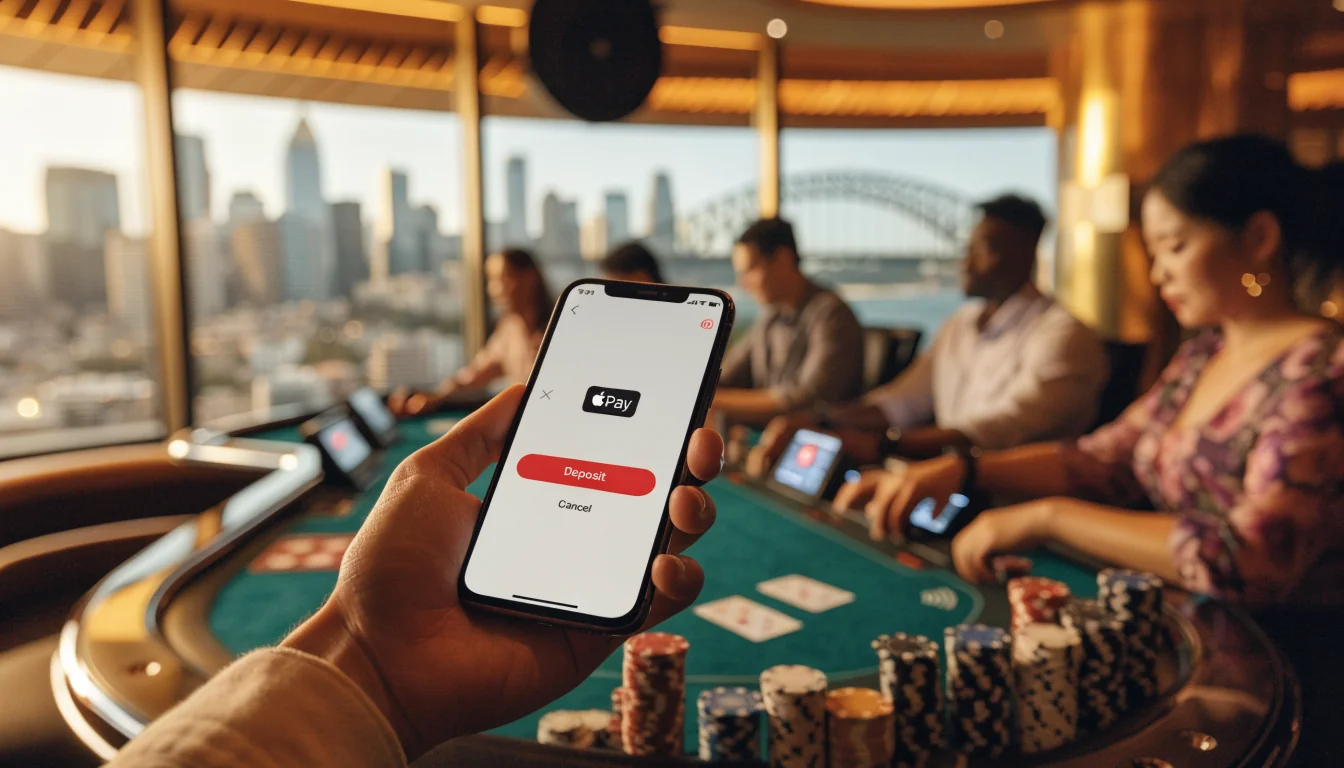
What "accepting" means in practice
Accepting a deposit method is not a single fact but a bundle of conditions. A site can permit billing to a mobile account for funding while steering withdrawals toward PayID or an e-wallet, in line with the Same Method Rule that requires payouts to return through the channel used for deposits where the channel supports incoming funds. Since phone bills carry money only in one direction, casinos accepting the method tend to nominate a banking fallback, and most offshore operators accept PayID as their primary AUD deposit method for players whose telephones cannot receive payouts, according to the terms of the operators themselves.
Another criterion is scale. The method suits modest deposits because a carrier invoice is not a limitless credit line. Operators that court Australian slot players publish a deposit ceiling per transaction and often another per day, disclosed in their terms pages, and that disclosure is part of what "accepting" means. Blanket statements about acceptance hide the real question: accepting how much, and under which withdrawal fallback?
A short list of what to examine
Since the market provides no domestic licensees to inspect, the sensible list is a list of checks, applied to whichever brand an aggregator page happens to parade this month. The names rotate; the examination does not.
- The banking page names phone billing, prepaid vouchers, or both. If it mentions neither, the casino does not accept the method, regardless of what the affiliate headline implies.
- The operator discloses its deposit ceiling, its wagering multiplier on bonus funds, and its payout route before asking the player to deposit.
- The withdrawal page names a fallback method — PayID, an e-wallet, or a bank transfer under the common Australian instruction to report fiat conversions above A$10,000 to AUSTRAC — rather than leaving the question open.
- KYC checks are completed before the first withdrawal, as Australian-facing operators require identity verification prior to any payout.
Run that list against whichever operator an aggregator promotes, and the answer to "which casinos accept this?" stops depending on the aggregator’s advertising arrangements.
Why "best" lists mislead here
Review pages rank accepting casinos by headline bonus, by brand recognition, or by the affiliate fee attached. None of those measures tells a player whether the operator actually posts phone billing to an Australian handset rather than to a British legacy market. "Online casino that accepts pay by phone deposits" as a search phrase inherits the vocabulary of markets where the method is legitimate, pressuring Australian pages to import the same categories. The result is a list whose inclusion criterion has nothing to do with the player’s question.
A better ranking test is the withdrawal fallback and the published deposit ceiling — the criteria above — because a casino that accepts the funding method while concealing the withdrawal route has accepted only half the method.
The criteria matter more than the roster
Any given month’s roster of supposedly top casinos is an artefact of affiliate economics rather than of carrier support. What remains stable is the group’s defining features: whether phone billing appears on the banking page at all, what deposit ceilings it carries, which withdrawal channel the operator nominates, and whether the operator’s own terms make those disclosures before any affiliate does. On those checks rests the only meaningful answer to which casinos accept pay-by-phone deposits; the marketers’ accepted lists simply rearrange themselves around them.
Pay‑by‑Phone Casinos Not Listed on Betstop and Related Restrictions
The reason some offshore operators offering phone‑bill deposits do not appear on the Betstop register is straightforward: the register only applies to licensed wagering providers within Australia, while most casinos accepting phone‑bill payments operate outside that domestic framework. Because of this, their absence from the list does not necessarily mean they are non‑compliant — it simply reflects the scope of the register.

Australian gambling legislation notes a discrepancy here: the Interactive Gambling Act 1997 was originally referenced as prohibiting the provision of online casino games to Australian residents, yet a later framework names the Interactive Gambling Act 2001 as the primary Commonwealth law that governs the area and emphasises harm minimisation. In practice, operators focusing on Australian players usually rely on jurisdictional separation, which places them beyond the Betstop system rather than in clear violation of the register.
Regulatory restrictions still apply to how these operators present themselves. They must not advertise on social media or other online channels and must avoid any messaging targeting minors. In addition, inducement advertisements that promote opening an account are not permitted, and responsible‑gambling messaging must be integrated into all permitted marketing. These rules influence how casinos describe their deposit options, including whether they reference phone‑bill methods at all.
Restrictions also affect payment functionality. Credit cards and digital currencies cannot be used for deposits or betting, and operators generally require withdrawals to return to the original deposit method. Since phone‑billing services usually support deposits only, players using them must rely on alternative options for withdrawals in accordance with the operator’s terms.
KYC checks remain mandatory regardless of whether the casino appears on Betstop. Even for offshore platforms, verification must be completed before withdrawals, and wagering obligations must be satisfied if bonuses are involved. The register’s scope does not replace those obligations, which continue to shape how pay‑by‑phone operators handle player accounts.
Playing Online Slots with Phone‑Bill Payments
A slot funded from a mobile bill behaves, in the ledger, like any other deposit; the route of the money matters less than the conditions attached to it. The considerations that distinguish a phone‑bill top‑up from a card or an e‑wallet have little to do with the spinning itself.
Where the route of the deposit matters
Wagering requirements can lock funds until the conditions are met, and a slot session financed by a phone bill is not exempt from that arithmetic. The most common reason for a paused withdrawal at Australian casinos is verification (KYC) or bonus conditions — a reminder that the method chosen is only the first checkpoint.
Slots differ from table games mainly in the speed of play, and the prepaid voucher logic of a phone bill suits that pace: the deposit ceiling is fixed before the session begins. Live‑dealer tables and poker attract a different rhythm, and their deposit habits differ accordingly; slots, by contrast, lend themselves to smaller, repeated top‑ups rather than one large transfer.
The distinction is gentle, but it is a distinction.
Wagering Requirements When Using Phone‑Bill Deposits
The money arrives on the phone bill, and the fun begins — that is the theory. In practice, the bonus tied to that deposit often comes with a padlock on the winnings.
At Australian online casinos, wagering obligations can freeze every dollar until the playthrough conditions are satisfied. The mechanism is not mysterious: a bonus issued on a phone‑bill deposit typically carries a multiplier, and the balance — deposit plus winnings — stays locked behind it. Trying to withdraw early usually forfeits the bonus and, in some operator terms books, the winnings with it.
What makes phone‑bill funding more awkward than cards or e‑wallets is the Same Method Rule. Withdrawals must generally return to the deposit channel, and a phone number cannot receive funds. The fallback to a slower method — bank transfer, a prepaid voucher reversal — stretches the wait. Under one industry review, bank transfers rank as the slowest exit route in the Australian market.
An extra wrinkle: any fiat conversion above A$10,000 triggers a report to AUSTRAC under AML/CTF rules, and wagering cycles inflate turnover artificially when the operator credits a bonus on every bill top‑up.
Phone‑bill funding is typically one‑way; withdrawals must be routed through a different method, which can cause delays and additional verification steps.
Operators displaying wagering requirements clearly up front, as restriction rules demand, let players see the true cost before accepting. Some genuinely offer no‑wager options, yet offshore casinos — the only available channel, given the prohibition under the Interactive Gambling Act 2001 — treat the absence of playthrough as a premium feature. Absence, priced in.
The bill arrives either way.
General Guide to Casino Pay‑by‑Phone Transactions
The appeal of charging a deposit to a phone bill lies in its simplicity: confirm an SMS and the funds appear as a line item alongside the monthly mobile plan. That convenience, however, conceals a structural flaw. Phone‑bill services process deposits one direction only, so any casino accepting such payments still requires an alternative method for withdrawals.
Security standards remain comparable across the cashier. Every featured option employs SSL/TLS encryption and PCI‑DSS compliance, according to industry assessments — the same protection applied whether a player funds an account via phone billing or a conventional card.
Processing speeds diverge sharply once the deposit clears. Phone‑bill payments typically credit instantly but exit almost never. Withdrawing therefore falls back to cards, e‑wallets, bank transfers or crypto, each carrying distinct settlement times and fee structures at Australian operators. The brief initial gain in simplicity is soon paid back with compound interest.
Understanding Phone‑Bill Acceptance Policies Across Operators
Acceptance of phone‑bill payments varies significantly between operators. Rather than a universal standard, each casino sets its own policy based on technical setup, regulatory requirements, and the specific payment processors involved. Some platforms integrate direct carrier billing, while others rely on third‑party intermediaries to route transactions through mobile networks. The result is a fragmented landscape: what works at one site may not appear at another, even when both target the same Australian audience.
Visa and Mastercard remain widely accepted for casino payments in Australia, though Mastercard may face limitations specifically for withdrawals, according to one industry overview. When considering phone‑bill deposits, players should examine the operator’s payment terms rather than assume availability. KYC checks apply regardless of deposit method, and acceptance policies can change without notice. Understanding these nuances prevents frustration at the deposit stage and ensures the chosen method aligns with both the casino’s capabilities and the player’s needs.
Pay‑by‑Phone Options for German‑Language Players and Cross‑Border Deposits
A German‑speaking player who lands on an Australian‑facing site often finds the interface in English, yet the cashier sometimes recognises European habits. Two routes show up there. One industry overview notes that most offshore operators list PayID as their primary AUD deposit method — a bank‑linked transfer Australian operators treat as local. The same review describes Flexepin as a popular prepaid voucher option for 2026: the PIN is bought in advance, so the deposit is capped at the voucher’s value, and neither a bank account nor a phone contract is exposed. For someone navigating from Germany, Austria or Switzerland, the practical question is which channel the cashier accepts at that particular operator — PayID, a prepaid voucher, or a phone‑bill route — given that conditions vary by operator. Cross‑border deposits follow the operator’s terms, and the same overview confirms both options appear there. Language, however, rarely translates into preference.
Boku as a Phone‑Bill Payment Method in Europe and Its Availability in Australia
Boku built its name in Europe, where carrier billing settled early as a way to funnel small payments through the mobile network rather than a card. In that ecosystem it sits alongside cards, e‑wallets and bank transfers, each with its own speed and fee profile — one industry survey notes those profiles differ enough to matter at the cashier. Whether an Australian‑facing operator supports Boku is something the brands themselves do not publish in any consistent form, and the market’s own structure leaves the answer murky: casino payments here route through offshore sites, and the checkout list each one chooses remains its own. All the options that do appear — whatever their origin — run on SSL/TLS encryption and PCI‑DSS compliance, so a European name on the badge is less a security argument than a comfort for players who used it elsewhere. Familiarity, mostly.
What payment methods are available for Australian players at online casinos?
Australian players can use cards, bank transfers, e-wallets, phone-billed deposits, PayID, prepaid vouchers like Flexepin, and cryptocurrencies. Availability varies by operator and location.
What is the minimum legal gambling age in Australia?
The minimum legal gambling age in Australia is 18 years.
What security features must licensed casinos have?
All payment options must use SSL/TLS encryption and PCI-DSS compliance, and every licensed casino is required to perform mandatory KYC checks.
Do eWallets withdraw faster than cards?
Yes, e-wallet withdrawals usually complete within the same day to 48 hours, whereas card withdrawals can take 1 to 5 business days.