
Safe Online Pokies in Australia: What the Law Allows

- Understanding Safe Online Pokies in Australia (2026)
- The Legal Landscape: Regulation Without a Licence
- Crypto Casinos and the Payment Safety Debate
- The Regulatory Gap and the Offshore World
- Payment Methods and the “PayID” Question
- Practical Safety Checks
- Balancing Culture and Regulation
- Conclusion: The Weight of the Gamble
Understanding Safe Online Pokies in Australia (2026)
Australians have a curious legal relationship with the pokies they so famously love. On one hand, the country enforces some of the strictest gambling laws in the developed world; on the other, its citizens still find their way to the slot machines — whether in the pubs and clubs of suburban Australia or, increasingly, on offshore websites that the regulators cannot fully control. In 2026, understanding what is safe online pokies in Australia involves unravelling this paradox: it means grappling with the legal structure, the introduction of crypto casinos, new payment methods, and practical safety measures designed to protect players without stepping over legal boundaries.
The Legal Landscape: Regulation Without a Licence
The central piece of legislation is the Interactive Gambling Act 2001 (IGA), enforced by the Australian Communications and Media Authority (ACMA). Introduced with harm‑minimisation in mind, the Act is the primary Commonwealth law regulating online gambling services in Australia. It explicitly prohibits the provision of “online casino style games” — a category that inevitably includes pokies (slots), blackjack, roulette, and poker — to Australian residents. (Some sources have referred to an earlier “Interactive Gambling Act 1997,” but the current legal fabric is woven from the 2001 Act and its later amendments.)
Choosing a safe online pokies site in Australia comes down to checking licensing, payout speed and how generous (and fair) the welcome offer really is before you sign up.
Bonus: 240% up to A$4,100 + 300 free spins WinShark stands out for a large percentage match bonus paired with a substantial free spins package, making it worth a look for pokies players chasing extra bankroll on signup.
License: Curacao eGaming (Roby Games Ltd) · Bonus: 100% up to A$750 + 200 free spins Roby Casino operates under a Curacao eGaming licence via Roby Games Ltd and backs its pokies lineup with a straightforward welcome bonus that includes free spins.
License: Curacao Gaming Control Board OGL/2023/176/0095 (Hollycorn N.V.) · Bonus: up to A$11,000 + 300 free spins (code NEO100) Neospin holds a Curacao Gaming Control Board licence under Hollycorn N.V. and offers one of the larger welcome packages on this list, plus free spins unlocked with a bonus code.
License: Curacao OGL/2024/1335/0780 · Bonus: up to A$1,000 + 150 free spins, wager-free · Min. deposit: EUR 20 Vegaz Casino is Curacao-licensed and pairs a wager-free welcome bonus with free spins, while keeping the minimum deposit accessible.
Bonus: up to A$7,500 + 550 free spins across 10 deposits, 50x wagering · Payout speed: crypto under 1 hour, PayID 1-3 business days · Min. deposit: A$20 (A$30 to qualify for the bonus) Ricky Casino spreads a sizeable welcome bonus and hundreds of free spins across multiple deposits, and offers fast crypto payouts alongside PayID withdrawals for Australian players.
License: Curacao eGaming OGL/2024/923/0383 (Antillephone N.V.) · Bonus: up to A$2,000 + 100 free spins across 2 deposits · Min. deposit: A$30 WinSpirit Casino is licensed by Curacao eGaming under Antillephone N.V. and offers a multi-deposit welcome bonus with free spins at an accessible minimum deposit.
License: Curacao Gaming Authority (Jumpman Gaming Ltd) · Bonus: up to A$6,600 + up to 250 free spins across 4 deposits DragonSlots Casino runs under a Curacao Gaming Authority licence via Jumpman Gaming Ltd and offers one of the more generous multi-deposit bonus packages here, including free spins.
License: Tobique Gaming Commission · Bonus: up to A$8,000 + 400 free spins across 4 deposits · Payout speed: crypto ~10-15 minutes, fiat 1-5 days · Min. deposit: A$30 SkyCrown is licensed by the Tobique Gaming Commission and combines a large multi-deposit bonus with notably quick crypto payout times.
License: Curacao · Bonus: 100% up to A$500 + 200 free spins, 10x wagering · Payout speed: crypto 30-60 minutes, fiat 1-5 days · Min. deposit: A$10 Wild Tokyo is Curacao-licensed and keeps its welcome offer approachable with low wagering requirements, fast crypto payouts, and a low minimum deposit.
License: Curacao Gaming Control Board OGL/2023/176/0095 (Hollycorn N.V.) · Bonus: up to A$1,500 + 200 free spins across 3 deposits LuckyVibe is licensed by the Curacao Gaming Control Board under Hollycorn N.V. and offers a solid multi-deposit welcome bonus with free spins included.
The enforcement target of the law is not the individual player, but the provider. The Act makes it illegal to operate or even offer online casino gambling services to Australians, meaning that there is no domestically licensed, real‑money online casino operator available to players in Australia. The prohibition takes place at the Commonwealth level – and because the law targets operators, the burden resting on individual gamblers is minimal. In contrast, online sports betting continues to be legal under state or territory licences, with provision made for pre-match bets even though in‑play wagering remains banned.
This structure produces an unexpected outcome. While domestic online casinos are completely off limits, Australians nonetheless have access to offshore platforms. Legally, the individual gambler is not criminalised when he or she gambles on offshore‑licensed crypto casinos. The law is designed to restrict the operators – those who set up shop – not to penalise the citizens who find their way through the digital loopholes. This nuance is key to understanding both the safety debate and the continuing cultural fascination with the pokies on foreign platforms.

Learn how instant withdrawals really work, from PayID and crypto cash-outs to which casinos actually…

How free-play Aristocrat pokies differ from real-money gambling in Australia, plus features, gameplay, and where…

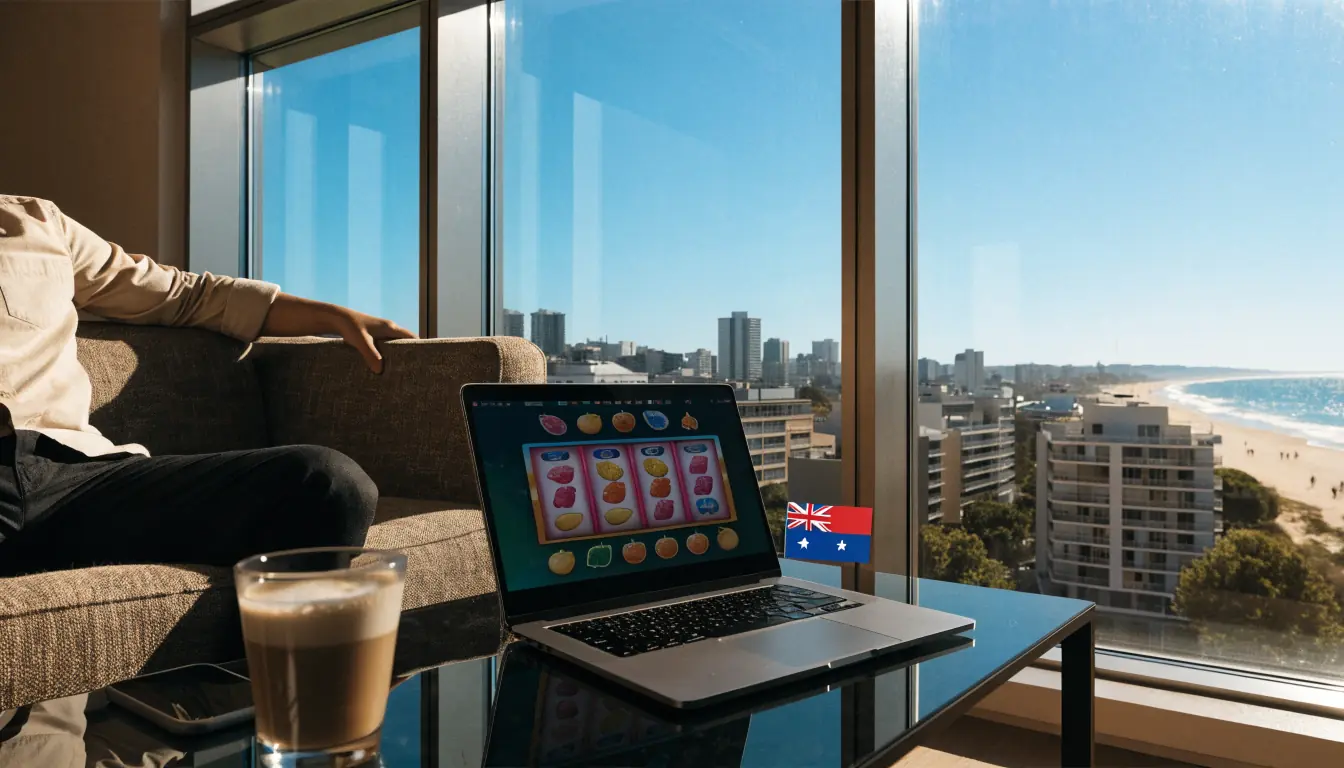
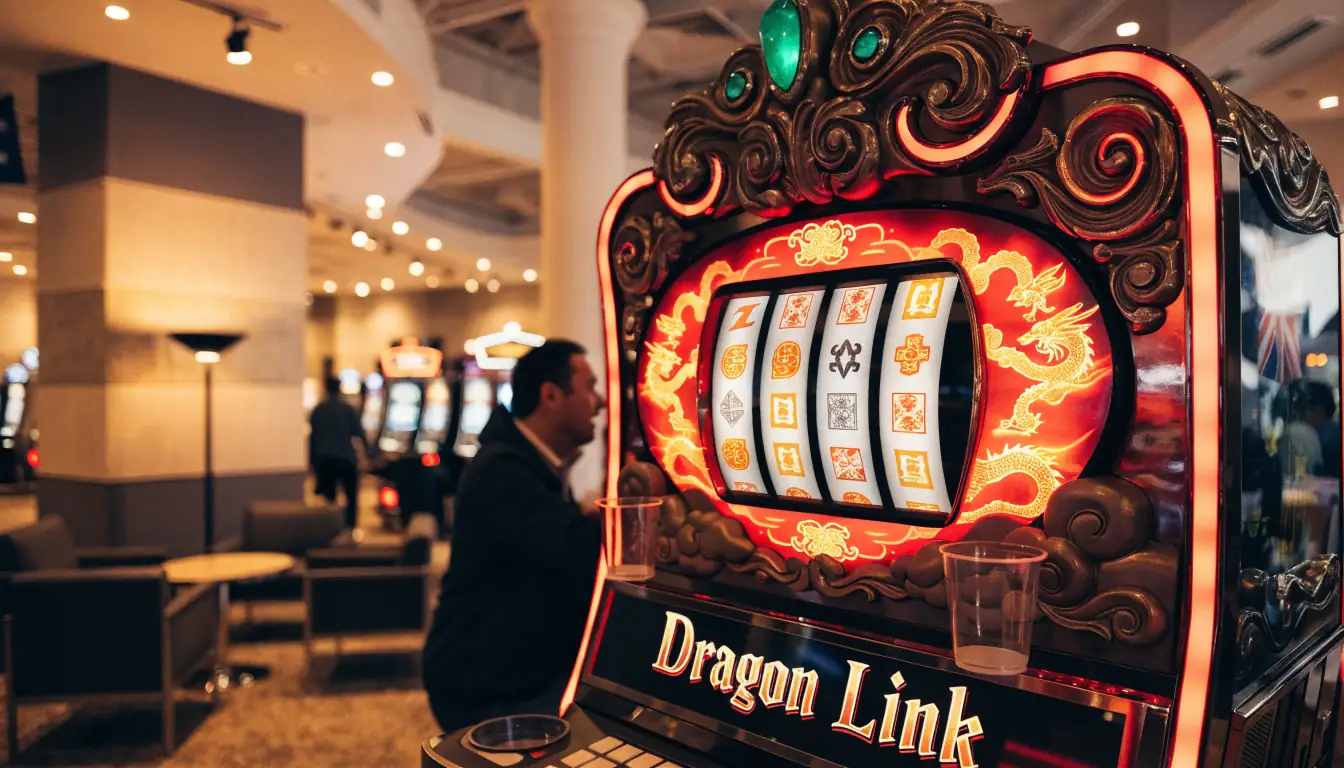
Explains Dragon Link's Arc Diamond cabinet design, free vs real-money play, and why Australia's licensing…


Crypto Casinos and the Payment Safety Debate
Beyond the legal fence‑mending lies the heart of the discussion: what does it mean for an online pokie — or any online gambling platform — to be safe? In the absence of a trusted domestic regulator, many Australian players turn to what is commonly called a crypto casino. This term is used here rather than the older “bitcoin casino,” though the latter still lingers in public discourse. Crypto casinos have offered a different way to bank. They tout greater payment flexibility, the ability to move funds directly, and reduced delays when compared with the traditional card‑led systems we associate with traditional online gambling.
Among their many appeals, crypto casinos accept a roster of digital currencies. Bitcoin remains the most widely accepted, but many operators support Ethereum, Litecoin, USDT, Dogecoin, Solana, Ripple, and various other altcoins. According to one industry overview, a handful of names commonly recommended to Australian players include platforms such as GoldEx, King Johnnie, and Stellar Spins—though the endorsement of specific operators varies from one market researcher to the next.
A crypto casino frequently mentioned as a recommended option for Australian players.
Another popular offshore platform noted for accepting multiple digital currencies.
A third listed casino that appears in industry overviews for its crypto support.
The modality of deposit and withdrawal in these crypto casinos is another critical dimension. Deposits are confirmed in a matter of minutes, and withdrawals are usually processed instantly or within a few hours with relatively low fees. However, it is important to note that there is a divergence here: some sources insist that withdrawals depend heavily on casino approval and on the pace of the blockchain, meaning delays are possible even if the technological promise of speed remains attractive. Similarly, one industry overview suggests that a few operators grant native tokens that yield staking rewards and even governance rights, further complicating the safety picture by adding a decentralised element.
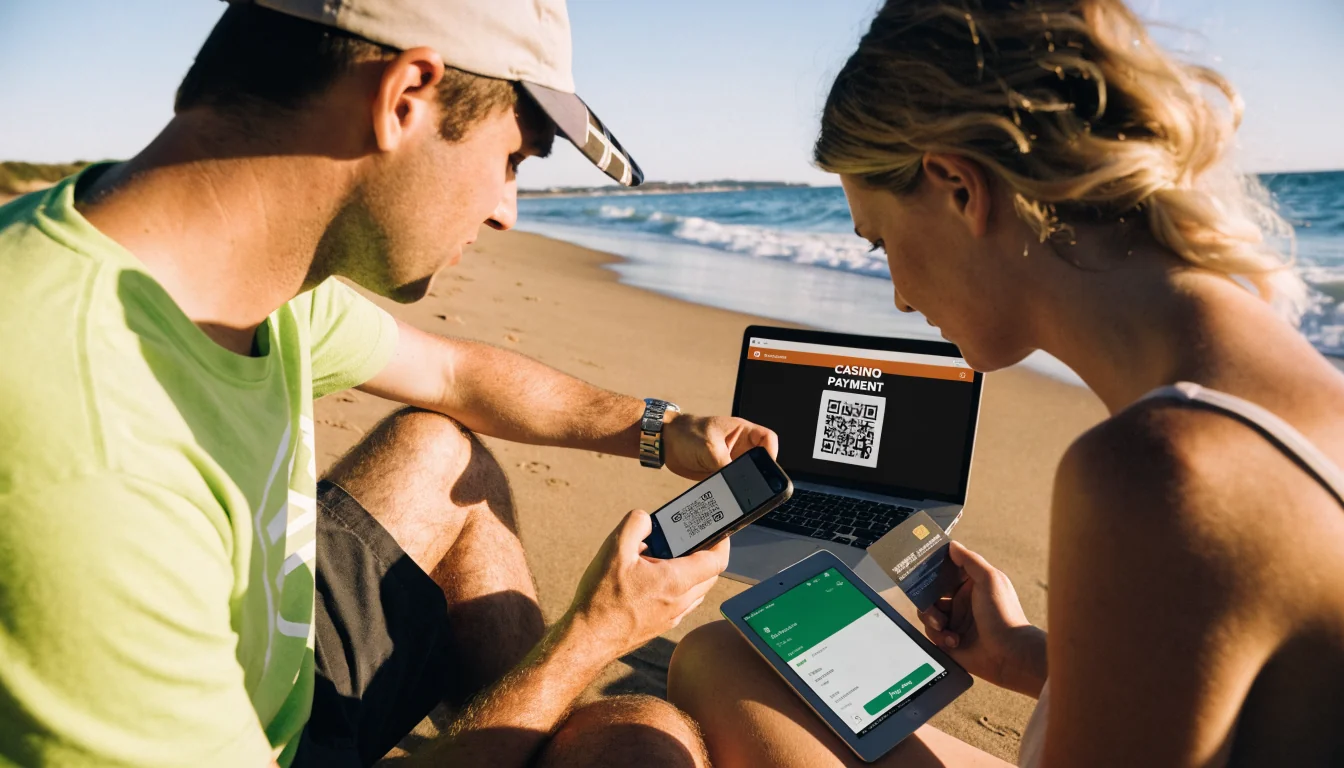
Furthermore, the safety of transaction details must be reconciled with regulatory realities. In June 2024, an amendment to the Interactive Gambling Act declared that Australian‑licensed gambling sites should not accept cryptocurrencies or credit cards – a move to placate concerns over money laundering and customer protection. According to one operator’s own summary, these provisions in effect block the integration of crypto payments into locally regulated markets. In close temporal proximity, one industry overview also mentioned 2023 amendments that sought to restrict operators from accepting digital‑currency payments, though—as ever—the details remain the subject of legal and commercial debate.
The Regulatory Gap and the Offshore World
The ban on domestic online casinos naturally pushes Australian players into the space of offshore casinos. These outfits often hold licences in jurisdictions such as Curacao or Malta and operate in a market that the ACMA cannot easily reach. The fundamental challenge is that while the Commonwealth law is fierce on paper, its enforceability suffers in practical terms when the operator sets up outside the national boundaries. Many platforms still “actively offer” online casino services to Australians, in direct violation of the prohibition, but the legal focus remains on the operator rather than the individual player — a loophole that the entire Australian regulatory framework is built on.
With regulatory neutrality comes a grey area in terms of practical gambling advice. In jurisdictions with fully licensed operators, safety measures are verifiable. Here, in the Australian context, there is no verifiable public register to consult, no straightforward checklist to tick. What a player must examine is an amalgam of legal caution and private diligence. One must evaluate whether the operator holds a legitimately issued offshore licence and whether it employs advanced mechanisms, like provably fair algorithms, to verify randomness via cryptographic hashes. These mechanisms provide a technocratic safety net—yet a safety net without a domestic safety standard.
Illegal offshore operators
Australian law targets the operators, not the players, but using an unlicensed offshore casino can expose you to fraud and loss of funds.
Payment Methods and the “PayID” Question
A topic dear to many players is the method by which funds are deposited and withdrawn. The question “is PayID safe for pokies?” often arises, and while some sources remain silent on the specifics of this payment option, it is clear that any regulated, Australian‑licensed site would not be permitted to accept crypto payments or card‑linked deposits. Instead, many players seek the speed and flexibility of crypto transactions — which can be confirmed in minutes and are often completed on withdrawal within hours. Nonetheless, it is worth noting that overly optimistic timelines can be misleading if one ignores the potential dependency of the process on casino approval and blockchain confirmations.
Players’ own choices in handling payment introduce layers of risk. One common mistake is sending funds on the wrong blockchain. Another is underestimating transaction fees. And still another is the assumption that crypto anonymity somehow eliminates the need for identity checks, when in fact it does not. The term no KYC is often touted as a benefit of some offshore sites, but safety here depends largely on whether the operator rigorously enforces its own rules or simply exploits a regulatory blind spot. In truth, safety transcends simply moving money quickly; it must also encompass verifying that the site’s technology does not lapse into the laxity that clandestine operations so often enjoy.
PayID risks
Even though PayID is fast, sending funds to the wrong blockchain or without proper KYC can lead to irreversible losses.
Practical Safety Checks
Since no domestic licence exists and a public register is not maintained, the gambler in Australia has to perform a bit of intellectual labour instead. Begin with the basics:
- Legal Awareness: The Interactive Gambling Act 2001 clearly targets operators, not players, and that distinction remains a cornerstone of policy. Although the Act outlaws online casino-style games, it does not directly criminalise individual Australians who choose offshore sites.
- Offshore Licensing: Since major players in this space operate offshore in Curacao or Malta, one must enquire into the operator’s actual licence rather than relying on a badge on the page. Licensing by these jurisdictions is the only legal parameter that guarantees some oversight.
- Technological Transparency: The implementation of provably fair algorithms now features in reputable crypto casinos. By allowing players to verify the randomness of outcomes via cryptographic hashes, these tools offer a measure of reliability in an otherwise unregulated field.
- Transaction Nuance: While deposits tend to clear in minutes and withdrawals are described as “instant or within hours,” the actual experience can depend on the casino’s internal procedures and blockchain processing times. Some sources insist that a delay is almost inevitable when the casino must still approve a withdrawal request.
- AML/CTF Developments: One industry overview details how recent changes in Anti‑Money Laundering/ Counter‑Terrorism Financing (AML/CTF) rules in 2026 require additional reporting from the gambling sector. This new regulation places much of the compliance burden on providers – a development that, according to the same single source, might ultimately play a role in their willingness to offer services to Australian residents.
The practicality of these “checks” is all the more important because of the rapid technological expansion of the industry. Digital currencies, decentralised platforms, and native token functionalities inject additional uncertainty into a landscape that is as legally fraught as it is technologically innovative. Safety, therefore, becomes a personal responsibility rather than an inherent guarantee of the platform.
Balancing Culture and Regulation
Inevitably, the conversation must extend to the role that pokies occupy in the national consciousness. Australia’s strict rules are, in part, a reaction to decades of cultural dominance of pokies in social settings. There is an irony to the fact that the government can ban these games domestically, yet them being available in pubs — and subsequently on offshore websites — has ingrained them in the public psyche. The law protects by prohibiting, but it has also created a vacuum into which countless unregulated providers now stream.
At the intersection of culture and regulation, players shoulder the burden of making safe choices. Regulators continue to signal their disapproval through targeted amendments (such as the June 2024 ban on crypto and credit card transactions on any licensed site, and the 2023 amendment that sought to restrict digital currency payments — though the burden of proof in these instances remains low). Yet, without domestic licences, the onus is on offshore entities to comply voluntarily—if at all—and for players to understand precisely what risks they take when navigating these sites.

Conclusion: The Weight of the Gamble
In sum, safe online pokies in Australia for 2026 occupy a precarious middle ground between outright prohibition and unregulated offshore practice. The Interactive Gambling Act 2001 lays down the law with little room for domestic operators, making it unequivocally clear that no legal online casino licences are available in Australia. Enforcement, however, is aimed at the providers, which leaves players free to access international platforms – while still facing a myriad of risks.
On the one hand, crypto casinos and similar sites offer advantages like fast banking and flexible payments through a variety of digital currencies. On the other hand, caution is unavoidable: transaction errors, variable withdrawal timelines, and legislative amendments that emphasize AML/CTF measures (as noted by one industry overview) all contribute to the safety debate. The distinction between legality and safety, the tension between rapid technology and stagnant regulation, and the clear targeting of operators rather than players all must be balanced in one’s mind before stepping into this digital arena.
And for all its brevity, the final word remains a reminder: Proceed with caution.
Is online casino legal in Australia?
No, the Interactive Gambling Act 2001 prohibits offering online casino services to Australian residents, and no domestic real-money online casino licences exist. However, it is not illegal for individual players to use offshore-licensed platforms.
What is the process of applying for a Licence for a Relevant Product?
It is not possible to obtain a licence to operate an online casino domestically in Australia, as the Interactive Gambling Act 2001 explicitly prohibits the provision of online casino style games to residents.
What makes a good Bitcoin casino?
A reliable Bitcoin casino offers fast deposits and withdrawals with low fees, supports multiple cryptocurrencies beyond Bitcoin, and uses provably fair algorithms that let players verify game randomness via cryptographic hashes.
What security features must licensed casinos have?
Reputable crypto casinos use provably fair algorithms allowing players to verify randomness through cryptographic hashes, while some operate on decentralized protocols where no single entity controls funds or outcomes.
How do recommended online casinos ensure game fairness?
They use provably fair algorithms that allow players to independently verify the randomness of outcomes via cryptographic hashes, and some operate on decentralized protocols without central control over results.